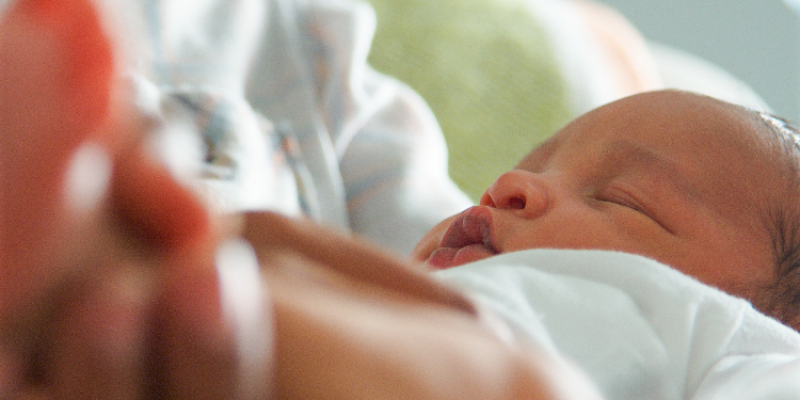
Having a baby abroad brings a particular mix of excitement and logistical complexity, and Senegal is no exception. The country's maternity care landscape divides sharply between a public system that serves the majority of the population and a private sector that meets the expectations most expatriates bring from home. Understanding where each system excels, what things cost, and what administrative steps follow the birth will help you plan confidently. This article covers the full journey: from confirming a pregnancy to registering your newborn and navigating childcare in Dakar.
Maternity care in Senegal operates across two distinct tracks. The public system, anchored by facilities such as the Hôpital Principal de Dakar, handles the overwhelming majority of births in the country. The private sector, meanwhile, serves a smaller share of overall demand but is the default choice for most expatriates seeking modern facilities, shorter waiting times, and a closer alignment with international clinical standards. Private clinics cover about 20% of overall maternal demand in Senegal, yet they concentrate a disproportionate share of the resources and specialist staff that expatriate families rely on.
One feature of Senegalese maternity care that often surprises newcomers is the central role of midwives. Known locally as sages-femmes, midwives handle the bulk of labor support even in high-end private clinics. An obstetrician is typically present or on call for the actual delivery and for any complications that arise. This midwife-led model is deeply embedded in the system, and working with it rather than around it tends to produce the smoothest experience for expatriate mothers.
Protect your health and get easy access to treatment for expats in Senegal.
Exclusive discounts and additional benefits on Regency for Expats Health Insurance. Get a free quote now and save up to 40% on the best health insurance for Expats.
Specialists in international health insurance for 40 years, offering health cover adapted to your needs as an expatriate, whether for a temporary stay or a long-term expatriation.
30+ years' experience in providing global health insurance across more than 200 countries. Over 1.65 million hospitals, clinics, physicians and specialists worldwide covered.
Pregnancy tests are available over the counter at pharmacies across Dakar and in the larger regional cities, with no prescription needed. Once a positive result appears, the standard next step is to confirm the pregnancy through a blood test at an independent medical laboratory or with an initial consultation at a private gynecology practice. Several well-regarded practices operate in Dakar and are familiar with expatriate patients.
It is worth acting quickly after confirmation. Expatriate-friendly private clinics in Dakar book up fast, and securing your preferred obstetrician and a guaranteed spot in the maternity ward requires early registration. Leaving this until the second trimester can mean losing your first choice of facility entirely.
Senegal's formal prenatal care schedule requires at least three medical check-ups: one before the end of the third month, one around the sixth month, and one around the eighth month. Completing all three is also a condition for accessing maternity financial benefits through the country's Social Security Fund. Private clinics go considerably further, offering comprehensive prenatal packages that include advanced 3D and 4D ultrasound imaging alongside standard monitoring.
On the cost side, an ultrasound at a private clinic typically ranges from XOF 25,000 to XOF 35,000 (roughly USD 42 to USD 58). A specialist consultation costs between XOF 15,000 and XOF 25,000 (approximately USD 25 to USD 42). Routine blood and urine tests are conducted either at independent laboratories or within the clinic's own facilities, depending on where you receive care.
Good to know:
Meeting the three mandatory prenatal visit requirements is not just a clinical best practice in Senegal; it is the condition that qualifies employed mothers for maternity benefit payments from the Social Security Fund.
Join the Senegal community
Get regular tips and advice to make the most of your expat life
Choosing where to give birth in Senegal
For expatriates, the practical choice of birth location almost always comes down to one of several well-regarded private clinics in Dakar. Each has a distinct profile worth understanding before committing.
Clinique de la Madeleine is known for advanced laparoscopic surgery and high-end neonatal care, making it a strong choice for pregnancies with identified risk factors. Clinique Niang has built a strong reputation among the expatriate community for its personalized obstetrics team. Clinique Bellevue offers physiological birth options and delivery rooms equipped with jacuzzis for those seeking a low-intervention environment. NEST Clinic is a slightly more affordable private alternative that receives consistent praise for the quality of its midwife-led care.
Home births are not standard practice for expatriates in Senegal. The emergency regulatory framework for out-of-hospital births is limited, and most families who want a natural, low-intervention birth pursue that goal within a private clinic rather than at home. Some families do hire local doulas to provide additional advocacy and support during a hospital birth.
Child birth in Senegal
Major private clinics in Dakar are equipped with modern delivery suites and operating theaters capable of handling both vaginal births and emergency cesarean sections. Epidurals are available at the leading facilities, but they require advance discussion with the clinic's anesthesiologist and come with an additional fee. Because the anesthesiologist needs to be on call, this is not something to leave until you arrive in labor.
Cesarean section rates in Dakar's private sector are notably high. Expatriates who want a physiological birth are strongly advised to communicate their birth plan clearly and early, ideally in writing, and to consider hiring a doula who can advocate on their behalf during labor. Partners are generally permitted in the delivery room at private clinics, but this should be confirmed at registration, since access may be restricted if an emergency cesarean becomes necessary.
Insurance and costs of pregnancy and birth in Senegal
Cost planning starts well before the birth itself. Most international expatriate health insurance policies impose a waiting period of 9 to 12 months before maternity benefits can be claimed. This means that if you are planning a pregnancy, choosing and activating the right insurance well in advance is essential; buying a policy after conception will not cover the birth.
For the birth itself, a routine vaginal delivery in a private clinic costs around XOF 300,000 (approximately USD 500), not including separate obstetrician or anesthesiologist fees. A cesarean section in a private clinic ranges from XOF 500,000 to XOF 900,000 (approximately USD 830 to USD 1,500), depending on the facility and the length of the hospital stay. Private VIP room upgrades add between XOF 5,000 and XOF 15,000 per day on top of medical fees.
The public system presents a very different cost structure. At a public hospital such as the Hôpital Principal de Dakar, a normal birth costs between XOF 15,000 and XOF 25,000, and cesarean sections are provided at no charge beyond the cost of the care kit. However, the administrative complexity and crowding typical of public maternity wards deter most expatriates from using this route.
After the birth in Senegal
The standard hospital stay following an uncomplicated vaginal delivery is 3 days; a cesarean section involves a stay of around 5 days. Before discharge, the clinic will administer initial newborn health checks and the first vaccinations, including BCG and Polio. You leave with documented proof of these, which will be needed for subsequent pediatric appointments and for administrative processes.
Breastfeeding is deeply embedded in Senegalese culture and entirely accepted in public spaces. New mothers will find no social friction around nursing openly. Routine postnatal home visits from public midwives are not a standard service in Senegal, but private postnatal home visits can be arranged through independent practitioners or doula services for families who want professional support in the weeks following discharge.
Pregnancy loss in Senegal
Quality medical care following a miscarriage is available through specialized private gynecologists and obstetric clinics in Dakar. The emotional and logistical support available locally may feel limited compared to what some expatriates are used to at home, so reaching out to expatriate community networks early can help connect you with others who have navigated this experience in Senegal.
On the employment side, Senegalese labor law provides meaningful protection. Employees suffering from medical complications or pregnancy loss are entitled to paid sick leave, with the law providing up to 6 months of fully paid leave depending on seniority. This applies to foreign employees working under Senegalese labor contracts in the same way it does to local workers.
Registering the birth in Senegal
Every birth in Senegal must be registered with the local civil registry (Centre d'État Civil) within 60 days of the child's birth. Missing this deadline significantly complicates the registration process and should be avoided. The documents required for local registration include:
The medical certificate of birth issued by the hospital or clinic
Valid identification documents for both parents
Once the Senegalese birth certificate is in hand, expatriate parents need to register the birth at their home country's embassy or consulate to secure citizenship and a passport for the newborn. For U.S. citizens, this means applying for a Consular Report of Birth Abroad (CRBA) through the U.S. Department of State's birth abroad process. Applications are submitted online via the MyTravelGov portal and followed by an in-person interview at the U.S. Embassy in Dakar. The application fee is USD 100. If the child is born to an unmarried U.S. citizen father who is not present, Form DS-5507 must also be completed.
Embassy procedures and required documents vary by nationality. Contact your country's embassy in Dakar as early as possible to understand the exact steps and any specific forms required for your situation.
Nationality and citizenship in Senegal
Being born in Senegal does not automatically grant a child Senegalese citizenship when both parents are foreign nationals. Senegal applies a restricted version of jus soli: automatic citizenship by birth is only granted through what is referred to as "double jus soli," meaning the child is born in Senegal and at least one parent was also born in Senegal. This condition will not apply to the vast majority of expatriate families.
In practice, a child born in Senegal to two foreign parents will inherit the nationality of the parents through their home country's jus sanguinis rules and will live in Senegal as a foreign national dependent. The child will need a residence permit or equivalent status, just as any other foreign national would. There are no restrictions on foreigners giving birth in Senegal; the country places no nationality-based barriers on access to maternity care.
The Senegalese Labor Code entitles pregnant employees to 14 weeks of paid maternity leave, structured as 6 weeks before the birth and 8 weeks after. Leave is paid at 100% of the daily wage and is administered by the Social Security Fund (IPRES), provided the employee has completed at least 3 consecutive months of paid work before the leave begins. In cases where illness results from pregnancy or childbirth, leave can be extended by up to 3 additional weeks.
Paternity leave in Senegal is considerably more limited. Fathers are entitled to 1 day of paid leave following the birth of a child under the interprofessional collective agreement. Upon returning to work after maternity leave, mothers hold a legal right to paid nursing breaks for up to 15 months after the birth, a provision worth factoring into any conversation with an employer about return-to-work arrangements.
Good to know:
These provisions apply to employees working under Senegalese labor contracts. Expatriates working for foreign employers or under different contractual arrangements should verify with their employer or legal counsel which rules apply to their specific situation.
Dakar offers a reasonably wide range of childcare options at different price points. The most common arrangement among expatriate families is hiring an in-home nanny (nounou) or maternity nurse. Salaries are negotiated directly, making this a flexible option that can be tailored to the family's schedule and needs.
For families who prefer a structured environment, private daycares (crèches) and preschools are plentiful in Dakar, with a number offering bilingual French-English settings or pedagogical approaches such as Montessori. Monthly fees at private crèches and kindergartens in Dakar average around XOF 152,000 (approximately USD 253). Premium bilingual or Montessori facilities such as Le Hochet charge between XOF 100,000 and XOF 120,000 per month, plus an annual registration fee of between XOF 50,000 and XOF 100,000. The range of available options means that most families can find a setup that matches both their budget and their preferences.
Day-to-day life with a newborn in Dakar is more manageable than first-time expat parents might expect. Major supermarkets stock imported baby formula, diapers, and specialized baby products, though imported goods come at a premium over what you would pay at home. It is worth building up a small stock of key items before the birth to avoid scrambling in the first weeks.
Dakar's tropical climate calls for practical clothing choices. Lightweight, breathable cotton clothing for your newborn helps prevent heat rash, which is a common concern in the hot and humid conditions, particularly during the wet season.
For community support, expatriate parent networks in Dakar are active and genuinely useful. Facebook groups focused on the expatriate parent community in Dakar are widely used for sharing pediatric recommendations, selling second-hand baby gear, and exchanging tips on trusted local nannies. Connecting with these groups before the birth gives you a ready network to draw on from day one.
Frequently asked questions
All births in Senegal must be registered at the local civil registry (Centre d'État Civil) within 60 days of the child being born. Missing this deadline significantly complicates the registration process, so it is worth prioritizing this step in the weeks immediately following the birth.
No. Senegal does not grant automatic citizenship to children born to two foreign parents. Citizenship by birth is only granted through "double jus soli," meaning at least one parent must also have been born in Senegal. Your child will inherit your nationality through your home country's citizenship laws.
Pregnant employees are entitled to 14 weeks of maternity leave under the Senegalese Labor Code, typically split as 6 weeks before and 8 weeks after delivery. It is paid at 100% of the daily wage by the Social Security Fund, provided the employee has completed at least 3 consecutive months of contributions before the leave begins.
Yes, epidurals are available at major private clinics in Dakar. You must discuss this in advance with the clinic's anesthesiologist, as it requires a specialist to be on call and will incur an additional fee. Do not wait until you are in active labor to raise this request.
A routine vaginal delivery in a private clinic costs around XOF 300,000 (approximately USD 500), excluding separate obstetrician fees and room upgrades. A cesarean section ranges from XOF 500,000 to XOF 900,000 (approximately USD 830 to USD 1,500) depending on the clinic and the length of the stay.
Most international health insurance policies apply a waiting period of 9 to 12 months before maternity benefits can be claimed. If you are planning a pregnancy, you need to have the right policy in place well before conception. Purchasing a policy after you are already pregnant will not cover the birth.
No. There are no legal restrictions on foreigners giving birth in Senegal. The Senegalese government has officially refuted circulating misinformation that claimed certain nationalities were barred from accessing maternity services in the country. Expatriates of all nationalities can freely access both public and private maternity facilities.
Yes. Breastfeeding is deeply embedded in Senegalese culture and is universally accepted in public spaces. Mothers can nurse openly without facing stigma or social objection, which many expatriate mothers find reassuring in the early months.
U.S. citizen parents must apply for a Consular Report of Birth Abroad (CRBA) through the U.S. Embassy in Dakar. The process starts with an online submission via the MyTravelGov portal, followed by an in-person appointment. The fee is USD 100. If the child is born to an unmarried U.S. citizen father who is not present, Form DS-5507 must also be submitted.
ℹ️
We do our best to provide accurate and up to date information. However, if you have noticed any inaccuracies in this article, please let us know in the comments section below.
I fell in love with words at an early age After a break to focus on my studies, I rediscovered the joy of writing while keeping a blog during my years between London and Madrid. This passion for storytelling and for exploring new cultures naturally inspired me to create Expat.com, a space for my own reflections as well as for anyone wishing to share their experiences and journeys abroad.