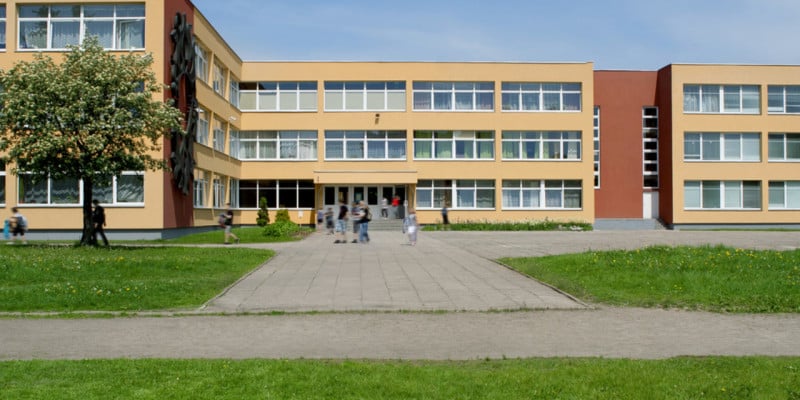
Finding the right school is often the most urgent task on a relocating parent's list, and in Senegal, the options are more varied than many families expect. Almost all of the country's international school options are concentrated in Dakar, where English-medium, French-medium, and bilingual programs sit alongside one another. Class sizes in the public system can reach up to 80 students per teacher, which means that most expat families head straight to the private and international sector. This article covers every practical step in that process: how the school system is structured, which international schools in Senegal are available, what they cost, and how to secure a place before you arrive.
Senegal's formal education system follows a 6-6-2 structure: six years of primary school, four years of middle school (collège), and three years of upper secondary (lycée). Education is officially free and compulsory for children between the ages of 6 and 16, though enforcement of that requirement varies considerably between urban centers like Dakar and rural areas, where traditional Islamic schools known as Daaras are more common.
The Senegalese government has been investing to address long-standing structural gaps. The national education budget was increased by 7.2% to XOF 975,000,000,000 to tackle teacher shortages and modernize school infrastructure. Despite these investments, the public system continues to face significant challenges, most notably high student-to-teacher ratios that can reach 80:1 in some classrooms. This is the single most important practical factor pushing expat families toward private and international schooling.
French is the primary language of instruction throughout the formal system. Recent reforms have increasingly introduced national languages such as Wolof in the early years to improve comprehension among young learners, but French remains the dominant academic language from primary school through the baccalaureate.
Families relocating to Senegal will find four broad categories of school, each serving a distinct audience and budget range. Families relocating to Senegal should assess each option carefully before committing to a neighborhood or housing arrangement.
Public schools are state-funded and free to attend. They follow the national curriculum and are open to all residents, including expat children. In practice, overcrowding, underfunding, and periodic teacher strikes make them an uncommon choice for international families. The language barrier compounds this: instruction is entirely in French, and there is no structured support for integration for non-native speakers arriving mid-year.
Private local schools, which may be secular, Catholic, or Islamic, offer better student-to-teacher ratios and improved facilities than public schools, while still following the Senegalese national curriculum. These schools serve primarily local middle-class families and some long-term residents, but are rarely the first choice for newly arrived expat families seeking curriculum continuity with their home country.
International schools are concentrated almost entirely in Dakar and offer foreign curricula, including American, British, French, and International Baccalaureate programs. These are the primary options for the expat community.
Bilingual schools occupy a middle tier between local private schools and premium international schools. Schools such as École Actuelle Bilingue offer a hybrid French-English curriculum and represent a more affordable entry point for families who want an international learning environment without premium international school fees.
Dakar is the only city in Senegal with a concentration of accredited international schools, and the range of curricula on offer is broader than in many West African capitals. English-speaking families are well served, with three major options to consider.
TheInternational School of Dakar (ISD)is an IB World School offering the Primary Years Programme (PYP), Middle Years Programme (MYP), and Diploma Programme (DP). It holds accreditation from the Middle States Association and the Council of International Schools, and is widely regarded as the leading option for families seeking an American-style education with an internationally recognized qualification pathway.
Dakar Academy (DA) offers a North American curriculum grounded in Christian principles and operates across three campuses: DA Central in Hann Maristes, DA West in Mamelles, and DA South in Sindia. This multi-campus structure makes it one of the more accessible options by location, depending on where a family chooses to live.
For families following the British curriculum, the British International School of Dakar (BISD) is a COBIS Provisional School offering the Cambridge International Education pathway, including IGCSE and A-Levels. It is currently the only school in Senegal offering a structured British curriculum route to A-Level qualifications.
French-medium families have two highly regarded AEFE-accredited institutions to consider. Lycée Français Jean Mermoz (LFJM) covers the full French curriculum from primary through the baccalaureate and also offers an International American Section (SIA) for families seeking bilingual progression. Institution Sainte Jeanne d'Arc (ISJA) is a Catholic school with AEFE accreditation, running from preschool through high school, and is well-regarded for its academic standards. Both schools use the EDUKA platform for online admissions.
Good to know:
Dakar Academy offers tiered tuition rates depending on whether a family has employer assistance, making it one of the few schools where the fee structure explicitly accounts for families without a corporate relocation package.
Join the Senegal community
Get regular tips and advice to make the most of your expat life
Public schools for expat children in Senegal
Expat children are legally permitted to attend Senegal's public schools, which are open to all residents. However, the practical barriers are significant enough that very few international families pursue this route. Instruction is conducted entirely in French, with local languages such as Wolof used informally or in early years. No structured language immersion or integration programs exist for non-native speakers, meaning a child arriving without solid French skills would face an immediate and unsupported language challenge.
Beyond language, the resource constraints of the public system are a serious concern. Class sizes reaching up to 80 students per teacher leave little room for individualized attention, and school infrastructure varies widely. For francophone expat families, the language barrier is not an obstacle, but they tend to opt for private or international schools, given the overcrowding. For non-francophone families, public school enrollment in Senegal is rarely a workable solution without prior and strong French fluency.
Language considerations for schools in Senegal
The language of schooling is one of the first decisions a relocating family needs to make. In Senegal, French dominates both the public system and the most established private school networks, while English-medium education is available but limited to a smaller group of international schools.
For English-speaking families, ISD, AISD, and Dakar Academy are the primary options. All three deliver instruction in English and offer qualifications recognized for university entry in North America, the UK, and beyond. For families who want to maintain English while also developing French, the SIA section at Lycée Français Jean Mermoz offers a structured bilingual pathway within a French-system school.
English as an Additional Language (EAL) support and French language programs are available at major international schools, but they typically come at an extra cost. Many international schools also require all students to study French as a second language, reflecting the linguistic reality of life in Senegal. Families with children who have no prior exposure to French should factor in these support costs when calculating the total annual school budget.
Choosing a school in Senegal
Several factors should shape a family's decision beyond curriculum type. In Dakar, traffic is a serious daily challenge, and commute times to school can be significant depending on the neighborhood. Families who base their housing search in areas like Almadies, Mamelles, or Hann Maristes often find they can align their choice of neighborhood with the campus location of their preferred school, cutting down on travel time considerably.
Accreditation is another critical check. Before enrolling, verify that the school holds recognized accreditation from bodies such as the Middle States Association (MSA), the Council of International Schools (CIS), or COBIS. Accreditation affects not only the quality assurance framework the school operates under, but also whether qualifications are recognized for university entry abroad.
Waiting lists are a real constraint at the most sought-after schools. ISD and Lycée Français Jean Mermoz, in particular, can have limited availability, and families are strongly advised to begin the application process at least twelve months before their planned start date. Arriving in Dakar without a confirmed school place puts families in a difficult position, and the most competitive schools do not hold places.
Extracurricular facilities vary significantly by school tier. Premium international schools typically offer extensive programs including competitive sports, performing arts, and broad after-school activity schedules, which can be an important quality-of-life factor for children making a major transition.
Most international schools in Senegal follow a broadly consistent admissions process, though deadlines and specific requirements differ by school. As a standard baseline, applications require the following:
A copy of the student's passport
A recent ID photograph
A comprehensive vaccination record
School report cards from the previous two academic years
Many top schools now process applications entirely online. Lycée Français Jean Mermoz and Institution Sainte Jeanne d'Arc both use the EDUKA platform for enrollment and re-enrollment. Families should check each school's website directly for current deadline dates, as these are set annually and differ between new and returning students.
At ISD, a mandatory non-refundable application fee of USD 250 applies. Entrance assessments or language evaluations are required for certain specialized streams: the International American Section (SIA) at French schools, for instance, requires students to demonstrate bilingual ability as part of the selection process. Families whose children may need language support should be upfront about this at the application stage to understand what additional provision is available and what it costs.
School fees and costs in Senegal
School fees in Dakar vary widely by school type and tier, and the total annual cost extends beyond tuition alone. Registration fees, capital development levies, exam fees, and learning support charges can add substantially to the headline tuition figure.
At the premium end, schools such as ISD charge primary tuition in the range of XOF 8,000,000 to XOF 14,000,000 (approximately USD 13,000 to USD 23,000) per year. High school years at these schools can reach up to USD 29,000 annually. Mid-tier international schools charge roughly XOF 4,000,000 to XOF 7,000,000 (approximately USD 6,500 to USD 11,500) per year for primary education. Bilingual and budget-tier schools range from XOF 1,500,000 to XOF 3,200,000 annually (approximately USD 2,400 to USD 5,200).
Dakar Academy operates a tiered fee structure based on whether a family has employer assistance. For Grades K-5, tuition is USD 14,450 with employer support, dropping to USD 11,000 without it. For Grades 6-12, fees are USD 18,375 with employer assistance or USD 13,200 without.
The École franco-sénégalaise (EFS) sets its tuition for foreign students at XOF 1,100,000, with an annual registration fee of XOF 150,000 and a mandatory supply fee of XOF 75,000.
Beyond tuition, families should budget for:
One-off registration fees: XOF 300,000 to XOF 1,000,000
Capital development fees: up to USD 8,000 at premium schools
Exam fees for external qualifications (IGCSE, IB, Baccalaureate)
Learning support or EAL programs: XOF 800,000 to XOF 2,500,000 per year, where applicable
Families on corporate relocation packages should negotiate an education allowance as a standard component of their contract. Given that total annual costs at premium schools can exceed USD 30,000 when all fees are included, this is one of the most financially significant aspects of an expat package in Senegal.
The school year in Senegal
The official Senegalese public school calendar runs from early October to late July, divided into three trimesters. International and private schools operate on a different schedule and generally start earlier, typically in late August or early September, mirroring Northern Hemisphere academic calendars and ending in June.
Families arriving from North America or the UK should note that international schools starting in August or September means enrollment deadlines often fall in the spring of the preceding academic year.
School life in Senegal
International schools in Dakar offer well-developed extracurricular programs that go beyond academic instruction. Dakar Academy runs more than 15 after-school activities, and ISD competes within the West African International Schools Activities League (WAISAL), giving students access to competitive sports against other international schools across the region. This regional sports network is an important part of school life for families based in Dakar, providing a broader social community for children outside the classroom.
Canteen services are standard at larger schools. At Lycée Français Jean Mermoz, meals are prepared on-site, and students use a prepaid badge system, with reloads available via cash or the Wave Money app. Community values and sustainability are embedded in the cultures of several schools: LFJM incorporates UN Sustainable Development Goals into its curriculum, and Dakar Academy structures its institutional mission around community service. For families making a significant international move, this kind of school culture can ease the transition for children adjusting to a new environment.
Special educational needs in Senegal
Provision for special educational needs (SEN)in Senegal is limited at the national level, but a number of international schools have internal support frameworks in place. Families with children who have identified learning differences should investigate the provision carefully and not assume that the level of support available in their home country will be replicated in Dakar.
At Dakar Academy, specialized services, including Speech-Language Pathology, are available as a customized package. The École franco-sénégalaise accommodates students with particular learning needs (Élèves à Besoins Particuliers, or EBP) through individualized learning plans. Learning support and EAL programs at premium international schools can add between XOF 800,000 and XOF 2,500,000 per year to the base tuition cost.
Parents should request a detailed breakdown of what SEN support a school provides before enrolling, including whether it is delivered by a qualified specialist, how it is structured within the school day, and what additional fees apply. A formal assessment of the child's needs, ideally completed before the move, will make this conversation with prospective schools considerably more productive.
Higher education pathway in Senegal
Students who complete their schooling at an international school in Dakar graduate with internationally recognized qualifications: the IB Diploma, a US High School Diploma, Cambridge A-Levels, or the French Baccalaureate, depending on the school. Each of these qualifications opens pathways to universities in North America, Europe, or the UK, and most expat families treat higher education abroad as the natural next step after secondary school in Senegal.
Some local post-secondary options do exist. Institution Sainte Jeanne d'Arc Post Bac offers BTS (Brevet de Technicien Supérieur) programs in fields such as International Business and Logistics, providing a locally accredited technical qualification for students who prefer to remain in Senegal after secondary school. Senegal has three public and three main private universities, though these are oriented primarily toward Senegalese students and are less commonly pursued by expat graduates.
Frequently asked questions about schools in Senegal
Can expat children attend public schools in Senegal?
Yes, public schools in Senegal are legally open to all residents, including expat children. However, instruction is conducted entirely in French, class sizes can reach up to 80 students, and no language integration support is available for non-native speakers. For these reasons, the vast majority of expat families choose private or international schools instead.
How much do international schools cost in Dakar?
Fees vary significantly by tier. Premium schools such as ISD charge primary tuition of XOF 8,000,000 to XOF 14,000,000 (approximately USD 13,000 to USD 23,000) per year, with high school fees reaching up to USD 29,000. Mid-tier schools range from XOF 4,000,000 to XOF 7,000,000, and bilingual budget options cost between XOF 1,500,000 and XOF 3,200,000 annually. Additional mandatory fees for registration, capital development, and exams apply across most schools.
When does the school year start in Senegal?
The public school calendar starts in early October and runs to late July. International and private schools typically follow a different schedule, starting in late August or early September and finishing in June, in line with Northern Hemisphere academic calendars. French-system AEFE-accredited schools align with the French academic calendar and generally begin in early September.
What documents are needed to apply to a school in Dakar?
Most international schools ask for a copy of the student's passport, a recent ID photograph, a full vaccination record, and school reports from the previous two academic years. Many schools process applications entirely online: Lycée Français Jean Mermoz and Institution Sainte Jeanne d'Arc both use the EDUKA platform. Some schools also charge a non-refundable application fee, such as ISD's mandatory USD 250 fee.
How far in advance should families apply to international schools in Dakar?
For the most sought-after schools, particularly ISD and Lycée Français Jean Mermoz, families should apply at least twelve months before their intended start date. Waiting lists are a real constraint, and arriving in Dakar without a confirmed school place can leave families in a difficult position. Starting the process early is one of the most important steps a relocating parent can take.
Is there language support for children who don't speak English or French?
Major international schools in Dakar offer EAL and French language support programs, but these typically come at an additional cost of between XOF 800,000 and XOF 2,500,000 per year on top of base tuition. Families should ask prospective schools directly about the structure and cost of language support before enrolling.
What SEN support is available at schools in Dakar?
Provision varies by school. Dakar Academy offers specialized services, including Speech-Language Pathology at an additional cost, and the École franco-sénégalaise works with students with particular learning needs through individualized plans. Families should request a full breakdown of SEN support before enrolling and ideally complete a formal assessment of their child's needs before arriving in Senegal.
Are education allowances standard in expat packages for Senegal?
Given that total annual costs at premium international schools in Dakar can exceed USD 30,000 when all fees are included, negotiating an education allowance as part of a corporate relocation package is standard practice and highly advisable. Some schools, such as Dakar Academy, also offer lower fee tiers for families without employer assistance.
Have questions about schooling in Senegal or looking for advice from families who've already been through the process? Join the Expat.com community to connect with expats living in Dakar.
ℹ️
We do our best to provide accurate and up to date information. However, if you have noticed any inaccuracies in this article, please let us know in the comments section below.
I fell in love with words at an early age After a break to focus on my studies, I rediscovered the joy of writing while keeping a blog during my years between London and Madrid. This passion for storytelling and for exploring new cultures naturally inspired me to create Expat.com, a space for my own reflections as well as for anyone wishing to share their experiences and journeys abroad.