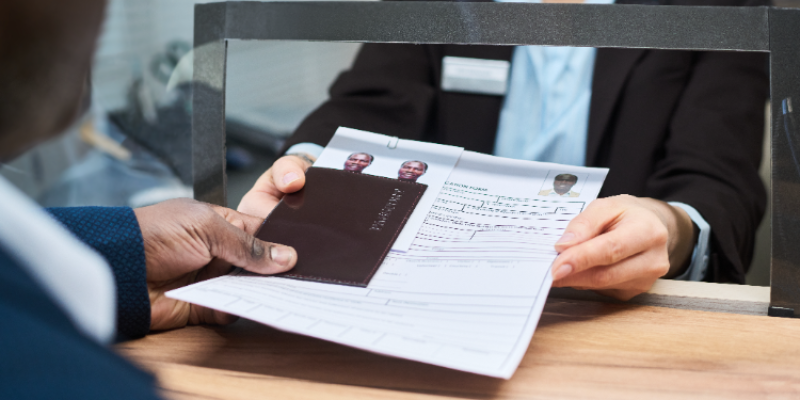
Senegal does not issue a permanent residency card in the way North America or Europe might define the term, yet the country has a clear and well-established legal framework for foreign nationals who want to settle long-term. The key document is the Carte d'Identité d'Étranger, a five-year renewable residence card that gives holders the right to live, work, and build a life in the country. Understanding how to obtain it, what it costs, and what it actually entitles you to is essential before you commit to making Senegal your long-term home.
Senegal does not use the term "permanent residency" in a strict legal sense. Instead, the country distinguishes between short-term stays and formal long-term settlement through a document called the Autorisation d'établissement, or Settlement Authorization. Once this authorization is granted, the foreign national receives a physical card: the Carte d'Identité d'Étranger (CIE), which functions as the official residence permit for all practical and legal purposes.
The CIE is legally mandatory for any foreign national staying in Senegal for more than 90 days. The card is valid for five years and is indefinitely renewable, meaning that, provided you meet renewal conditions, your right to remain in Senegal is not subject to a fixed end date. It grants the right to live, work, open bank accounts, and invest in the country, making it the closest equivalent to what many expats would recognise as long-term residency.
Good to know:
Nationals of ECOWAS (the Economic Community of West African States, also known as CEDEAO) and UEMOA member countries operate under a separate legal regime. They are exempt from the formal Settlement Authorization requirement, though they must still comply with local registration procedures to legally live and work in Senegal.
Holding the CIE in Senegal gives you considerable stability, but it is not the same as citizenship, and the differences are worth understanding before you commit to the process. As a CIE holder, you have the right to live, work, sign long-term leases, open resident bank accounts, and conduct business in Senegal without a restrictive time limit. What you cannot do is vote in national or local elections or hold a Senegalese passport.
The other critical difference is the security of status. The Settlement Authorization can be revoked under specific circumstances, such as criminal conduct or loss of means of subsistence, whereas Senegalese citizenship, once granted, is unconditional. Citizenship also removes the obligation to renew your status every 5 years and eliminates the risk of a status lapse due to an extended absence from the country.
For those considering the longer path, Senegal allows foreign nationals to apply for naturalization after ten years of continuous, legal residence. The timeline is shortened to 5 years for individuals who have made an exceptional contribution to the country or for foreign spouses of Senegalese citizens. Senegal officially recognizes dual citizenship, so obtaining Senegalese nationality does not automatically require giving up your original passport, though your home country's rules also apply.
Join the Senegal community
Get regular tips and advice to make the most of your expat life
Pathways to permanent residency in Senegal
There are several recognized routes to obtaining the Settlement Authorization and CIE in Senegal, and the right one depends on your personal situation. None of these pathways requires passing a formal language test: there is no Wolof or French proficiency exam mandated by law to obtain the CIE. That said, all administrative interactions with the Ministry of Interior are conducted in French, making a working knowledge of the language a practical necessity.
Employment pathway: This is the most common route for foreign nationals. You must first hold a valid work permit and employment contract before applying for the CIE. The residency authorization follows from your established professional status in the country.
Business and investor pathway: Foreign investors who are contributing to the local economy or setting up a business can apply by demonstrating financial capacity, a viable business plan, and compliance with local investment regulations.
Retirement pathway: Retirees must provide proof of consistent pension income or financial self-sufficiency, typically demonstrated through regular transfers to a local Senegalese bank account, alongside a clean criminal record and a health clearance certificate.
Family and dependent pathway: Spouses and minor children of existing CIE holders can obtain dependent residency status. This requires proof of the family relationship through certified and legalized marriage or birth certificates.
Required documents for permanent residency in Senegal
The CIE application in Senegal is document-heavy, and preparing your dossier carefully before approaching the authorities will save significant time. Several documents have strict validity windows, so timing matters. All foreign-language documents must be translated into French by a certified translator and legalized before submission.
A handwritten and signed application letter (Demande manuscrite d'autorisation d'établissement) formally addressed to the Minister of Interior
A certified copy of your valid passport, specifically the pages showing your photo, validity dates, and your Senegalese entry stamp
An original birth certificate issued within the last six months
A criminal record certificate from your home country, issued within the last three months
A medical certificate attesting to good physical and mental health, issued by a registered doctor physically established in Senegal
Three recent passport-sized identity photos
A Certificat de résidence (local certificate of residence) issued by your local town hall or district delegate, supported by proof of address such as a lease agreement or a utility bill from Senelec, Seneau, or Sonatel
Proof of financial subsistence, such as an approved employment contract, recent bank statements, or pension slips
A fiscal tax stamp (Timbre fiscal) of XOF 15,000 (about USD 25)
The official receipt of the repatriation deposit (Quittance de versement de la caution de rapatriement), a financial guarantee whose amount varies by nationality
Foreign students enrolled in Senegalese institutions and religious workers are legally exempt from the fiscal stamp and the repatriation deposit. Students must instead provide a school enrollment certificate and proof of scholarship or financial support.
Good to know:
Documents from your home country that carry an expiry date, such as the criminal record certificate and the birth certificate, should be requested as close to your planned submission date as possible. Once submitted to the authorities, you will not get the originals back, so keep certified copies of everything before handing over your dossier.
Application process for permanent residency in Senegal
The application for the CIE in Senegal follows a sequential process that requires several local steps before you can submit your dossier. You cannot complete everything remotely or before arriving: some documents, including the medical certificate and the residence certificate, can only be obtained once you are physically present in Senegal.
Arrive in Senegal and secure stable accommodation. You will need a lease agreement or utility bills in your name to obtain the proof of address required later in the process.
Undergo a medical examination with a registered Senegalese doctor to obtain the mandatory health certificate.
Visit your local district delegate (Chef de quartier) with your passport and lease to obtain a residence paper, then take this to your local mayor's office to collect the official Certificat de résidence.
Pay the repatriation deposit at the designated Senegalese public treasury and buy the XOF 15,000 fiscal tax stamp.
Submit your complete dossier in person to the Division of Foreigners Police and Travel Documents (DPETV) in Dieuppeul, Dakar. If you live outside Dakar, you can submit at the central police station or gendarmerie of your area of residence.
Upon successful submission, the authorities issue a récépissé (receipt) valid for six months. This document proves your legal status in the country and allows you to work, provided you also hold a valid work permit.
Wait for the physical card. Because production of the CIE can take over a year, you will need to renew your six-month récépissé repeatedly at the police station until your card is ready for collection.
Keep certified copies of every document you submit to the DPETV. The process involves multiple administrative offices, and having duplicates on hand prevents unnecessary delays if documents are misplaced.
Processing times and fees for permanent residency in Senegal
The costs involved in obtaining the CIE are relatively modest compared to residency processes in many other countries, but the timeline is longer than most expats expect. It is important to distinguish between the official receipt issued at submission and the physical card itself.
Fiscal tax stamp: XOF 15,000 (about USD 25) for the initial application
Medical certificate: Between XOF 20,000 and XOF 25,000 (about USD 33 to USD 41), depending on the clinic
Repatriation deposit (Caution de rapatriement): A mandatory, refundable financial guarantee paid to the Senegalese treasury. The exact amount varies by nationality and is set by the Senegalese public treasury
Récépissé: Issued immediately upon filing or within 15 to 30 days; valid for six months
Physical CIE card: Currently takes between one and one and a half years to be produced due to administrative bottlenecks
Renewal fee: A tax stamp of XOF 15,200 is required when renewing the card every five years
Because the repatriation deposit is refundable when you permanently leave Senegal and surrender your residency card, it functions more as a guarantee than a fee. That said, you must budget for it upfront, and the specific amount for your nationality should be confirmed directly with the Senegalese public treasury before you submit your application.
Rights and benefits of permanent residency in Senegal
Once you hold the CIE in Senegal, your day-to-day life as a foreign national becomes considerably more straightforward. The card grants you the legal right to live and work in Senegal without the constant need to manage short-term visa renewals. You can sign long-term residential leases, open resident bank accounts, and set up utilities such as electricity, water, and internet connections in your own name.
The CIE also allows you to act as a sponsor for family reunification. You can apply for your spouse and minor children to obtain dependent residency status, provided you demonstrate sufficient income to support them and supply certified proof of the family relationship.
Crossing Senegalese borders also becomes easier. As a CIE holder, you do not need to repeatedly apply for entry visas, and your legal resident status is recognized at border control. Moreover, CIE holders can convert their foreign driving license into a Senegalese one within the first year of residency, provided their home country has a reciprocity agreement with Senegal. The existence and terms of such agreements vary by nationality, so it is worth checking current conditions with the Senegalese Direction des Transports Terrestres before making that request.
The CIE in Senegal is valid for exactly five years from the date of issuance and does not renew automatically. To maintain your legal resident status, you must submit a new application to the Minister of Interior before the card expires. Letting the card lapse without renewing it puts your legal status at risk, so starting the renewal process well in advance is essential.
The renewal dossier requires updated versions of many of the same documents used in the original application:
A new handwritten application addressed to the Minister of Interior
A recent local criminal record (Casier judiciaire) established in Senegal, issued within the last three months
A fresh medical certificate from a locally registered doctor
Three new passport photos
Certified copies of your current passport
Ongoing proof of financial subsistence
A new tax stamp of XOF 15,200
Beyond renewal, it is important to understand that the Settlement Authorization is not unconditional. It can be revoked if you are convicted of a serious criminal offense, if you are found to pose a threat to public order, or if you lose your means of financial subsistence in Senegal. This is a meaningful difference from citizenship, which, once granted, cannot be taken away on these grounds. Maintaining your status requires staying compliant with Senegalese law and keeping your financial situation stable throughout your residency.
Holding the CIE is the foundation from which Senegalese citizenship can eventually be pursued. The standard naturalization route requires at least ten years of continuous, legal residence in Senegal. During that period, you are expected to demonstrate genuine integration into Senegalese society, economic independence, and a clean criminal record.
The ten-year requirement can be reduced to five years for individuals who have made an exceptional contribution to the country, or for foreign nationals who have been married to a Senegalese citizen for at least five years. In all cases, applicants must show they can support themselves financially and that their conduct has been consistent with the expectations placed on residents.
Senegal recognizes dual citizenship, which means you do not necessarily have to renounce your original nationality to become Senegalese. However, the rules of your home country on dual nationality also apply, and the two sets of rules do not always align, so it is worth checking the position of your home country's authorities before beginning the naturalization process.
Good to know:
Senegal has ended gender discrimination in the transmission of citizenship, meaning Senegalese women can now pass citizenship to their foreign spouses on equal legal footing with Senegalese men.
Frequently asked questions
No, there is currently no formal language test required to obtain the Settlement Authorization or the Carte d'Identité d'Étranger. However, all administrative forms and interactions with the Ministry of Interior are conducted in French. If you are not fluent in French, working with a bilingual local contact or translator when navigating the DPETV offices can save a great deal of time and confusion.
The caution de rapatriement is a mandatory financial guarantee paid to the Senegalese treasury when applying for residency. It is designed to cover potential deportation or emergency repatriation costs and is refundable if you permanently leave Senegal and surrender your residency card. The amount varies by nationality and must be confirmed directly with the Senegalese public treasury before you apply.
Yes. Because the physical CIE can take over a year to be produced, the six-month récépissé issued at the time of submission serves as full legal proof of your resident status. Provided you also hold a valid work permit, you can work legally in Senegal using this receipt while you wait for the card itself.
You must submit your application dossier to the DPETV before your initial visa or 90-day visa-free period expires. It is advisable to start gathering local documents, such as the medical certificate and proof of address, within your first month of arrival so that you have adequate time to compile a complete dossier before the deadline.
No. Foreign students enrolled in Senegalese institutions are exempt from paying the fiscal stamp and the repatriation deposit. They must still apply for the CIE but are required to provide a school enrollment certificate and proof of a scholarship or financial support in place of a work contract.
Nationals of ECOWAS member states are exempt from the formal autorisation d'établissement and the repatriation deposit. However, they are still legally required to obtain a foreign resident identity card to live and work in Senegal long term. The process is simpler but not entirely optional.
If your Carte d'Identité d'Étranger is lost or stolen, you must first obtain a certificate of loss from the local police. You will then need to submit a full renewal file to the DPETV, including the police report, to obtain a replacement card. Keep certified copies of your original documents to make this process faster.
Yes, family reunification is permitted. Spouses and minor children can apply for dependent residency status based on your approved Settlement Authorization. You will need to provide certified and legalized copies of marriage and birth certificates to prove the family relationship, along with documentation showing you have sufficient income to support them.
ℹ️
We do our best to provide accurate and up to date information. However, if you have noticed any inaccuracies in this article, please let us know in the comments section below.
I fell in love with words at an early age After a break to focus on my studies, I rediscovered the joy of writing while keeping a blog during my years between London and Madrid. This passion for storytelling and for exploring new cultures naturally inspired me to create Expat.com, a space for my own reflections as well as for anyone wishing to share their experiences and journeys abroad.