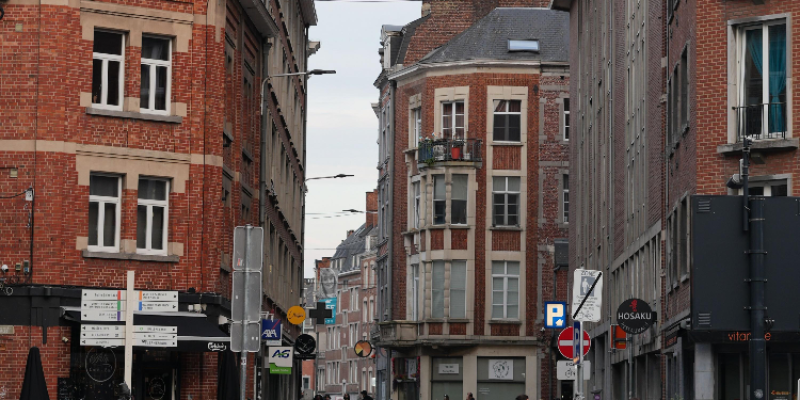
People often assume that buying property in Belgium as a foreigner involves special restrictions, additional levies, or a more complicated administrative path than local buyers face. In Namur, none of that applies: foreign nationals can purchase residential property with no nationality-based limitations, and transaction costs are identical to those paid by Belgian buyers. What does set the Belgian process apart is the weight of the private sale agreement. The compromis de vente (private sale agreement) is legally binding the moment both parties sign it, with no withdrawal period, making preparation before signing essential.
Belgium imposes no nationality-based ownership cap, no visa requirement, and no residency condition on purchasing residential property in Namur. Foreign nationals can buy freely, with one administrative requirement: every buyer needs a Belgian tax identifier. Residents registered in a Belgian municipal register receive a National Register number. Non-residents who own property in Belgium without registering in the population register are assigned a BIS number through the BIS register; this number is the administrative link required for all Belgian property-related tax formalities, and non-resident buyers should request it before or during the purchase process.
Residency status does affect the registration duty (droit d'enregistrement) rate. For a standard resale property in the Walloon Region, which covers Namur, the rate is 12.5% of the declared purchase price. A reduced rate of 3% applies from January 1, 2025, for buyers who make the property their sole and own dwelling and meet the statutory Walloon conditions, which principally means establishing registered residence there. Foreign buyers who do not intend to live in the property as their primary registered home should budget at the full 12.5% rate. Importantly, foreign purchasers pay the same rates as Belgian nationals: no additional surcharge applies specifically to non-residents.
Buyers who cannot attend a signing in person can complete a purchase remotely using a Belgian power of attorney (procuration). Belgian consulates outside the European Union can receive notarial deeds through the FPS Foreign Affairs notarial channel when a Belgian civil-law notary sends the draft deed in advance.
Namur organizes its central area around the Corbeille, a network of named quarters including the Université, Hôtel de Ville, Théâtre, Célestines, and Vieux Namur districts. For buyers who prioritize walkability and direct access to shops, restaurants, municipal services, and the railway station, the Corbeille is the natural starting point for any property search.
Within the Corbeille, Vieux Namur forms the historic pedestrian core in the south-western section. Properties here suit buyers who want a car-light daily routine, with heritage streetscapes, cafés, and shopping streets within walking distance. Vehicle access to the pedestrian zone is monitored by ANPR cameras active since September 2022 outside permitted hours; buyers considering property in this zone should clarify parking arrangements, moving-in logistics, and visitor access before signing anything.
Jambes, on the east bank of the Meuse within the city of Namur, is a practical mid-range search area for families and buyers who want broader housing stock than the pedestrian core offers. Active collective-housing development projects and infrastructure works make parts of Jambes worth monitoring for newer apartment supply. Saint-Servais, immediately north of the center, is a dense residential district where the city runs active neighborhood-cohesion programs; it suits buyers seeking urban services and community activity at prices below the historic-core premium.
Unlike some larger Belgian cities where international residents concentrate in specific districts, Namur has no single expat enclave. Buyers should choose by commute requirements and lifestyle priorities rather than looking for a community cluster.
Get regular tips and advice to make the most of your expat life
Property prices in Namur
The Q1 2026 official Statbel median transaction price for houses in Namur municipality stands at EUR 215,000, with the broader market range for houses extending to around EUR 300,000. The city-wide average asking price runs to approximately EUR 3,104 per m², placing Namur among the higher-priced Walloon provincial capitals but well below the cost levels of Brussels.
Apartment prices span a wide range depending on size and specification. Studios and entry-level one-bedroom units start from around EUR 60,000 to EUR 70,000, while two-bedroom apartments run from roughly EUR 208,800 to EUR 376,000; larger or higher-specification units can reach approximately EUR 474,800. The provincial Namur apartment median of EUR 204,000 sits below the Belgian national apartment average of EUR 288,250 (notaries' barometer), giving apartment buyers relatively accessible entry points compared with the national market.
Good to know:
Prices are rising: Statbel figures show a further increase in average house prices for Namur province following a strong recovery in the prior year. Buyers should benchmark each listing against current medians rather than older reference points, and factor in that transaction costs on top of the purchase price are substantial.
Types of property in Namur
Namur's housing stock divides broadly between central apartments and traditional Belgian row houses, with a smaller supply of semi-detached and detached houses, limited new-build development, and a niche of heritage properties along the Meuse corridor.
Belgian market listings and official transaction statistics categorize houses by the number of exposed façades: a maison 2 façades is a terraced row house; a maison 3 façades is semi-detached; and a maison 4 façades (or villa) is fully detached. Each category carries different price and planning implications, so checking which applies to a given property is a practical first step when reading listings or comparing Statbel transaction data.
New-build supply is limited in Namur relative to the resale market. Off-plan apartmentprojects are available, particularly in Jambes, but buyers should check completion timelines, planning-permit status, and the VAT regime before committing: buying from a developer triggers 21% VAT instead of the standard registration duty. For apartment buyers in general, Belgian apartments are held under co-ownership (copropriété), with a property manager (syndic) overseeing common areas and services.
A niche category worth noting for buyers searching along the Meuse is the bien mosan: traditional, classical, and neo-classical houses in garden plots subject to Namur's specific urban-planning regulation for Meuse-corridor properties. Anyone considering heritage or older central stock should verify what renovation or planning constraints apply before making an offer; the applicable partial urban-planning regulation for Meuse-corridor properties is published by the City of Namur.
Finding property in Namur
Belgium's primary property portal is Immoweb, and it is the broadest starting point for any Namur search, covering both resale and rental listings. Zimmo is a useful cross-check: since June 2023 it absorbed the former Logic-Immo.be inventory, so searches on Zimmo now cover both platforms' historical stock, and listings are enriched with price-change history and nearby sold asking prices. Running searches on both portals surfaces a more complete picture of available stock at any given time.
Several locally based agencies with IPI accreditation operate in the city, giving buyers a range of direct contacts. These include Honesty Namur, a full-service agency available Monday through Saturday; Agence Immobilière de la Citadelle (immocitadelle.be, IPI no. 105,237), with 20 years in the Namur market; ERA LA CLÉ (era.be), covering Bouge and Namur; Christine Surgès Immobilier (christinesurges.be), based in Belgrade, Namur; NAM PROPERTY (namproperty.be, IPI no. 504786); AD-IMMO (ad-immo.omnicasa.com), a central Namur agency active since 1995; INNOV'EXPERT (innov-expert.be, IPI no. 511,551), with an office in Jambes; and l'Agence Namur (lagence-immobiliere.be), covering Namur and districts including Erpent, Flawinne, and Bouge.
Belgian law requires all property agents to hold IPI accreditation. Before making contact, verify any agent's IPI number. Fake listings and copied advertisements with phantom agents have been reported in the Belgian market; use agency websites directly or portal-verified contact forms, and never pay a deposit before an in-person or live video viewing. Most Namur agencies act for the seller; before signing any search mandate, confirm in writing who the agency represents and whether a buyer-side fee applies.
Good to know:
Virtual tours are available on some Namur listings. For properties offered with a virtual-tour option, they are a practical first step before committing to a physical visit, particularly for buyers searching from abroad.
The property buying process in Namur
The Belgian purchase sequence has one feature that consistently surprises foreign buyers: the preliminary sale agreement, known as the compromis de vente, is fully binding on signature. Unlike systems in some countries where a preliminary agreement functions as a soft reservation that can be exited by forfeiting a deposit, in Belgium once both parties sign the compromis, the sale is definitive, and neither party can withdraw without legal consequences. This makes pre-signing legal review not a precaution but a necessity.
The process runs in six stages:
Consult a notary before signing anything written. Before making a formal written offer, ask a Belgian civil-law notary (notaire) to review the draft. A sale can become legally binding as soon as buyer and seller agree on property and price in writing, even before the formal compromis is signed.
Make a written offer with conditions precedent. Include any conditions suspensives (conditions precedent) clearly in the offer, particularly mortgage-financing approval. An offer accepted without a financing clause leaves the buyer fully bound even if the loan is refused.
Sign the compromis de vente. Once both parties sign, the sale is definitive. A deposit may be requested at this stage, though no statutory amount is fixed. This signature also starts the four-month clock for completing the authentic deed.
Notarial due diligence. The notary verifies the seller's title, searches for existing mortgages or registered charges, checks the property's urban-planning compliance and cadastral position, and incorporates findings into the authentic deed. The price stated in the deed must reflect the true transaction value: a declared price below market value can trigger additional registration duty and a fine for both parties.
Sign the authentic notarial deed. The notary reads the acte authentique to the parties and receives their signatures. Buyer and seller may each appoint their own notary; if two notaries are involved, they share the statutory fees, so the buyer pays no extra for having a separate notary. Foreign buyers who cannot attend in person can grant a Belgian power of attorney to a trusted representative.
Registration and mortgage-office transcription. After signature, the notary registers the deed and arranges transcription at the competent bureau hypothécaire for Namur's district. This transcription protects the buyer against subsequent claims by the seller's creditors and makes the transfer enforceable against third parties. The entire process from signed compromis to registered authentic deed must be completed within four months.
Four common pitfalls to avoid: treating the compromis as a non-binding reservation; signing an offer without a mortgage-approval clause; missing the four-month deadline; and declaring a purchase price below market value.
Costs of buying property in Namur
The headline cost of buying a resale property in Namur is the registration duty: 12.5% of the declared purchase price for a standard resale property in the Walloon Region. A reduced rate of 3% applies for buyers who purchase the property as their sole and own home and meet the statutory Walloon residence conditions. Foreign buyers who will not register the property as their primary residence should plan on the 12.5% rate. No additional levy, surcharge, or transfer tax applies specifically to non-resident or foreign purchasers of residential property in Namur.
Buying a new-build property from a developer follows a different tax route: 21% VAT applies instead of registration duty. Social housing purchases carry reduced VAT rates of 12% (from a CPAS/OCMW) or 6% (from a recognized regional or social housing company). A property first occupied in 2025 is treated as new until December 31, 2027, so the VAT regime applies during that window; this is a material cost difference that makes new-build acquisition significantly more expensive on the tax side than a standard resale.
Notarial costs cover three components: the notary's professional fee, the registration duties payable to the tax authority, and deed costs including fiscal stamps and search fees. For a standard resale purchase, total acquisition costs typically run to roughly 15-17% on top of the purchase price when registration duty and notarial costs are combined. Use the Belgian notariat's online calculator for an exact estimate before signing the compromis.
Wallonia also offers a prime à l'acquisition (acquisition premium) of EUR 745 for qualifying purchases of new or existing dwellings in the public sector located in Wallonia. If granted, it is applied as a reduction of the sale price at the purchase deed, resulting in a 0% registration-duty base for that amount. Buyers meeting the eligibility criteria should ask their notary whether this applies to their transaction; full details are on the Walloon housing authority's acquisition premium page.
Financing and mortgages in Namur
Belgianmortgages are available to foreign buyers in principle, but eligibility varies significantly by lender and residency status. KBC states explicitly that a borrower can only take out a mortgage with them if they live in Belgium and receive their main income in euros; non-residents or buyers earning in another currency will not qualify under that lender's terms. BNP Paribas Fortis operates a dedicated expat banking channel and offers Belgian mortgage loans to international residents, making it the first lender to approach for buyers who are new to Belgium or not yet registered as residents.
The National Bank of Belgium sets a prudential loan-to-value threshold of 90% for owner-occupied residential mortgage lending. In practice, buyers should plan for a minimum deposit of around 10% of the property value, separate from transaction costs. For a standard resale purchase, those transaction costs add a further 15-17% on top of the purchase price and must also be funded from own resources; lenders do not cover them.
Current Belgian mortgage rates range from approximately 3.20% (lowest observed fixed rate) to 4.12% (average new variable-rate contract). Fixed-rate mortgages are available. Rates depend on individual lender assessment and borrower profile, so obtaining comparable quotes from at least 2 lenders before committing is advisable.
Lenders assess solvency using payslips, tax returns, and bank statements for employed applicants. For self-employed buyers, the most recent operating accounts for the activity are required, supplemented where available by the tax assessment notice for the same period. The Wikifin portal, published by the Belgian financial regulator, sets out the full mortgage-file documentation requirements in detail.
Buyers whose main income is not in euros face currency risk: all Belgian property costs and mortgage repayments are euro-denominated. A weakening of a buyer's home currency against the euro increases both the effective purchase cost and monthly repayments. Non-euro earners should factor this into their affordability calculation before signing any purchase agreement.
Legal considerations for property buyers in Namur
The Belgian system's primary buyer protection is compulsory notarial conveyancing. The notary is a public officer who verifies the seller's title, searches for registered charges and mortgages, checks urban-planning compliance, and incorporates all results into the authentic deed before completion. After signature, the notary arranges transcription of the deed at the bureau hypothécaire for Namur's district, making the transfer enforceable against third parties and protecting the buyer against the seller's creditors.
Three categories of legal risk require explicit pre-completion attention. First, liens and mortgages: any unresolved registered charge on a property is a practical completion risk, and the notary's mortgage-office search identifies these. Second, zoning and urban-planning conformity: Namur municipality issues an attestation of urban-planning compliance (attestation de conformité urbanistique), and buyers should verify the property's planning status before signing the compromis. Third, inherited properties: if the seller acquired the property through an estate, a valid record of hereditary notoriety (acte de notoriété héréditaire) may be needed to establish a clear title chain before the sale can proceed.
Foreign buyers have the right to appoint their own notary independently of the seller's preferred professional, at no additional cost: when 2 notaries are involved, they share the statutory fees. Buyers unfamiliar with French-language legal documents should appoint a notary or independent legal adviser who works in their language; this adds a meaningful layer of protection on complex transactions or for anyone navigating French-language legal documentation for the first time. Property-purchase disputes in Belgium are handled through the ordinary judicial system; the compulsory notarial process and pre-completion due diligence are the most effective means of avoiding them.
Owning property in Namur
Every property owner in Namur pays the annual property tax (précompte immobilier). The Walloon regional base rate is 1.25% of the property's indexed revenu cadastral (a notional administrative rental value, not the market rent). On top of this, Namur municipality levies 2,900 additional centimes for tax years running through 2031, and the Province of Namur adds its own provincial centimes. The person who owns the property on January 1 is liable for that year's full tax bill; it is common to negotiate an apportionment between buyer and seller at the deed stage when the purchase takes place mid-year.
Non-resident owners face an additional charge. Namur levies an annual second-residence tax on any furnished and immediately occupiable dwelling whose occupant is not registered in Namur's population or foreigners register, applicable through 2031. Non-residents who own a Namur property that is not their primary registeredhome fall within the scope of this tax; it is a cost to plan for from the outset alongside the précompte immobilier.
For apartment owners, monthly common service charges (charges de copropriété) fall in the range of EUR 60 to EUR 150 for standard Namur apartments, depending on building services such as a lift, common heating, insurance, reserve funds, and the syndic's management fee. Request the last 3 years of syndic accounts before purchasing any apartment, as this reveals any deferred maintenance or underfunded reserve. Annual home insurance for a standard Namur property typically runs EUR 360 to EUR 600, with premiums varying by property size, location, construction type, and coverage level; getting at least 2 quotes before completion is advisable.
Owners who let their Namur property to private tenants are taxed on property income based on the property's revenu cadastral rather than the actual rent received, which generally results in a lower taxable base than gross rental income. Non-resident owners should confirm their specific tax position with an accountant, as the treatment can differ from that applicable to Belgian residents.
Before advertising a property for sale in Wallonia, the seller must obtain a valid energy-performance certificate (certificat de performance énergétique des bâtiments, PEB certificate). Every sale advertisement must display the energy-performance indicators from this certificate; a seller without a valid PEB cannot legally advertise the property. Commission a certified energy assessor early, before fixing a listing price, because the energy rating affects both marketability and buyer price negotiations.
A valid electrical inspection report (contrôle électrique) is also required to finalize the authentic deed. A negative report can be annexed to the deed, but it will affect price negotiations. Having this inspection completed before marketing avoids delays at the compromis or deed stage. Town-planning searches and administrative certificates also take time; sellers should initiate these through the Namur urban-planning service before listing the property, not after accepting an offer.
Once buyer and seller sign the compromis de vente, the sale is binding on both parties, and the authentic deed must be completed within four months. Incomplete administrative searches or unresolved document-preparation issues can become critical within this window. Sellers who have all documentation ready before signing the compromis avoid the timing pressure that can arise from gathering certificates after the sale is already committed.
On the tax side, any capital gain on the sale of a Belgian property is subject to Belgian rules that depend on individual circumstances: how long the property has been held, whether it served as the habitual residence, and the seller's residency status. These rules vary, and there is no single flat capital-gains rate applicable to all residential sales. Non-resident sellers should take specific tax advice before listing, as the treatment may differ from that applicable to resident sellers. Ask a notary to calculate the tax consequences for the specific situation before signing the compromis.
Have questions about buying property in Namur? Join the Expat.com community to connect with expats who have been through the process.
No. Foreign nationals can buy property in Namur without any prior residency permit or visa. The only administrative requirement is obtaining a Belgian tax identifier: a BIS number, which is issued to non-residents with a Belgian administrative link, such as property ownership. Residency becomes relevant only if you want to qualify for the reduced 3% registration duty rate, which requires registering your main home in Belgium after purchase.
Namur shows positive market signals: prices are rising, and transaction volumes have recovered strongly. As Belgium's Walloon capital, it draws steady demand from students, civil servants, and institutions, and entry prices sit well below those in Brussels. Whether it suits your investment goals depends on your financing cost, intended use (rental income or capital growth), tax position, and planned holding period. Consult a local notary or tax adviser before buying for investment purposes, as individual circumstances vary significantly.
Rising. Official Statbel figures for Q1 show a further increase in average house prices for Namur province following a strong recovery in transaction volumes and values the previous year. The city-wide average asking price stands at around EUR 3,104 per square meter, and the median house price in the Namur municipality is EUR 215,000. Buyers should benchmark each listing against current medians rather than older reference points.
For most foreign buyers, a resale property involves a more straightforward transaction: registration duty applies at 12.5% (or 3% if you qualify for the reduced rate) and the process follows the standard Belgian compromis-to-notarial-deed route. A new build purchased from a developer attracts 21% VAT instead, which is higher, but may offer lower maintenance risk and better energy performance from day one. New-build supply in Namur is limited, so availability itself often shapes the choice. Compare total acquisition costs carefully for each option before deciding.
Yes, in principle, but mainstream Belgian lenders typically require the borrower to be resident in Belgium and to receive their main income in euros. KBC states this condition explicitly. BNP Paribas Fortis has a dedicated expat channel and is the first lender to approach if you are not yet a Belgian resident. Non-residents should confirm mortgage eligibility with lenders before making any unconditional purchase offer, and should budget for a minimum 10% deposit separate from transaction costs such as registration duty and notary fees.
The formal timeline from signed compromis de vente to completed authentic notarial deed is a maximum of four months, approximately 17 weeks. The time before signing the compromis (search, offer, and negotiation) varies depending on market conditions and how quickly all parties are ready. Allow additional weeks for mortgage approval and document preparation if buying with financing or purchasing an older property that requires administrative searches and planning-compliance checks.
Private owners can generally rent out residential property in Namur. If you purchased using the reduced 3% registration duty rate, which requires the property to be your sole and own residence, renting it out too soon may conflict with the residence-maintenance conditions attached to that rate. Rental income for private residential lets is taxed in Belgium based on the property's notional cadastral value rather than the actual rent received. Confirm your lease and tax obligations with your notary before letting, particularly if you are non-resident.
The annual property tax (précompte immobilier) is charged for the full year to whoever owns the property on January 1; buyer and seller may negotiate how to divide it at the deed signing. Any capital gain on the sale is subject to Belgian tax rules that depend on your specific situation: how long you have held the property, whether it served as your habitual residence, and your residency status. There is no single flat capital-gains rate applicable to all residential sales. Ask your notary to calculate the tax consequences for your specific case before signing the compromis de vente.
ℹ️
We do our best to provide accurate and up to date information. However, if you have noticed any inaccuracies in this article, please let us know in the comments section below.
I fell in love with words at an early age After a break to focus on my studies, I rediscovered the joy of writing while keeping a blog during my years between London and Madrid. This passion for storytelling and for exploring new cultures naturally inspired me to create Expat.com, a space for my own reflections as well as for anyone wishing to share their experiences and journeys abroad.