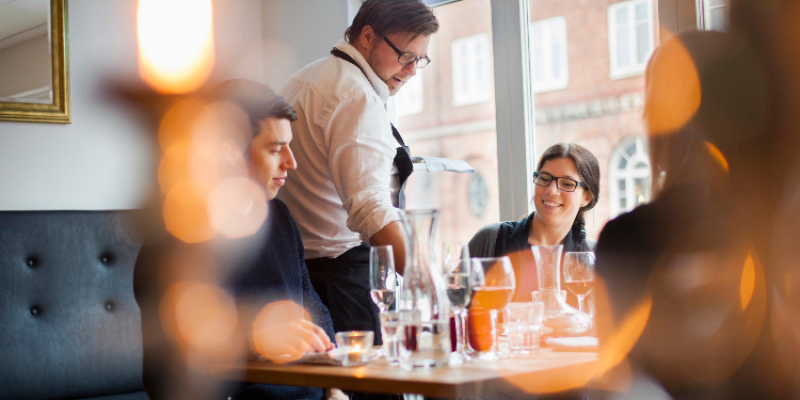
For anyone settling in this compact Walloon city, eating well is less about navigating a complex restaurant scene and more about understanding a few consistent patterns: which market runs on which day, what the Belgian brasserie format means in practice, and where to find the local products that make Namur's food identity distinct. The city has genuine specialties, petits-gris de Namur (locally raised garden snails) and pèkèt, a Walloon juniper spirit that doubles as a cooking ingredient, alongside a bistronomy scene that has grown with the Université de Namur's student population and a price range spanning from a EUR 4 weekday canteen lunch to multi-course gastronomic menus.
Brasseries, weekly markets, and a café scene anchored in the historic center define daily eating in Namur. The city is not organized around destination dining; it runs on neighborhood rhythms: a market on Saturday morning, lunch near the university, a beer and a plate on a terrace after work. The Université de Namur (UNamur) gives the city a large student population that keeps everyday eating options priced accessibly, while a visible contemporary bistronomy scene adds ambition without disrupting the city's fundamentally relaxed character.
The format that shapes most of this culture is the Belgian brasserie: part bar, part café, part restaurant, serving drinks, snacks, and full meals throughout the day without separating them into rigid service windows. A plate of mussels at 15:00 or a coffee nursed through the afternoon are equally normal. This food-all-day approach means newcomers rarely need to time their arrival precisely; the question is where to go, not when.
Café and terrace culture reinforces this pattern. A cappuccino at a central café costs around EUR 3.81, and the historic core is dense enough with coffee spots, tea rooms, and brunch venues that they function as accessible social spaces for people still finding their footing in the city. Weekend food habits are strongly shaped by the city's five district markets, with Saturday morning at the Marché du Bord de l'Eau along the Sambre serving as the main fresh-food event of the week.
Trends in the dining scene lean toward seasonal and locally sourced cooking. Bistronomy-format restaurants have appeared across the center and in residential districts like La Plante, and the UNamur canteen's use of Nutri-Score labeling for its daily hot meals reflects a broader shift toward health-conscious weekday eating, particularly among the city's student community.
Namur's food identity is anchored in a small cluster of products that are genuinely specific to the city and province. The most iconic savory specialty is petits-gris de Namur, locally raised small grey garden snails prepared in the Namur style. They appear on menus at Le Temps des Cerises and Balthazar, both listed by the Visit Namur tourist office, making them a practical first target for anyone who wants to eat something distinctly local. A closely related preparation is cassolette namuroise, a casserole of rice, kidney, and veal cooked au pèkèt, with the traditional Walloon juniper spirit integrated directly into the dish. At Le Temps des Cerises, this cassolette is listed as a house specialty alongside the snails, illustrating how the spirit moves from the glass into everyday Walloon cooking.
Pèkèt (also written péket) deserves its own explanation. It is Wallonia's equivalent of jenever: a juniper-forward grain spirit usually drunk neat or short, not mixed into a long drink the way gin often is. The Confrérie du Pèkèt d'Namur et de ses Escargots formalizes its role as a heritage product, pairing it with snails as the dual signature of the city's gastronomic identity. Both the spirit and the snails feature together on traditional menus and in food tourism experiences organized around Namur's gastronomy.
Beyond the savory, Namur has two sweets worth tracking down. Biétruméé, a butter caramel and chocolate confection created in 1956, and Baisers de Namur ("Namur kisses") are both findable through chocolatiers and specialist food shops in the center. Neither requires a special trip; they appear alongside Belgian pralines but represent something specific to the city rather than the broader Belgian chocolate tradition.
The most visible locally branded beer is Blanche de Namur, a pale wheat beer brewed in the Namur province, available in nature and roséee versions in 25 cl servings. It turns up on restaurant and café menus across the city without any effort on the diner's part. Belgium's culture of pairing specific beer styles with food extends actively to Namur: the city's annual Beer Summer Tour links local dishes with craft beers, reflecting a dining culture where choosing a beer to match a plate is as natural as selecting a wine elsewhere.
Also worth looking for in bakeries and caterers is avisance, a puff pastry filled with minced meat that Visit Namur identifies as a local specialty on food-focused itineraries through the city.
Fresh produce and artisan food products are distributed across five weekly district markets. The Marché du Bord de l'Eau on boulevard Frère Orban runs Saturday from 08:30 to 13:00 and is the central weekly anchor. The Belgrade market operates Monday from 08:00 to 13:00 at place du Bia Bouquet; Salzinnes runs Tuesday from 08:00 to 13:00 at place Louise Godin; Jambes covers Thursday from 08:00 to 13:00 around avenues Materne and Bovesse; and La Plante holds a dedicated organic, farm, and artisan market every Friday from 15:00 to 18:30 at the chaussée de Dinant sports hall car park.
Join the Namur community
Get regular tips and advice to make the most of your expat life
Types of dining in Namur
The Belgian brasserie or bistro is a kitchen open across the day, a full bar, a terrace in season, and a menu ranging from a light snack to a complete meal. Walk-ins are the norm at this level, service is unhurried, and the expectation is that a table can be held for a drink as comfortably as for a full dinner. Alongside these, a growing number of bistronomic restaurants in the center and in residential districts like La Plante offer seasonal, locally sourced cooking at mid-range prices in informal settings, combining culinary ambition with the same relaxed atmosphere.
At the upper end of the market, the Michelin Guide lists Namur restaurants, confirming that destination-level dining is available for special occasions. A concrete benchmark for gastronomic pricing is Lo à la Bouche in the greater Namur area (Wépion), where seasonal contemporary menus run from EUR 42 for 2 courses to EUR 77 for 5 courses, drinks excluded. This range represents the ceiling for regular dining in and around the city outside the most exceptional tasting menus.
Casual and quick-service dining is well represented throughout the center. Burgers, poké bowls, sushi, dürum, pitta, kebab, sandwiches, and ribs sit alongside Belgian chip shops (friteries), making them the default everyday option for students and young professionals. These formats are served by all three main delivery platforms, so they are accessible from home as well as on foot.
The most affordable weekday option in the city is the UNamur Arsenal restaurant at 11 Rue Bruno, open Monday to Friday from 11:45 to 13:30. A daily hot meal or vegetarian dish costs EUR 4 on presentation of a university card, and a street-food special runs every Thursday. For anyone affiliated with the university, whether as a student, staff member, or researcher, this is the most cost-effective sit-down lunch option in Namur by a significant margin. The restaurant also publishes weekly menus online, making it easy to plan ahead.
A café and bakery scene rounds out the picture. Le Pain Quotidien operates in Namur alongside independent cafés popular with university and local crowds for mid-morning and afternoon eating. Brunch and lunch cafés listed by Visit Namur cover the historic center and tourist areas, with terraces adding outdoor seating through the warmer months.
Neighborhoods for food in Namur
The highest concentration of restaurants, wine bars, and evening venues sits in Vieux Namur, the historic core around place du Marché, Rue des Brasseurs, and Rue des Tanneurs. This is where Belgian brasseries, bistros, bistronomic tables, cocktail bars, and gastronomic restaurants cluster most densely, and it is the natural first area for any newcomer who wants to test several styles of dining on foot. Rue des Brasseurs in particular is the main going-out street, combining bars, wine bars, and evening venues with restaurants; a single walk down this street gives a practical sense of the city's eating-out register.
Across the Meuse, Jambes is where waterside and terrace dining concentrates. Restaurants with river views or proximity to the Meuse are the draw here, along with the Thursday district market on avenues Materne and Bovesse. Jambes also hosts the large annual Marché de l'Ascension on rue d'Enhaive, which draws over 120 traders selling Walloon terroir products, crafts, and market food; it is one of the city's major food events of the year.
South of the center, La Plante is a quieter residential riverside district with bistronomic addresses and the city's dedicated organic market every Friday afternoon. For weekly food shopping with an emphasis on local and artisan produce, the Friday La Plante market at the chaussée de Dinant omnisports car park is the most focused option in Namur.
The Citadelle district combines event dining and destination restaurants. The Citadelle hosts the annual Médiévales de la Citadelle, which includes an artisan food market among its activities, and the NE5T complex is home to the Intuition restaurant, a seasonal produce-led dining address suited to special-occasion meals with a view.
For budget weekday lunch, the area around UNamur's campus and Rue Bruno is where the Arsenal university restaurant operates alongside a concentration of budget lunch spots, sandwich shops, and quick-service cafés that serve the student population. The city's overall eating geography is compact enough that all these districts, including Jambes across the Meuse, are reachable on foot from the train station, which makes early exploration straightforward.
International cuisine in Namur
Belgian and Franco-Belgian brasserie cooking is by a considerable margin the dominant register in central Namur. Restaurants describing themselves as Belgian, French, Belgian-French, bistro, brasserie, or refined local cuisine form the backbone of the city's dining scene. Brasserie Métropole represents this mainstream well, and the Visit Namur restaurant listings reflect how heavily the center skews toward this tradition. For anyone arriving from a city with a wide international dining spectrum, Namur's range is closer to a well-served market town than a major capital: decent options exist, but the breadth of Asian cuisines in particular (beyond sushi and poké bowls) is limited compared with Brussels or Liège.
The strongest non-Belgian international offer in the city comes from Spanish and Mediterranean cuisines. Restaurant BCN specializes in Spanish and Catalan cuisine; La Cantina at Rue de la Halle 2 serves Mediterranean tapas; and Bocata et Caetera brings Iberian bocadillos, tapas, and Spanish products to the city center. Taken together, these three addresses make Spanish-influenced dining the most reliably available international option outside the Belgian mainstream, and a reasonable first port of call for anyone wanting to eat something other than Belgian or French food.
At the high end of the meat dining market, Bos Taurus in central Namur positions itself around premium cuts from multiple origins: Rubia Gallega from Spain, Japanese Wagyu, and Belgian terroir beef. This approach, combining Belgian identity with internationally sourced premium produce, represents a growing fusion tendency in the city's more ambitious restaurant addresses.
Italian cuisine is available at Ristorante Gentile, which offers a weekday chef's lunch of three courses (starter, main, and dessert or coffee) at EUR 27 per person. This is one of the more competitive mid-range weekday lunch menus in the city for the quality level it represents, and a useful benchmark for planning a business lunch or a more relaxed midday meal without the full cost of an evening menu.
French formal dining is present at the upper tier via the Michelin Guide's Namur listings, which include destination-level French-style cuisine for special occasions above and beyond the brasserie register.
Grocery shopping in Namur
For a full weekly shop with emphasis on fresh produce, local products, and organic options, Delhaize Salzinnes is the main mid-to-higher-range supermarket in the city. The store carries a fresh meat counter, bakery, fruit and vegetables, organic products, Belgian and local specialty items, and fresh smoothies, making it the most comprehensive option for a household shopping regularly rather than topping up. In terms of range and quality positioning, it is comparable to a mid-tier grocery chain in a large North American city or a quality-focused supermarket in the UK.
ALDI at Boulevard d'Herbatte 259 is the city's main budget-discount option, stocking everyday essentials including fresh fruit and vegetables, frozen food, fish, groceries, and hygiene products with daily deliveries to store. The product range and pricing are consistent with ALDI's discount-format stores elsewhere in Europe and North America. For anyone prioritizing cost over range, this is the practical first choice.
SPAR Express Namurand Spar Croisiers on Rue des Croisiers are both part of the Spar Colruyt Group network and operate as convenience-format stores: more limited in range than Delhaize but useful for top-up shopping in or near the city center without a special trip to a larger store.
The five district markets (covered in detail in the Local specialties section) supplement supermarket shopping, particularly for fresh produce and artisan food. For organic-only sourcing, the La Plante market on Friday afternoons is the city's dedicated point.
Online grocery delivery operates in Namur through two main channels. Uber Eats Grocery covers the city center with live order tracking, while Deliveroo partners with Carrefour Express at Namur Station for grocery orders on a minimum order of EUR 5. Both allow same-day delivery of everyday food items, which is particularly useful during a first week in the city before a regular supermarket routine is established.
Eating out costs in Namur
A solo budget restaurant meal in Namur averages around EUR 21, while a fast-food or quick-service combo meal runs approximately EUR 11.50, making the latter the cheapest counter-service option for a quick lunch. These figures place everyday eating within a range that is manageable even on a student or entry-level budget, particularly when combined with home cooking from market or supermarket shopping.
For a sit-down weekday lunch at a quality restaurant, the EUR 27 three-course chef's menu at Ristorante Gentile (starter, main, dessert or coffee) represents a clear price-to-quality benchmark in the mid-range. A three-course dinner for two at a central Namur restaurant averages around EUR 90 in total, which is broadly comparable to a mid-range restaurant dinner for two in a major northern European city, though Namur's lower-end options are noticeably more affordable than their equivalents in larger capitals.
At the gastronomic level, Lo à la Bouche (Wépion, greater Namur area) prices its seasonal contemporary menus from EUR 42 for 2 courses to EUR 77 for 5 courses per person, drinks excluded. This is the upper tier for regular dining in the Namur area outside exceptional tasting experiences.
Drinks are priced accessibly. A domestic draught beer (0.5 liter) averages EUR 2.50 at a bar or restaurant, which is among the most affordable standard drinks at the price level of Belgian city dining generally. A cappuccino or regular coffee at a central café costs approximately EUR 3.81.
The absolute floor for eating out is the Arsenal university restaurant, where a hot daily meal or vegetarian dish costs EUR 4 on presentation of a university card. Students, university staff, and affiliated researchers eating there on weekdays can keep their daily food costs well below any other sit-down option in the city.
Dietary requirements in Namur
Vegetarian eating is straightforward in Namur. A daily changing vegetarian dish is available at the UNamur Arsenal restaurant, multiple restaurant directories identify vegetarian-friendly venues in the center, and individual menus such as Bayti mark vegetarian dishes clearly. Newcomers should expect at least one vegetarian option on most menus, with dedicated venues available for those who eat vegetarian exclusively.
Vegan dining is available but not universal. Végétalicia and HUGGYS Namur are the dedicated or strongly vegan-friendly addresses in the city. Beyond these, vegan dishes appear mainly at selected burger spots, healthy-food cafés, Middle Eastern restaurants, and mixed-cuisine venues rather than across all restaurants. It is worth checking the menu before booking rather than assuming availability.
Halal dining is available at a moderate level. The Takeaway.com halal category for Namur lists options including KFB, Pita Maison Namur, and Snack Halal, among others. Most of these are self-labeled rather than formally certified. Diners who require formally certified halal should ask the restaurant directly about meat sourcing and preparation before ordering; public listings rarely display a certification document, and the distinction matters for observant diners.
Gluten-free options exist but are selective. HUGGYS Namur advertises gluten-free preparations, and Bayti marks gluten-free dishes on its Namur menu. Belgian law requires food businesses to declare 14 regulated allergens for both packaged and restaurant food, including gluten. In practice, however, restaurant implementation varies: some venues publish allergen pages or train staff to provide information verbally, while others rely on customers asking. For coeliac disease or any serious allergy, the safest approach is to call the restaurant before arriving and repeat the restriction clearly when seated. The relevant framework is published by the SPF Santé publique (Belgian Federal Public Health Service).
When communicating dietary requirements, French is the working language in Namur restaurants. Useful phrases: "Je suis végétarien/végétarienne"; "Je suis végane"; "Est-ce que la viande est halal ?"; "Je dois manger sans gluten"; "Je suis allergique à..."; and "Pouvez-vous vérifier les allergènes et la contamination croisée ?" (cross-contamination). For severe allergies, combining a pre-arrival call with a verbal reminder when seated is the most reliable protocol.
Food delivery in Namur
Three major delivery platforms operate city-wide in Namur: Uber Eats, Deliveroo, and Takeaway.com (the Belgian market name of the Just Eat Takeaway group, which operates the same app and ordering process as Just Eat in other European markets). Tipping for delivery riders is optional on all three platforms.
Grocery delivery is available through both Uber Eats and Deliveroo. Uber Eats covers grocery orders through its city category, while Deliveroo partners with Carrefour Express at Namur Station for grocery items on a minimum order of EUR 5. Takeaway.com also lists grocery options for Namur alongside its restaurant offer. These channels are useful for covering food shopping from home before a regular supermarket routine is in place.
Reservations are recommended at bistronomic, gastronomic, and scenic-setting restaurants in Namur. The main booking platform is TheFork, which lists bookable Namur restaurants including La Table du Royal Snail, Equilibrio, and Cavo. Many Namur restaurants, including Bos Taurus, use their own direct online reservation forms rather than a central platform, so checking a restaurant's own website first avoids the assumption that TheFork covers everything. For brasseries and cafés, walk-ins are standard and reservations are not expected.
Service style in Namur restaurants is relaxed and unhurried. Staff do not check in between courses, substitutions are less automatic than in North American restaurant culture, and meals move at a slower pace by design. This is the standard Belgian approach at brasseries and bistros and is not a sign of inattentive service; it is what the format intends.
Card payment is accepted in practically all Namur restaurants and cafés. Belgian businesses cannot legally refuse electronic payment, and debit cards, Visa, Mastercard, contactless, and electronic payment methods are all widely accepted. A minority of market stalls and small independent venues may still prefer cash, so carrying a small amount for market days is practical. Bill splitting is common and handled straightforwardly: simply tell the server before the bill arrives.
Tipping is optional. Menu prices in Belgian restaurants legally include service and tax (service compris), meaning staff are paid regular employment salaries rather than relying on gratuities as a wage supplement. The common practice is to round up the bill or leave a few euros for particularly attentive service. If a card terminal prompts for a tip, declining is entirely socially acceptable and causes no awkwardness. The practical range, when leaving something, is 5-10% at most.
Namur is not a late-night dining city. Restaurant dinner service typically starts around 18:00-18:30, with kitchens closing around 22:30 and some venues extending to 23:30 on Fridays and Saturdays. Arriving after 21:00 for a full dinner requires confirming in advance that the kitchen is still accepting orders: the venue may be open while the kitchen is not. For eating after 22:00, delivery platforms are a more reliable option than walking into a restaurant expecting a full sit-down meal.
Have questions about moving to Namur? Join the Expat.com community to connect with expats who've been through the process.
Frequently asked questions
Namur has a distinct set of local specialties centered on petits-gris de Namur (small grey garden snails prepared in the local style), cassolette namuroise (a casserole of rice, kidney, and veal cooked with pèkèt, the city's traditional juniper spirit), and avisance (puff pastry filled with minced meat, found at bakeries and caterers). On the sweet side, look for biétrumé, a butter caramel and chocolate confection created in 1956, and Baisers de Namur, a traditional local confectionery. Blanche de Namur, a local pale wheat beer brewed in the province, is the most visible regionally branded drink you will encounter across restaurant menus in the city.
Café and terrace culture is a genuine part of daily life in Namur's historic center, with beer cafés, brasseries, brunch spots, and tea rooms all active throughout the day. The format is relaxed: sitting with a single drink for an extended period is entirely normal, and cafés function well for solo newcomers and after-work meetings alike. A cappuccino at a central café costs around EUR 3.81, and a 0.5-liter draught beer averages EUR 2.50. Belgian brasseries in particular serve food across the full day alongside drinks, so there is no strict separation between a coffee stop and a meal.
Restaurant dinner service in Namur typically starts around 18:00-18:30, and the practical window for a sit-down meal is 19:00 to 20:30. Most kitchens close around 22:30, with some venues extending to 23:30 on Fridays and Saturdays. Arriving after 21:00 for a full dinner requires checking in advance whether the kitchen is still taking orders, as Namur does not have a strong culture of late spontaneous dining.
Regular eating out in Namur is manageable if you mix formats. A solo meal at an inexpensive restaurant costs around EUR 21, while a fast-food combo runs approximately EUR 11.50. A three-course weekday lunch at a mid-range venue is around EUR 27 per person, and a three-course dinner for two at a central brasserie averages EUR 90. Students and university-affiliated staff have access to a daily hot meal at the UNamur Arsenal restaurant for EUR 4, making it the most affordable weekday option in the city.
Card payment is accepted almost universally in Namur restaurants and cafés. Belgian businesses cannot legally refuse electronic payment, and most venues accept debit cards, Visa, Mastercard, and contactless payment. Some restaurants also accept restaurant vouchers. A small number of market stalls and independent casual spots may still prefer cash, so carrying a modest amount is practical for weekly market visits.
Tipping is not expected in Namur. Belgian menu prices legally include service charge and VAT, so no additional amount is owed at the end of a meal. The common practice is to round up the bill or leave a few euros for notably attentive service; skipping the tip entirely is acceptable and causes no offense. If a card terminal prompts for a tip, declining is standard and will not be noticed negatively.
Three major platforms operate city-wide in Namur: Uber Eats, Takeaway.com, and Deliveroo. All three cover the city center for restaurant meal delivery, and both Uber Eats and Takeaway.com also offer grocery delivery. Deliveroo additionally partners with Carrefour Express at Namur Station for grocery orders, with a minimum order of EUR 5. Reliability varies by neighborhood, time of day, and weather conditions; for important meals or larger groups, booking a table or collecting from the restaurant directly is the safer option.
The most common surprises are that service is deliberately unhurried (staff do not hover between courses and the pace of a meal is slower by design), menu prices already include tax and service charge so tipping is a voluntary gesture rather than an obligation, and most restaurants operate within fixed lunch and dinner windows rather than staying open continuously throughout the day. Walk-ins are generally fine at brasseries and cafés, but bistronomic and gastronomic venues benefit from an advance booking made through TheFork or directly via the restaurant's own website. Card terminals may prompt for a tip at payment; declining is entirely normal.
Most Namur restaurants are not open late. Kitchens typically close around 22:30, with some venues extending to 23:30 on Fridays and Saturdays. There is no established after-midnight dining culture in the city, so for eating after 22:00, the three main delivery platforms, Uber Eats, Takeaway.com, and Deliveroo, are the most practical option.
ℹ️
We do our best to provide accurate and up to date information. However, if you have noticed any inaccuracies in this article, please let us know in the comments section below.
I fell in love with words at an early age After a break to focus on my studies, I rediscovered the joy of writing while keeping a blog during my years between London and Madrid. This passion for storytelling and for exploring new cultures naturally inspired me to create Expat.com, a space for my own reflections as well as for anyone wishing to share their experiences and journeys abroad.