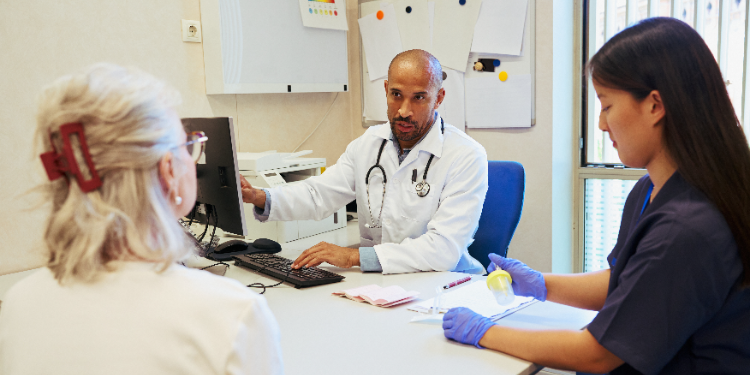
Mauritius is looking to accelerate the development of medical tourism and attract more international patients. According to official figures, over 4,000 international patients travel to the island each year for medical care or wellness stays. This number has been steadily rising since 2015, yet it remains modest compared with major regional hubs.
The island is banking on several key strengths: modern private clinics, an attractive lifestyle, a bilingual population, recognized political stability, and a strategic location at the heart of the Indian Ocean. The goal is clear: to position Mauritius as a regional healthcare hub capable of drawing patients from sub-Saharan Africa, neighboring islands, the Middle East, and the French territories of Réunion and Mayotte.
But behind this ambition lies a more complex reality of the Mauritian healthcare system, as expats living on the island know all too well. When it comes to healthcare in Mauritius, there is often a gap between the image being projected and the day-to-day experience of foreign residents.
Healthcare: A top priority for expats in Mauritius
For expats, the quality of medical care remains one of the most important factors to consider before settling in Mauritius long-term. Retirees, families with children, entrepreneurs, and digital nomads all want to know whether the infrastructure is reliable, whether they can access specialists quickly, what happens in an emergency, whether care is affordable, and whether some procedures might require traveling abroad.
In practice, the vast majority of expats rely almost exclusively on the private sector. While public hospitals are technically open to all residents, including foreigners with a valid residence permit, they continue to struggle with well-documented challenges: overcrowded services, staff shortages, sometimes lengthy wait times, limited equipment in certain specialties, and a language barrier for non-French speakers due to the prevalence of Mauritian Creole.
Private clinics generally offer a better experience: fast appointments, modern facilities, more personalized care, and easier communication in French or English. The main private facilities used by expats are concentrated in the north and center of the island, particularly in Moka and the Plaines-Wilhems area.
Get regular tips and advice to make the most of your expat life
A solid system for routine care
For general medicine and everyday healthcare needs, many expats feel that Mauritius offers a satisfactory standard of care. It is relatively straightforward to see a GP, pediatrician, gynecologist, dentist, dermatologist, or certain specialists such as cardiologists and ophthalmologists at private clinics. Appointment wait times are often significantly shorter than in France or Belgium.
Quick access to doctors is, in fact, one of the points most frequently highlighted by foreign residents. Julien, who has lived in Mauritius for 19 years, explains that he uses private services almost exclusively: "Yes, practically without exception, apart from a few times, like at the eye hospital in Moka." He also acknowledges a gradual improvement in the private sector: "After 19 years in Mauritius, you can see that care keeps getting better, and above all, that you can easily get an appointment with a specialist, something that has become very difficult in France."
This ease of access to medical care is now one of Mauritius's main draws for expats coming from countries where healthcare systems are under strain.
Private healthcare costs: What you need to know
One aspect that rarely gets discussed is the cost of private care in Mauritius. As a rough guide, a GP consultation costs between Rs 600 and Rs 1,200 (around €12 to €24), while a specialist consultation ranges from Rs 1,200 to Rs 3,000. A night in a private clinic in a single room can run anywhere from Rs 6,000 to Rs 15,000, depending on the facility.
Dental care is often one of the most cost-effective areas. A scale-and-polish costs between Rs 1,500 and Rs 3,500, and a dental implant between Rs 25,000 and Rs 45,000, roughly €500 to €900, about half the price you would pay in Europe. Julien speaks from personal experience: "I had a dental implant fitted a few years ago. From what I understood, it would have cost me twice as much in Europe."
Overall, these prices remain lower than those in Western Europe for equivalent care, but they can add up quickly in the event of a lengthy hospitalization or major treatment. This is the primary reason why international health insurance is considered non-negotiable by virtually all expats.
The picture becomes more complicated when medical needs are serious or highly specialized. Many expats are aware that in the event of a major health issue, whether a severe accident, cancer, complex cardiac surgery, neurosurgery, or an organ transplant, a medical evacuation abroad may be necessary. The most common destinations are Réunion, South Africa (particularly Johannesburg and Cape Town), India (Chennai and Mumbai), and sometimes Europe or Dubai.
This reality has bred a degree of skepticism among some foreign residents. Béatrice, an expat in Mauritius, feels that the country's medical tourism ambitions are premature: "In my humble opinion, it's too soon. Mauritians go abroad for treatment as soon as they can afford to, or Mauritian hospitals send them abroad when the current system can't treat them." Julien is even more direct: "Absolutely not, I wouldn't recommend it. Recent family experiences have made that very clear to me."
Retirees, in particular, consistently stress the importance of checking, before relocating, whether their medical condition can be adequately managed locally. Michel, who has been living in Tamarin for three years with his wife, sums it up well: "Before we left, we spent six months looking closely into the healthcare question. I've had cardiac monitoring for a few years, and that was our main concern. On the ground, we found a competent cardiologist at a private clinic; appointments are quick, and routine tests are done without any problem. But when my GP raised the possibility of a more complex procedure, he was very clear that it would be done in Réunion or South Africa. We knew that going in and had prepared for it. What matters is having good insurance and being realistic about what the island can and cannot handle."
These accounts reflect a reality often discussed quietly within expat communities: Mauritius can effectively meet many routine medical needs, but the system's limitations are clearly visible when it comes to complex conditions or procedures that require highly specialized facilities.
International health insurance is an absolute must
The vast majority of expats who settle in Mauritius long-term take out private international health insurance, which is considered non-negotiable for covering hospitalizations, surgeries, emergency care, and, above all, medical evacuations, which can cost between €15,000 and €30,000 without adequate coverage.
Annual premiums vary considerably depending on age and the level of coverage required. A young adult between 25 and 35 can typically get by with €800 to €1,500 per year for basic coverage, while someone between 40 and 50 should budget €1,500 to €3,000. For retirees aged 60 to 70, the bill often ranges from €3,000 to €6,000 per year, or more, depending on health status and medical history. These amounts increase significantly if you want comprehensive dental and optical coverage or maternity benefits.
Mauritius does not currently compete with major medical tourism destinations such as India, Thailand, or Turkey. Those countries have far larger hospital infrastructure, numerous international accreditations (including Joint Commission International), generally lower costs, and decades of experience welcoming foreign patients, with multidisciplinary teams well-versed in international protocols. Julien acknowledges this himself: "That's the ambition, at least for neighboring countries. For a European to come to Mauritius for surgery, there's still a long way to go."
That said, certain segments already appear well-positioned. Dental care, including implants, veneers, and crowns, is often half the price of equivalent treatment in Europe. Cosmetic and aesthetic surgery is already attracting some regional patients. Ophthalmology, covering refractive surgery and cataract treatment, is another promising niche. Wellness and convalescence stays, combining medical care with hotel accommodation in a tropical setting, are arguably the most natural fit for the island. Medically assisted reproduction is an emerging sector, still under the radar but worth watching.
One of the most serious structural challenges facing the Mauritian healthcare system is a shortage of qualified professionals. The country lacks specialist doctors across many disciplines, as well as nurses, healthcare assistants, and medical technicians in radiology, laboratory work, and anesthesia, and more broadly, experienced hospital staff. Several Mauritian healthcare professionals also leave the island to work abroad, particularly in the UK, Canada, and Australia, drawn by better salaries and stronger career prospects. This medical brain drain undermines the country's medical tourism ambitions: attracting foreign patients is difficult when human resources are in short supply.
While Mauritius has genuine strengths to build on in certain medical tourism segments, the reality on the ground is more nuanced and more honest than the picture sometimes painted by official communications. Living in Mauritius, therefore, requires a well-thought-out and forward-looking approach to healthcare planning.
A journalist, holder of the DALF C1 and C2 and a diploma from the University of Mauritius, I have nearly twenty years of writing experience. After six years in the Mauritian press, I joined Expat.com, where I have been working for over a decade, including five years as editorial assistant, and now as editorial manager.