Chaotic streets for drivers and pedestrians
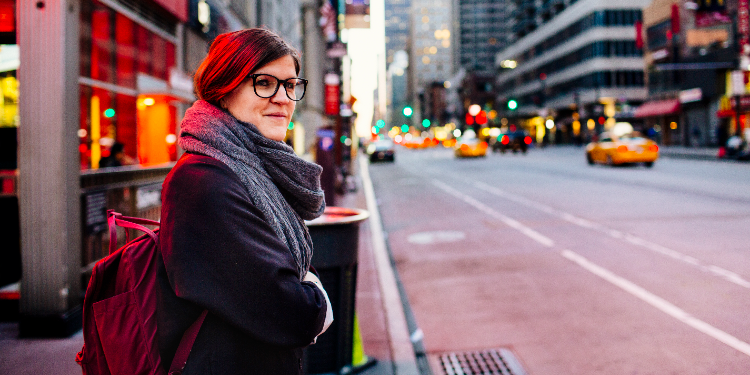
For expats who drive, getting behind the wheel in a large, unfamiliar city can be intimidating. Not only might the traffic rules be different, but the city's layout and the driving habits of the locals can add to the challenge.
Many expats in China express their surprise at the number of mopeds and bicycles in major Chinese cities. One English expat says that he finds it scary to be a pedestrian in Beijing because mopeds, many of which are for food delivery men, “tend to drive on the pavement.” One Canadian expat in Colombia also bemoans that motorcycle drivers in major Colombian cities are surprisingly reckless, which has made him realize the importance of “watching out crossing the street.”
Similarly, many expats in Jakarta have been surprised by the amount of bikes, scooters, and bicycles on its streets, with one expat even saying she's seen “4 people on one bike.” Another expat jokes that “traffic lights are treated as decorations” in the city, although he adds that it's “all part of the fun of being an expat in Indonesia.”
In sprawling cities, parking can also be a headache. One expat in Tianjin, a city close to Beijing, says that it is extremely difficult for him to find a parking space downtown. Even though Tianjin has a population of 14 million, nearly double that of London or New York, it is considered only a midsize city in China because of the sheer scale of cities there.
Sometimes, the chaos of driving in a big city isn't about traffic but rather the climate. When interviewed, one Mauritian expat in Oslo shared his surprise at the difficulty of converting his driver's license to an international one, because it snows heavily in the city's harsh winters. He had to learn how to drive from scratch all over again to know how to avoid skidding on icy streets or getting his car stuck in layers of snow. Fortunately, he finds public transit in Oslo to be very affordable and practical, so he does not have to drive often.
It's not always negative: in many big cities abroad, expats are impressed by the efficiency of public transit systems that make life easier for hundreds of thousands, or even millions, of daily commuters. One English expat in Shenzhen, a Chinese metropolis with nearly 18 million residents, the third most populous city in the country after Beijing and Shanghai, finds that the public transit system there helps make the city “a magical place.” He says that he never has to wait more than five minutes for a bus or train, and that as an expat, he never gets lost because there are “voice recordings in English and Chinese telling you the name of each stop.” He finds the bilingual nature of street signs and of the information on digital screens in major Chinese cities to be highly accommodating for expats.
Technology and digitalization in everyday life
Expats were also surprised by the extent of digitalization and technology, or the lack thereof, in major cities abroad. One Australian expat on the Expat.com forum was surprised to find that bureaucracy in Berlin is still largely paper-based, despite being the capital of the most powerful country in the European Union. In his opinion, reliance on paper-based bureaucracy in such a sprawling city with close to 3.5 million people, including nearly 900,000 expats, is “labor-intensive and prone to human error.”
Expats in the Gulf countries, meanwhile, are often astonished by how high technology and apps permeate every aspect of daily life. On the Expat.com forum, a French expat in Doha, the capital of Qatar, was surprised by how convenient it is to pay water and electricity bills through Kahramaa, the app of the Qatar General Electricity & Water Corporation. Ordering food from home in Doha has been very easy, because he not only has access to Uber Eats, but also to plenty of local/regional apps such as Talabat and Rafeeq.
Some cities might have technological peculiarities that might look strange or even funny. San Francisco, located close to Silicon Valley, has many driverless Waymo cars and delivery robots. New expats in San Francisco might find it odd to see multiple driverless cars in a single day, or even hail a driverless taxi! On the pavement, they'll come across not only people and animals, but also small robots puttering past to deliver tacos and burgers to people's houses. Sometimes, self-driving Wymo taxis and delivery robots even crash into each other, which must be a strange sight to behold!
Expats in Tokyo might also be surprised to find that the staff stacking shelves in grocery stores are not people… but robots! Since 2020, to address the staff shortage in an aging population, Japanese grocery chain franchises such as FamilyMart and Lawson have begun using Model-T robots in Tokyo and a few other major cities. It is semi-autonomous and can be controlled remotely. So, if you're an expat grabbing ramen at your local convenience store, don't be startled if a robot whirs up next to you, restocking the shelves with precision.
The cost of living varies wildly across big cities
Expats have been surprised by how high or low the cost of living can be in some major cities around the world. On the forum of Expat.com, one American expat in Barranquilla, the fourth largest city in Colombia, which is home to over 1 million people, shares that he was surprised by how “inexpensive manual labor is” there. This would include the services provided by construction workers, cleaners, domestic workers, cooks, electricians, and plumbers.
In recent years, many Americans have been moving to South American cities to enjoy the lower cost of living down south. Mexico City, Medellin, Rio de Janeiro, and others have become favorite destinations among American expats, especially digital nomads. According to Living Cost, the average monthly cost of living for one person in Barranquilla, where the American expat who gave a testimonial lives, is 789 USD, which makes it among the 30% cheapest big cities around the world.
At the other end of the spectrum, some cities have shocked expats with how expensive they are. On the Expat.com forum, a prospective American expat inquiring about the cost of living in London was astonished to find that £2,000, equivalent to $ 2,500, would not be enough for a family with more than two children to survive in the capital.
Expats on a budget in British cities might feel relieved to discover the existence of supermarket “meal deals.” These are ubiquitous in every supermarket, whether it's Tesco, Sainsbury's, Morrison's, Marks & Spencer, Waitrose, or Boots. They are meals that cost only between £3-6 (4-8 USD) and include a main (often a sandwich), a snack (fruit, chocolate bar, etc.), and a drink. Even if they are small, they remain balanced and filling. As a lunch-on-the-go, they are a quintessential feature of life in busy and expensive British cities like London.