

Living in New York: the ultimate expat guide
Everything you need to know for a successful life in New York.
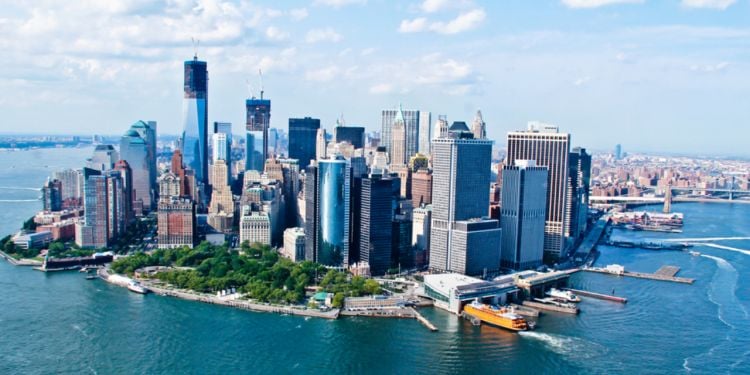
New York City is one of the world's most dynamic metropolises, home to nearly 8.5 million residents across five distinct boroughs: Manhattan, Brooklyn, Queens, The Bronx, and Staten Island. The city's exceptional diversity means you'll encounter over 800 languages spoken here, creating a truly international atmosphere. From world-class museums and Broadway theaters to iconic landmarks like Central Park and the Statue of Liberty, New York provides endless cultural opportunities. While the cost of living ranks among the highest globally, the city compensates with exceptional career prospects, comprehensive public transportation, and neighborhoods suited to every lifestyle and budget.
5 good reasons to move to New York City
- Unparalleled career opportunities: NYC hosts headquarters for numerous Fortune 500 companies and leads in finance, technology, healthcare, media, and creative industries, with average salaries significantly above the national median.
- World-class cultural scene: Over 150 museums, 500 art galleries, Broadway shows, Lincoln Center performances, and year-round festivals celebrating global cultures.
- Exceptional diversity: Experience authentic cuisines, neighborhoods, and communities from virtually every country, creating a welcoming environment for international residents.
- No car necessary: The extensive subway and bus network operates 24/7, complemented by bike lanes, ferries, and walkable neighborhoods, eliminating the need for vehicle ownership.
- Elite educational institutions: Home to prestigious universities including Columbia, NYU, and Cornell Tech, plus exceptional public and private schools for families with children.
Source: NYC Planning
Working in New York City
New York City's economy ranks among the world's largest. The job market offers exceptional opportunities across diverse sectors, though competition remains fierce.
Key industries and employment
Finance and banking are key pillars of New York City's economy, with Wall Street home to the world’s most influential stock exchanges. The technology sector is thriving, with major companies such as Google, Facebook, and Amazon maintaining significant operations in the city. Healthcare is another major employer, with a large network of hospitals including Mount Sinai Health System, NYU Langone, and NewYork-Presbyterian leading the field.
Work permits
Non-U.S. citizens must secure proper work authorization. The most common route, the H-1B visa, requires employer sponsorship and is subject to a lottery. Alternatives include the L-1 visa (intracompany transfers), the O-1 visa (extraordinary ability), and the E-2 visa (investors).
Unemployment Rate | 4.9% (August 2025) |
Average monthly salary (net) | $5,392 |
Top sectors | Healthcare, finance, technology |
Data correct as of December 2025.
Sources: NY Dept of Labor, Numbeo
Work in New York
New York's sheer size and the scope of the city's economy mean that there is an incredibly diverse and exciting job market, with ...
Higher education & universities
New York City hosts over 100 colleges and universities, and many rank among the world's best.
Major universities
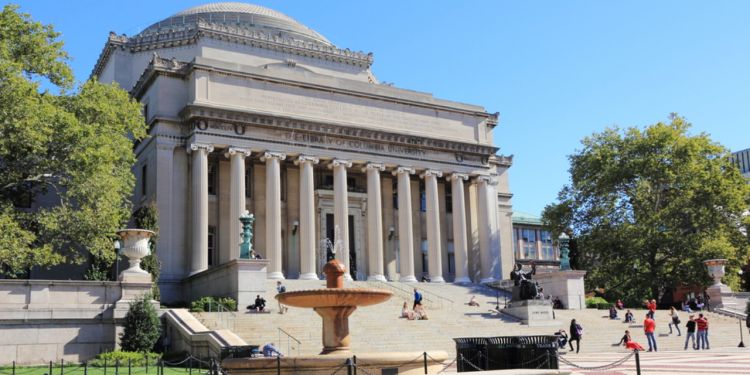
Columbia University, an Ivy League institution in Manhattan, offers undergraduate and graduate programs across numerous disciplines. The university serves a diverse international student body and provides need-based financial aid. New York University (NYU) operates multiple schools across Manhattan and Brooklyn, enrolling a large and diverse student body including substantial international populations. Many undergraduates receive financial aid. NYU's Stern School of Business, Tisch School of the Arts, and engineering programs enjoy international recognition. Other notable institutions include Cornell Tech on Roosevelt Island specializing in technology and entrepreneurship, The New School, Fordham University, and the CUNY system offering more affordable public education options.
Applications and requirements
Undergraduate applicants for universities in New York have to submit academic records, recommendation letters, personal essays, and often standardized test scores (though many schools now make testing optional). Graduate applicants need completed bachelor's degrees, relevant entrance exam results, and statements explaining their academic goals. International students must prove English language ability through TOEFL or IELTS exams. Most universities accept applications between November and January for programs starting the following September. To obtain a student F-1 visa, you'll need your university acceptance letter and proof you can cover tuition and living expenses.
Sources: Columbia University, NYU
Study in New York
New York City has some of the best universities in the country, from world-famous private schools to more affordable public options. Studying here is ...
Schooling for children
New York City operates the largest public school system in the United States, serving over 1 million students across approximately 1,800 schools. Expat families choose between public schools (free), charter schools, private institutions, and international schools.
International and private schools
Among the options are: United Nations International School (UNIS) offers Pre-K through Grade 12 with IB programs. British International School of New York follows British curriculum for ages 3-18, while Lycée Français de New York provides French-American bilingual education. Other options include International School of Brooklyn, Nord Anglia International School, and Dwight School. Private school tuitions typically range $30,000-$60,000 annually. Many offer financial aid.
Enrollment process
Applications typically begin a year before intended enrollment. Most schools require campus visits, parent and student interviews, previous academic records, and assessment tests. International families should also prepare passport copies and visa documentation. Popular schools fill quickly, so apply early. Contact individual school admissions offices for specific requirements and deadlines.
Sources: NYC Department of Education, UNIS, British International School

International schools in New York
New York City is one of the most international places you could live, and it's no surprise that the city attracts people from all over the world, ...
Housing & neighbourhoods
Finding accommodation in NYC is challenging and expensive, with only around one-third of residents owning homes. Most expats rent, with prices varying dramatically by borough. Manhattan commands the highest rents, while outer boroughs are more affordable. Act quickly when viewing apartments—desirable units rent within days.
Where expats live
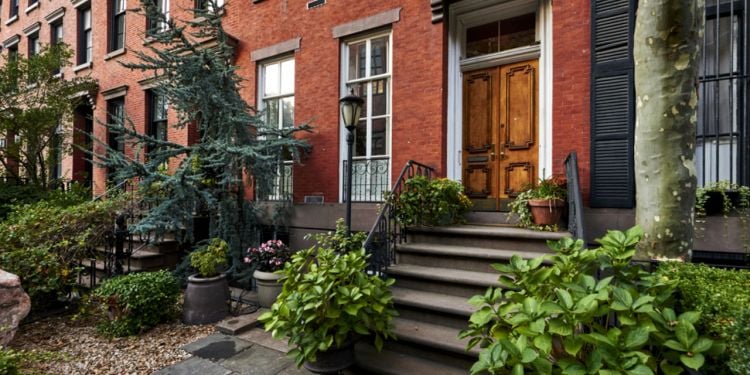
Manhattan neighborhoods popular with expats include the Upper West Side (family-friendly with parks), Upper East Side (excellent schools and museums), Greenwich Village (artistic character and cafés), and Tribeca (spacious lofts and waterfront access). Brooklyn attracts families to Williamsburg (trendy restaurants and nightlife), Park Slope (tree-lined streets near Prospect Park), and Brooklyn Heights (historic brownstones with Manhattan views). Queens offers exceptional diversity in Astoria (international dining), Long Island City (modern developments and waterfront), and Forest Hills (suburban feel with gardens).
Rental process and rental costs
Applications require proof of income, employment verification, tax returns, and credit reports. International applicants without U.S. credit may need guarantors or prepayment. Leases typically run for 12 months.
Rent of a 1-bedroom apartment in the city center | $3,000 - $5,500/month |
Rent of a 3-bedroom apartment in the city center | $5,000 - $12,000/month |
Data correct as of December 2025.
Source: Numbeo
🔍To learn more
Leisure, culture & things to do
New York City offers unparalleled cultural and recreational opportunities with hundreds of museums and art galleries, countless performance venues, and year-round festivals. Many attractions offer free or discounted admission on specific days.
Museums, arts and culture
The Metropolitan Museum of Art houses over 2 million works spanning human history and welcomes visitors with flexible admission policies. MoMA showcases modern and contemporary masterpieces, offering special evening hours for extended access. American Museum of Natural History fascinates all ages with dinosaur fossils, cultural exhibits, and planetarium shows. The Guggenheim combines modern art with Frank Lloyd Wright's iconic spiral architecture. Broadway presents world-famous theatrical productions, with same-day tickets available through TKTS booths in Times Square. Lincoln Center hosts the Metropolitan Opera, New York Philharmonic, and New York City Ballet. Off-Broadway theaters present innovative, intimate productions throughout the city. Comedy clubs like the Comedy Cellar showcase both established stars and emerging talent nightly.
Parks and recreation
Central Park spans 843 acres offering walking paths, boating lakes, free summer concerts, and seasonal activities from ice skating to outdoor theater. The High Line was once an elevated railway that has now been turned into an innovative linear park with gardens and Hudson River views. Sports fans follow the Yankees and Mets for baseball, Knicks and Nets for basketball, and Rangers and Islanders for hockey. Outdoor enthusiasts enjoy kayaking on the Hudson River, cycling through dedicated park lanes, and rock climbing at indoor facilities. Summer beaches at Coney Island and Rockaway offer oceanfront relaxation.
Sources: Metropolitan Museum, NYC Parks
🔍To learn more
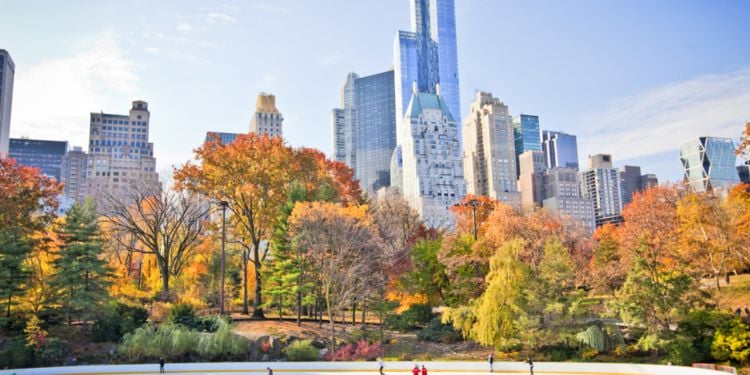
Leisure activities in New York City
Regardless of the season or the weather, New York is a city that remains both vibrant and lively ...

Things to do in New York with your partner, your family or your friends
New York is a world-class city that attracts millions of tourists a year. From galleries to live ...

Sports activities in New York
New York City is entering a new era of sport, with major investments in venues, community programs, ...
Daily life
New York operates 24/7, with businesses and entertainment available around the clock. The multicultural environment means encountering different languages and cuisines daily. Most expats adapt within months.
Public transportation
The Metropolitan Transportation Authority (MTA) operates one of North America's largest transit systems. The subway runs 24/7 across 472 stations covering all boroughs except Staten Island. The contactless OMNY payment system accepts credit cards and mobile payments for convenient tap-and-go access, with automatic fare capping that rewards frequent riders. Buses complement the subway service, reaching neighborhoods with limited train access. NYC Ferry provides scenic waterfront routes connecting Manhattan, Brooklyn, and Queens. The Long Island Rail Road and Metro-North Railroad serve suburban areas. Citi Bike offers thousands of shared bicycles at docking stations across all five boroughs.
Cultural habits
New Yorkers value efficiency and direct communication. Tipping is standard: 15-20% at restaurants, $1-2 per drink at bars. Dining out is popular, with late dinners (8-10 PM) common. Weekend brunch is a social institution. For those who want to get or stay fit, there are plenty of gyms, yoga studios and green spaces.
🔍To learn more
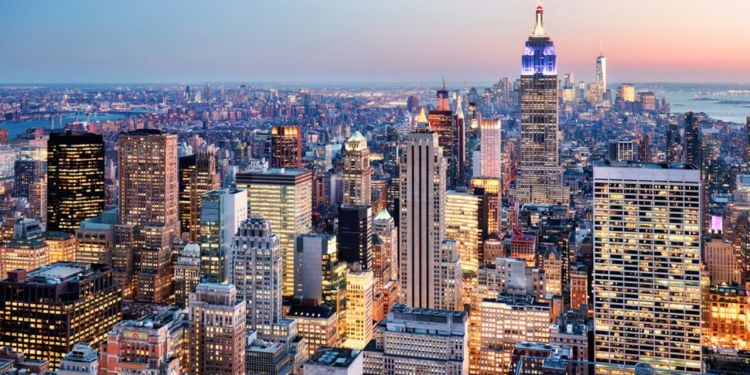
Living in New York
One of the most iconic cities in the world, New York is instantly recognizable to most of us from ...

Networking in New York
With over 8.9 million residents and countless newcomers arriving each year, New York can feel both ...
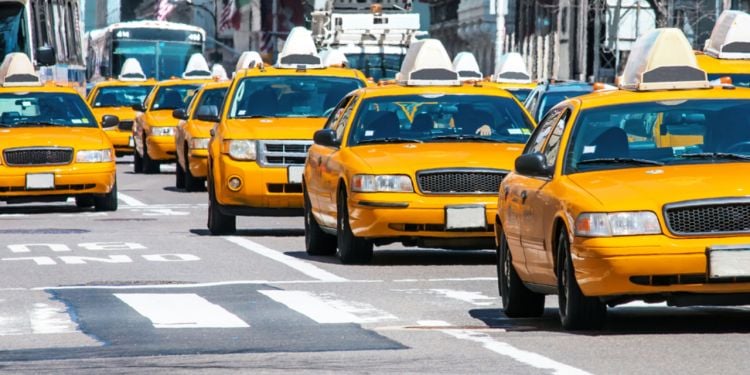
Getting around New York
Navigating the bustling metropolis of New York as an expat can be intimidating. The city's transportation network is huge, including 24-hour ...
Cost of living
The cost of living in New York City consistently ranks among the world's highest. Housing is the most significant expense, consuming a large slice of monthly incomes. However, costs vary substantially by borough and lifestyle choices.
Monthly expenses for a single person
Rent of a 1-bedroom apartment in the city center | $3,000 - $5,500 |
Utilities | $115 - $340 |
Groceries | $400 - $500 |
Data correct as of December 2025.
Monthly expenses for a family of four
Rent of a 3-bedroom apartment in the city center | $5,000 - $12,000 |
Utilities | $250 - $400 |
Groceries | $1,000 - $1,500 |
Data correct as of December 2025.
Sources: Numbeo, Housing Anywhere
In short
New York City delivers an extraordinary expatriate experience for those willing to embrace its intensity. The unmatched career opportunities, particularly in finance, technology, healthcare, and creative industries, attract ambitious professionals from nearly every nation. Cultural riches—world-class museums, Broadway theaters, diverse cuisines, and vibrant neighborhoods—provide endless opportunities for exploration. Yes, the cost of living ranks among the world's highest, but salaries typically compensate. If you thrive on energy, diversity, and opportunity, New York will exceed expectations. For more information, read our informative guides and join the Expat.com New York City forum to ask questions and connect with others who've made this remarkable city their home.
We do our best to provide accurate and up to date information. However, if you have noticed any inaccuracies in this content, please contact us.


News & testimonies

Freelancer Expat: Double Delight
Expatriation involves a great deal of adventure and uncertainty. Freelance work too, comes with a lot of freedom, flexibility, and creativity — all leading to an unconventional reality that can make or break you. Moving abroad is already a challenge when there's a solid employment contract waiting for you, let alone when there's no company, support network of colleagues, and steady income. But you know with all your heart that freelancing is what you want to be doing, and you want to be doing it abroad. Here are a few things to consider before you pack your laptop.

How does the United States define “extraordinary talent”?
In 2026, the United States began enforcing a new set of measures aimed at “restricting the entry of foreign nationals and protecting the United States.” President Trump has once again tightened immigration policy: visa procedures have been frozen in more than 70 countries, and negotiations are underway to require visa applicants to disclose their social media accounts. When it comes to visas, a fresh wave of anxiety is spreading among those classified as “extraordinary talents.” Recent cases suggest that certain categories of applicants may now be favored over others. Here's a closer look at what's happening.

US suspends immigrant visas for nationals of 75 countries and introduces visa bonds
Immigrant visa suspension, visa bonds, tighter H-1B rules and higher entry barriers: the United States is pressing ahead with policies aimed at curbing both legal and illegal immigration. What will the “American Dream” look like in 2026, and what should expats expect?

REAL ID: How to get the new US driver's license
Much more than just a driver's license, the American Driver's License serves as a genuine form of identification. The recent introduction of the REAL ID Driver's License—a true driver's license identity card—proves it once again.
Essential services for your expat journey