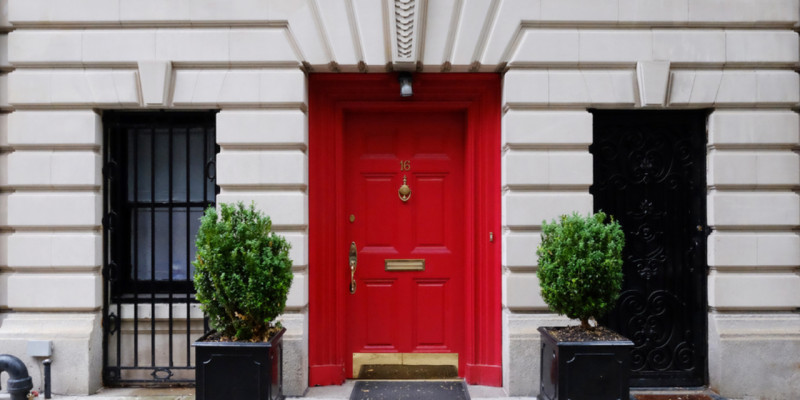
Purchasing property in New York is a huge undertaking, particularly for foreigners navigating the city's fast-moving and high-priced real estate market. New York is the largest city in the United States and one of the most expensive cities in terms of real estate globally. Currently, Manhattan's median price exceeds USD 1,600 per square foot, and average prices across New York City now range between USD 740 and USD 800 per square foot in prime locations, with lower values in the outer boroughs. Before going ahead with the purchase, it is essential to invest some time in real estate market research. Knowing the necessary procedures, where you can go for help, and being aware of the difficulties you may encounter will be of incredible help throughout your purchasing process.
What expats need to know before buying property in New York
Luckily, foreigners can freely buy real estate in New York, but ownership doesn't grant residency or work rights. You'll still need a valid visa if you plan to live in the US long-term. Common options include H-1B, L-1, E-2, or EB-5 investor visas, though there's no specific “property owner” visa.
Getting a mortgage as a non-resident is possible but stricter, often requiring a 30–40% down payment, an ITIN, and proof of overseas income. Major banks like HSBC and Citibank have expat programs.
Expect standard US property taxes and closing costs (3–6%), plus potential tax on any rental income. A real estate attorney is essential to handle contracts, title checks, and fund transfers.
If buying a co-op, be ready for extensive board approval and financial disclosures—condos are usually more flexible for international buyers (more on these options later).
Navigating the housing market as an expat can be made a lot easier with the help of a licensed realtor and a good lawyer.
In 2025-2026, the average price per square foot in New York is $740 - $800. However, this pricing varies a lot depending on the neighborhood. As mentioned above, the per-square-foot price in Manhattan can be double this amount.
In addition to the purchase price, there are several other fees involved in buying a property in New York. Closing costs have risen to an average of USD 12,000–15,000 for a USD 400,000 home loan, reflecting higher legal and administrative expenses. Transfer taxes for buyers now typically range from 1.4% to 2.9%, and for sellers from 7% to 9.5%, depending on the property type and value.
Good to know:
Lawyers in New York can charge up to 1,500 - 4,000 USD for such transactions. Despite the high prices involved in buying property, it is worth noting that the real estate market in New York is among the most secure in the world. Moreover, it is one of the best ways to invest your money, especially if you intend to rent your apartment, house, or studio.
To find the one property you have always dreamt of, it is best to go through an established real estate agency. There are hundreds, probably thousands, of them in the city, but the most famous ones are Corcoran Group, Welcome Home Real Estate, and Compass, amongst others. There are several types of properties you can find in New York, but the two most common are condominiums and co-ops.
Condos are very similar to co-owned properties that you can also find in Europe. They operate according to the same principles: once you own a condo, you automatically become the owner of the commonly held parts of the property. The buying process tends to be quite simple, except for the fact that prices for condos tend to be 10% higher than co-ops.
Co-ops account for almost 75% of the real estate market in New York but involve more procedural constraints. To receive an ownership title, you must present yourself to the administrative council of the cooperative society, whose role is to review your application. They may or may not accept it and may also require you to stay in the apartment for a few years before you finally get the approval to let your property.
Regulations now make it easier to convert commercial buildings into residential use and to add accessory dwelling units (ADUs) in certain boroughs, which has slightly increased housing supply and created new opportunities for buyers. In 2025, co-op boards have introduced stricter requirements for financial documentation and reference checks due to increased regulatory oversight.
Start with the big question: how much can you actually spend? New York real estate is famously expensive, so be realistic about your budget and what you want most. Think about commute times, access to public transport and schools, monthly maintenance fees, and whether you'd prefer a condo or co-op.
Find a local real estate agent
Get yourself a good New York real estate agent or broker. They'll know the boroughs, the buildings, and how to navigate the city's complex property market. A local agent can guide you through everything from offers and board applications to inspections and closing procedures and will often have insight into buildings that haven't yet hit the market.
Check out property prices
Property prices in New York vary dramatically by borough and even by block. Spend some time exploring listings to see what's realistic for your price range and desired location.
Figure out your funding
If you're not buying outright, getting pre-approved for a mortgage is essential before you make an offer. This shows sellers and co-op boards that you're serious and financially prepared. Mortgage lenders often ask for more documentation from expat or non-resident buyers, so work with institutions that are familiar with international clients. Be prepared to provide information like income verification, tax records, and proof of assets in both your home country and the US.
In New York, your lawyer plays a major role in the buying process. Once your offer is accepted, your real estate attorney will review and negotiate the contract, coordinate with the seller's lawyer, and ensure all due diligence checks (including building financials and title searches) are completed. Co-op buyers will also need to submit a package to the board containing detailed financial statements, references, and employment verification. Unlike California, New York doesn't use escrow companies; instead, attorneys and title companies handle the transfer of funds and ownership.
Close the deal
Once the contract is finalized, the mortgage is approved, and any board or condo approvals have been obtained, you'll move to closing. This usually happens at your lawyer's office or a title company. Expect to sign multiple documents, pay closing costs (often $12,000–$15,000 on an average apartment), and cover any transfer taxes or legal fees. Once everything is processed, the deed is recorded with the New York City Register, and you officially own your new property in the city. Congratulations!
We do our best to provide accurate and up to date information. However, if you have noticed any inaccuracies in this article, please let us know in the comments section below.
A New Zealander who has spent much of their life overseas, I am now based back in my home country with my American partner and child. I have lived in the UK, the Cook Islands, the USA and Australia and am especially familiar with the expat experience in the US, having spent 2016 - 2020 in America.
In New Zealand I work as an employment case manager at the Ministry of Social Development and a freelance writer and editor. I enjoy outdoor adventures, nature, writing and literature, cooking, foraging, fishing, and drawing.