


 Guide updated by Leyla R on 13 August 2026
The world's fourth most populous country with 287 million inhabitants and the largest archipelago on the planet (17,000+ islands), Indonesia hosts an expat community estimated at over 100,000 permanent residents, plus several hundred thousand digital nomads concentrated in Bali. As a G20 member and the world's 16th-largest economy, the country combines steady growth with a cost of living that remains highly attractive by international standards.
5 strong reasons to settle here
- Remarkably low cost of living: Bali is roughly 177% cheaper than Australia, and a comfortable lifestyle in Jakarta starts around USD 1,000–1,500/month.
- Bali, the world capital of digital nomadism: tropical weather, beaches, coworking spaces everywhere (Dojo, Tropical Nomad), and an active international community.
- Exceptional natural and cultural wealth: volcanoes, coral reefs in the Coral Triangle, orangutans, Komodo dragons, and UNESCO-listed temples like Borobudur and Prambanan.
- Outstanding street food culture at low prices: nasi goreng, rendang (repeatedly voted the world's best dish), satay, gado-gado - full meals from USD 1–3 in a local warung.
- Strategic Southeast Asia hub: cheap regional flights to Singapore, Malaysia, Australia, and Thailand via Garuda, Lion Air, and AirAsia.
Your setup journey
Guide in 13 steps. Click any step below to jump directly to the section you need.
01Where to live in Indonesia: Bali, Jakarta, Yogyakarta and beyond
The choice of city largely shapes the expat experience in Indonesia. Bali draws lifestyle, nomad, and retiree profiles; Jakarta hosts corporate professionals; Yogyakarta appeals to academics, teachers, and lovers of Javanese culture. Lombok, Surabaya, Medan, and Makassar offer cheaper, less crowded alternatives.
Bali: Southeast Asia's lifestyle hub
Bali (~4.4 million inhabitants) is predominantly Hindu in a Muslim-majority country, giving the island a uniquely open and international atmosphere. I Gusti Ngurah Rai (DPS) Airport in Denpasar welcomed over 6.95 million international tourists in 2025, with Australians making up the largest market at 1.63 million arrivals (23.4%).
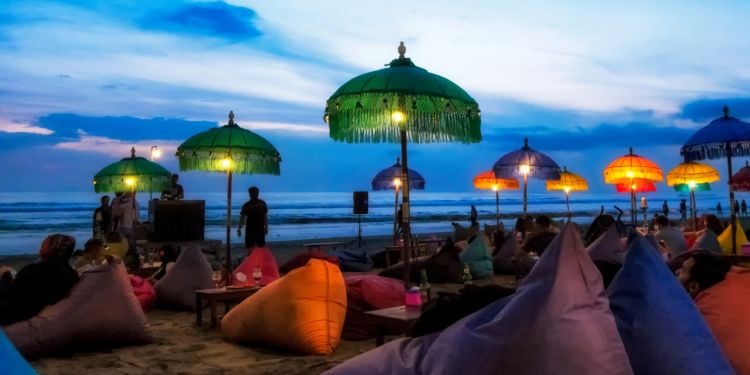
Canggu / Batu Bolong / Berawa is the digital nomad hub, with leading coworking spaces (Dojo, Tropical Nomad, Canggu Community Center), trendy cafés, surf, and yoga. Noisy and sometimes traffic-heavy, it also has the highest rents - a 2-bedroom villa with pool runs IDR 12–30 million/month. Pererenan and Umalas offer cheaper alternatives. Seminyak is the upscale option with its beach clubs (Potato Head, KU DE TA) and gourmet restaurants. Ubud, with no beach, is the spiritual and cultural heart: Tegallalang rice terraces, yoga, art, and the Green School hub. Sanur attracts families and retirees with its calm vibe, sheltered beach, and proximity to the new Bali International Hospital. Nusa Dua / Jimbaran leans more high-end touristic, and Uluwatu / Bukit Peninsula appeals to advanced surfers and the young international crowd.
Jakarta: the corporate capital
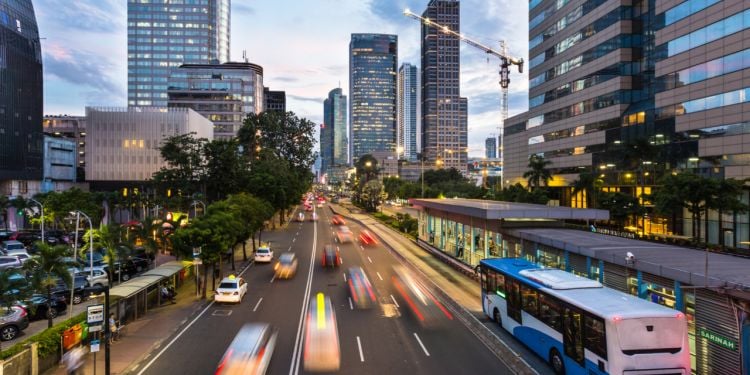
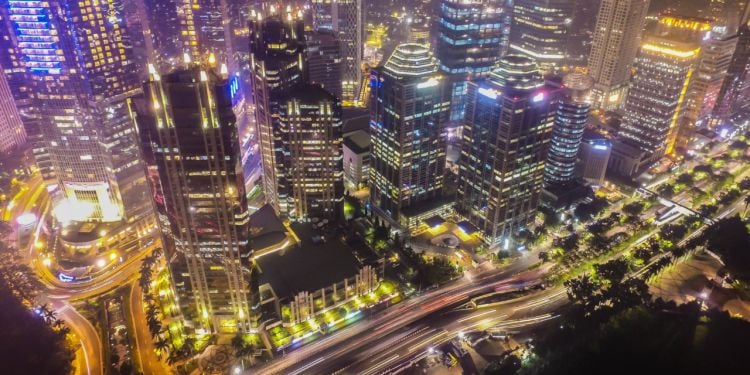
Jakarta (~10.7 million in the city, ~35 million across the Jabodetabek metro) remains the de facto capital, despite the gradual transfer to Nusantara in Kalimantan. A chaotic but fascinating megacity, it is Southeast Asia's business center, with rich cultural life and modern infrastructure. Kemang in South Jakarta is the classic expat neighborhood for families: villas, Western restaurants, international schools (villa rents: IDR 25–80+ million/month). Kuningan / Mega Kuningan is the CBD, with its ultra-modern residential towers, embassies, and business centers. Pondok Indah attracts wealthy families (luxury residential, golf, security). Senopati draws young professionals with trendy cafés and restaurants, while SCBD / Sudirman concentrates glass towers and 5-star hotels.
The MRT/LRT network, expanding since 2019, complements the TransJakarta BRT and the Grab/Gojek super-apps. Traffic is legendary: 2 hours for 10 km at peak times on some axes. Soekarno-Hatta Airport (CGK), the Garuda and Lion Air hub, is Indonesia's second largest. Siloam, RSPI, and Premier hospitals cover premium healthcare needs.
Yogyakarta: the cultural capital
Yogyakarta (~430,000 in the city, ~3 million metro), the former Javanese cultural capital, hosts UGM (Indonesia's second-ranked university), an active sultanate, and the entire batik, wayang, and gamelan tradition. It is the ideal base for visiting Borobudur and Prambanan. The cost of living is among the lowest in Indonesia for a university city. The expat community is smaller - mostly teachers, researchers, and students. Yogyakarta International Airport (YIA) offers direct flights to Singapore, Kuala Lumpur, and many Indonesian cities.
Other options: Lombok, Surabaya, Medan, Makassar
Lombok, east of Bali, attracts those seeking a "pre-tourism Bali": stunning beaches, the Gili Islands, and a much lower cost of living. Surabaya (~3 million inhabitants) is Indonesia's second city, an industrial hub for East Java with limited tourism, a few international schools, and RS Premier Surabaya for healthcare. Medan in North Sumatra gives access to the Bukit Lawang orangutans and offers exceptional street food. Makassar in Sulawesi is the regional hub for exploring Toraja and dive sites. These cities offer a more authentic and far more affordable lifestyle for those wanting to escape tourist crowds.
02Visas and immigration: how to legally settle in Indonesia
Indonesia has thoroughly modernized its visa system since 2022, launching the Second Home Visa, the Golden Visa, and most importantly the Remote Worker KITAS (E33G) in April 2024. The right visa depends on length of stay, source of income, and long-term intentions. Here is the 2026 landscape.
Short-stay visas: Visa on Arrival and B211A
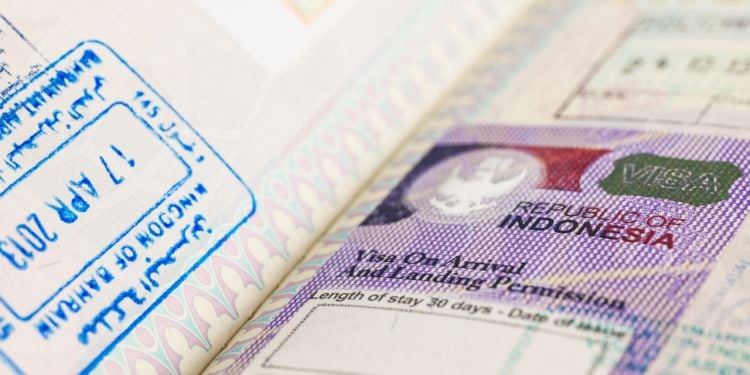
For an initial scouting visit, the Visa on Arrival (VoA) remains the simplest option. It grants 30 days, renewable once (60 days maximum), for around IDR 500,000 (~USD 30) on arrival at the airport. The online e-VoA avoids airport queues. Beware of overstays: the penalty is IDR 1,000,000 per day (~USD 63), with a 60-day maximum before detention and deportation.
For longer stays without local work, the B211A Visa (Social/Cultural Visit) remains popular among digital nomads. It allows 60 days extendable four times by 30 days, totaling 180 days maximum. Cost via a visa agent: USD 200–300. After 180 days, a "visa run" out of the country is mandatory before re-entry.
Digital nomad visa: the Remote Worker KITAS (E33G)
Launched in April 2024, the Remote Worker KITAS (E33G) is a 1-year residence permit for employees or contractors working remotely for an employer registered outside Indonesia. Key requirements include bank statements showing at least USD 2,000 over the past 3 months, a passport valid for 12 months minimum, and a recent ID photo. Government fees are USD 150, plus roughly USD 300–800 in agent fees. The visa is non-renewable: it must be closed before expiry, with the holder leaving the country and reapplying from abroad. Dependents (spouse, children) can obtain a linked dependent KITAS.
Second Home Visa and Golden Visa for long stays
For permanent settlement, two options exist. The Second Home Visa, launched in late 2022, offers 5 or 10 years of residence, requiring either a deposit of USD 130,000 in an Indonesian state bank account or the purchase of residential property worth at least USD 1,000,000 under a Hak Pakai or HGB title. Remote work for foreign employers is permitted; local employment is not.
The Golden Visa, introduced in 2023–2024, targets investors and corporate executives. It offers 5 or 10 years of residence with a minimum investment of IDR 2 billion (~USD 120,000) in government bonds, equities, or company capital.
Work KITAS and permanent residence (KITAP)
The Work KITAS is required for any foreigner employed by an Indonesian company. It demands a job offer, an IMTA work permit, and employer sponsorship. Validity is one year, renewable up to five years in some cases. After 3 years of continuous residence on a valid KITAS (Second Home, employment, or marriage), holders can apply for the KITAP (Kartu Izin Tinggal Tetap), the permanent residency permit, renewable every 5 years.
Since September 2025, the digital All Indonesia Arrival Card has been mandatory for all international arrivals, replacing the paper form. The reference authority is the Direktorat Jenderal Imigrasi (imigrasi.go.id), with applications processed via evisa.imigrasi.go.id. Processing times generally run 7–15 working days for the E33G and most KITAS categories.




03Working and doing business in Indonesia: jobs and key sectors
With unemployment falling to 4.76% in 2025, the lowest level since 1998, Indonesia's labor market is dynamic but structurally dual: 55% of the workforce is in the informal sector, while the formal sector attracts expats to high-value positions. Local salaries are very low in absolute terms, but corporate packages in Jakarta can match Western standards.
Labor market and salaries
Indonesia has no single national minimum wage: each province sets its own UMP (Upah Minimum Provinsi) and each city its UMK. For 2026, the Jakarta UMP rises to IDR 5,729,876/month (~USD 347), the highest in the country after a 6.17% increase. The national average sits around IDR 3,400,000/month (~USD 206). The median formal-sector salary is IDR 2,000,000/month (~USD 121), reflecting the gap with Western standards.
Expats on corporate assignments in Jakarta typically negotiate packages between USD 3,000 and 15,000/month, depending on sector and seniority. The 13th-month bonus (Tunjangan Hari Raya, THR) is mandatory and paid 7 days before Eid al-Fitr (Lebaran). The standard workweek is 40 hours.
The table below summarizes 2026 salary and contribution indicators.
Indicator | 2026 value | USD equivalent |
Jakarta UMP (monthly) | IDR 5,729,876 | ~USD 347 |
National average UMP | ~IDR 3,400,000 | ~USD 206 |
Median formal-sector salary | IDR 2,000,000 | ~USD 121 |
Senior expat package (Jakarta) | USD 3,000-15,000 | - |
Total employer charges (BPJS) | ~10-13% of gross | - |
Sources: Wage Indicator Indonesia, Tempo (2026 UMP by province).
Key sectors for expats
Several sectors concentrate the best opportunities for foreign professionals. Tourism and hospitality employ managers, hotel directors, dive instructors, and guides across Bali, Lombok, and Labuan Bajo. Tech and startups (Gojek, Tokopedia, OVO) recruit developers and data scientists, mostly in Jakarta. Energy (Pertamina, Total, Chevron, BP) hires engineers and geologists in Kalimantan, Papua, and Sumatra. Banking and finance (HSBC, Citibank, Standard Chartered, Mandiri) cluster in Jakarta, alongside manufacturing hubs in Bekasi, Cikarang, and Batam. International education and private healthcare for expats round out the picture.
Starting a business and freelancing
Working for an Indonesian employer is possible but tightly regulated through a positive list (Daftar Positif) of roles open to foreigners and an IMTA work permit. To run a business, the mandatory structure is the PT PMA (Perseroan Terbatas Penanaman Modal Asing), a foreign-owned limited company, with sector-specific minimum capital requirements. Some sectors remain closed via the Daftar Negatif Investasi. For freelancers and consultants serving foreign clients, the E33G KITAS is the cleanest route, while the B211A can be used with care on the tax side.
On contributions, expats employed locally for more than 6 months must contribute to BPJS Kesehatan (health) and BPJS Ketenagakerjaan (employment), totaling 10–13% in employer costs above gross salary. Foreigners are exempt from JP (pension) contributions.
Discover more


Join the discussion on the forum
04Finding a home in Indonesia: Bali, Jakarta, and the property market
Indonesia's housing market has two key features: foreigners cannot acquire freehold property (Hak Milik), and annual upfront rent payments are common in Bali. Counterintuitively, Jakarta is more affordable than Bali for rent, a consequence of the tourism premium on the island. Here are the options and best practices for finding a home.
Property status and restrictions for foreigners
Non-Indonesians cannot hold full freehold (Hak Milik), reserved for Indonesian citizens. Three alternatives exist: Hak Pakai (right of use, 30 + 20 + 30 years for a total of 80), Hak Guna Bangunan (HGB) for condominiums, and leasehold (hak sewa), particularly common in Bali in the form of 25–30 year leases extendable to 80–99. Watch out for marketing-style "freehold" contracts in Bali - they do not always reflect a legally robust right. Consulting an Indonesian lawyer before any purchase is non-negotiable. For the Second Home Visa, the minimum property value is USD 1,000,000.
Rent in Bali: expat zones and ranges
Bali is significantly more expensive than the rest of the archipelago. The main expat areas are Canggu (digital nomads, surfers), Seminyak (upscale, nightlife), Ubud (cultural, spiritual), Sanur (families and retirees), Kerobokan/Umalas (between Seminyak and Canggu), and Pererenan (cheaper emerging alternative). For long-term furnished rentals (12-month leases):
- Studio in a local guesthouse: IDR 1–3 million/month (~USD 60–180)
- 1-bedroom villa with pool, expat zone: IDR 8–18 million/month (~USD 500–1,100)
- 2-bedroom villa with pool in Canggu/Seminyak: IDR 12–30 million/month (~USD 750–1,800)
- 3+ bedroom premium villa: IDR 25–60+ million/month (~USD 1,500–3,700)
- 1-bedroom apartment in Denpasar/Sanur: IDR 5–12 million/month
According to Numbeo (February 2026), a 1-bedroom in the city center costs around IDR 18,400,000/month (~USD 1,100); outside center, ~IDR 11,600,000/month. Local specifics: annual upfront payment is common, with landlords often requesting 6–12 months in advance, sometimes more for the best rates. Plan cash flow accordingly.
Rent in Jakarta: a more affordable corporate hub
Jakarta groups its expat community in well-defined neighborhoods: Kemang (South Jakarta, expat families, villas, Western restaurants), Kuningan/Mega Kuningan (CBD, embassies, residential towers), Pondok Indah (luxury, golf), Senopati (young professionals), and SCBD/Sudirman (business district). Typical rent ranges:
- Studio or 1-bedroom CBD: IDR 6–15 million/month (~USD 360–900)
- 2-bedroom CBD high-end: IDR 15–35 million/month (~USD 900–2,100)
- Kemang villas for expat families: IDR 25–80+ million/month (~USD 1,500–4,800)
Search platforms and best practices
In Bali, useful platforms include FazWaz, balilongtermrentals.com, Airbnb for short-term, and Facebook groups such as "Bali Long Term Rentals". In Jakarta, the main platforms are Rumah123.com, Lamudi.co.id, OLX.id, and Properti.Kompas.com, with Colliers handling the high end. To avoid scams, especially in Bali, working with a recognized visa/relocation agent (Inter Relocation, ILA Global Consulting, LMI) is strongly recommended for the first move.
Discover more
05Cost of living in Indonesia: Bali, Jakarta, and real budgets
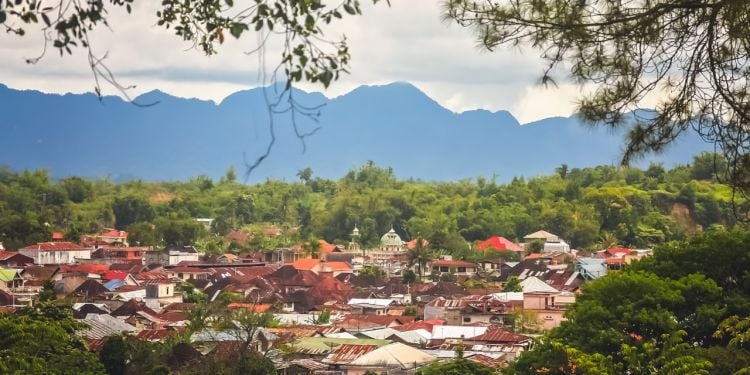
Indonesia offers one of the best value-for-money equations in Asia for foreign residents, provided one does not fully replicate a Western lifestyle. The key nuance is geographic: Bali costs significantly more than Jakarta, a paradox driven by tourism pressure and international demand. According to Numbeo, around IDR 67 million is needed in Bali versus IDR 42 million in Jakarta for the same standard of living. For comparison, Australia is 177% more expensive than Indonesia excluding rent, and New York 195% more expensive (Numbeo, 2026).
Single-person budget
The table below presents monthly ranges for a single expat in Bali and Jakarta, depending on lifestyle. Data is sourced from Numbeo (February–May 2026) and resident expat reports.
Profile | Bali | Jakarta |
Backpacker / tight budget | USD 500–800/month | USD 600–900/month |
Standard digital nomad | USD 1,000–1,800/month | USD 1,000–1,500/month |
Comfort (premium villa, car) | USD 2,000–3,500/month | USD 2,000–3,000/month |
Family of 4 budget
For a family of four, the most decisive expense is international school fees. The table below gives ranges depending on whether children attend international school.
Family profile | Bali | Jakarta |
Family without international school | USD 2,500–4,000/month | USD 2,000–3,000/month |
Family with 2 children in international school | USD 4,000–7,000+/month | USD 4,500–7,500+/month |
Reference everyday prices
In practice, a meal at a local warung costs IDR 15,000–40,000 (USD 1–2.50), a cappuccino in an expat café in Canggu around IDR 40,000 (~USD 2.50), and a mid-range restaurant IDR 80,000–200,000/person. Monthly scooter rental runs IDR 800,000–1,200,000 (~USD 50–73), with fuel at IDR 10,000–14,000 per liter (state-controlled price). A 10-km Grab/Gojek ride costs IDR 30,000–80,000. High-speed internet averages IDR 350,000/month (~USD 21). Utilities (electricity + water) for an 85 m² apartment come to about IDR 1,390,000/month (~USD 84), variable with air-conditioning use.
On healthcare, international private insurance is the main fixed expense for self-employed expats: IDR 1,000,000–3,000,000/month (~USD 60–180) including medical evacuation. BPJS Kesehatan class 1, where eligible, costs only around IDR 600,000/month.
Sources: Numbeo Bali (February 2026), Numbeo Jakarta, Bali Villa Realty (April 2026).
Join the discussion on the forum
06Healthcare in Indonesia: BPJS public system and private sector
Indonesia's healthcare runs on a dual structure: the universal public program BPJS Kesehatan, which covers around 90% of the population, and a strong private sector concentrated in Jakarta and Bali. For expats, comprehensive international private insurance with medical evacuation remains essential, even when BPJS access is available.
BPJS Kesehatan: the universal public system
The BPJS Kesehatan (Badan Penyelenggara Jaminan Sosial Kesehatan) is the national health insurance program. Expats employed locally for more than 6 months must enroll (4% employer contribution, 1% employee contribution, capped on a salary of IDR 12,000,000). Since 2025, holders of a Second Home Visa or E33G KITAS can also enroll voluntarily, subject to residence and sponsor conditions. Class 1 coverage costs roughly IDR 600,000–1,000,000/month (~USD 36–60). However, tourists and short-stay visa holders have no BPJS access: in private hospitals, the rule is absolute - no payment, no treatment, even in life-threatening emergencies.
Reference hospitals for expats
In Bali, several facilities are recognized for international standards. BIMC Hospital (Nusa Dua and Kuta) is the only Bali hospital recognized by the Australian Medical Doctors Association, with multilingual staff and 24-hour emergency care. Siloam Hospital Bali in Denpasar is part of Indonesia's largest private network. Bali International Hospital (BIH), opened in April 2025 in Sanur in partnership with the Mayo Clinic, delivers international-standard oncology and advanced cardiology - the country's first health-zone special economic hospital.
In Jakarta, the Siloam Hospitals Group operates multiple modern sites. RS Pondok Indah (RSPI) was named Indonesia's best private hospital in 2023 by Global Health Asia Pacific (general consultations USD 80–165, single rooms USD 100–265/night). RS Premier Jatinegara, Mayapada Hospital, and RS Pertamina complete the offer. In Surabaya, RS Premier Surabaya provides international standards with English-speaking staff.
Indicative costs and recommended private insurance
Private healthcare is affordable by international standards: a GP visit costs IDR 200,000–500,000 (~USD 12–30), a specialist IDR 500,000–1,500,000 (~USD 30–90), and a hospital night IDR 1,000,000–17,000,000 depending on class and facility. Dental tourism is well-developed in Bali, with prices 40–70% lower than in Australia or the UK.
An international private insurance plan with medical evacuation is considered essential by virtually every expat. Costs typically range from USD 60–200/month depending on age and coverage, with evacuation to Singapore (1-hour flight) or Bangkok being decisive for complex cases. The main providers operating in Indonesia are Cigna Global, AXA International, Bupa Global, APRIL International, William Russell, and Pacific Prime.
Useful numbers: ambulance 119, police 110, fire 113. The bottom line: living in Indonesia without international health coverage is an unwise risk, even though routine care remains inexpensive.
Discover more


07Understanding Indonesia's tax system as an expat
Indonesia operates a tax system in active modernization, with a new filing platform (Coretax) launched in 2025 and a particularly attractive territorial regime for newly resident skilled foreigners. The country has signed 71 double taxation agreements (DTAs) covering most major economies, including the US, UK, Australia, Canada, Singapore, and the entire EU.
Tax administration and filing obligations
The reference authority is the Direktorat Jenderal Pajak (DJP), accessible at pajak.go.id. All tax residents must obtain an NPWP (Nomor Pokok Wajib Pajak), the Indonesian tax ID. Without an NPWP, withholding rates are increased by 20%. The system runs on self-assessment: the taxpayer calculates and pays their own tax via the new Coretax platform, mandatory from fiscal year 2025. The annual return, the SPT Tahunan, must be filed by March 31 of the following year (a 2-month extension is available on request).
Personal income tax (PPh 21): the brackets
For tax residents, personal income tax (PPh 21 for employees, PPh 25/29 for self-employed) follows progressive brackets unchanged in 2026. Tax residence is established after 183 days of presence over a 12-month period, or upon evidence of intent to reside (employment contract, lease, KITAS).
Up to IDR 60,000,000 | 5% |
IDR 60,000,001 – 250,000,000 | 15% |
IDR 250,000,001 – 500,000,000 | 25% |
IDR 500,000,001 – 5,000,000,000 | 30% |
Above IDR 5,000,000,000 | 35% |
Non-residents face a flat 20% withholding on Indonesian-source income, unless reduced by an applicable DTA. Residents are in principle taxed on worldwide income, except under the territorial regime described below.
Territorial regime: a major incentive for new residents
Introduced under the Omnibus Law, an exceptional provision allows foreigners who become Indonesian tax residents to be taxed only on Indonesian-source income for their first 4 years, provided they hold qualifications validated by the DJP. In practice, income earned from foreign employers or clients (remote work, international freelancing) is not taxable in Indonesia during this period. This is a major opportunity for digital nomads residing more than 183 days locally. Care is needed where the source country also exempts the income, as the benefit may not stack with the relevant DTA.
VAT, corporate tax and double taxation treaties
The VAT (PPN, Pajak Pertambahan Nilai) rose from 11% to 12% on January 1, 2025, a politically contested increase. Essential goods (basic food, healthcare, education, public transport) remain exempt or zero-rated. Corporate tax (PPh Badan) stands at 22%, reduced to 19% for listed companies with more than 40% free float.
Indonesia has signed double taxation treaties with 71 countries, including the United States, United Kingdom, Australia, Canada, Germany, Singapore, the Netherlands, India, Japan, China, and most EU member states. US citizens remain subject to FATCA reporting and US tax obligations regardless of Indonesian residence and should consult a cross-border tax specialist. To benefit from a DTA, taxpayers must present a Certificate of Domicile (CoD) to the local tax office. Treaty withholding rates are typically reduced: 10–15% on dividends, 10% on interest, 10–12% on royalties. The official rate list is published on the DJP website.
Discover more
08Studying in Indonesia
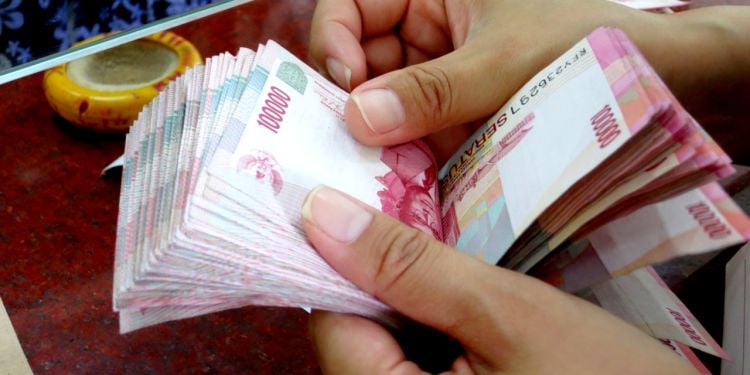
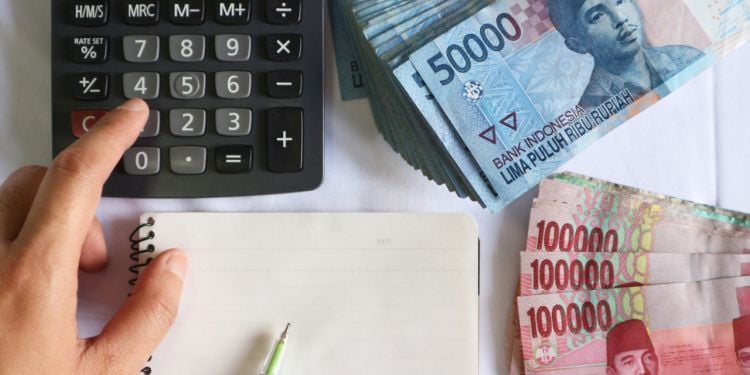
Indonesia is becoming an appealing study destination for international students looking for a mix of academic quality, cultural diversity, and affordability. With its growing network of reputable universities and a welcoming environment, the country offers a unique setting to earn a degree while experiencing life in one of Southeast Asia’s most dynamic nations.
Top institutions such as Universitas Indonesia (UI), Gadjah Mada University (UGM), and Bandung Institute of Technology (ITB) are recognized for their programs in engineering, business, social sciences, and environmental studies. An increasing number of universities offer fully English-taught or English-track programs, especially at the postgraduate level and in key fields.
Why study in Indonesia?
Indonesia offers a well-balanced mix of academic opportunity and cultural discovery. Tuition and living costs are generally lower than those at Western universities, though English‐track programs may carry premium fees, and living costs vary by city. Students can also benefit from government or university scholarships designed for international learners, including the Darmasiswa Scholarship, which supports non-degree studies in the Indonesian language, arts, and culture.
Outside the classroom, studying in Indonesia opens the door to diverse traditions, natural beauty, and a welcoming local community, ideal for anyone interested in Southeast Asian culture and global connections.
Tips:
- You’ll need to apply for a student visa (often class C316), and then your university will help you convert to a stay permit (KITAS) after arrival.
- Gather transcripts, passport, financial proof, and health certificate, legalized by the Indonesian Embassy if required.
- Many programs are in English, but learning Bahasa Indonesia helps with daily life and local interactions.
- Always check whether your chosen program is genuinely full-English (or partially) and recognized in your home country.
Discover more
09Schooling your children in Indonesia: international schools overview
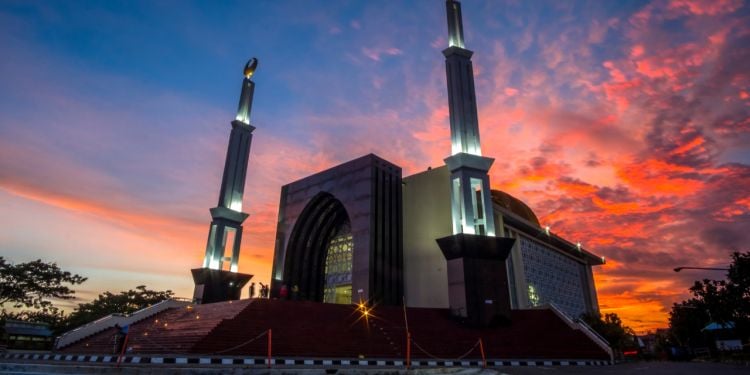
Expat families have a wide choice of international schools in Indonesia, mostly concentrated in Jakarta (corporate hub) and Bali (lifestyle hub). Fees vary considerably by city, curriculum, and grade level. The "National Plus" segment offers a more affordable bilingual alternative, blending Indonesian and international programs.
The Indonesian education system
Public schooling is delivered in Bahasa Indonesia, which rarely suits short or mid-term expat families. The National Plus sector consists of private schools combining the national curriculum with international elements (often Cambridge or IB), with bilingual English-Indonesian instruction. Fees are noticeably lower than at full international schools, making them a sensible compromise for families settling long-term.
International schools in Jakarta
Jakarta hosts the country's most prestigious schools. Jakarta Intercultural School (JIS) is the most established, with a US curriculum complemented by IB, charging USD 22,000–30,000/year. British School Jakarta (BSJ) follows the British curriculum and IB Diploma at USD 17,000–26,000/year. Other notable options include Gandhi Memorial International School, Australian International School Indonesia, ACG School Jakarta, and Singapore International School. These institutions hold strong accreditation (WASC, CIS, IB World School) and most offer pathways to A-levels, IB Diploma, or US high school diplomas, recognized by universities globally.
International schools in Bali
Bali counts 22 international schools, mainly between Sanur, Canggu, and Ubud. Fees are generally more accessible than in Jakarta, starting near USD 6,000/year for bilingual programs and reaching USD 17,000 for premium schools.
- Bali Island School (BIS) in Sanur: WASC-accredited US curriculum. 2025–2026 fees: IDR 150–280 million/year (~USD 9,000–17,000).
- Australia International School (AIS) in Sanur: Australian curriculum and IB. Fees: IDR 140–230 million/year (~USD 8,500–14,000).
- Canggu Community School (CCS): Australian curriculum and IB. Fees: IDR 140–220 million/year.
- Green School Bali in Ubud: bamboo eco-campus, IB, sustainability-focused, unique worldwide. Fees: IDR 190–250 million/year.
- Sanur Independent School (SIS): British curriculum with IGCSE and A-Level.
- Dyatmika School in Sanur: bilingual, Cambridge IGCSE and Kurikulum Merdeka. Fees: IDR 100–180 million/year – the most respected "National Plus" option.
Universities and practical steps
Indonesian universities remain affordable for foreigners: between USD 2,000 and 8,000/year, depending on institution and program. The leading universities are Universitas Indonesia (UI) in Jakarta, ITB in Bandung, UGM in Yogyakarta, IPB in Bogor, and UNAIR in Surabaya. English-taught programs are expanding, particularly at the master's level, in business, public health, and Asian studies.
Practically, most international schools require a Student KITAS for the child, a process typically handled by the school. Budget also for one-time enrollment fees (often equivalent to a term's tuition), uniforms, school transport, and outings, which can add 10–15% to total costs.
Discover more

10Relocating to Indonesia: practical checklist
Preparing your move well saves countless administrative headaches. Between obtaining the KITAS, registering with local authorities, opening a bank account, and adapting to local super-apps (Grab, Gojek), the first weeks are intense. Here is an operational roadmap.
- Visa and arrival: complete the digital All Indonesia Arrival Card before departure (mandatory since September 2025). On arrival with a VoA, expect to pay at the airport (in USD or IDR). For a long stay, the KITAS is collected in person at the immigration office once approved.
- Local registration (within 14 days): report to the local town hall (Kelurahan) to obtain the SKSKPS and the STM (Surat Tanda Melapor), the police registration document. Without this step, the KITAS remains incomplete.
- NPWP (tax ID): mandatory for any tax resident. Without it, the employer automatically applies a 20% surcharge on withholdings. Apply at the local tax office as soon as the KITAS is issued.
- Bank account: the major banks are BCA (Bank Central Asia), BNI, Mandiri, and BRI. HSBC and Citibank operate in Jakarta. A valid KITAS is generally required. While waiting, services like Wise or Revolut handle international transfers without excessive fees.
- Driver's license: an international driving permit is temporarily accepted, but the local SIM (Surat Izin Mengemudi) is recommended for long stays. In Bali, where scooters are the main transport mode, a SIM C (motorcycle) or international permit with a motorcycle endorsement is technically required and increasingly enforced.
- SIM card and connectivity: 4G/LTE coverage is solid in urban and tourist areas. Main carriers are Telkomsel, Indosat, and XL Axiata. A local SIM with unlimited data costs about IDR 50,000–100,000/month (~USD 3–6). Pick one up at the airport with your passport.
- Grab and Gojek super-apps: indispensable for daily life. They cover taxis, motorbike rides (ojek), food delivery, errands, and payments. Install them immediately, metered taxis outside these apps are rarely reliable.
- Consular registration: register with your country's embassy or consulate in Jakarta. This grants access to consular services (passport renewal, civil status, voting from abroad).
- Learn basic Bahasa Indonesia: extremely useful outside tourist areas. Lessons are easy to find in Bali (Cinta Bahasa, Realia) and Jakarta. The first words instantly open doors with locals.
- Cultural codes: modest dress in temples (a sarong is mandatory in Bali), never point with the index finger (use the thumb instead), and eat with the right hand. The left hand is considered unclean in Muslim culture.
For the physical move, several international companies operate in Indonesia (AGS, Crown, Allied Pickfords). Allow 6–10 weeks of sea transit from Europe or North America, longer from Australia for some destinations. It is often more cost-effective to buy everyday furniture locally, except for items of high sentimental value.
Discover more


Join the discussion on the forum
11Everyday life in Indonesia
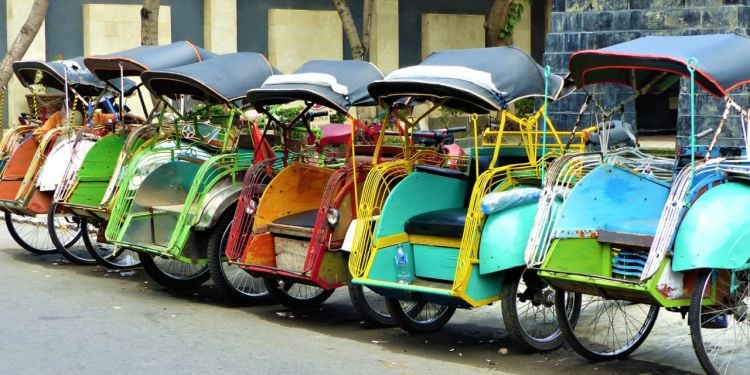
Life in Indonesia often follows local rhythms rather than the clock. Many neighborhoods feature vibrant morning markets, street vendors serving breakfast, and communal spaces where neighbors gather for conversation or tea. Daily routines are frequently intertwined with social and cultural interactions, making community engagement a natural part of life.
Urban centers like Jakarta or Bandung are bustling and fast-paced, but outdoor life remains important. Streets are shared by pedestrians, motorcycles, and bicycles, while parks, plazas, and riverfronts provide spaces to relax, exercise, or meet friends. In smaller towns and villages, life moves at a slower pace, with local traditions shaping daily routines, celebrations, and family gatherings.
Local habits & customs
Greetings: A handshake is common in professional contexts; a slight nod or “Selamat pagi” (good morning) is typical socially.
Respect and hierarchy: Using polite forms of address, such as “Bapak” (Mr.) or “Ibu” (Mrs./Madam), signals respect, especially toward elders or authority figures.
Modesty and etiquette: Dress conservatively in public spaces, particularly in religious areas, and remove shoes before entering homes or certain businesses.
Community focus: Participation in local events, from neighborhood gatherings to religious ceremonies, is valued and helps build relationships.
Discover more






12Leisure in Indonesia: culture, nature, and food
With its 17,000 islands, volcanoes, ancient temples, and exceptional marine biodiversity, Indonesia offers an almost limitless playground for expats. Bali's Hindu culture, unique in a Muslim-majority country, adds a strong spiritual and artistic layer. Here is an overview of the must-sees and must-dos.
Culture, spirituality, and heritage
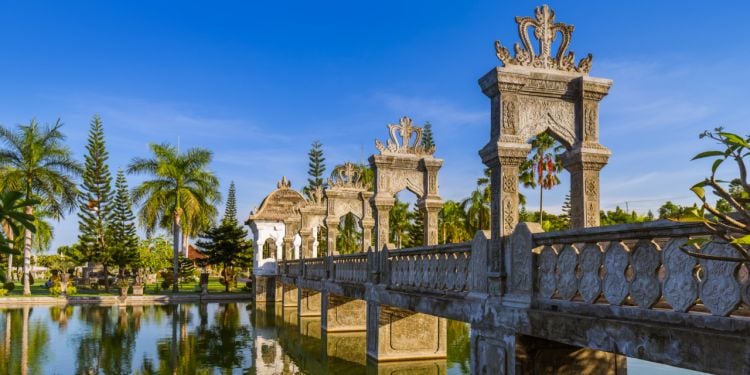
Bali concentrates an exceptional density of Balinese Hindu temples. Pura Tanah Lot, perched on a sea rock, is the island's most photographed sight. Pura Taman Ayun in Mengwi, a 17th-century royal palace, is UNESCO-listed since 2012. Pura Besakih, on the slopes of Mount Agung (3,142 m), is Bali's "Mother Temple". Pura Luhur Uluwatu, perched 70 meters above the ocean, hosts the famous Kecak dance performance at sunset. At Tirta Empul, visitors can take part in the purification ritual in sacred pools.
On Java, two major UNESCO sites lie 90 minutes by flight from Bali: Borobudur, the world's largest Buddhist monument with 9 levels, 2,672 bas-reliefs, and 504 Buddha statues (sunrise from the central stupa is a defining experience), and Prambanan, the 9th-century Hindu temple complex dedicated to Shiva, Vishnu, and Brahma. Yogyakarta, an active sultanate, is the cultural capital of Java (Kraton, Taman Sari, batik workshops, wayang theater).
Nature, diving, and adventure
Indonesia sits within the Coral Triangle, the world's richest marine ecosystem. Raja Ampat in West Papua is regarded as the planet's premier diving destination. Bunaken in North Sulawesi features a spectacular vertical coral wall. In Bali, Tulamben (USAT Liberty wreck), Amed, Nusa Penida (giant manta rays, mola-mola), and Menjangan are diveable year-round.
For volcanoes, Mount Batur (1,717 m) in Bali can be climbed in 2–3 hours for sunrise. Mount Bromo in East Java and the Ijen Crater (turquoise sulfuric acid lake, blue-flame nighttime phenomenon) are classic treks. On Lombok, Mount Rinjani (3,726 m) offers a 2–3 day expedition. Wildlife enthusiasts head to Bukit Lawang (Sumatra) or Tanjung Puting (Kalimantan) for orangutans, and to Komodo and Labuan Bajo to see the famous dragons.
Food and street culture
Indonesian cuisine is among the richest in Asia. Nasi goreng (fried rice with spices and an egg) is the iconic national dish. Rendang from Padang (beef slow-cooked in coconut milk) has been voted the world's best dish multiple times. Satay (grilled skewers with peanut sauce), gado-gado (steamed vegetable salad with peanut sauce), nasi Padang (multi-dish self-service), and bakso meatball soup are essentials. The warung culture (small street eateries) lets you eat a full meal for IDR 15,000–40,000, under USD 3. Jamu, herbal drinks based on ginger, turmeric, and tamarind, anchor a centuries-old wellness tradition.
For nightlife, Bali's beach clubs (Potato Head, KU DE TA, La Brisa, Ulu Cliffhouse, Sundays Beach Club) deliver memorable sunsets. Balinese ceremonies - Nyepi (Day of Silence in March, the entire island shut down for 24 hours), Galungan, and the odalan (temple anniversaries) - punctuate the year and immerse residents in living spirituality. Balinese massages (IDR 70,000–150,000/hour, ~USD 4–9) are a near-daily ritual for many expats.
Discover more

13In short: why try the Indonesian adventure
In 2026, Indonesia combines solid economic growth (+5.6% in Q1), an attractive cost of living, some of Asia's most extraordinary landscapes, and a vibrant expat community spread across Bali, Jakarta, and the wider archipelago. The new Remote Worker KITAS (E33G) and the territorial tax regime over the first four years make it especially compelling for digital nomads and independent professionals. Affordable private healthcare, proximity to Singapore, and well-established international schools secure family relocations. If the Indonesian adventure tempts you, the Expat.com community is here to share field experience and practical advice.
Join the Indonesia community
Get regular tips and advice to make the most of your expat life
Essential services for your expat journey







Forum topics on living in Indonesia
Discover forums topics on expat life in Indonesia: join the conversation, ask your questions, get advice and share your experience.