

 Guide updated by Stephanie Heron on 15 December 2025
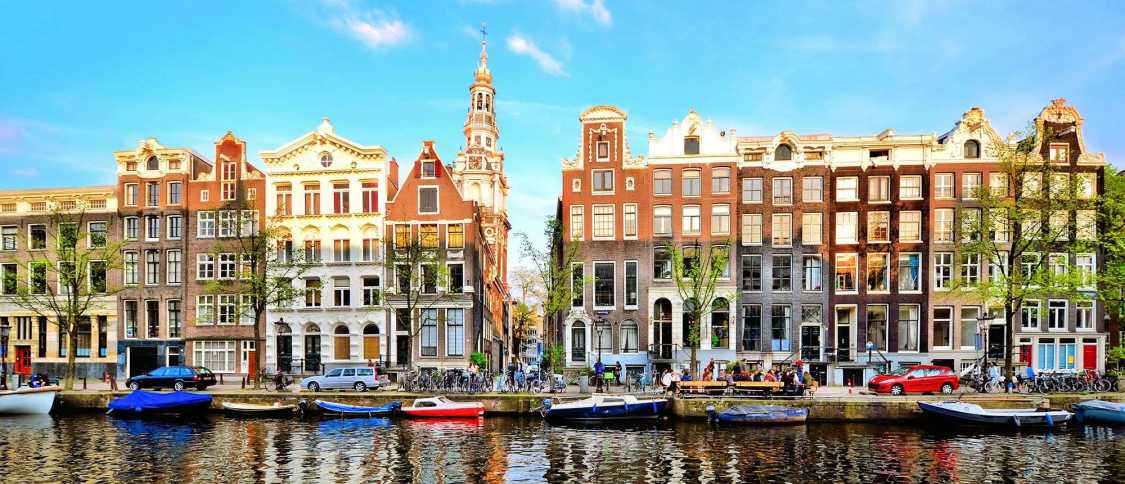
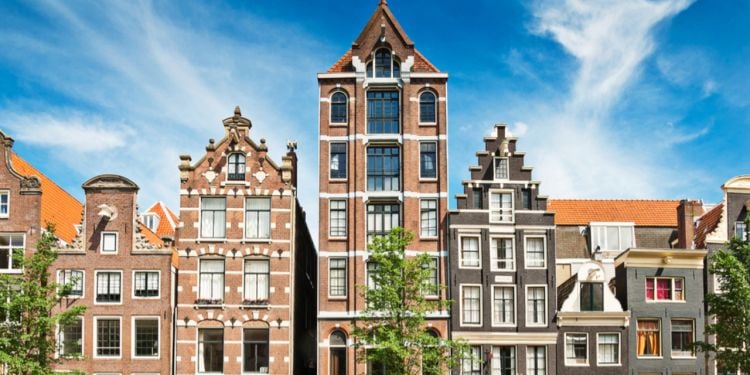
Amsterdam is the capital of the Netherlands, and an important commercial and financial center. Its canals, gabled houses, narrow streets, and lively neighborhoods give the city its unique character, while excellent public transport and cycling routes make getting around easy. Known for its world-class museums, thriving business scene, and welcoming multicultural atmosphere, Amsterdam attracts people from many parts of the world.
5 good reasons to move to Amsterdam
- Universal healthcare access through a regulated insurance system used by residents.
- World-class universities and research institutions, including the University of Amsterdam and VU Amsterdam.
- Excellent transport links across Europe.
- Extensive cycling routes (more than 500 kilometers) and plenty of parks
- Family-friendly city with safe neighborhoods and international schools.
Your setup journey
Guide in 9 steps. Click any step below to jump directly to the section you need.
01Working in Amsterdam
Amsterdam draws professionals from around the world, thanks to its cosmopolitan environment and established business networks.
Key industries
Among the top industries in Amsterdam are ICT, fintech, life sciences, and logistics. Prominent companies headquartered here include Adyen, Getronics, and VERMEG. The city is also a hotspot for startups, covering a range of sectors from software and biotech to sustainable technologies.
Work permits and procedures
EU and EEA citizens can work in Amsterdam without restriction. However, non-EU nationals typically require a work permit or a combined residence-and-work authorization, such as the widely used Highly Skilled Migrant scheme (kennismigrant).
Unemployment rate (Netherlands) | 4.0% |
Average monthly gross salary (Amsterdam area) | €4,098 |
Main employment sectors | ICT, finance, creative industries |
Data correct as of November 2025
Sources: Trading Economics, Numbeo
Join the discussion on the forum
02Housing & neighborhoods
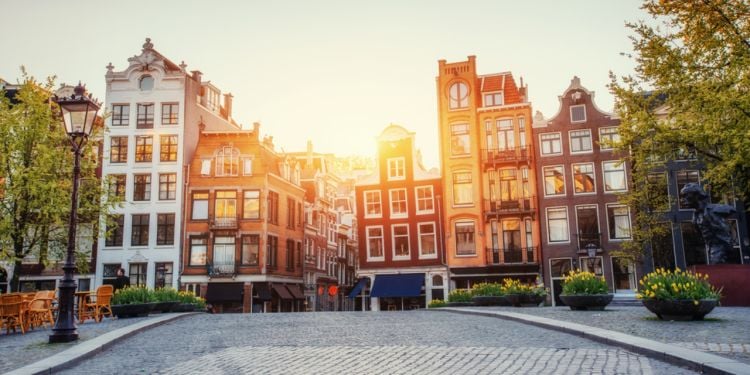
Housing in Amsterdam offers a real mix: from elegant historic canal houses and central city apartments to more recent builds in Amsterdam-Noord and parts of Zuidoost.
Popular expat areas
Expat favorites include Jordaan, De Pijp, Amsterdam-Zuid, Oud-West and parts of Amsterdam-Zuidoost and Amsterdam-Noord. These neighborhoods offer convenient services, excellent transport connections, and a high standard of living.
Rents and rental process
To rent privately, landlords typically ask for government ID, proof of income (often three to five times the monthly rent), and a refundable security deposit — usually one to two months’ rent.
1-bedroom apartment (city center) | €1,500–€2,800/monthly |
3-bedroom apartment (city center) | €3,000–€6,000/monthly |
Data correct as of November 2025.
Sources: Numbeo — Rent prices Amsterdam, City of Amsterdam — Housing
Discover more
03Daily life & cost of living
Daily living costs in Amsterdam will depend on a variety of factors, including your lifestyle, the neighborhood you live in, and how you manage everyday expenses like food, transport, and utilities.
Monthly expenses for a single person
Rent (1-bedroom apartment city center) | €1,500 - €2,800 |
Groceries | €267 |
Utilities | €200 - €350 |
Date correct as of November 2025.
Monthly expenses for a family of four
Rent (3-bedroom apartment city center) | €3,000 - €6,000 |
Groceries | €500 - €700 |
Utilities | €200 - €400+ |
Data correct as of November 2025.
Sources: Numbeo — Amsterdam, Relocate.me, Rentumo
04Retirement in Amsterdam
The Netherlands is renowned for its high quality of life. While Amsterdam provides exceptional healthcare, efficient public transport, and a lively cultural scene, it is also one of the most expensive places to live in the country.
Visa and residency
EU and EEA citizens can live in Amsterdam without a visa. Non‑EU nationals must meet Dutch immigration requirements, which typically include proving they can support themselves. To officially reside long-term, new residents must first register with the municipality to obtain their citizen service number (BSN) and secure Dutch health insurance.
Costs and healthcare
To access public healthcare, residents need a Dutch basic health insurance plan. Note that living costs in Amsterdam are usually higher than in smaller Dutch cities.
Sources: IND (Immigration and Naturalization Service), City of Amsterdam — Healthcare
05Higher education & universities
Amsterdam is home to two internationally recognized research universities, the University of Amsterdam (UvA) and Vrije Universiteit Amsterdam (VU), both of which welcome students from around the world. Many degree programmes are offered in English.
Major universities
UvA and VU provide a broad selection of English‑taught bachelor’s and master’s programmes, as well as research and exchange opportunities.
Fees, admission and international programmes
Tuition at UvA and VU depends on your nationality: EU/EEA students pay a lower “statutory” fee, while non‑EU/EEA students pay a higher “institutional” rate. Admission to universities in Amsterdam typically requires proof of previous academic qualifications and an English proficiency test, and applications are submitted online.
Sources: University of Amsterdam, Vrije Universiteit Amsterdam, City of Amsterdam — Studying
Discover more
06Schooling for children
Parents in Amsterdam have a choice between Dutch state schools, specialized bilingual Dutch-English schools, and fully international schools. While state schools primarily instruct in Dutch, many schools in Amsterdam now incorporate bilingual instruction or offer full International Baccalaureate (IB) programs within the Dutch education framework.
International schools
Amsterdam is home to several well-established international schools that follow foreign curricula and offer IB programs. Notable examples include the Amsterdam International Community School (AICS) and the International School of Amsterdam (ISA). The annual tuition for international schools varies widely: publicly supported international programs (like AICS) typically start around €10,000, while fully private institutions (like ISA) often charge between €20,000 and €30,000 or more, depending on the student’s grade level.
Enrollment proces
Children are registered through the City of Amsterdam, which oversees school placements and enrollment. Admission procedures vary by school, and popular bilingual programs may have waiting lists. For public schools, education is free, although parents sometimes contribute voluntarily to cover additional activities or resources.
Sources: City of Amsterdam — International schools, DENISE listing.
07Everyday life in Amsterdam
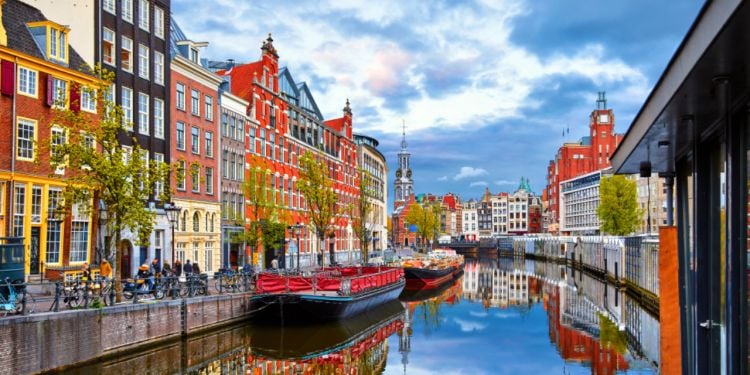
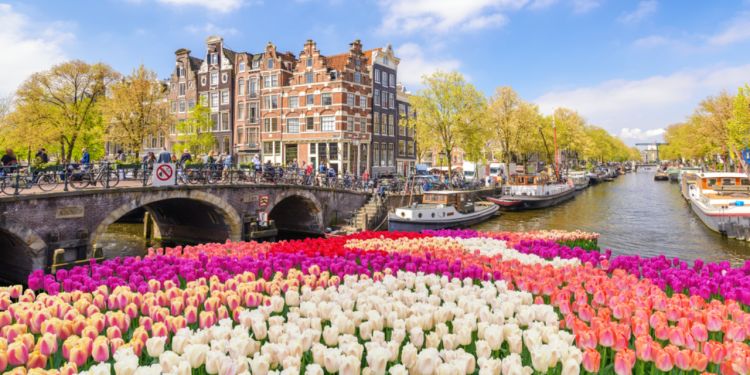
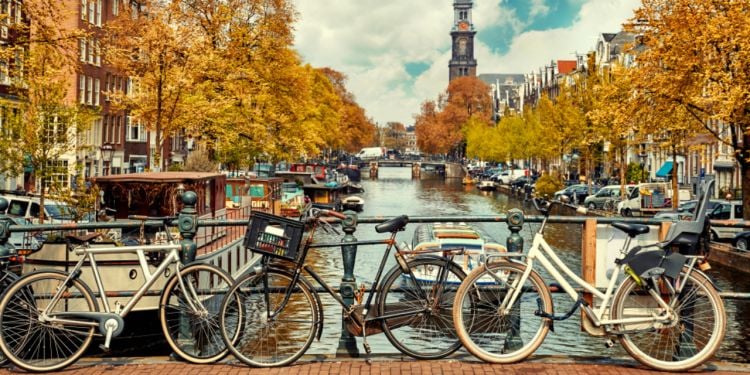
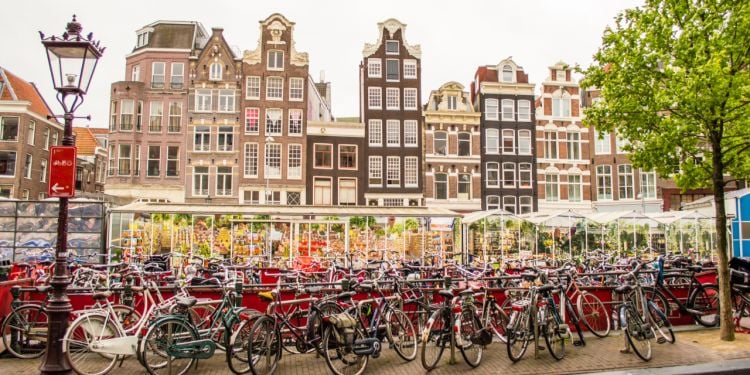
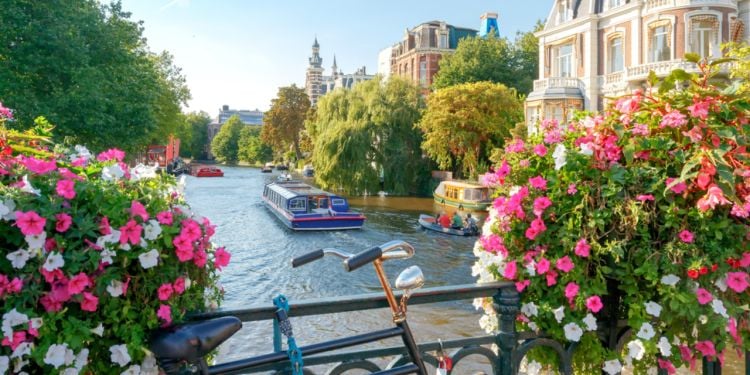
In Amsterdam, bikes outnumber cars on many streets, and canals thread through neighborhoods, shaping how people live and move. Grocery shopping often means visiting a market stall in the morning, while evenings might be spent at a local café or stroll along a canal path.
Living like a local
Neighborhoods are at the heart of daily life. People meet regularly at corner cafés, small shops, and gyms. Parks such as Vondelpark and Oosterpark are used year-round for jogging, walking dogs, or meeting friends. Many residents join sports clubs, music groups, or volunteer organizations to connect with the community.
Everyday essentials
In many neighborhoods, supermarkets, bakeries, and pharmacies are typically a short bike ride away. Public transport — trams, buses, and metro — covers longer trips, though cycling remains the fastest option for most routes. Municipal offices, libraries, and community centers provide practical support, including health registration, language classes, and guidance on local services.
Discover more



Join the discussion on the forum
08Leisure, culture & things to do
There is plenty to see and do in Amsterdam to keep you occupied in your free time. Parks, museums, theaters, and music venues are just some of the things you can look forward to in the city.
Museums and events
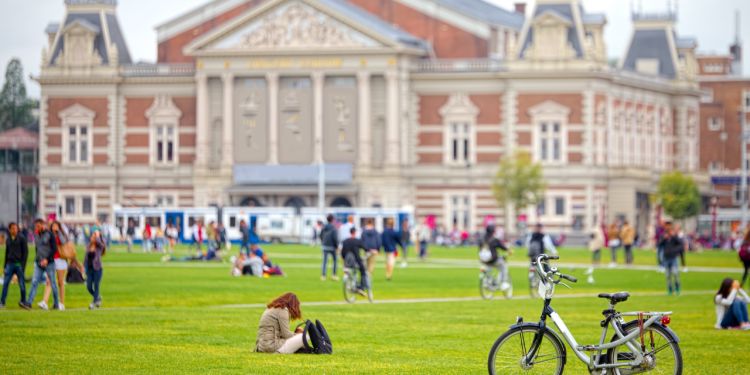
Key cultural highlights include the Rijksmuseum, Stedelijk Museum, and the Van Gogh Museum, all located around Museum Square. Throughout the year, Amsterdam comes alive with large-scale events like King’s Day, cultural festivals, and art exhibitions that draw both locals and visitors from abroad.
Parks, sports and nightlife
Amsterdam’s parks, including Vondelpark, offer peaceful places to relax, while sports centres and local clubs provide opportunities to stay active. After dark, the city hums with a lively energy in its cafés, bars, and clubs around Leidseplein and Rembrandtplein.
Sources: Rijksmuseum, Van Gogh Museum
Discover more

09In short
Many expats find Amsterdam easy to settle into thanks to its international community and well-organized infrastructure. The city has a good mix of job opportunities across technology, finance, creative industries, and public sectors, along with excellent transport connections and reliable public services. If you’re moving here, you’ll need to register with the municipality to get a BSN (Burgerservicenummer, the Dutch citizen service number), check visa requirements through the IND (Immigration and Naturalisation Service), and begin your housing search early. For more information, tips and advice, join the Expat.com Amsterdam forum and connect with other expats who are already living in Amsterdam.
Join the Amsterdam community
Get regular tips and advice to make the most of your expat life
Essential services for your expat journey






Forum topics on living in Amsterdam
Discover forums topics on expat life in Amsterdam: join the conversation, ask your questions, get advice and share your experience.
- MVV is taking too long
- Starting a job in the Netherlands without a Dutch registered address
- Tips on finding a rental apartment in Eindhoven
- Offer letter in Netherlands
- Can I work remotely in the Netherlands for a US-based company?
- English speaking (international) school in Zwolle
- Living in Netherlands, working for a UK company
- What are your MVV experiences?