

 Guide updated by Veedushi Bissessur on 07 August 2026
With its 5,174,789 inhabitants (2026 estimate), Costa Rica stands out as one of the most dynamic expat destinations in Latin America. Political stability, exceptional nature, and recognized quality of life draw new residents each year, with a strong international community of North Americans, Germans, Spaniards, and a growing wave of digital nomads from across the world.
5 good reasons to move to Costa Rica
- Universal healthcare system CCSS ranked 36th worldwide by WHO, accessible to legal residents
- Territorial tax regime: foreign-source income is not taxed in Costa Rica
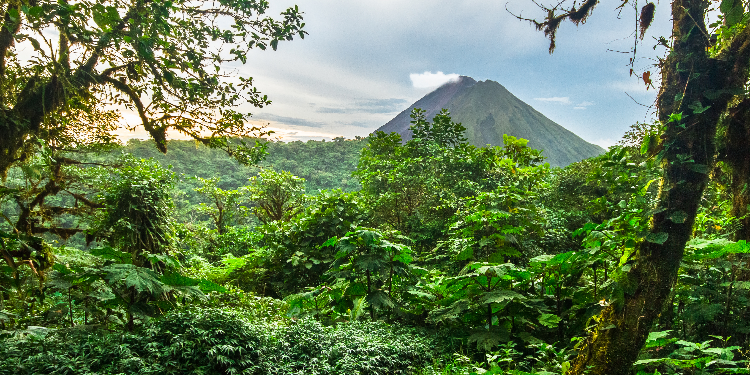
- Outstanding nature: 26% of the territory in parks and reserves, 5% of global biodiversity
- Oldest continuous democracy in Latin America, with no army since 1949
- Multiple clear residency pathways: Pensionado, Rentista, Inversionista, Visa Nómada Digital
Your setup journey
Guide in 14 steps. Click any step below to jump directly to the section you need.
01Where to live in Costa Rica: a guide to the best cities for expats
Costa Rica offers very different lifestyles depending on the region. The Greater Central Valley concentrates services, employment, and international schools, while the Pacific coast attracts surfers, retirees, and digital nomads. Here are the most popular destinations within the expat community.
San José, the capital
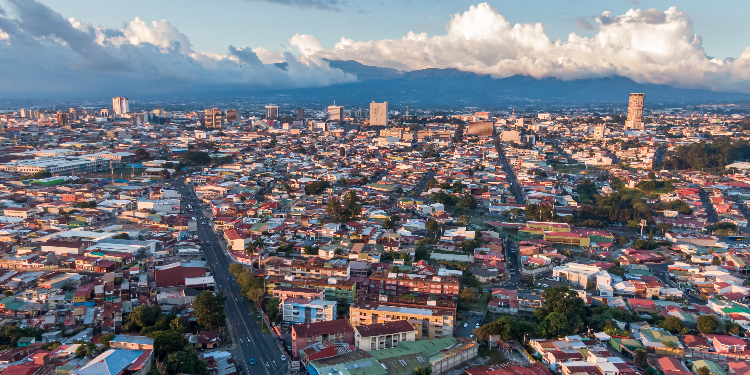
With 1 million inhabitants (3 million in the metro area), San José is the economic and administrative center. Rents: USD 360 to 500/month in the outskirts, USD 700-900 in the center for a one-bedroom. The capital concentrates the CIMA, Bíblica, and La Católica hospitals and the Juan Santamaría (SJO) airport. Popular neighborhoods include Barrio Escalante, Rohrmoser, and Los Yoses. Crime Index moderate (55.6).
Escazú, the upscale suburb
Ten minutes from the center, Escazú has 60,000 inhabitants and concentrates the wealthier expat community. Rents: USD 800-1,500/month for a one-bedroom, USD 1,200-2,000 for a two-bedroom. Hospital CIMA, Multiplaza shopping mall, Blue Valley School and Country Day School nearby, plus an 18-hole golf course. About 30% more expensive than central San José but with above-average safety.
Atenas, the perfect climate
A small town of 27,000 inhabitants, including around 1,500 expats. Very affordable rents: USD 600-900/month. National Geographic and AARP have called it one of the cities with the "world's best climate." Single-person cost of living around USD 1,280/month. 35 minutes from San José and 45 minutes from Pacific beaches. Crime Index among the lowest in the country (40.5).
Tamarindo, surf and coastal life
On the northern Pacific coast in Guanacaste, with 5,000 to 10,000 permanent residents. Rents: USD 800 to 1,500/month for a one-bedroom, USD 1,200 to 2,000 for a house. World-renowned for surfing, but no hospital on site (Liberia is 1 hour away with the LIR airport). Popular with digital nomads and active retirees.
La Fortuna and Arenal
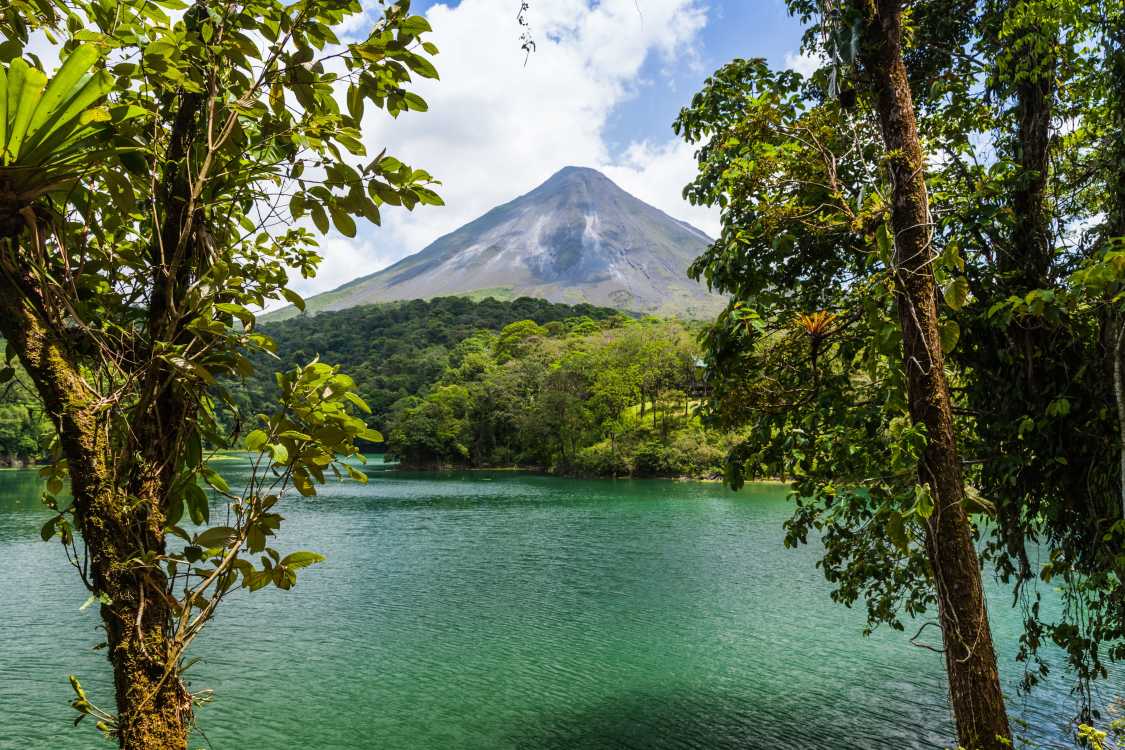
With 15,000 inhabitants, La Fortuna is the gateway to the Arenal Volcano and its hot springs. Among the most affordable rents: USD 500-800/month. The expat community is smaller but tight-knit, particularly in Nuevo Arenal. An option for those favoring an eco-lifestyle in close contact with nature.
Explore our city guides
02Visas and administrative procedures in Costa Rica
Costa Rica offers a structured immigration framework with pathways tailored to retirees, remote workers, and investors. All procedures are handled by the Dirección General de Migración y Extranjería (DGME), the national immigration authority. The end of "perpetual tourism" in 2025 brought stricter controls.
Tourist stay and the end of perpetual tourism
Citizens of the United States, Canada, the United Kingdom, Australia, and the European Union enter without a visa for 90 to 180 days, at the discretion of the immigration officer. Since 2025, after a maximum stay of 180 days, travelers must remain outside the country for at least 90 days before re-entering as tourists. Overstay fines reach approximately USD 300 per month.
Main residency visas
The Visa Nómada Digital requires a monthly income of USD 3,000 (USD 4,000 with family), valid for 1 year and renewable once. The Pensionado visa, with no age requirement, demands a lifetime pension of at least USD 1,000 per month. The Rentista visa requires guaranteed income of USD 2,500 per month for 24 months, or a bank deposit of USD 60,000. The Inversionista visa requires a minimum investment of USD 150,000 in a business or real estate.
Procedure and permanent residency
The application file includes a passport, birth certificate, and police clearance, all translated into Spanish and legalized by a Costa Rican consulate. Applications are filed with the DGME, in person or through an attorney. Processing time: 8 to 24 months for temporary residency. Base cost: USD 50 per applicant. The identity document issued is the DIMEX. Registration with the CCSS is mandatory upon approval. Permanent residency is available after 3 years of temporary residency, and citizenship after 7 years (5 years if married to a Costa Rican). Note: Costa Rica has a FATCA agreement with the US (in force since 2019), but the territorial tax regime limits double taxation issues for most foreign income.
Discover more



03Working and starting a business in Costa Rica: market and opportunities
The Costa Rican labor market is improving in 2025-2026, with falling unemployment and several sectors open to international profiles. Access to salaried employment is strictly regulated for foreigners, but starting a business remains an active path supported by a dynamic entrepreneurial environment.
Labor market and salaries
Unemployment fell to 6.3% in Q4 2025. The average gross salary stands at approximately CRC 620,000 per month (~USD 1,211), with a median between USD 760 and USD 1,015. The Consejo Nacional de Salarios sets minimum wages by professional category: CRC 367,109 for an unskilled worker and CRC 626,000 for a university graduate, with a general increase of +1.63% in 2026.
Growth sectors and restrictions
The country attracts companies such as Intel, IBM, Amazon, and P&G, particularly in technology and shared services. Tourism accounts for 8.2% of GDP and offers many bilingual positions. Medtech exports massively to the United States. Foreign nationals cannot be salaried employees without permanent residency or a specific work permit: the employer must prove that no qualified local candidate is available.
Starting a business
Two structures dominate: the Sociedad Anónima (SA) and the Sociedad de Responsabilidad Limitada (SRL). Registration goes through the Registro Nacional, the Ministerio de Hacienda, and the CCSS (2 to 4 weeks with a local attorney). The Zonas Francas (free zones) offer significant tax exemptions to exporting companies, with no tax on dividends.
Key labor market figures
The table below summarizes the main indicators to assess the job market.
Unemployment rate (Q4 2025) | 6.3% |
Youth unemployment (15-24) | Around 19.95% |
Average gross salary | CRC 620,000/month (~USD 1,211) |
Unskilled minimum wage | CRC 367,109/month (~USD 716) |
Sources: Trading Economics (2025), AG Legal (2026).
Discover more

04Finding housing in Costa Rica: neighborhoods, rents, and procedures
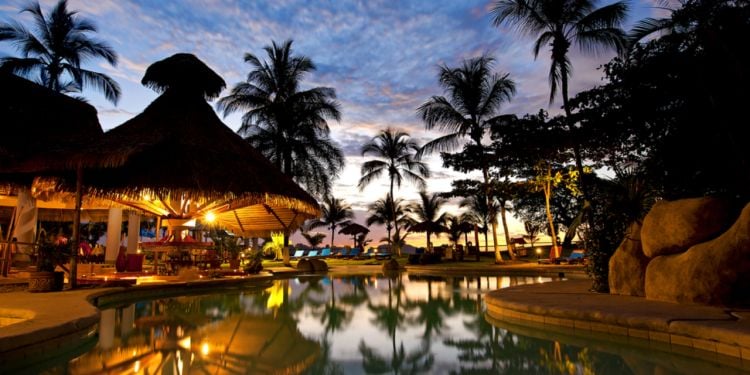
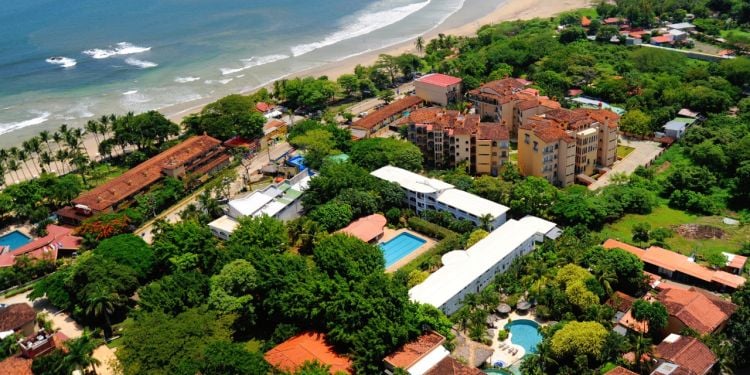
The Costa Rican housing market is varied, from urban condominiums to beach villas. Expats are concentrated in the Greater Central Valley and certain coastal areas such as Tamarindo. The legal framework is generally favorable to foreigners, with a few coastline restrictions.
Housing types and popular neighborhoods
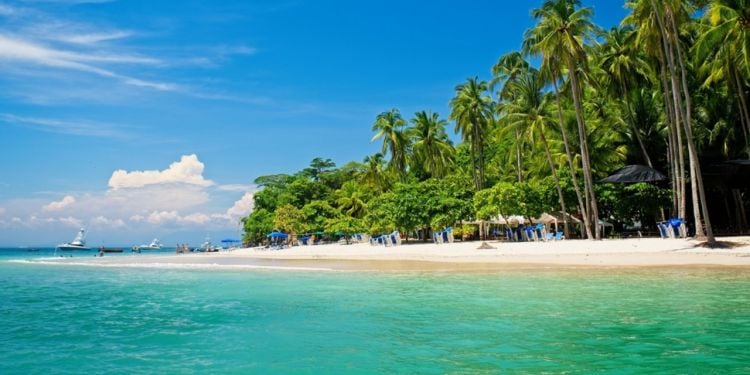
Four main options dominate: condominios (apartments in shared ownership), condominios cerrados (gated communities very popular among expats), single-family homes more common in rural areas, and beach villas. Escazú is the most expensive neighborhood, often compared to Beverly Hills. Santa Ana offers a similar profile 15-20% cheaper. Rohrmoser / La Sabana and Barrio Escalante attract young professionals. Heredia is more affordable, Tamarindo draws surfers and digital nomads, and Atenas is favored by retirees.
Average rents
For a one-bedroom: USD 700 to 900/month in central San José, USD 360 to 500/month in the outskirts, USD 800 to 1,500/month in Escazú. A three-bedroom in the outskirts rents around USD 1,031, versus USD 1,800 to 2,500 in Escazú.
Buying property
Foreigners can buy freely, except on the Maritime Zone (the first 50 meters from the high-tide line). An apartment in San José is priced around USD 2,175/m², versus USD 2,500 to 4,500/m² in Escazú. Property tax remains very low: 0.25% of registered value. Using a local attorney is strongly recommended.
05Cost of living in Costa Rica: how much to budget each month?
Costa Rica is the most expensive country in Central America according to Numbeo (2025), but remains overall 22 to 33% cheaper than the United States excluding rent. The actual budget depends heavily on where you settle: Escazú and Tamarindo charge international prices, while rural areas remain very affordable. The Costa Rican colón is the local currency, but US dollars are widely accepted.
Budget for a single person
The table below summarizes the main expense categories for a single person, based on Numbeo (April 2026) data and estimates from relocation specialists.
Category | Monthly range | Comments |
One-bedroom rent (city center) | USD 700 - 900 | San José; Escazú higher |
Groceries | USD 400 - 500 | Local market |
Utilities and internet | USD 100 - 150 | 60 Mbps internet: USD 51 |
Transport | USD 30 - 200 | Bus only or car |
Health insurance | USD 60 - 200 | CCSS or private |
Estimated total | USD 1,500 - 2,500 | Depending on lifestyle |
Budget for a family of 4
For a family with two children, the budget shifts mainly with the chosen neighborhood and the decision to enroll in international schooling.
Category | Monthly range | Comments |
Three-bedroom rent | USD 1,031 - 2,500 | SJ outskirts vs Escazú |
Groceries | USD 800 - 1,200 | 4 people |
Utilities | USD 150 - 250 | Larger home |
Transport | USD 200 - 400 | Car recommended |
Tuition (per child/year) | USD 8,000 - 20,000 | International school |
Family health insurance | USD 150 - 500 | CCSS plus private top-up |
Estimated total | USD 3,000 - 5,500 | Excluding international tuition |
Sources: Numbeo (April 2026), Foyer Global Health (2025).
06Healthcare in Costa Rica: universal CCSS and a strong private sector
Costa Rica is recognized for the quality of its healthcare system, ranked 36th worldwide by WHO. All legal residents have access to universal coverage, complemented by a modern private sector that attracts substantial medical tourism.
CCSS, the pillar of the public system
The Caja Costarricense de Seguro Social (CCSS), founded in 1941, provides 100% coverage to legal residents: consultations, hospitalizations, surgeries, medications, and maternity care. Enrollment is mandatory for permanent residents and from the moment temporary residency is requested. Cost for an expat: USD 60 to 200 per month depending on declared income. The public network includes 30 hospitals and 250 clinics, with a local EBAIS primary-care network. Main limitations: waiting times for non-urgent care and no choice of practitioner.
Private insurance and reference hospitals
The INS (Instituto Nacional de Seguros) offers private coverage up to age 74, complemented by international insurers such as Cigna, Bupa, and Pacific Prime. Three private hospitals stand out: Hospital CIMA in Escazú, Clínica Bíblica in San José, and Hospital La Católica. A private insurance policy costs USD 60 to 200 per month depending on age and coverage. US citizens should note that Medicare is not valid in Costa Rica, so private insurance or CCSS enrollment is essential. Costa Rica ranks 7th in the Medical Tourism Index, reflecting a private sector recognized internationally.


Join the discussion on the forum
07Taxation in Costa Rica: an advantageous territorial regime
The Costa Rican tax system is built on the territoriality principle: only Costa Rican-source income is taxed. Foreign pensions, foreign investment income, and foreign rental income are not taxed in Costa Rica, making the country particularly attractive to retirees and digital nomads. The tax authority is the Dirección General de Tributación (DGT), under the Ministerio de Hacienda.
Tax residency and personal income tax
Tax residency is acquired beyond 183 days per year in Costa Rica. The fiscal year runs from October 1 to September 30 (except salaries: calendar year). The 2025 monthly progressive scale for employees is: 0% up to CRC 922,000, 10% up to CRC 1,352,000, 15% up to CRC 2,373,000, 20% up to CRC 4,745,000, and 25% above. Family credits: CRC 20,760 per child and CRC 31,440 per spouse, per month. For self-employed workers, Law No. 10667 introduces from January 2026 a flat 25% deduction of gross income without supporting documentation for certain professions.
VAT and other taxes
The IVA (VAT) is set at 13%, with reduced rates of 4%, 2%, and 1%. Corporate income tax is 30% for companies with gross revenue above approximately USD 235,000. Property tax is very low (0.25% of registered value per year). Capital gains are not taxable unless trading is the habitual activity; dividends are subject to a 5% withholding, and interest to 15%.
Social contributions and treaties
The CCSS contributions amount to 10.67% of gross salary on the employee side and 26.67% on the employer side in 2025. Costa Rica has signed few double taxation treaties (Germany, Spain, Mexico only). There is no treaty with the United States, the United Kingdom, or Canada, but the territorial regime limits the practical risk of double taxation. The country also has a FATCA agreement with the US since 2019 and is a signatory to the OECD Convention on Mutual Administrative Assistance in tax matters.
Discover more


08Retiring in Costa Rica: a privileged setting
Costa Rica regularly ranks in the global top 5 for retirement destinations. The town of Atenas has been named one of the best places to retire abroad by AARP, and the country ranks 54th on the 2025 Global Peace Index. A temperate climate, recognized healthcare system, and tax-friendly framework make it a serious option to consider.
The Pensionado visa
The Pensionado visa requires a lifetime pension of at least USD 1,000 per month, with no age limit. Residency is granted for 2 years, renewable, with mandatory enrollment in CCSS. Processing time: 8 to 12 months.
Benefits and budget
Foreign pensions are not taxed in Costa Rica thanks to the territorial regime. The status grants exemption from import duties on personal effects upon first arrival and a one-time exemption on a vehicle. A retired couple can live comfortably on USD 2,200 to 2,800 per month, with around 35% allocated to housing. Popular retirement towns include Atenas, Escazú, Grecia, and Tamarindo, each with distinct profiles in terms of climate, services, and community.
Discover more
09Higher education in Costa Rica: public universities and international options
Costa Rica welcomes a growing number of international students, drawn by educational quality and moderate cost. The country has several leading public universities and private or international institutions that offer an increasing share of programs in English.
Public universities
The Universidad de Costa Rica (UCR) in San José is the main public university, open to foreigners and predominantly in Spanish. The Instituto Tecnológico de Costa Rica (TEC) in Cartago specializes in engineering and computer science. The Universidad Nacional (UNA) in Heredia is recognized in social sciences and environment. Tuition for foreigners: generally USD 2,000 to 6,000 per year.
International institutions
The EARTH University in Guácimo specializes in sustainable agriculture, with programs entirely in English. Universidad Veritas in San José stands out in design and architecture. The UWC Costa Rica offers the International Baccalaureate Diploma, on a merit-based scholarship admission. Foreign degrees may be recognized through the Consejo Nacional de Rectores (CONARE) depending on the field of study.
Discover more

10Schooling in Costa Rica: public, bilingual, and international options
With a literacy rate of 97.9%, Costa Rica has a free public education system, compulsory until age 18. Expat families have several options: integration into the local system, bilingual schools, or international schools, particularly well-developed in the Greater Central Valley around San José.
Local system: MEP
Public education falls under the Ministerio de Educación Pública (MEP). The school year runs from February to November, with instruction in Spanish. The secondary diploma is the Bachillerato de Educación Media, equivalent to a high school diploma.
International schools around San José
The Country Day School (CDS) in Alajuela follows a US-accredited curriculum (USD 19,953 to 20,887/year). Lincoln School in Heredia combines US curriculum and IB (USD 10,754 to 12,566/year). Pan-American School in San Antonio de Belén offers the country's first complete IB Continuum (USD 8,888 to 17,551/year). Blue Valley School in Escazú combines IB and US curricula (USD 10,600 to 17,750/year). The American International School (AIS) in Cariari has been a benchmark since 1970 (USD 8,800 to 20,700/year). The British School of Costa Rica offers A-levels and GCSEs.
Choosing a school and budget
The general range for an international or bilingual school is USD 5,000 to 21,000 per year. The choice depends on the family project: length of stay, language of instruction preferred, and continuity with the child's previous education system. Many families choose IB-track schools for international portability of qualifications.
Discover more

11Preparing your move to Costa Rica: the essential checklist
Good preparation saves months of administrative hassle. Between visa applications, document legalization, opening a bank account, and CCSS registration, the steps are numerous but follow a clear order. Here is the roadmap.
- Obtain visa or residency before arrival for any stay over 90 days. Plan ahead to legalize and translate official documents (birth certificate, police clearance, diplomas) into Spanish through a Costa Rican consulate.
- Open a local bank account once you receive your DIMEX (Banco Nacional, Banco de Costa Rica, Scotiabank). Without a DIMEX, opening an account is generally impossible.
- Register with CCSS as soon as residency is approved: it is a legal obligation and the gateway to public healthcare.
- Take out private health insurance while waiting for CCSS activation, which can take time after registration.
- Driver's license: international permits are accepted for 3 months. After that, present your original license and DIMEX to obtain the local equivalent.
- Vehicle import: customs duties reach 40-50% of value. It is generally better to buy locally, except under Pensionado status (one-time exemption).
- Pets: prepare a veterinary certificate, rabies vaccination, and deworming. Contact the Costa Rican embassy in your country for current rules.
- Personal belongings: customs exemption is available on first arrival with resident status.
- Notify your home country tax authorities of your change of residence if required (US citizens remain subject to worldwide taxation and FATCA reporting).
- Learn Spanish: essential for daily life outside tourist areas and outside Escazú/Santa Ana.
Discover more


12Daily life in Costa Rica: transport, food, and lifestyle
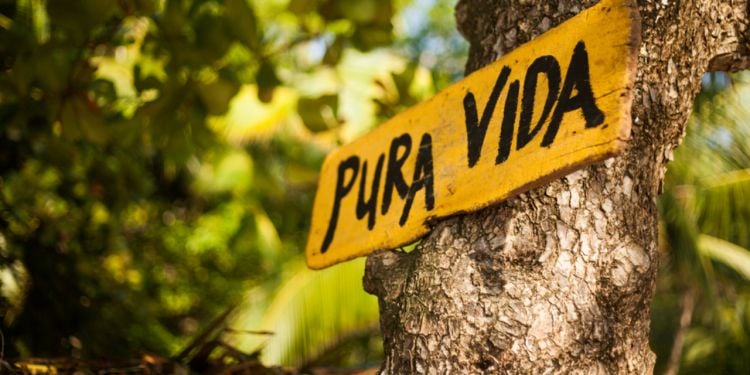
Settling in Costa Rica also means embracing the "Pura Vida" rhythm: less rushed, closer-knit, with its own codes. Transport, shopping, and services follow a different logic from major Western cities.
Getting around
The bus network is dense and inexpensive: USD 0.55 to 0.85 in San José, around USD 10 to Tamarindo. Taxis: USD 1.20 base fare and USD 1.25/km. Uber, inDrive, and Bolt are available. Outside San José, a car is often essential. The marchamo (mandatory annual insurance and inspection) costs USD 200 to 400 per year. The INCOFER train serves the central valley at very low cost.
Shopping and connectivity
The Ferias del Agricultor, local Saturday farmers' markets, offer fresh produce at very low prices. Supermarkets include Automercado (upmarket), Walmart, and PriceSmart (Costco-style wholesaler). Imported goods are 25-40% more expensive. A meal at a soda (local diner) costs USD 5 to 8. On connectivity, Kolbi (state operator), Movistar, and Claro cover the country. Mobile plans with 10 GB run around USD 26/month; unlimited 60 Mbps internet around USD 51/month. Spanish is essential outside Escazú and tourist hubs.
Discover more







13Leisure in Costa Rica: nature, culture, and sports in abundance
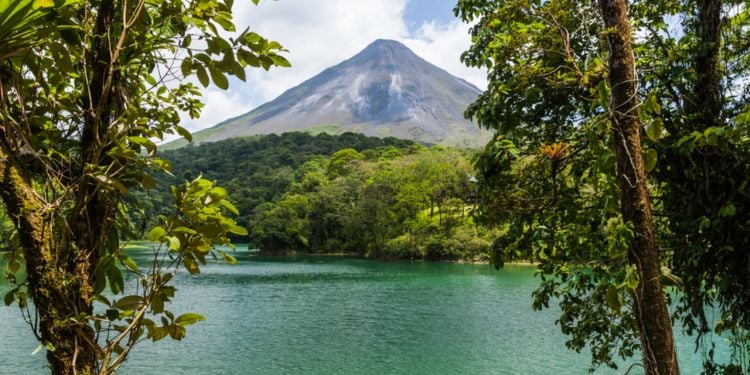
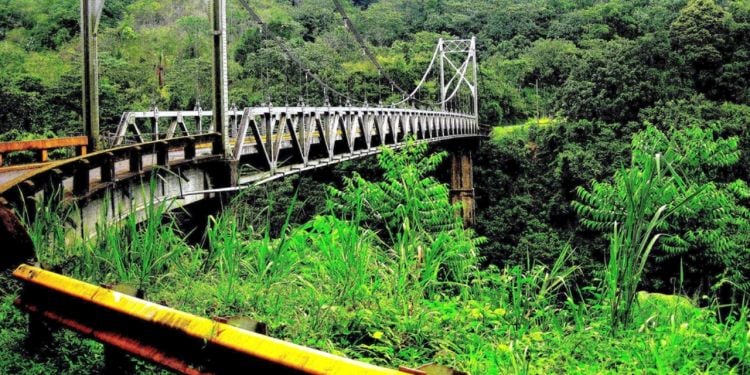
With 26% of its territory classified as parks and reserves, Costa Rica concentrates 5% of global biodiversity. The country offers a setting where hiking, surfing, wildlife watching, and cultural activities flow seamlessly into daily life.
Culture and heritage
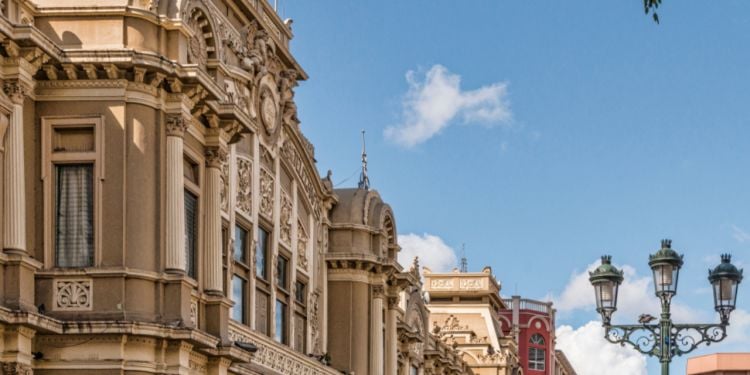
San José is home to the Teatro Nacional, an architectural gem inaugurated in 1897 (entry around USD 7), the Museo del Jade, holding the world's largest collection of pre-Columbian jade, and the Museo Nacional housed in the former Bellavista fortress. National holidays mark the year: Independence Day on September 15 and Día de la Cultura on October 12.
Sports and nature
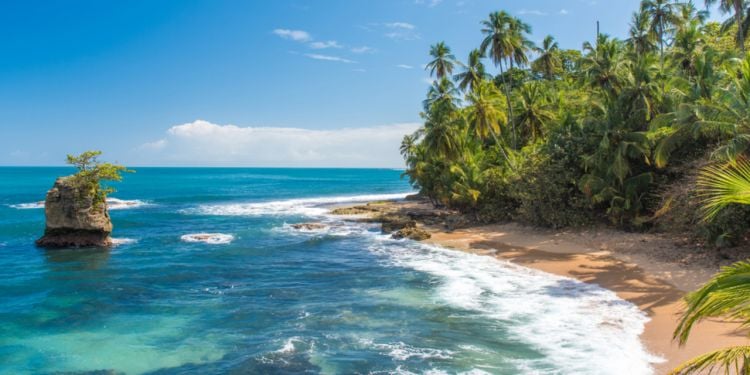
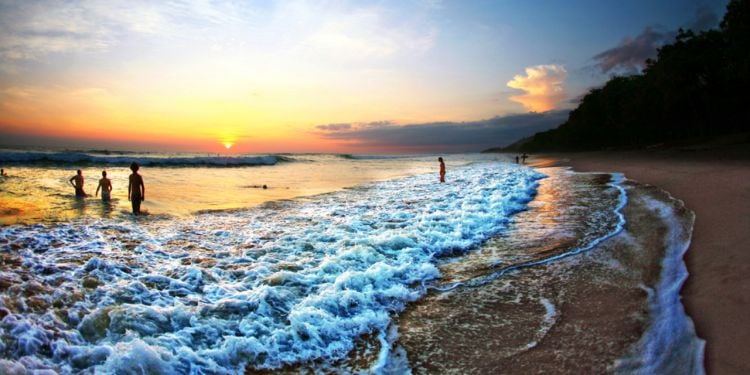
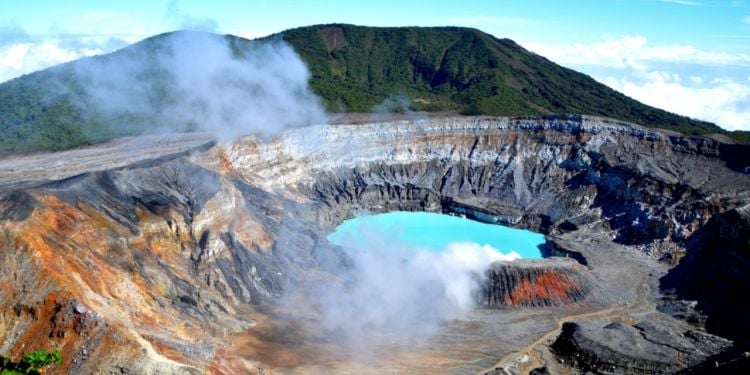
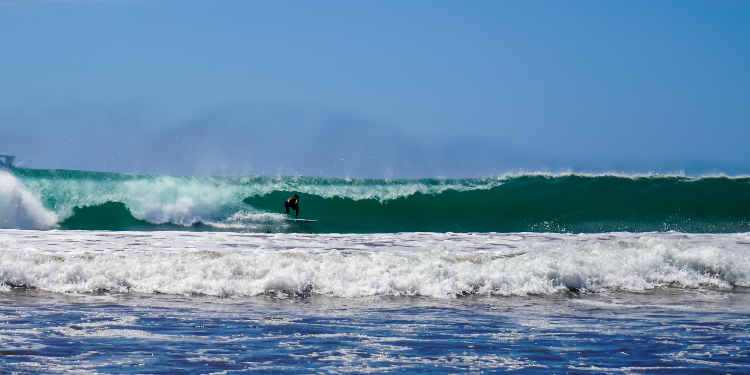
Surfing draws crowds to Tamarindo, Santa Teresa, Jacó, and Puerto Viejo on the Caribbean coast. Rafting is practiced on the Río Pacuare, ranked among the world's top 10. Hiking leads to Chirripó (3,820 m, the country's highest peak), the Arenal, Poás, or Irazú volcanoes, or the Monteverde cloud forest. Diving takes place at Isla del Coco, a UNESCO site. Expect around USD 65 per month for a gym membership.
National parks
The country has 30 national parks, 19 wildlife refuges, and 8 biological reserves. Highlights include Manuel Antonio (beaches and wildlife), Corcovado (Osa Peninsula), Tortuguero (Caribbean canals, sea turtle nesting), and Río Celeste in Tenorio National Park. To plan visits, the Costa Rica Tourism Institute centralizes practical information.
14In short: why choose Costa Rica
Costa Rica combines what few destinations offer simultaneously: exceptional nature, a quality universal healthcare system, an advantageous territorial tax regime, and a level of political stability rare in the region. Whether your project is retirement in Atenas, remote work in Tamarindo, or starting a business in San José, the residency pathways are clear and accessible. The transition takes preparation - document legalization, learning Spanish, choosing a neighborhood - but the setting and the Pura Vida mindset reward the effort.
Join the Costa Rica community
Get regular tips and advice to make the most of your expat life
Essential services for your expat journey





Forum topics on living in Costa Rica
Discover forums topics on expat life in Costa Rica: join the conversation, ask your questions, get advice and share your experience.
- Keeping a horse in Costa Rica
- TELEVISION IN COSTA RICA
- La Paz School vs CRIA/Living in CR with kids
- Condominio Loma Verde
- Trustworthy Realtor
- Single male retiree from US - dating options
- Why do so many people leave Costa Rica after moving there?
- bringing seeds into Costa Rica
- What I learned building in a gated community in Costa Rica
- Eco Lagarto Development
- Gringo Gulch
- Can I have a felony and still be allowed to live in Costa Rica
- Anyone have experience or opinions on prefab construction of homes?
- toilet/plumbing
- ATV and UTV licensing, ownership and driving on roads
- Cat Supplies (Tamarindo)