

 Guide updated by Veedushi Bissessur on 24 July 2026
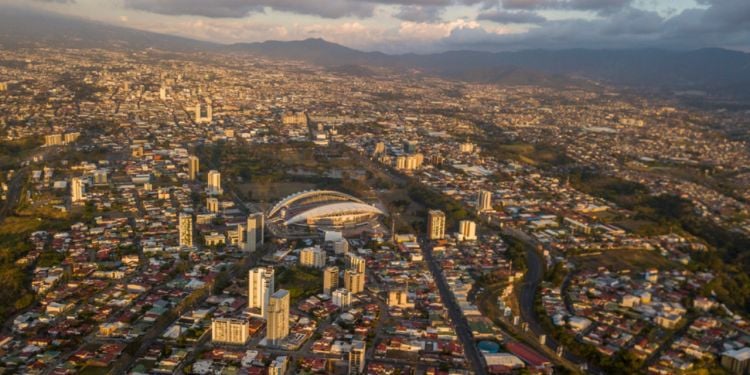
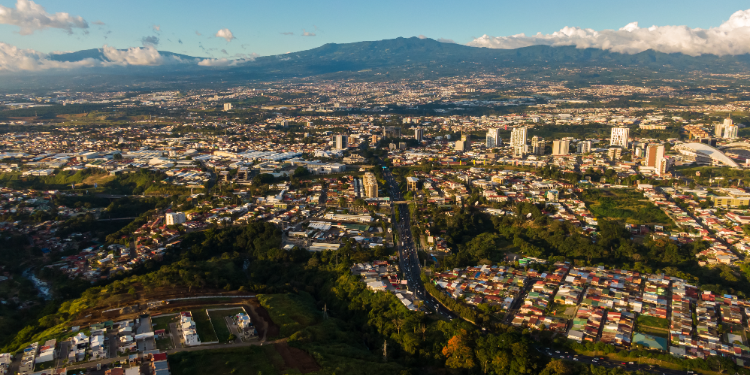
San José, the capital and largest city of Costa Rica, sits at 1,172 metres in the Central Valley and is home to around 335,000 residents, with about 1.5 million across the wider Greater Metropolitan Area (GAM). Founded as the national capital in 1823, the city, locally nicknamed "Chepe", is the country's political, economic, academic and cultural hub. It hosts the largest expat community in Costa Rica, drawing retirees, multinational professionals, entrepreneurs and digital nomads from over 500,000 foreign residents nationwide.
Spanish is the official language, but English is widely spoken in private hospitals, international firms and expat neighbourhoods such as Escazú, Santa Ana, Rohrmoser and Curridabat. The climate is temperate year-round (16–27°C), and Costa Rica's "Pura Vida" lifestyle, abolished army (1948) and renewable energy leadership (98% renewable electricity) shape a notably stable, welcoming setting.
5 good reasons to move to San José
- Regional economic hub: multinationals (Intel, Microsoft, Amazon, HP), embassies, NGOs and universities concentrate here.
- One of the world's best year-round climates, with mild temperatures and no real extremes.
- Political stability and strong democratic institutions in a country with no standing army.
- World-class private healthcare at competitive prices (Clínica Bíblica, CIMA, Metropolitano).
- Diverse neighbourhoods: from historic Barrio Amón to upscale Escazú and foodie Barrio Escalante.
Your setup journey
Guide in 9 steps. Click any step below to jump directly to the section you need.
01Working in San José
San José concentrates most of Costa Rica's qualified jobs, especially in IT, shared services and life sciences. The country hosts more than 402 multinationals under its free-zone regime, employing around 200,000 people and generating over 60% of national exports, according to CINDE.
Key sectors and employers
Major employers include Intel, Microsoft, Amazon, HP, Procter & Gamble and Western Union. Strong sectors are software development, cybersecurity, BPO/shared services, medical devices (13 of the world's top 20 OEMs operate in the country), finance and renewable energy. Business clusters concentrate in the Escazú–Santa Ana corridor, Heredia free zones and Lindora Park.
Salaries, work permits and job search
The legal workweek is capped at 48 hours. Public-sector jobs are largely closed to foreigners. Foreign workers usually need an employer-sponsored work permit, while remote workers can apply for the Estancia para Trabajadores Remotos (digital-nomad visa, Law 9996), requiring USD 3,000/month in foreign income. The main job platforms are CINDE, Encuentra24 and LinkedIn Costa Rica.
The table below summarises the main labour-market indicators for Costa Rica, with San José as its main job hub.
Unemployment rate (Q4 2025) | 6.3% |
Average gross monthly salary | USD 1,211 (CRC 620,000) |
Minimum wage (unskilled, 2026) | USD 720 (CRC 373,092) |
Minimum wage (university graduate) | USD 1,400 (CRC 687,115) |
Expat salary (multinationals) | USD 2,000–8,000/month |
Sources: Trading Economics – Costa Rica, Wage.is, Costa Rica Minimum Wage 2026.
Discover more
02Housing & Neighbourhoods
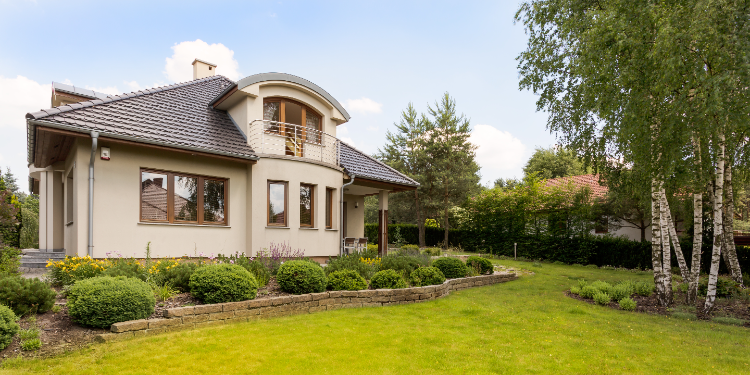
The San José housing market is concentrated in the Central Valley and offers a mix of modern condos, gated communities, family houses and historic apartments. The west side (Escazú, Santa Ana, Rohrmoser) is widely considered the most expat-friendly area.
Where expats live
Escazú—nicknamed the "Beverly Hills of Costa Rica"—and Santa Ana attract families and professionals with their international schools, malls (Multiplaza, Avenida Escazú) and proximity to Hospital CIMA. Rohrmoser and La Sabana are home to embassies and modern condos near the city's main urban park. The east side offers more affordable options: Curridabat (family-friendly), San Pedro (university district) and Los Yoses (elegant, diplomatic). Barrio Escalante is the trendy foodie hub. Areas such as Desamparados, Pavas, La Carpio and León XIII are best avoided due to higher crime rates.
Average rents and procedures
Rental contracts usually run for one year, with a one-month deposit. Foreigners can sign leases with a passport. Below are average rents in San José as of April 2026.
Property type | City centre | Outside centre |
1-bedroom apartment | USD 908 | USD 632 |
3-bedroom apartment | USD 1,627 | USD 1,104 |
Premium Escazú/Santa Ana | USD 1,200–2,500 | – |
Sources: Numbeo – San José (April 2026), Encuentra24.
03Cost of Living
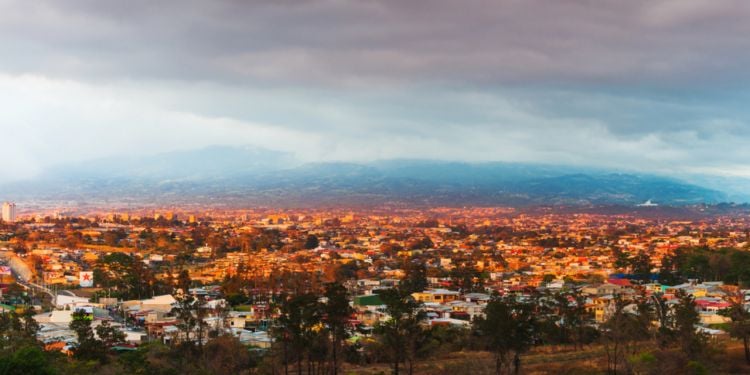
San José is the most expensive city in Costa Rica but remains affordable by North American and European standards. According to Numbeo (April 2026), the cost of living is roughly 18% lower than Columbus, Ohio, and rents are about 36% lower. The country's Cost of Living Index is 55.88 (vs. NYC=100).
Single person budget
The table below shows a comfortable monthly budget for one person living in San José.
Rent (1-bed, central) | USD 908 |
Groceries | USD 265–365 |
Utilities (85 m²) | USD 92 |
Internet + mobile | USD 92 |
Transport | USD 100–160 |
Private health insurance | USD 100–150 |
Total | USD 2,250–3,250 |
Family of four budget
For a family of four, expect significantly higher costs, particularly due to international school fees.
Rent (3-bed, central or gated) | USD 1,627–2,500 |
Groceries | USD 715–1,020 |
Utilities & internet | USD 260–370 |
Transport | USD 205–370 |
School fees (2 children, intl.) | USD 1,350–3,500 |
Family health insurance | USD 300–600 |
Total | USD 4,500–8,000 |
Sources: Numbeo – San José, International Insurance – Costa Rica.
04Retirement in San José
San José and the surrounding Central Valley are among the world's most popular retirement destinations, with a strong international retiree community drawn by the climate, healthcare and low cost of living.
Visas for retirees
The Pensionado visa requires proof of a lifetime pension of at least USD 1,000/month. The Rentista visa demands USD 2,500/month in guaranteed income for two years (or a USD 60,000 deposit). Both lead to permanent residency after 3 years. Costa Rica uses a territorial tax system, so foreign-source income (pensions, dividends) is not taxed locally. Applications are filed through the Dirección General de Migración.
Healthcare and budget
Residents must join the public CCSS system (contributions: 7–11% of declared income), while most expat retirees also use private hospitals such as Clínica Bíblica (the country's first JCI-accredited hospital), CIMA and Metropolitano. A comfortable retirement budget is around USD 2,000–2,500/month for a single person and USD 2,200–3,200/month for a couple. Recommended residential areas include Escazú, Santa Ana, Rohrmoser, Curridabat and nearby valley towns such as Atenas and Grecia.
Sources: CRIE – Costa Rica Expats & Retirees, The Latinvestor.
05Higher Education & Universities
San José is the academic capital of Costa Rica. The country has 55 accredited institutions (4 public, 51 private), and around 70% are located in San José province. International students are welcome, and degrees from accredited universities are recognised across Latin America.
Top public and private universities
The Universidad de Costa Rica (UCR), with its main Rodrigo Facio campus in San Pedro, is the country's flagship institution, ranked #499 in the QS World University Rankings 2026 and #19 in Latin America. It hosts roughly 40,000 students across six faculties. Other major public options include the Tecnológico de Costa Rica (TEC), the Universidad Nacional (UNA) in Heredia, and the distance-learning UNED, modelled on the UK's Open University. Leading private universities include Universidad Latina, ULACIT, Universidad Veritas (art, design, architecture), the Universidad Hispanoamericana and the INCAE Business School in Alajuela, one of Latin America's top business schools.
Tuition and admissions
Public universities are very affordable but require an entrance exam in Spanish. Private universities charge between USD 3,000 and USD 12,000 per year. Universidad Veritas offers semester programmes in English for around USD 10,000–12,000. All private institutions are accredited by CONESUP. Useful links: UCR, TEC, INCAE.
Sources: QS World University Rankings 2026, University of Costa Rica.
Discover more

06Schooling for Children
Costa Rica's public school system, run by the Ministerio de Educación Pública (MEP), is free but taught entirely in Spanish, with a February-to-December calendar. Most expat families choose international or bilingual schools, which are concentrated in and around San José.
International schools
Top options include Country Day School (CDS) in San Rafael de Alajuela (Nord Anglia group, US curriculum with IB and AP), Lincoln School in Heredia (the largest private school in the country, offering IB, US and National diplomas), the American International School of Costa Rica (AIS) in Cariari, Blue Valley School in Escazú, British School of Costa Rica in Rohrmoser and UWC Costa Rica in Santa Ana, which offers the IB Diploma on scholarships.
Bilingual schools and fees
Bilingual options include Colegio Humboldt (Spanish/German/English), Saint Claire School (English/Spanish/French), the Lycée Franco-Costaricien and Pan American School. Annual fees vary widely:
School | Annual fees (USD) | Curriculum |
Country Day School | 19,953–20,887 | US / IB / AP |
Lincoln School | 10,754–14,869 | US / IB |
American International School | 7,170–11,380 | US |
Blue Valley School | ~13,200–17,000 | US / IB |
Sources: US Department of State – Lincoln School, International Schools Database – CDS.
Discover more

07Daily Life
Life in San José runs at the pace of the "Pura Vida" philosophy: relaxed, friendly and family-oriented. The city blends Hispanic, indigenous and Afro-Caribbean influences, with a strong expat presence in western suburbs. Spanish is essential outside expat hubs, but English is widely spoken in business and healthcare.
Getting around
San José has no metro or tram. Public transport relies on an extensive but ageing bus network, with a local ticket at CRC 500 (USD 1.02) and a monthly pass at CRC 30,000 (USD 61). Official red taxis coexist with Uber, Didi and InDriver. Rush-hour traffic is heavy on key routes like Highway 27 and the Pan-American Highway. Juan Santamaría International Airport (SJO), 17 km from the centre, connects San José with the Americas, Europe and the Caribbean.
Food, leisure and connectivity
Shopping is easy thanks to chains like Automercado, Walmart, MasxMenos and PriceSmart, plus weekly ferias del agricultor (farmers' markets). A meal in an inexpensive restaurant costs around CRC 5,000 (USD 10), while a mid-range dinner for two runs about CRC 30,000 (USD 61). Fibre internet (60+ Mbps) averages USD 60/month, and 10 GB mobile plans cost around USD 31. Coworking spaces such as Selina and WeWork are well established. The Numbeo Safety Index is moderate (44.4), so basic vigilance is advised in busy downtown areas.
Discover more


08Leisure, Culture & Things To Do
San José offers a rich cultural scene and easy access to Costa Rica's famed natural attractions. Most museums and theatres are within walking distance in the historic centre, while volcanoes, cloud forests and Pacific beaches lie within a few hours.
Museums, theatres and parks
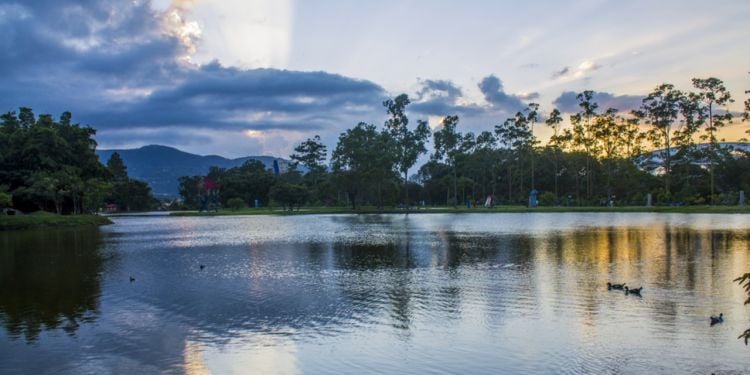
The Teatro Nacional de Costa Rica (1897), a neoclassical landmark, hosts concerts and guided tours. The Museo del Jade houses the world's largest pre-Columbian jade collection, while the Museo del Oro Precolombino displays over 1,600 gold artefacts beneath Plaza de la Cultura. The Museo Nacional, set in the Bellavista Fortress, includes a butterfly garden with 600 species. Green spaces include Parque Metropolitano La Sabana (the city's main park, with the National Stadium), Parque Morazán and the Parque Okayama Japanese garden.
Nightlife, food and day trips
Barrio Escalante is San José's foodie heart, with the Calle 33 food hall and trendy restaurants. Avenida Escazú caters to a more upscale crowd, while San Pedro offers a lively student nightlife. Costa Rica's third-wave coffee culture is thriving, with roasters like Cafeoteca and Franco. Within easy reach: Volcán Poás and Irazú (1 hour), Arenal and Monteverde (about 3 hours), Manuel Antonio National Park and the Pacific beaches (under 2 hours via Highway 27). Major events include the Festival Internacional de las Artes, the Festival de la Luz (December) and the Tope Nacional horse parade.

09FAQ
10In short
San José combines the calm of the Pura Vida lifestyle with the practicality of a true regional capital: stable institutions, a mild year-round climate, excellent private healthcare, and a cost of living that remains accessible. Expats benefit from a thriving multinational job market, well-regarded universities, a strong selection of international schools and welcoming neighbourhoods such as Escazú, Santa Ana and Curridabat. From museum mornings in the historic centre to volcano hikes and Pacific beach weekends, daily life here is varied and balanced.
Thinking about moving to San José? Join the conversation with fellow members and ask your questions on the Expat.com Costa Rica forum.
Join the San Jose community
Get regular tips and advice to make the most of your expat life
Essential services for your expat journey





Forum topics on living in San Jose
Discover forums topics on expat life in San Jose: join the conversation, ask your questions, get advice and share your experience.
- Keeping a horse in Costa Rica
- TELEVISION IN COSTA RICA
- La Paz School vs CRIA/Living in CR with kids
- Condominio Loma Verde
- COVINTEC construction experience
- Single male retiree from US - dating options
- Why do so many people leave Costa Rica after moving there?
- bringing seeds into Costa Rica
- What I learned building in a gated community in Costa Rica
- Playa Lagarto Eco Developement
- Gringo Gulch
- Can I have a felony and still be allowed to live in Costa Rica
- Anyone have experience or opinions on prefab construction of homes?
- toilet/plumbing
- ATV and UTV licensing, ownership and driving on roads
- Moped Laws