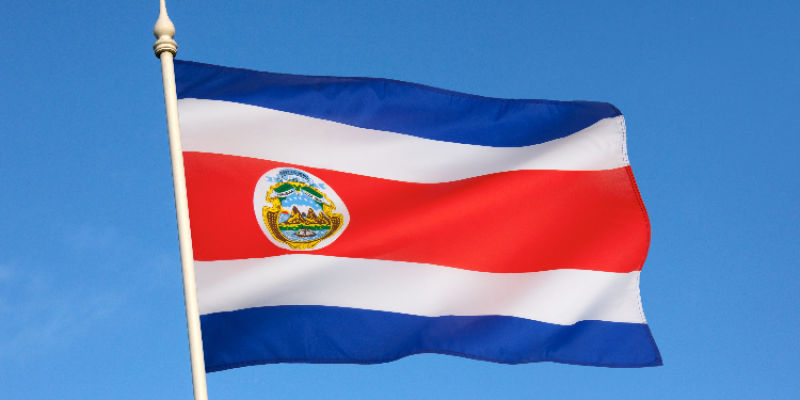
Becoming a citizen of Costa Rica is one of the most significant steps a long-term resident can take. It transforms your relationship with the country from one based on permits and renewals to one grounded in constitutional rights and permanent belonging. For many expats, it marks the end of years of paperwork and the beginning of full participation in Costa Rican society. This article covers every pathway available, what the process looks like in practice, how long it takes, what it costs, and what changes once you hold a Costa Rican passport in your hands.
Costa Rica stands out in Latin America for its political stability, strong democratic institutions, and well-established legal framework for immigration and naturalization. For expats who have built their lives here, pursuing Costa Rican citizenship offers something that permanent residency simply cannot: a permanent, unconditional status that no authority can revoke and no renewal cycle can disrupt.
The practical benefits are substantial. Long-term residents who naturalize gain full constitutional rights, including the right to vote in national and municipal elections and the right to stand for public office, privileges that are explicitly reserved for citizens. They also receive a Costa Rican national ID (Cédula de Identidad) and become eligible for a Costa Rican passport, which currently ranks among the stronger travel documents in the region. Beyond the paperwork, citizenship also eliminates the recurring costs and administrative burden of renewing the Documento de Identidad Migratorio para Extranjeros (DIMEX), the ID card issued to legal residents.
The process is managed centrally by the Tribunal Supremo de Elecciones (TSE) through its Civil Registry. The Costa Rican Constitution treats naturalization as a protected right rather than a discretionary privilege, which gives applicants a clear legal foundation to work from. The main pathways include naturalization through long-term residency, citizenship through marriage to a Costa Rican, citizenship by descent, and in exceptional cases, citizenship by presidential decree for individuals who have made notable contributions to the country.
Understanding the gap between permanent residency and citizenship helps clarify why so many long-term expats eventually pursue naturalization. Both statuses allow you to live and work freely in Costa Rica and access the public healthcare system through the CAJA (Caja Costarricense de Seguro Social). But the similarities largely end there.
Permanent residents must periodically renew their DIMEX card, with fees ranging from USD 95 to USD 133 depending on their residency category. Miss a renewal, and you risk falling into irregular immigration status. Citizens, by contrast, are permanently exempt from all DIMEX procedures and the risks that come with them. More importantly, permanent residency can be revoked if a resident spends extended periods outside the country, whereas citizenship carries no such condition. Citizens have an unconditional right of abode regardless of how long they spend abroad.
The political dimension is equally significant. Permanent residents, no matter how long they have lived in Costa Rica, cannot vote or run for office. Only citizens hold those rights. Citizens are also issued a Cédula, which serves as the primary form of identification in everyday life, and can apply for a Costa Rican passport, opening up significantly greater global mobility. For expats who see Costa Rica as their permanent home, citizenship is the logical and practical final step.
Get regular tips and advice to make the most of your expat life
Pathways to citizenship in Costa Rica
Costa Rica offers several distinct routes to citizenship, and your starting point will largely determine which pathway applies to you. The most common is naturalization through long-term residency, but marriage, descent, birth, and exceptional merit also open doors under specific circumstances.
Naturalization by residency: The standard pathway, requiring seven years of continuous legal residence. Citizens of Central American countries, Spain, and other Ibero-American nations qualify after five years.
Citizenship by marriage: Available to foreign nationals married to a Costa Rican citizen who have also resided legally in the country for at least two years.
Citizenship by descent (jus sanguinis): Granted to individuals born abroad to at least one Costa Rican parent, subject to registration deadlines.
Citizenship by birth (jus soli): Children born in Costa Rica to foreign parents may opt for citizenship upon reaching adulthood, or immediately if they would otherwise be stateless.
Special merit: Nationality may be granted by presidential decree to foreigners who have made significant contributions to Costa Rican science, culture, or humanitarian efforts. This pathway is rare and entirely discretionary.
Citizenship via investment residency: Costa Rica has no direct citizenship by investment program. However, a qualifying investment of at least USD 150,000 can support an Inversionista residency visa, which then allows the investor to apply for naturalization after completing the standard seven-year residency timeline.
Naturalization: becoming a citizen through residency in Costa Rica
For most expats, naturalization by residency is the primary route to Costa Rican citizenship. The standard requirement is seven years of continuous legal residence, reduced to five years for citizens of Central American countries, Spain, and other Ibero-American nations. These years must be spent in legal status; the Dirección General de Migración y Extranjería (DGME) reviews all entry and exit stamps when verifying an applicant's continuous domicile, so extended absences can complicate or disqualify an application.
Financial stability is a firm requirement. Applicants must demonstrate that they have lawful means of supporting themselves, whether through employment, a pension, or established investments. A consistent, uninterrupted history of contributions to the CAJA is also expected as part of demonstrating genuine integration into Costa Rican life.
On the documentation side, applicants must provide a clean criminal record from both Costa Rica and their home country. The home country police certificate must have been issued no more than three months before the application is submitted. All foreign documents must be apostilled and officially translated into Spanish. Integration is further assessed through mandatory exams in Spanish language and Costa Rican civics, both administered by the Ministry of Public Education.
Once the application is submitted to the Civil Registry, the administrative review typically takes between twelve and eighteen months. This means that for most expats, the realistic timeline from first arriving in Costa Rica to holding a Cédula as a citizen runs to roughly seven to nine years. It is a long journey, but the requirements are clear and the pathway is well-established.
Citizenship by descent in Costa Rica
If you were born outside Costa Rica to at least one Costa Rican parent, you may already have a legal claim to citizenship by descent. This pathway, known in legal terms as jus sanguinis, does not require you to have lived in Costa Rica, but it does involve strict registration deadlines that applicants must respect.
For minors, the Costa Rican parent can register the child's birth directly with the Civil Registry in Costa Rica or through any Costa Rican consulate abroad, and this must be done before the child turns eighteen. If the parent fails to complete that registration, the individual has the right to register themselves, but only before they turn twenty-five years old. Missing both windows means forfeiting the claim.
The registration process requires applicants to establish an unbroken chain of lineage. This means submitting apostilled and officially translated birth certificates and marriage certificates that link the applicant to their Costa Rican ancestor. Consular registration abroad carries exactly the same legal weight as registration completed at the TSE headquarters in San José. Processing times for descent-based applications generally range from six to eighteen months, depending on how complex the lineage documentation turns out to be.
Citizenship by marriage in Costa Rica
Foreign nationals married to a Costa Rican citizen benefit from one of the fastest routes to naturalization available in the country. To be eligible, the applicant must have been married to the Costa Rican citizen for at least two years and must have also resided legally in Costa Rica throughout that same period. The marriage must be officially registered and inscribed in the Costa Rican Civil Registry before any application can proceed.
The naturalization by marriage process is handled by the Sección de Opciones y Naturalizaciones at the TSE, and notably, it carries no government application fee. The Civil Registry takes the authenticity of the marriage seriously. Officers review shared financial accounts, lease or mortgage documents, and conduct interviews to confirm that the couple genuinely cohabits. If the marriage ends in legal separation or divorce before the final approval is issued, the applicant automatically loses eligibility under this pathway.
Processing for marriage-based naturalization is generally faster than the standard residency route. According to the TSE's official naturalization by marriage documentation, the procedure typically takes around two hundred days, or roughly ten months. This makes it a meaningfully quicker option for those who qualify.
Costa Rica does not offer a direct citizenship by investment program that bypasses the standard naturalization process. There is no golden passport scheme, and no amount of investment will accelerate eligibility on its own. However, investment can serve as the basis for an Inversionista residency visa, which requires a minimum qualifying investment of USD 150,000. Once that residency is granted and maintained for seven continuous years, the investor becomes eligible to apply for naturalization under the same rules that apply to all other long-term residents. The investment route is therefore a starting point for residency, not a shortcut to citizenship.
Dual citizenship policy in Costa Rica
Costa Rica's position on dual citizenship is clear and straightforward: it is officially permitted. Expats who naturalize in Costa Rica are not required by Costa Rican law to give up their original nationality. The country also holds specific reciprocity treaties with Spain and most Latin American nations that formally guarantee dual nationality rights for citizens of those countries.
One important procedural note: during the naturalization oath, applicants must truthfully declare all nationalities they currently hold. Concealing another passport is not a minor administrative oversight. It can result in sanctions or even the annulment of the Costa Rican citizenship itself.
The more complex question for many applicants is not what Costa Rica requires, but what their home country permits. Some nations automatically revoke citizenship when their nationals voluntarily acquire a new one. This is not a hypothetical concern. It affects citizens of certain European, Asian, and Middle Eastern countries in particular. Before beginning the naturalization process, every applicant should verify their home country's rules on dual nationality directly with their national embassy or consulate. For some people, this may be the deciding factor in whether to proceed at all, and it deserves serious consideration before any application is filed.
Citizenship test and language requirements in Costa Rica
Applicants for standard naturalization must pass two separate exams administered by the Ministerio de Educación Pública (MEP). The first evaluates basic conversational, reading, and writing proficiency in Spanish. The second covers Costa Rican history and civic values. A minimum score of seventy out of one hundred is required to pass each exam.
Each test costs CRC 10,000 (approximately USD 19), and candidates must register online through the MEP's "Yo Aplico" platform. There is no formal CEFR level designation attached to the Spanish exam, but the test is designed to assess functional everyday communication rather than advanced academic language. Applicants who have spent several years living and working in Costa Rica generally find the level manageable, though those who have lived in expat bubbles with limited Spanish exposure may want to prepare more deliberately.
Exemptions from both exams are available in specific cases. Minors, older adults, and individuals who can provide medical certification of a cognitive or health impediment may request to be excused from the testing requirement. For everyone else, the exams are a mandatory step that must be completed before the application file can advance.
Application process for citizenship in Costa Rica
The naturalization application process in Costa Rica follows a clear sequence of steps, all managed through the Civil Registry at the TSE. While the steps are well-defined, the document preparation phase is where most applicants encounter delays, so starting early and staying organized makes a significant difference.
Verify your continuous legal residence and get an official residence certification from the DGME to confirm your eligibility timeline.
Gather all required documentation. This includes a home-country criminal background check issued within the last three months, your original birth certificate, and proof of income or financial stability. All foreign documents must be apostilled and officially translated into Spanish.
Register for and pass the MEP exams in Spanish language and Costa Rican history through the "Yo Aplico" platform.
Submit your formal application (the "escrito inicial") to the Sección de Opciones y Naturalizaciones at the TSE headquarters in San José or at a regional office. The TSE's official requirements for naturalization by domicile set out the exact documentation checklist.
Provide character witness declarations from individuals who can attest to your good conduct and lawful livelihood in Costa Rica.
Attend an interview with Civil Registry officers, who will verify your reasons for seeking citizenship, your integration into Costa Rican life, and your means of financial support.
Wait for the review and approval of your application file. Once approved, you will be summoned to take the naturalization oath.
It is worth emphasizing that documents with expiry dates, particularly the home-country criminal record certificate, must remain valid throughout the active review period. If a document expires before the Civil Registry processes your file, you may need to obtain a fresh one. Building this into your timeline from the start avoids unnecessary delays.
Processing times and fees in Costa Rica
One of the more pleasant aspects of the Costa Rican naturalization process is that the administrative application itself is completely free of charge at the TSE. Applicants do pay a nominal fiscal stamp (timbre fiscal) of either CRC 20 or CRC 200, less than USD 0.50, depending on their nationality, but this is a minor formality rather than a meaningful cost.
The real costs come from the supporting steps. Each MEP exam costs CRC 10,000 (approximately USD 19), so two exams total around USD 38. The more variable expense is document preparation: obtaining a home-country police certificate, having it apostilled, and hiring a certified translator in Costa Rica can range from USD 100 to USD 500, depending on your country of origin and how many documents require processing. Applicants with complex document chains spanning multiple countries should budget toward the higher end of that range.
As for processing times, standard naturalization applications typically take between twelve and eighteen months once submitted to the Civil Registry. Marriage-based applications move more quickly, with a typical processing time of around ten months. These are working estimates based on current practice, and actual times can vary depending on case complexity and the volume of applications the TSE is handling. Applicants should treat these as realistic benchmarks rather than guaranteed timelines, and plan their lives accordingly during the waiting period.
Rights and benefits of Costa Rica citizenship
Becoming a Costa Rican citizen unlocks a set of rights and benefits that go well beyond what permanent residency offers. Some of these are practical and immediately visible; others are more subtle but equally meaningful over the long term.
Global mobility: The Costa Rican passport currently grants visa-free or visa-on-arrival access to 148 destinations, including the Schengen Area, Japan, and the United Arab Emirates, placing it among the stronger passports in the Latin American region.
Political rights: Citizens have the full right to vote in presidential, legislative, and municipal elections, and the right to stand as candidates for public office.
Permanent security: Citizens hold an unconditional right of abode in Costa Rica. They cannot be deported and face no risk of losing their status due to extended time spent abroad.
Family benefits: Citizens can pass Costa Rican nationality to children born abroad through descent, extending the benefits of citizenship to the next generation.
Economic freedom: Citizens can work in any sector or profession without the restrictions tied to certain temporary residency categories, such as the Pensionado or Rentista visas, which limit income-generating activities within Costa Rica.
Citizenship ceremony and oath in Costa Rica
Once the Civil Registry approves a naturalization application, the applicant is formally summoned to take an oath before designated authorities of the Tribunal Supremo de Elecciones. The ceremony is a legal formality, but it carries real weight. Under the Ley de Opciones y Naturalizaciones, the oath requires the applicant to swear or affirm their respect for the constitutional order of the Republic of Costa Rica and to formally commit to residing regularly within the national territory.
Following the oath, the new citizen receives their official Carta de Naturalización (Certificate of Naturalization). This document is the formal record of the new status and serves as the basis for applying for the Cédula de Identidad and, subsequently, a Costa Rican passport. The ceremony itself is relatively straightforward, but for most people who have spent years working toward this moment, it represents a meaningful personal milestone.
Receiving the Carta de Naturalización is not quite the end of the administrative process. Several practical steps follow that new citizens need to complete promptly.
The immediate priority is applying for the Cédula de Identidad, the mandatory national ID card for all Costa Ricans over eighteen. This card replaces the DIMEX as your primary form of identification in everyday life. With the Cédula in hand, you can then apply for a Costa Rican passport (Pasaporte costarricense) through authorized agencies such as the Bank of Costa Rica (BCR) or Correos de Costa Rica.
The transition also requires updating your identification number across every institution that has you on record. Your DIMEX number is replaced by your new Cédula number, and this change needs to be reflected with the CAJA, your commercial banks, and the tax authority, the Ministerio de Hacienda. If you hold a driver's license linked to your DIMEX, that will also need to be updated to reflect your new Cédula number. These administrative updates can take some time to work through, but they are a one-time process rather than a recurring obligation, which is precisely the point of having made this journey in the first place.
For most expats, the standard path requires seven years of legal residence before applying, reduced to five years for citizens of Latin American countries and Spain. Once the application is submitted, the Civil Registry typically takes an additional twelve to eighteen months to process it. This means the realistic total timeline from arrival to citizenship is roughly seven to nine years for most applicants.
Yes, Costa Rica officially permits dual citizenship. Expats who naturalize here are not required by Costa Rican law to give up their original nationality. However, applicants must verify the rules of their home country, as some nations may automatically revoke citizenship when a new one is voluntarily acquired.
Yes, applicants for standard naturalization must pass two exams administered by the Ministry of Public Education: a Spanish language test and a Costa Rican history and values test. A minimum score of seventy out of one hundred is required for each. Exemptions are available for minors, seniors, and individuals with documented cognitive or health impediments.
The administrative application at the TSE is completely free of charge. You will need to pay CRC 10,000 (approximately USD 19) per MEP exam, plus the costs of apostilling and officially translating your foreign documents, which can range from USD 100 to USD 500 depending on your country of origin. Budget for both exams and document preparation from the start.
Costa Rica does not have a direct citizenship by investment program. Investing a minimum of USD 150,000 can qualify you for an Inversionista residency visa, but you would still need to complete seven years of continuous legal residence before becoming eligible to apply for naturalization through the standard pathway.
If you marry a Costa Rican citizen, you can apply for naturalization after two years of marriage, provided you have also lived legally in Costa Rica for those same two years. The marriage must be registered in the Costa Rican Civil Registry. Processing for spouse applications typically takes around ten months once submitted.
Yes. Exemptions from both the Spanish language and civics exams are available for minors, older adults, and individuals who provide certified medical documentation of a cognitive or health impediment. All other applicants are required to complete both tests before their application file can advance.
Citizenship applications are handled by the Sección de Opciones y Naturalizaciones at the Civil Registry, which is a division of the Tribunal Supremo de Elecciones (TSE). You can submit your application at the TSE headquarters in San José or at a regional TSE office. The process is centralized and there is no filing fee at this stage.
ℹ️
We do our best to provide accurate and up to date information. However, if you have noticed any inaccuracies in this article, please let us know in the comments section below.
A journalist, holder of the DALF C1 and C2 and a diploma from the University of Mauritius, I have nearly twenty years of writing experience. After six years in the Mauritian press, I joined Expat.com, where I have been working for over a decade, including five years as editorial assistant, and now as editorial manager.