Costa Rica's tropical climate, varied terrain, and deeply social culture make it one of the most sports-friendly countries in the Americas for expats. Whether you're looking to join a local soccer game, paddle out on a Pacific break, hit the trails above San José, or find a modern gym near your neighborhood, there is something on offer for every fitness level and budget. This article walks you through the sports scene from the bleachers to the mountains, so you can find your footing quickly after you arrive.
Sport in Costa Rica is not a weekend hobby reserved for a few. It is woven into daily life, shaped by a geography that places rainforests, volcanic peaks, and two coastlines within a few hours of each other. The tropical climate means outdoor activity is possible year-round, and residents take full advantage of it. Trail running, mountain biking, surfing, and informal five-a-side soccer are all part of the everyday rhythm for locals and expats alike.
The government body responsible for sports infrastructure in Costa Rica is the Instituto Costarricense del Deporte y la Recreación (ICODER), which oversees public facilities and promotes mass participation in sport and recreation. ICODER has directed significant investment toward restoring key public spaces, including Parque Metropolitano La Sabana in San José, with the explicit goal of encouraging more people to be active. Soccer remains the undisputed national passion, dominating both professional leagues and informal community play, but the country's active culture extends well beyond the pitch.
If you want to understand Costa Rican society quickly, go to a soccer match. The Liga FPD (Primera División) is the top professional league, and its clubs inspire genuine, vocal devotion. The four most followed teams are Deportivo Saprissa, Liga Deportiva Alajuelense, Club Sport Herediano, and Cartaginés. Among these, the rivalry between Saprissa and Alajuelense, known as the Clásico, is the single biggest fixture in the Costa Rican sports calendar, capable of filling stadiums with an electric atmosphere that is well worth experiencing at least once.
Getting to a match is straightforward and affordable. For regular Primera División fixtures, ticket prices range from around CRC 3,500 (USD 7) for standard bleacher seating up to CRC 40,000 (USD 78) for premium club seats, according to pricing listed on the official Saprissa ticketing platform. High-profile Clásico matches tend to push prices up, with seats typically ranging from CRC 11,000 to CRC 20,000, as reported by El Mundo CR. Tickets are sold online through platforms such as eticket.cr, boleteriamorada.com, and ticketshow.cr, and you will need a digital QR code for stadium entry, so make sure to download your ticket before you go.
Get regular tips and advice to make the most of your expat life
Gyms and fitness centers in Costa Rica
The gym scene in Costa Rica has grown considerably, and expats in the greater San José area and surrounding towns will find a solid range of options from budget chains to premium health clubs. The choice you make will likely depend on your priorities, whether that is cost, location, or the type of classes and equipment on offer.
Smart Fit is the leading budget gym chain, with locations in Escazú, San Sebastián, and Cariari. A basic plan costs between USD 34.99 and USD 37.99 per month, while the premium "Black" plan, which allows access to all branches, is priced at USD 40.99 per month plus tax. These gyms include cardio equipment, free weights, and group classes such as Smart Rumba and Smart Combat. For expats who move between neighborhoods or travel frequently within the country, the multi-branch access plan offers genuine flexibility.
Mid-range and premium options are also well represented. Multispa operates locations in Alajuela, Escazú, Tíbás, and Turrialba. Gold's Gym offers a mid-to-premium tier. Pricing for these gyms was last reported by El Financiero in early 2024, placing Multispa standard memberships at around USD 101 per month with a one-time USD 50 enrollment fee, and Gold's Gym at around USD 84.75 per month. These figures may have changed, so it is worth confirming current rates directly with each gym before signing up.
Running and jogging in Costa Rica
San José may not look like a runner's city at first glance, but it has a strong and welcoming running community. Parque Metropolitano La Sabana and Parque de la Paz are the two main urban hubs for daily joggers, and you will find people on the paths at almost any time of day. Both locals and expats use these parks as informal meeting points for group runs, and several running clubs and marathon training groups operate regularly in the metropolitan area.
The flagship competitive event is the Gran Maratón Costa Rica, an ICODER-organized race that routes participants around the streets of San José. Registration is set at CRC 19,000 (around USD 37) and covers distances from a 2k fun run all the way up to a full 42k marathon, making it accessible to participants of all levels. Registration proceeds from the race go directly toward the restoration of La Sabana Park, so taking part also supports the city's public sports infrastructure.
Swimming in Costa Rica
Access to swimming facilities in Costa Rica varies depending on where you live. In the San José area, the most prominent public aquatic facility is the Piscina María del Milagro París, located within La Sabana park. Managed by the Costa Rican Aquatics Federation (FECODA), this Olympic-standard pool hosts major national championships and offers swimming lessons and programs open to the public. It is the designated venue for national aquatics and water polo competitions, which gives you a sense of the facility's quality and standing.
Outside San José, the historic Balneario Ojo de Agua in Belén offers spring-fed public pools set in a park environment, providing a more relaxed alternative for recreational swimming. Many expats, however, find that the most consistent access to maintained lap pools comes through private country club memberships or premium gym packages such as those offered by Multispa. If regular lap swimming is important to your fitness routine, it is worth factoring pool access into your gym or club selection from the outset.
Team sports in Costa Rica
Beyond watching soccer, expats quickly discover that playing it is even easier to arrange. The most popular form of amateur team sport in Costa Rica is "Fut 5," five-a-side soccer played on synthetic turf pitches. These pitches are scattered across every city and town, and informal matches, known locally as mejengas, are organized constantly through social media groups and neighborhood networks. Renting a standard Fut 5 pitch costs around CRC 20,000 (USD 39) per hour, or roughly CRC 10,000 (USD 19) per team when split between two sides. One practical note: proper synthetic turf or flat-soled shoes are strictly required at all Fut 5 facilities, so cleats are not appropriate here.
Beyond soccer, recreational basketball and ultimate frisbee are both actively organized among expat communities, particularly in metropolitan areas and coastal towns. These games are typically arranged through Facebook groups and WhatsApp communities, making it relatively easy to find a group and join in, even if your Spanish is still developing.
Racquet sports in Costa Rica
Padel in Costa Rica has grown at a remarkable pace across the Gran Área Metropolitana (GAM), with modern clubs like Puro Padel, X3 Padel, and Art Padel opening in Curridabat, Santa Ana, and other urban hubs. The sport has attracted a large and enthusiastic following, and the social format of padel, typically played in doubles, makes it an excellent way for expats to meet people. Courts can be booked through the Playtomic app, which is widely used by Costa Rican padel clubs and makes scheduling straightforward. If you are based in or around Santa Ana, you can find more options by checking the sports scene in Santa Ana for local clubs and facilities. Equipment costs are worth budgeting for: new padel rackets sold locally were priced between CRC 56,900 and CRC 179,900 (approximately USD 110 to USD 350) according to La Nación, though prices may have shifted since that report.
Pickleball is gaining momentum, especially in coastal expat communities, offering a less physically demanding option with a growing tournament structure. For those who prefer traditional tennis, the Costa Rica Tennis Club in San José remains the most established institution in the country, with a long history and well-maintained courts.
Martial arts and combat sports in Costa Rica
Brazilian Jiu-Jitsu (BJJ) has a particularly strong presence in Costa Rica, with dedicated gyms such as Athletic Advance and Raptor Jiu Jitsu operating in San José. The sport is both competitively active and socially tight-knit, meaning that joining a BJJ gym is often one of the faster ways for expats to build a local network. Competitive BJJ tournaments run regularly, with entry fees for ranked adult competitions sitting at around USD 40, based on recent pricing from the Integración Jiu Jitsu tournament. Most gyms require a gi (uniform) for BJJ classes, which you buy separately, though No-Gi grappling sessions are also widely available and require no specialized clothing.
For those interested in striking disciplines, kickboxing fitness and MMA conditioning classes are offered at several high-end fitness centers across San José. Dedicated unlimited kickboxing class packages were priced at around USD 69 per month at major gyms, according to El Financiero, though this figure dates from 2024 and is worth verifying directly with facilities before committing.
Golf in Costa Rica
Costa Rica offers a small but appealing selection of golf courses, most set against lush tropical backdrops that make for memorable rounds. Parque Valle del Sol in Santa Ana is among the most accessible and popular with expats and visiting golfers, with green fees ranging from USD 67 to USD 81 for 18 holes. The historic Cariari Country Club in San José offers a championship layout designed by George Fazio, with visitor rounds typically running around USD 150.
At the premium end, Reserva Conchal in Guanacaste is a resort course that charges between USD 155 and USD 175 for resort guests. Most Costa Rican courses use Bermuda or Zoysia grass and hold Audubon International certification, which means the courses are managed with conservation in mind. Golfers routinely share fairways with wildlife, from birds and lizards to the occasional monkey, which makes the experience genuinely distinct from courses elsewhere.
Water sports in Costa Rica
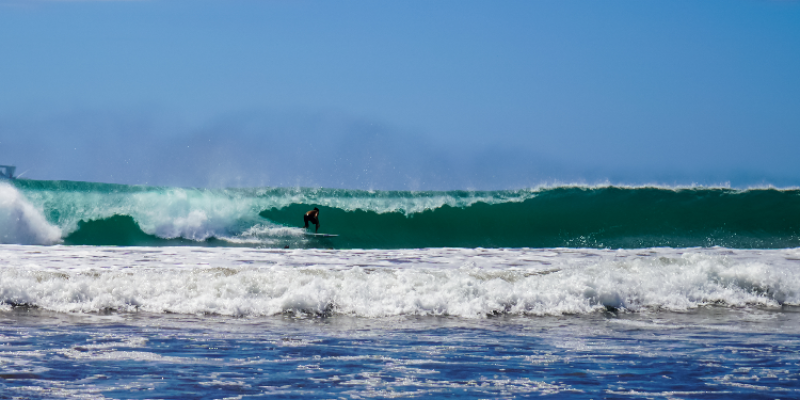
Costa Rica's two coastlines give expats access to some of the best water sports in Central America. Surfing is the standout discipline, with Tamarindo, Santa Teresa, and Jacó serving as the main coastal hubs. Each of these towns has a full ecosystem of surf schools, board rentals, and local coaching talent. In Tamarindo, a standard two-hour beginner group surf lesson including board rental and a rash guard runs between USD 50 and USD 60 per person. Private one-on-one sessions provide faster progression and typically cost between USD 80 and USD 150 per session, depending on duration and the instructor. Daily board rentals at local shops average USD 20.
Beyond surfing, scuba diving and snorkeling are widely available and well-organized, with popular dive sites around the Bat Islands, Caño Island, and along the Caribbean coast. The diversity of marine life in these waters is a significant draw for expats who want to explore beyond the beach.
Outdoor and adventure sports in Costa Rica
The landscape of Costa Rica is built for outdoor endurance sports. Trail running and mountain biking are especially popular, drawing both casual participants and serious competitors to routes that climb through cloud forest, weave through national parks, and descend along river valleys. The country hosts multi-discipline adventure events that attract international participants, and the XTERRA Costa Rica off-road triathlon and trail running festival is one of the most prominent, bringing together triathletes and trail runners from across the region.
Hiking ranges from accessible half-day walks in well-managed national parks like Arenal and Manuel Antonio to demanding multi-day treks such as the ascent of Mount Chirripó, Costa Rica's highest peak. Whether you are new to trail sports or an experienced endurance athlete, the country offers routes and challenges across the full spectrum of ability.
Expat families will find a wide range of organized youth sports in Costa Rica. At the national level, ICODER funds the Juegos Deportivos Estudiantiles Centroamericanos (CODICADER), which supports youth competition in track and field, judo, gymnastics, and soccer through local schools. This program gives children access to structured competitive sport from an early age, regardless of their family's financial background.
Private sports academies covering tennis, swimming, and martial arts operate across the country's urban centers, providing more specialized coaching for children who want to develop a specific discipline. Coastal towns offer dedicated youth surf camps, and five-day beginner surf packages are popular among expat families living near the Pacific coast. Entry to most national public sporting events is free or heavily discounted for children under twelve, which makes it easy and affordable to introduce kids to the spectator side of sports culture from an early age.
The Clásico between Saprissa and Alajuelense remains the biggest recurring sporting event in the country, attracting passionate crowds and generating genuine national excitement. If you attend only one live sports event during your time in Costa Rica, this is the one most expats recommend.
The Gran Maratón Costa Rica is the flagship urban running event, drawing thousands of participants to San José for distances ranging from 2k to 42k. The Costa Rican Aquatics Federation hosts major national tournaments at the Piscina María del Milagro París in La Sabana, including the Campeonato Nacional de Polo Acuático and national swimming qualifiers, which showcase the country's competitive aquatics talent. For adventure sports fans, the XTERRA Costa Rica festival highlights the country's growing reputation as an off-road endurance destination, drawing international triathletes to compete on Costa Rican terrain.
Frequently asked questions about sports in Costa Rica
Budget chains like Smart Fit offer basic memberships starting at USD 34.99 to USD 37.99 per month, with a premium all-access plan at USD 40.99 per month plus tax. Mid-range and premium gyms like Multispa or Gold's Gym typically cost between USD 85 and USD 101 per month, based on figures last published by El Financiero in 2024. Always confirm current rates directly with the gym before signing up, as prices may have changed.
Tickets for regular matches range from CRC 3,500 (around USD 7) for budget seating up to CRC 40,000 (around USD 78) for premium club seating. Prices increase for high-profile rivalry games such as the Clásico between Saprissa and Alajuelense. Tickets are sold online through platforms like eticket.cr and boleteriamorada.com, and a digital QR code is required for entry.
Padel has grown rapidly across the Gran Área Metropolitana, with clubs including Puro Padel, X3 Padel, and Art Padel operating in areas like Curridabat and Santa Ana. Courts are typically booked through the Playtomic app. Pickleball is particularly popular in coastal expat communities such as Tamarindo, with a growing number of organized games and tournaments.
Yes. The most prominent is the Piscina María del Milagro París in La Sabana park, which hosts national championships and offers public lessons through the Costa Rican Aquatics Federation (FECODA). The historic Balneario Ojo de Agua in Belén also provides public spring-fed pools for a small entrance fee, offering a more relaxed environment for recreational swimming.
A standard two-hour group surf lesson in Tamarindo averages between USD 50 and USD 60, including board rental and a rash guard. Private one-on-one sessions typically cost between USD 80 and USD 150 per session. If you just want to rent a board independently, daily rentals at local shops average around USD 20.
Yes. Five-a-side Fut 5 is very accessible, with pitch rentals running around CRC 20,000 (USD 39) per hour, or roughly CRC 10,000 per team. Informal games are organized constantly through community social media groups, and you do not need to speak fluent Spanish to join in. Bring turf or flat-soled shoes, as cleats are not allowed on synthetic pitches.
The Gran Maratón Costa Rica is the flagship event, taking place in San José with distances ranging from a 2k fun run to a full 42k marathon. Registration costs CRC 19,000 (around USD 37), and proceeds go toward the restoration of La Sabana Park. The event is organized by ICODER and is open to participants of all levels.
Green fees vary by course. Parque Valle del Sol charges between USD 67 and USD 81 for 18 holes, making it one of the more accessible options for resident golfers. Premium resort courses like Reserva Conchal in Guanacaste run USD 155 to USD 175 per round for resort guests, while the historic Cariari Country Club typically charges around USD 150 for visitor rounds.
ℹ️
We do our best to provide accurate and up to date information. However, if you have noticed any inaccuracies in this article, please let us know in the comments section below.
A journalist, holder of the DALF C1 and C2 and a diploma from the University of Mauritius, I have nearly twenty years of writing experience. After six years in the Mauritian press, I joined Expat.com, where I have been working for over a decade, including five years as editorial assistant, and now as editorial manager.