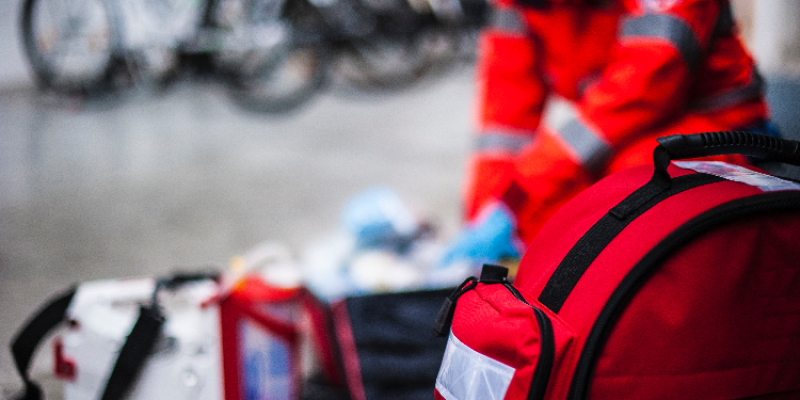
Costa Rica is one of the most welcoming countries in Latin America, and most expats settle in comfortably without ever facing a serious emergency. That said, being prepared matters. From medical crises and road accidents to natural disasters and petty theft, knowing what to do, who to call, and where to go can make a real difference when things go wrong. This article covers the key emergency services, contacts, and practical steps every expat in Costa Rica should know before they need them.
The first number every expat in Costa Rica should save is 911, the universal emergency line for police, fire, and medical assistance. The line operates around the clock, and while most operators are native Spanish speakers, bilingual English-Spanish responders are frequently available to assist foreigners. If you are in an area with limited signal or feel uncertain about communicating in Spanish, using short, clear phrases and your location will help operators dispatch help quickly.
Beyond 911, two direct lines are worth keeping on your phone. The Fire Department (Bomberos) can be reached at 118, and the Costa Rican Red Cross (Cruz Roja) ambulance service answers at 128. These lines connect you directly to the relevant service without going through a general dispatcher, which can save time in a time-critical situation.
Costa Rica also operates a Tourist Police unit (Policía Turística) with over three hundred specialized agents, more than half of whom speak English. This unit focuses specifically on supporting foreigners in popular destinations such as San José, Tamarindo, and Puerto Viejo. Authorities have established a dedicated 911 dispatch center in San José for the Tourist Police, designed to deploy bilingual officers quickly and track criminal patterns in tourist areas. This is a meaningful resource for expats who are unsure which service to contact.
In a medical emergency in Costa Rica, call 911 or dial 128 directly for a Red Cross ambulance. The response time will vary depending on your location, and rural or coastal areas may experience longer waits, so having both numbers saved is practical.
Costa Rica's public hospital network, run by the Costa Rican Social Security System (CCSS, commonly called the Caja), will treat anyone in a life-threatening situation regardless of their insurance status or residency. Treatment for acute emergencies is provided at no cost or very low cost. However, for non-critical conditions, the system prioritizes enrolled residents, and uninsured expats may face extended wait times or out-of-pocket charges for non-urgent care.
Many expats prefer private hospitals for emergency care. Facilities such as Hospital CIMA, Clínica Bíblica, and Hospital Metropolitano operate 24-hour emergency rooms staffed by bilingual personnel and generally offer faster service. Be aware that private hospitals typically require proof of insurance or upfront payment before treatment begins. Carrying your insurance card or a digital copy of your policy at all times is strongly advisable.
For situations serious enough to require medical evacuation, private air ambulance providers operate in Costa Rica. The U.S. State Department notes that an air ambulance flight can cost around USD 50,000 and typically requires full payment upfront. This figure underscores how important it is to carry comprehensive international health insurance that explicitly covers emergency evacuation before you need it.
Join the Costa Rica community
Get regular tips and advice to make the most of your expat life
Roadside emergencies in Costa Rica
If you are involved in a traffic accident in Costa Rica, call 911 immediately. Costa Rican law requires that vehicles stay in position until the Transit Police (Policía de Tránsito) arrive to file an official report, unless both drivers formally agree to move out of traffic flow. Moving your vehicle without that agreement can create legal complications when it comes to insurance and liability, so it is worth waiting even if it feels inconvenient.
For non-accident roadside problems such as a flat tire, dead battery, or running out of fuel, the National Insurance Institute (INS) offers an optional roadside assistance plan called Seguro Asistencia en Carretera. As reported by Diario Extra, the annual cost for private vehicles and light cargo is CRC 18,895 (about USD 37), and CRC 12,894 (about USD 25) for motorcycles. The plan covers towing, locksmith services, fuel delivery, tire changes, and jump-starts. INS policyholders can request assistance by calling 800-TELEINS (800-835-3467).
One local driving habit worth knowing: Costa Rican drivers commonly use hazard lights when slowing suddenly or encountering road obstacles. Practicing defensive driving, especially on mountain roads and during heavy rain, is highly recommended for all expats behind the wheel.
Fire emergencies in Costa Rica
To report a fire, call 118 to reach the Benemérito Cuerpo de Bomberos de Costa Rica (Fire Department) directly, or use the 911 line. Both will dispatch firefighters to your location.
Fire safety is a serious concern in Costa Rica, particularly in rural and forested areas. The country experienced its most intense forest fire season in recent memory, with 141 fire emergencies and over 27,865 hectares burned in a single year. Dry season conditions, combined with strong winds, create high-risk environments in regions like Guanacaste, where wind speeds can reach 88 km/h. The National System of Conservation Areas (SINAC) has issued high-alert warnings during periods of extreme dry and windy weather.
Expats living outside of urban areas should be aware that outdoor burning requires a formal permit from the Ministry of Agriculture and Livestock. Burning without one is not only illegal, but it can also trigger devastating wildfires in already vulnerable terrain. The National Emergency Commission (CNE) advises residents in fire-prone zones to monitor official alerts and have an evacuation plan ready during dry season months.
Police in Costa Rica
Costa Rica's general law enforcement body, the Fuerza Pública, is reachable via 911 or directly at 117. For traffic-related incidents specifically, the Transit Police (Policía de Tránsito) handles accidents and violations; their direct line is 2222-9330.
For serious crimes such as theft, robbery, or assault, expats should contact the Judicial Investigation Organization (OIJ), Costa Rica's equivalent of a criminal investigation unit. Their hotline is 800-8000-OIJ (800-8000-645). It is important to understand that 911 is intended for emergencies in progress, while the OIJ handles the formal reporting of crimes that have already occurred. Filing a report with the OIJ is not just a formality: it is required for insurance claims and any subsequent legal process.
The Tourist Police (Policía Turística), with its dedicated bilingual dispatch center in San José, provides targeted support in key expat and tourist areas. If you are in Tamarindo, Puerto Viejo, or the capital and need police assistance, this unit can often respond more effectively to foreign nationals than the general Fuerza Pública.
Natural disasters in Costa Rica
Costa Rica sits on the Pacific Ring of Fire and lies within a region affected by Atlantic weather systems, making it one of the more natural disaster-prone countries in Central America. The hazards most relevant to expats include earthquakes, volcanic activity, severe flooding, and landslides. Forest fires, as covered above, are also a growing seasonal risk.
The National Emergency Commission (CNE) is the government body responsible for coordinating disaster response. Flooding has become an increasingly serious issue: the CNE recorded a 160% increase in rainfall-related incidents in a single year, with 670 flood emergencies in the first five months alone. The CNE uses a color-coded alert system, issuing Yellow, Orange, and Red alerts depending on severity. A Red alert means immediate evacuation may be ordered and roads may close without warning.
The CNE has also warned that returning to or rebuilding in high-risk landslide zones significantly increases the danger of secondary disasters. Expats who live in or near mountainous or forested areas should pay close attention to these alerts and avoid dismissing risks that may not be immediately visible.
Preparation before a disaster occurs is far more effective than reacting to one. Practical steps include:
Registering with your embassy to receive security and emergency alerts
Downloading the APP-911 app and enabling location services
Keeping a go-bag stocked with water, non-perishable food, medication, cash, and copies of important documents
Identifying your local evacuation routes and emergency shelter points in advance
Following CNE alerts through local media or official channels
Most foreign embassies and consulates in Costa Rica are based in San José, and they play a critical role in emergency situations ranging from lost passports to legal detention and medical repatriation. Knowing your embassy's contact details before you need them is one of the most practical steps any expat can take.
United States Embassy (Pavas, San José): main line +506 2519-2000; after-hours emergency line +506 2220-3127
British Embassy (Edificio Centro Colón, San José): +506 258-2025
Canadian Embassy (San José): +506 2242-4400
Expats are strongly encouraged to register with their embassy upon arrival. The U.S. offers the STEP (Smart Traveler Enrollment Program), and Canada provides the Registration of Canadians Abroad service. Both allow embassies to send you security alerts and make it significantly easier to contact you or your family in a crisis. Registration is free and takes only a few minutes.
Lost or stolen documents in Costa Rica
If your passport is lost or stolen in Costa Rica, your first step is to file a formal police report, known locally as a denuncia, at a physical OIJ office. This document is mandatory for both insurance claims and the embassy application for a replacement document. You can locate the nearest OIJ office using the OIJ CR Safe mobile app or by calling 800-800-3000.
Once the denuncia is filed, visit your country's embassy or consulate in San José to apply for an emergency or temporary passport. Processing times vary by nationality, so contacting the embassy by phone before you visit can save time. Keep your embassy's contact number saved separately from your phone in case your device is also stolen.
As a precaution, embassies advise expats to carry photocopies of the passport photo page and their Costa Rican entry stamp while keeping original documents in a hotel safe or secure lockbox. A digital photo stored in cloud storage or emailed to yourself provides an additional backup that is accessible even without your phone.
Crime and personal safety in Costa Rica
Costa Rica is generally considered safe relative to much of Central America, but petty theft and opportunistic crime are common, particularly in urban areas and tourist hotspots. Vehicle theft has risen sharply in San José, and the vast majority of car break-ins target visible items such as laptops, bags, and mobile phones. Never leave valuables in plain sight in a parked car, even for a short stop.
Common scams include distraction techniques in crowded areas and the "flat tire" scheme, where someone deliberately deflates your tire and then offers to help while an accomplice steals from your vehicle. Staying alert in unfamiliar areas and keeping your phone and wallet out of sight in busy spaces significantly reduces your exposure.
If you are the victim of a crime, call 911 only if the crime is in progress or you are in immediate danger. For crimes that have already occurred, you must visit an OIJ office in person to file a denuncia. This report is a prerequisite for any insurance claim or follow-up action, so do not skip it even if the experience feels time-consuming.
Mental health crisis in Costa Rica
If you or someone you know is experiencing a mental health crisis in Costa Rica, help is available around the clock. The National Support Line (Línea Nacional de Apoyo) is free and operates 24 hours a day, seven days a week. You can reach it by dialing 0800-0767 or *0767 from any mobile phone in Costa Rica.
The College of Professionals in Psychology (Colegio de Profesionales en Psicología) also runs a dedicated suicide prevention and emotional support line called "Aquí Estoy," reachable at +506 2272-3774. For expats who prefer to seek support in a digital format or outside business hours, the TouchPeace mobile app offers confidential video calls with trained volunteer counselors at no cost, available 24 hours a day.
Seeking support during a difficult period is a sign of self-awareness, not weakness. If you are struggling with isolation, anxiety, or adjustment difficulties after moving to Costa Rica, reaching out early makes a meaningful difference.
A few well-chosen apps can make a real difference when navigating an emergency or an unfamiliar situation in Costa Rica.
Waze: The most widely used navigation app in the country and far more reliable than standard GPS. It provides real-time alerts for road closures caused by flooding, landslides, or accidents, which is especially important during rainy season.
APP-911: The official app of Costa Rica's national emergency system. It integrates with Google Maps and includes a panic button feature that allows registered victims of domestic violence to instantly share their location with emergency services.
OIJ CR Safe: The official Judicial Investigation Police app. Use it to find the nearest OIJ office when you need to file a denuncia after a crime.
TouchPeace: A mental health app offering free, 24/7 emergency psychological support via video call with trained volunteer counselors.
Beyond apps, keep a written or offline record of key emergency numbers, your embassy contact, and your insurance policy details. In a flood, earthquake, or theft situation, your phone may not be accessible or functional. A printed card kept in your wallet or go-bag can fill that gap when it matters most.
Frequently asked questions about emergencies in Costa Rica
Yes, 911 is the universal emergency number covering police, fire, and medical dispatch. Most operators are native Spanish speakers, but bilingual English-Spanish responders are regularly available to assist expats and tourists. If you cannot communicate clearly, state your location and the nature of the emergency as simply as possible.
Yes, the public hospital network operated by the CCSS will treat anyone in a life-threatening emergency regardless of insurance status or residency. For non-critical care, priority goes to enrolled residents, and uninsured visitors may face longer wait times or costs for non-urgent treatment. Private hospitals are generally faster for expats with insurance coverage.
By law, you should not move your vehicle after an accident unless both drivers formally agree to do so to clear traffic. Otherwise, you must wait for the Transit Police to arrive and file an official report. Moving the car without agreement can affect insurance claims and legal liability.
Dialing 911 will connect you to ambulance dispatch, but you can also call 128 directly to reach the Costa Rican Red Cross, which manages ambulance services nationwide. Having both numbers saved is a sensible precaution, particularly if you live outside a major city.
The INS Seguro Asistencia en Carretera plan covers towing, locksmith services, fuel delivery, tire changes, and jump-starts. The annual cost is CRC 18,895 (about USD 37) for private vehicles, as reported by Diario Extra. INS policyholders can request assistance by calling 800-835-3467.
You must visit an OIJ office in person to file a denuncia, which is a mandatory step for both insurance claims and embassy replacement requests. Once you have that report, contact your national embassy in San José to begin the process for an emergency or temporary passport. The OIJ CR Safe app can help you locate the nearest office.
The most relevant hazards for expats include severe flooding, landslides, earthquakes, and seasonal forest fires. The CNE manages disaster response and issues color-coded alerts: Yellow for caution, Orange for elevated risk, and Red for immediate evacuation. Monitoring local media and downloading the APP-911 app are practical ways to stay informed.
Yes, the toll-free National Support Line is available 24/7 by dialing 0800-0767 or *0767 from a mobile phone. The TouchPeace app also offers free video counseling with trained volunteers at any hour. Both services are confidential and available to anyone in Costa Rica, regardless of nationality.
ℹ️
We do our best to provide accurate and up to date information. However, if you have noticed any inaccuracies in this article, please let us know in the comments section below.
A journalist, holder of the DALF C1 and C2 and a diploma from the University of Mauritius, I have nearly twenty years of writing experience. After six years in the Mauritian press, I joined Expat.com, where I have been working for over a decade, including five years as editorial assistant, and now as editorial manager.