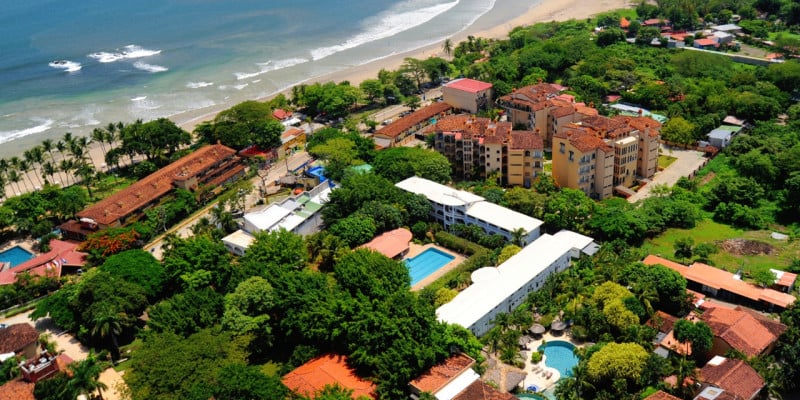
Costa Rica has built a strong reputation as one of Latin America's most welcoming destinations for foreign property buyers. The legal framework is straightforward: foreigners enjoy the same ownership rights as citizens, the title system is transparent, and the country's political stability makes it a reliable place to invest. Whether you are planning a retirement in the Central Valley, a beachside home on the Pacific coast, or a long-term investment property, the market offers a wide range of options across very different price points. That said, buying property here comes with real complexity, from navigating coastal land restrictions to verifying titles and managing financing as a non-resident. This article walks through everything you need to know before signing anything.
The Costa Rica real estate market continues to draw strong interest from North American and European buyers focused on lifestyle migration and retirement. Market analysts forecast national real estate values to grow by 6% to 8% in the near term, with highly sought-after coastal and tourism-driven areas potentially seeing appreciation rates of 10% to 12%, according to Global Property Guide. At the same time, inventory is expanding across multiple regions, leading to longer days on market and giving buyers more negotiation leverage, shifting the overall dynamic toward a more balanced position than in previous years.
Regional price variations are significant. The Guanacaste and Nicoya Peninsula region commands the highest premium, with median listing prices around USD 1,330,000. The Central Valley, favoured for its infrastructure and climate, offers more accessible median prices around USD 618,000. In San José, apartments average around USD 2,700 per square metre, reflecting strong urban demand as the capital continues to modernise. Eco-conscious builds, luxury vacation rentals, and sustainable development projects are particularly popular among foreign buyers, who tend to prioritise lifestyle and rental yield alongside long-term value.
Yes, and the rules are unusually clear. Foreign nationals enjoy exactly the same property ownership rights as Costa Rican citizens under the country's constitution. You do not need to be a resident, hold a visa category linked to investment, or satisfy any nationality-based requirements to buy titled real estate. Whether you buy in your personal name or through a locally incorporated company, the law treats foreign buyers the same as locals.
The one major area where equal rights do not apply is within the Maritime Terrestrial Zone (ZMT), which governs the coastal strip along the entire shoreline. This zone operates under a separate legal framework with strict restrictions on foreign ownership, covered in detail in the restrictions section below. Outside of that zone, owning property in Costa Rica does not automatically grant residency, but an investment above a specific threshold does qualify buyers for the country's Investor Residency programme, which is discussed later in this article.
The Costa Rican market offers a broader range of property types than many buyers expect. Understanding the difference between titled and concession land is essential before you start viewing properties, as it fundamentally affects what you own and what you can do with it.
Titled property (fee simple) covers roughly 95% of non-coastal real estate in the country. Buyers receive full ownership rights, registered in the National Registry (Registro Nacional). This is the most secure form of ownership and what most expats should aim for. Beyond titled land, the main categories include:
Concession property: Applies to the restricted 150-metre strip of the Maritime Zone. This functions as a long-term government lease, usually 20 years, rather than absolute ownership, and carries specific restrictions for non-residents.
Condominiums and townhouses: Extremely popular among expats for their security, shared amenities, and managed maintenance through homeowners' associations (HOAs). Common in areas like Jacó, Tamarindo, and Escazú.
Single-family homes and villas: Ranging from modern luxury estates with ocean views to jungle retreats and traditional Costa Rican homes.
Raw land and lots: Many foreigners buy titled land to custom-build eco-lodges, farms (fincas), or vacation homes.
Commercial properties: Boutique hotels, bed-and-breakfasts, and retail spaces in high-tourism zones attract significant expat investment.
Join the Costa Rica community
Get regular tips and advice to make the most of your expat life
Best areas for expat property buyers in Costa Rica
Location shapes the buying experience considerably in Costa Rica, from price and infrastructure to lifestyle and resale potential. The four main regions each attract a different type of expat buyer.
The Guanacaste and Nicoya Peninsula (Tamarindo, Nosara, Santa Teresa, Flamingo) is the premier coastal destination for foreign buyers. It offers high-end luxury homes, excellent surf, international schools, and easy access via Liberia International Airport. Median listing prices here are the highest in the country, exceeding USD 1,300,000. The Central and South Pacific coast (Jacó, Manuel Antonio, Dominical, Uvita, Ojochal) blends vibrant beach towns with dense jungle landscapes and attracts digital nomads and eco-conscious buyers. Median prices in this region average around USD 1,100,000.
The Central Valley (San José, Escazú, Santa Ana, Grecia) is a strong choice for retirees and working professionals. It offers a temperate climate, world-class healthcare facilities, major shopping centres, and solid urban infrastructure, all at more accessible price points, with median listings around USD 618,000. The Caribbean coast (Puerto Viejo, Cahuita) is more affordable and culturally distinct, though infrastructure is less developed and titled land near the beach is scarcer. Buyers drawn to that region should invest extra time in title verification before proceeding.
Restrictions on foreign property buyers in Costa Rica
The most significant restriction for foreign buyers is the Maritime Terrestrial Zone Law (Ley 6043), which regulates the 200-metre coastal strip starting from the mean high tide line. The law divides this strip into two zones. The first 50 metres from the high tide line is strictly protected public land: no individual, foreign or local, can privately own it or build permanent structures on it. The next 150 metres form the restricted zone, where land is available only as a government concession, meaning a long-term lease from the local municipality rather than freehold ownership.
Beyond the coastal zone, two additional categories are off-limits to foreign buyers. Agricultural lands distributed by the government to local farmers through INDER (the rural development institute) cannot legally be bought by foreigners. Indigenous reserves and national parks are absolutely prohibited from private development or foreign purchase. These restrictions are firm and not subject to negotiation or legal workarounds.
Conditions and formalities for buying property in Costa Rica
The property buying process in Costa Rica typically takes 30 to 60 days from accepted offer to completed registration. The process is relatively straightforward for titled property, but each stage requires professional oversight.
Offer / Letter of Intent (LOI): The process begins with a formal written offer detailing the price, deposit amount, and conditions.
Sales and Purchase Agreement (SPA): Usually signed within 10 days of the accepted offer. At this stage, a 5% to 10% earnest deposit is wired into a secure, third-party escrow account.
Due diligence period: Typically lasts two to four weeks. The buyer's attorney verifies the title at the National Registry, checks the Plano Catastrado, confirms municipal tax clearance, and verifies water and electricity availability.
Corporate formation: Most foreign buyers choose to set up a Costa Rican corporation (Sociedad Anónima S.A. or S.R.L.) during this period to hold the property for asset protection and simplified inheritance planning.
Closing / Public Deed (Escritura Pública): The final contract is signed before a licensed Costa Rican Notary Public, who is legally responsible for drafting the transfer deed. Both parties must be present or represented by a Power of Attorney.
Registration: The notary submits the deed to the National Registry. Formal registration typically completes within 10 to 15 business days.
Required documents for buying property in Costa Rica
Buyers should gather their documents early, particularly for anti-money laundering compliance, which escrow companies enforce rigorously. The main documents required include:
Valid passport: The primary identification for non-resident foreign buyers.
KYC and Anti-Money Laundering (AML) documents: Bank statements, a clear explanation of the origin of funds (such as sale of an asset, savings, or inheritance), and recent tax returns.
Proof of address: Usually a utility bill from your home country.
Seller documents to verify (via your attorney): The Folio Real (title certificate), Plano Catastrado (registered survey map), Uso de Suelo (municipal land use certificate), and water availability letters from AyA or the local ASADA water association.
Corporate documents: If buying through a Costa Rican corporation, the legal constitution documents, beneficial ownership declarations (UBO), and shareholder registry are required.
The water availability letter deserves special attention. Without an official Carta de Disponibilidad de Agua from AyA or the local ASADA, you cannot legally obtain a building permit, making it an essential document for any land or lot purchase. For official document verification, using a certified translations service can be important when submitting foreign-language paperwork to local authorities.
Working with real estate professionals in Costa Rica
Navigating the Costa Rica property market with the right professionals is not optional; it is the single most important thing you can do to protect your investment. The starting point is understanding how the industry works, because it differs significantly from most buyers' home markets.
Real estate agents in Costa Rica are not formally licensed by the government. However, any broker handling transactions or funds must be registered with SUGEF (Superintendencia General de Entidades Financieras) under Law 7786 for anti-money laundering compliance, as confirmed by local real estate professionals. Because there is no state licence, buyers should look for agents affiliated with recognised private bodies such as CRGAR (Costa Rica Global Association of Realtors) or the CCCBR. Always verify SUGEF registration before engaging any agent or brokerage. You can browse verified real estate agencies in Costa Rica to find professionals with established credentials.
A Costa Rican Notary Public is legally required to formalise any real estate transfer. Notaries here are specialised attorneys, not administrative officers. Critically, you should hire an independent attorney who does not represent the seller to conduct your due diligence. Sharing legal representation with the other party is a significant risk in any property transaction. Escrow companies are also heavily regulated and must be registered with SUGEF. Never wire funds directly to a seller or agent's personal account. For rural or coastal purchases, a licensed surveyor (Topógrafo) is essential for verifying property boundaries against the official Plano Catastrado.
Property prices and buying costs in Costa Rica
Beyond the purchase price itself, buyers should budget approximately 3.5% to 5.5% of the total purchase price to cover closing costs in Costa Rica. These costs are relatively predictable and break down as follows:
Property Transfer Tax (Impuesto de Traspaso): 1.5% of the declared property value, paid by the buyer to the National Registry.
Notary and legal fees: Set by law on a sliding scale, typically 1% to 1.5% of the purchase price, subject to 13% VAT.
Public Registry and documentary stamps: Approximately 0.6% to 1% of the property value.
Escrow fees: Usually flat rates ranging from USD 500 to USD 1,500, paid by the buyer or split equally with the seller.
Real estate agent commission: The industry standard is 5% to 7% of the sale price plus 13% VAT, customarily paid entirely by the seller.
Because the agent's commission is the seller's responsibility, buyers in Costa Rica do not typically pay agent fees directly. That said, the agent's loyalties follow the commission, which is another reason to have independent legal representation throughout the transaction.
Financing and mortgages for expats in Costa Rica
Access to financing is one of the more challenging aspects of buying property in Costa Rica as a foreigner. Local banks do lend to non-residents, but the underwriting process is demanding. Costa Rican banks typically require a down payment of 30% to 50%, with mortgage interest rates ranging from 7% to 9.5% and loan terms up to 25 years. The documentation requirements are extensive and the process can be slow, which is why many foreign buyers look elsewhere for financing.
US citizens can access 30-year fixed-rate mortgages through cross-border lenders for properties in Costa Rica, often requiring only 25% to 30% down and offering more familiar terms without prepayment penalties. Seller financing is another widely used option: the seller acts as the lender, typically asking for 30% to 50% down, with short loan terms of three to five years and interest rates around 6% to 10%. Because of the complexity and cost of local financing, the majority of foreign buyers purchase property entirely in cash, using international wire transfers to a local escrow account. This remains the simplest and most commonly used approach.
Risks and pitfalls when buying property in Costa Rica
Costa Rica is generally a safe market for foreign buyers, but several well-documented risks can cause serious financial harm when buyers skip due diligence or work with unverified professionals.
The most common pitfall is the titled versus concession confusion. Properties within the Maritime Terrestrial Zone are frequently marketed as "titled" beachfront land when they are, in fact, government concessions with strict foreign ownership restrictions. A full National Registry check is the only way to confirm the status of any coastal property before you proceed.
Squatter rights (adverse possession) are a real legal risk in Costa Rica. Under local law, individuals who openly occupy land for 10 consecutive years can claim legal ownership. Buyers of vacant land should fence their properties promptly and hire a caretaker to maintain visible, active possession. Leaving land unattended for extended periods is a genuine vulnerability.
Because the industry is unlicensed, fraudulent agents can collect deposits and disappear. Always verify that the agent and escrow company are registered with SUGEF before transferring any funds. Real estate scams targeting foreign buyers in Costa Rica often involve unregistered intermediaries. Hidden liens and legal embargoes are another risk: sellers may list properties carrying undisclosed mortgages or active legal disputes. An independent notary conducting a full registry search before any funds are wired is the essential safeguard here. Finally, never buy a lot without an official water availability letter. Without it, a building permit cannot be issued, and the land's development potential is effectively blocked.
Property programmes for expat buyers in Costa Rica
Costa Rica's Residency by Investment programme (Inversionista Visa), established under Law 9996, offers foreign buyers a direct path to temporary residency. Foreigners who invest a minimum of USD 150,000 in Costa Rican real estate, businesses, or securities are eligible. The investment can be in residential or commercial property, or land, provided the asset is registered in the applicant's name or through a corporation with matching share capital.
The visa grants two-year temporary residency, renewable as long as the investment is maintained. It covers the primary investor, their spouse, and dependent children under 25. After three years of temporary residency, investors can upgrade to permanent residency. After seven years total, they can apply for Costa Rican citizenship, subject to Spanish language and civic knowledge requirements.
A notable tax consideration for residents is that Costa Rica operates a territorial tax system, meaning residents are not taxed by the Costa Rican government on foreign-sourced income. Only income earned within Costa Rica is subject to local taxation. This makes the residency pathway particularly attractive for retirees and investors with income from abroad. As programme details and investment thresholds can change, always verify current requirements with a qualified local attorney before proceeding.
Property taxes and ongoing costs in Costa Rica
One of the genuine advantages of owning property in Costa Rica is that the standard annual property tax burden is low. The annual property tax (Impuesto de Bienes Inmuebles) is assessed at 0.25% of the property's registered value, payable to the local municipality. For a property registered at USD 300,000, that amounts to roughly USD 750 per year, well below what most expats pay in their home countries.
Properties where the construction value (excluding land) exceeds a government-set threshold are subject to an additional Luxury Home Tax (Impuesto Solidario). The threshold is currently around CRC 143,000,000 to CRC 148,000,000 (roughly USD 275,000 to USD 286,000), with rates ranging from 0.25% to 0.55% of the total property value, according to Tamarindo Real Estate. Buyers of higher-value properties should verify the current threshold with a local accountant, as the government adjusts these figures periodically.
Other ongoing costs to factor in include:
Corporate fees: If the property is held in a Costa Rican corporation, owners pay an annual corporate tax of USD 120 to USD 380, plus yearly beneficial ownership declarations.
Rental income tax: Landlords pay a flat 15% rate on 85% of gross rental earnings. Short-term rentals (such as those listed on Airbnb) also require the collection of 13% VAT, as noted by Sol Realty's tax overview.
Capital gains tax: Sellers are subject to a 15% capital gains tax on the profit margin, or a 2.25% tax on the total sale price.
HOA fees: Condos and gated communities charge homeowners' association fees ranging from USD 200 to over USD 1,000 per month depending on amenities and security level.
Completing the deed is not the end of the process. Several administrative steps follow registration that new owners need to handle promptly. Once the property is formally registered in the National Registry, which typically takes 10 to 15 business days, the new owner must update their details and declared property value at the local municipality. This ensures accurate billing for property taxes and municipal services like garbage collection.
Setting up utilities requires a formal application with the Instituto Costarricense de Electricidad (ICE) for electricity, and with AyA or the local ASADA water association for water service. You will need your deed, passport or national ID, and a deposit typically ranging from USD 200 to USD 500. Property values must also be formally reassessed and declared to the municipality every five years to calculate standard property tax, so keeping track of this obligation is part of responsible ownership.
For non-resident owners, hiring a local property manager is essential. Typical management fees run around 10% of monthly rent for long-term rentals, or 18% to 25% for short-term vacation rentals. If your property is held in a corporation, your local accountant should register the company with the tax authorities at the Ministerio de Hacienda and submit the annual shareholder declaration to the Central Bank. Leaving these filings incomplete can result in penalties or complications when you eventually sell.
Frequently asked questions about buying property in Costa Rica
True beachfront property is highly restricted under the Maritime Terrestrial Zone law. The first 50 metres from the high tide line is public land, and the next 150 metres is available only through government concessions. Foreigners with less than five years of Costa Rican residency are restricted to minority ownership (49%) in corporations holding those concessions. Titled property does exist near the coast but is set back from the shoreline.
It is generally safe for titled property when proper due diligence is carried out. Because real estate agents are unlicensed, safety depends entirely on hiring an independent Costa Rican Notary Public to scrutinise the National Registry, and using an escrow company registered with SUGEF to handle funds. Skipping either of these steps significantly increases your exposure to fraud and hidden legal issues.
The Impuesto Solidario is a luxury home tax that applies to properties where the construction value (excluding land) exceeds a government-set threshold, currently around CRC 143,000,000 to CRC 148,000,000 (roughly USD 275,000 to USD 286,000). The tax ranges from 0.25% to 0.55% of the total property value. The threshold is adjusted periodically by the government, so buyers of higher-value properties should confirm the current figure with a local accountant.
No, Costa Rica does not issue formal real estate licences. However, any agent or brokerage processing transactions must be registered with SUGEF for anti-money laundering compliance under Law 7786. Buyers should always request proof of SUGEF registration before working with any agent. Membership in private professional bodies such as CRGAR is also a useful indicator of credibility.
The seller customarily pays the entire real estate commission, which typically ranges from 5% to 7% of the sale price plus 13% VAT. Buyers do not pay agent fees directly. However, because the agent's fee comes from the seller, their primary loyalty is to the seller, which reinforces the importance of having independent legal representation as a buyer.
Forming a corporation is not mandatory for titled property, but it is highly common and widely recommended. A Costa Rican S.A. or S.R.L. provides asset protection, simplifies tax filings, and makes transferring ownership or managing inheritance considerably easier. If you hold concession property, corporate structure also affects your ownership eligibility under the Maritime Terrestrial Zone rules.
Yes, but it is difficult. Local banks require extensive documentation, charge interest rates of 7% to 9.5%, and demand 30% to 50% down payments. US citizens can also access cross-border lenders offering longer-term, fixed-rate products with lower down payment requirements. Because of the complexity involved, many foreign buyers opt for cash purchases or short-term seller financing instead.
Yes. Buying real estate with a registered value of at least USD 150,000 qualifies you to apply for the Inversionista (Investor) Residency Visa under Law 9996. This grants two-year temporary residency, renewable as long as the investment is maintained. It extends to your spouse and dependent children under 25, and opens a pathway to permanent residency and eventually citizenship after the required years of residence.
From accepted offer to completed registration, the process typically takes 30 to 60 days. The due diligence period alone takes two to four weeks, and National Registry registration after closing takes a further 10 to 15 business days. Complex transactions involving corporate formation, concession land, or financing can take longer.
Buyers should budget between 3.5% and 5.5% of the total purchase price for closing costs. This includes a 1.5% property transfer tax, 1% to 1.5% in notary fees, public registry and documentary stamps of around 0.6% to 1%, and escrow fees typically ranging from USD 500 to USD 1,500. These costs are in addition to the purchase price and should be factored into your total budget from the outset.
ℹ️
We do our best to provide accurate and up to date information. However, if you have noticed any inaccuracies in this article, please let us know in the comments section below.
A journalist, holder of the DALF C1 and C2 and a diploma from the University of Mauritius, I have nearly twenty years of writing experience. After six years in the Mauritian press, I joined Expat.com, where I have been working for over a decade, including five years as editorial assistant, and now as editorial manager.