Thoughts on buying a house in Costa Rica



As for technicalities, how much do realtors typically expect as a down payment for a home? We don't need anything luxurious, 2 bedrooms, 2 bath and we would require financing. Any help is much appreciated. Also, if anyone knows a real estate agent I could speak with that WOULDN'T give me "you're American therefore you must be rich" prices, I would appreciate that, too.
Thanks!
- Real estate listings in Costa Rica - 171 Ads
- Renting accommodation in Costa Rica - Guide
- Buying forever or Renting forever in Costa Rica?? - 4 Replies
- Shared Housing in Costa Rica - 10 Replies
- Buying a vehicle in Costa Rica - 6 Replies
- Building a house in Costa Rica - 6 Replies
- Buying property in Costa Rica and renting Casitas. Any experience? - 12 Replies

Do not hesitate to browse through the forum, it may help.

I also invite you to post an advert in Costa Rica classifieds > accommodation section.
Harmonie.



Monteverde - yearly mean temperature is a low of 61 and a high of 64 degrees Fahrenheit (16-18 Celsius)
Samara - January mean temperature is a low of 65 and a high of 83 degrees Fahrenheit (18-28) Celsius. These are two extremes but it gives you an idea considering there are twelve micro climates in Costa Rica.
Realty is not regulated in Costa Rica, for example I know of one piece of property that a realtor sold. The property sold for $80,000 and the seller received his asking price of $40,000, that's a GOOD commission! ALWAYS ask to speak directly with the owner before making an offer.
Financing is also VERY hard to accomplish within Costa Rica. You would be far better off to secure your financing in your current country.
We looked at numerous properties and unfortunately one of the two best realtors has since moved to the United States. One realtor that I would HIGHLY recommend is Casey Stamps. Here is a link to a web page, there is a brief bio of Casey on the bottom.
Good luck in your endeavor!


I just attended a conference hosted by Interational Living in Cancun. Costa Rica is high on the radar, and it is a recommended location by Pathfinder, an organization that researches areas where real estate meet their criteria. There is a lot to consider.
The last post was absolutely right. Take time to go there and visit. If you are purchasing a property as an investment and you plan to rent it out, know that the property managers will garnish anywhere from 35 to 50% of the rent. (I was shocked, too.) But when you consider that your investment is in a foreign country you need to know the risks and those property managers "are a must!" I met several folks at the conference who had initially invested in coastal properties, however chose to move to the higher elevations because they found that the heat and humidity was uncomfortable on a day to day basis, and the beach is simply an hour and a half drive away. I am inclined to do my personal search higher elevations, as well.
I, like you, am just beginning to learn about pursuing the path of an expat, so feel free to share your questions and concerns about anything, and I will do the same. It will help us to refine our questions. I have purchased, and just received, a book entitled Expat Taxes Made Easy. It cost $185. But, the author is amazing, I heard him at the conference and he spoke of big mistakes made in filing U.S. income taxes, and he is instructive about the forms to file that are often overlooked. So I can share this information with you as I learn more. Again, feel free to contact me with your questions.
Bruce Miller, CT

fakeplasticvero wrote:Hi there. I have about a million questions but I'll try to be brief. My husband and I, along with another couple are interested in buying a home in Costa Rica as a vacation home and possibly to rent out when we're not there. I realize that searching for properties online limits me to English-speaking sites which seem to be much pricier than if I were to come to Costa Rica and search for a home while there. Is that right? We have never been but plan on going this summer. In theory, I'd like to own a home near the ocean but I'm curious as to what the climate is like year round.
As for technicalities, how much do realtors typically expect as a down payment for a home? We don't need anything luxurious, 2 bedrooms, 2 bath and we would require financing. Any help is much appreciated. Also, if anyone knows a real estate agent I could speak with that WOULDN'T give me "you're American therefore you must be rich" prices, I would appreciate that, too.
Thanks!
I recommend you read the report I just wrote about this subject on this very site:
https://www.expat.com/en/guide/central- … -rica.html
It is getting easier to buy property or a home and get financing but it's far from easy; not like buying in the USA. Generally speaking if you get financing in Costa Rica it will be through the buyer himself, set up through a trusted attorney. I myself am offering this but not for a home just land to build on. And the interest will depend on your credit rate and the owner/financer, but 8% sounds about right.
It depends on where you want to buy of course, as to which realtor would be recommended to you. One I can recommend in the San Ramon area is Frank Gillespie of Paradise Management. He's in the San Ramon/ Central Valley area. You can find him via google or pm me. As to prices, I think the days of finding a better deal through a Tico are disappearing as Ticos if anything now want to charge MORE than Americans do for property. The Ticos tend to over-value their property and also once you show interest and think seriously about buying at the price they have told you, they are liable to then raise it! I've seen this happen time and again - it has happened to me.
You MIGHT get a better deal by finding a Tico who wants to sell, but a) it will be a Tico built home in all likelihood which means it may not have the plumbing and electricity etc that you would expect; and b) it will take you a lot of time and talking to a lot of Ticos and ending up on a lot of wild goose chases before you find that great deal. Here's what I mean:
You tell a Tico "I want to buy a very quiet property off the main road, with no close by neighbors". He says "Yes! I have a property just like that! Let me show you!" You make an appointment to see it, and when you get there, you see that it is right on the road, has tons of neighbors with dogs and kids and goats and what not and so it's not at all what you were looking for and you just wasted 3 hours and gas to look at something that bears no resemblance to what you told him you wanted. This happened to me many times before I found a good deal. And the good deal I found was through an American.
Your best bet in getting a good price is to do a lot of research online and in person, know what property is being sold for in the area you are looking at, and the type of property it is (ocean view, large acreage, 2br home, raw land, land with utilities or whatever...). So once you know what prices are for the type of property you're looking for, you can negotiate downward just like in the USA.
Finally, make sure your development has an authorization number from the government before you start paying them monthly HOA fees (if you are in a gated community). If you make an offer on a home, make sure it's at least 30% less than the asking price, and walk away if they want more.

About buying property in Costa Rica:
First, keep in mind that property law in Costa Rica is very similar to the laws in the US. Whatever you would do in the US for buying property, do so here. I noticed that when expats arrive to Costa Rica, they decide to ignore all of the rules they would use back home. These are some of the rules you will need to keep in mind here:
1. If you want to buy real estate, then buy real estate. Do not buy a corporation.
2. If you want to buy with a number of friends, you can purchase in co tenancy.
3. Get your own attorney. Never, never, never use the same attorney that the seller is using.
4. Do not use an attorney recommended by the real estate agent.
5. The real estate agent gets about 5% commission. But they get it from the seller, not from you.
6. Do a title search. Make sure that the chain of title is clear, and that it is free from liens and encumbrances.
7. Try not to buy property that has been affected by IDA.
8. Do not attempt to buy property in the maritime zone (ZMT). Foreigners are not legally allowed to buy into the ZMT. If you try to buy into the ZMT, you will get into trouble.
9. Get an escrow agent.
10. Your purchase agreement should have all of the property information and it should include a clause for the escrow agreement.
11. Get title insurance.
12. If you are planning on only living in CR for a few months out of the year and are planning on renting the place, then try to buy your property within a project that already provides that service, it will be easy for you. If you buy a standing alone property and hire a property manager, it can be chaos. There is a lot of people who do it that way and it works for them. But if you want to minimize your the aggravation and reduce your risks, buy into a project. If you buy into a project, get to talk to the other owners to see how they feel about the place.
I hope this helps.
Outlier Legal Services wrote:Fakeplasticvero,
About buying property in Costa Rica:
First, keep in mind that property law in Costa Rica is very similar to the laws in the US. Whatever you would do in the US for buying property, do so here. I noticed that when expats arrive to Costa Rica, they decide to ignore all of the rules they would use back home. These are some of the rules you will need to keep in mind here:
1. If you want to buy real estate, then buy real estate. Do not buy a corporation.
2. If you want to buy with a number of friends, you can purchase in co tenancy.
3. Get your own attorney. Never, never, never use the same attorney that the seller is using.
4. Do not use an attorney recommended by the real estate agent.
5. The real estate agent gets about 5% commission. But they get it from the seller, not from you.
6. Do a title search. Make sure that the chain of title is clear, and that it is free from liens and encumbrances.
7. Try not to buy property that has been affected by IDA.
8. Do not attempt to buy property in the maritime zone (ZMT). Foreigners are not legally allowed to buy into the ZMT. If you try to buy into the ZMT, you will get into trouble.
9. Get an escrow agent.
10. Your purchase agreement should have all of the property information and it should include a clause for the escrow agreement.
11. Get title insurance.
12. If you are planning on only living in CR for a few months out of the year and are planning on renting the place, then try to buy your property within a project that already provides that service, it will be easy for you. If you buy a standing alone property and hire a property manager, it can be chaos. There is a lot of people who do it that way and it works for them. But if you want to minimize your the aggravation and reduce your risks, buy into a project. If you buy into a project, get to talk to the other owners to see how they feel about the place.
I hope this helps.
I thought I knew most everything about this subject, but I am not sure what you mean by #7. What is "IDA"?
Also, there seems to be controversy re #11 - "Get Title Insurance". I have been told more than once that Title Insurance is not necessary in Costa Rica because by law the notario has to do all that stuff that Title Insurance does, anyway.
What does Title Insurance do that makes it a good idea in Costa Rica and is there a company you recommend for it?
Re #8. I know plenty of Americans who have bought property on the beach and have not had any major problems. I thought it was fine as long as the title was well researched.
I only know one person who had a problem and that's because he built a home too close to the high tide mark. In that case he was having difficulty getting a building permit, but he did get it some how. As far as I know the home still stands but I'm not 100% sure. There were quite a few homes and cabins built at close to the same distance from high tide on that beach, all owned by extrañeros, and I'm betting they're still there.
I do agree however that it's best not to buy along the beach and if you do, get everything TRIPLE checked by 2-3 attorneys or "notarios".
Regarding your questions:
IDA
This is a farming institute in charge of giving farmland to poor souls, so that they can make a living. In a lot of rural areas, people were given land for free by the government. In turn, people were required to work the land. These farms were encumbered; they could not be transferred within the first 10 years of possession. Some times, people holding IDA properties try to sell it, regardless of the fact that they have a restriction. Unsuspecting expats bite the bait. They may be able to obtain title (eventually) but it will be a painstakingly process.
Title insurance and attorneys doing due diligence.
I would concede this point to you if you can really trust a notary public. I know you deal in real estate, so you must interact with one or a few notary public. I am sure, that more often that not, that notary public that you use, acts also as the attorney for both the seller and the buyer, which obviously creates a conflict of interest and the results in the inability to responsibly represent either. Case and point, notary publics here are not reliable professionals. Get title insurance. The purpose to get title insurance is to protect your self from third parties claiming better title, which happens more often than it should. And, as insurance that it is, hopefully you will never need it, just like fire insurance in your home. Hopefully, you will not need it, but it will be good to have it just in case.
Regarding ZMT
If you are a foreigner, you are to buy into the ZMT if you have been in the country at least five years and are required to have residency. Just like you, I also know a number of expats (non residents) who have ZMT, but the fact that they have ZMT does not mean that it is legal. The fact that you can do something, does not make it legal. Right? Having a dubbie in your pocket does not make pot legal. Same thing with the ZMT.
Foreigners who have residency, are allowed to buy ZMT. Otherwise, it is not possible. Foreigners who are not resident, are only allowed to have ownership to up to 50% of a corporation that owns ZMT. What most attorneys do in this situations is to: create a shell corporation, give the expat 50% of the corporation, and have a straw person (tico of course, and most likely a person from the law firm) own the other 50%. They create all of this fallacy in order to somehow allow the expat to have access to the ZMT. There is a significant number of things wrong with this proposition, which I am not going to get into, but bottom line, it is illegal and wrong.
Furthermore, most of the ZMT in Costa Rica is tainted. The municipalities have created a mess out of the ZMT processes, and it is a pain in the neck to deal with them. I am in the business of making things easy for people, buying into the ZMT is not in my repertoire of easy things. The ICT and the counties are trying to correct the issues they currently have, in the meantime, I would stay away from it.
Finally, I used the phrase "buying into ZMT" very openly. I would like to clarify that you cannot buy into ZMT. ZMT is a concession, you can only get a contract with the county for 20 years, which you can renew for additional years period.
Concession is not freely transferable, and it is not transferable for a price, which means that if someone is trying to sell you a ZMT concession, it is then illegal, big no no. What you can do is request the county and the ICT to transfer the contract to you. However, what most people do is a transfer of shares of a corporation, which is also not allowed without permission of the ICT and the county. We can go on and on and on.
I bet you that a lot of the people that you know who have ZMT are not compliant. If you take a look at the files, you will find something wrong with it. They have it, but as I said, the fact that they have it does not mean that it is done right. A small fraction of ZMT properties are done the way that they are supposed to.
Once again, my suggestion is for people to stay away from it, but who can resist those beautiful sunsets on the beach. Right?
Sorry for the choppy response.
Just to clarify I do not buy and sell real estate nor have sold any at all. I do have 4 lots for sale due to the subdividing of the land I myself plan to build on, but am not a developer per se. I subdivided my land as an "after thought" and only out of economic necessity.


Try advertising your property on craiglist
Edward1958 wrote:The one thing you must know is that most homes being offered for sale to foreigners are over priced, although some good deals do pop up now and then. It's really better to rent, and search for a home to buy while you are actually here. Never use the sellers lawyer "never". Never buy into a development where all the lots are covered by one HOA deed, make sure you have an individually deeded lot on a municipal owned road. Example: If a home owner inside our development had a conflict with a builder and owed him money, the builder would file suit against the development and you'd be part of that law suit. Not only that, you'd be forced to pay monthly HOA fees, even if your development management was negligent and not maintaining the pool or common grounds etc. Rent for a year and educate yourself, that is my advice. There is also a Maritime Law you must learn about. I was burned in my first lot purchase in Costa Rica, so I'm speaking from experience. Many so called gated community developments are still classified by government as fincas (farms), which some guy has divided into lots and sold off to foreigners who thought they were buying a lot they could build on. I am nothing more than a retired Canadian "and not a real estate agent", but I know of a building lot in a gated community which is is for sale "and has separate deeds", as I live in that development. It's near the beach and the guy might sell it for about $25,000 - I live in that same development.
I agree totally: NEVER use the seller's lawyer.
I did, only because I had heard many good things about the seller's lawyer from independent sources; he was/ is well known in the gringo community because he speaks good English.
What I did not consider was that he had a close business relationship with the realtor and so... when there was a problem with the title and the realtor insisted he could fix it, I relied on the attorney to make sure it could really be fixed and would be fixed.
Guess what? The well respected attorney cared only about his relationship with his bread-and-butter client, the realtor, not about me, the buyer of the lot with title problems.
So the bottom line is they could not fix the title, yet I had given them $5k down in cash (ANOTHER big no-no and dumb on my part; live and learn!), and I nearly didn't get my $5k back and wouldn't have if another attorney had not managed to intervene for me and more or less push the realtor to give me my deposit back.
As for subdivisions, yes the lots have to be legally subdivided and approved, and you should absolutely own the land you buy with its own title, registered with the National Registry (Registro Nacional) and checked for liens etc by YOUR attorney! I subdivided my land into 5 lots and each have their own title, and each can be found and checked via the registro. Otherwise what are you buying? Nothing.
GET YOUR OWN ATTORNEY WHO IS WELL VERSED IN REALTY PURCHASES and who does his due diligence for you in checking for liens etc - many do not go this extra step. Also make sure you can actually build on it and get utilities to it and have road access to it!

Reason : For own security measures, please do not share email address on the forum, you could use our private message system for that.

Reason : Sharing of external links not allowed. For recommending services, please do so in the Business Directory


What ever you decide to do, do not rush or be rushed into making a decision to purchase property, and make sure to take enough time to get to know the area that you are considering.




What size is your property, how many sqm is the house
What’s your asking price
It's okay, just thought you should know.
Llholly wrote:You cannot finance a home in Costa Rica. The idea that you would buy a house, sight unseen in a country you’ve never even been to is pretty bold. Like everyone else I would suggest to travel to CR first, check out the different climates and if you want to be near the ocean, how remote are you willing to go? Property is getting pricier especially ocean view properties, land alone can cost hundreds of thousands upwards to millions. There are towns all along the pacific coast from Nicaragua to Panama, I suggest you check out some of them first before you decide you’re going to buy anything. If you have any way of obtaining cash, that is really the only way to purchase a property or seller-financing which you essentially rent to own the property from the sellers. I myself would not choose this route but it may work for some. If you do come up with the money, find a reputable realtor and a lawyer as all major transactions require one. Good luck
Actually you can finance a home in Costa Rica. I know people who do it and I am willing to finance some of my property as well.
It is a contract signed by the parties involved that is "financed" by the owner, and with interest and penalties (such as taking back the property if payment is more than 2 months late, etc just like banks). The contract is written up by an attorney and is legally binding.
And I have heard that some banks do finance condos in Costa Rica, to Ticos at least, but I cannot confirm that.
re financing a home in Costa Rica:
https://duckduckgo.com/?t=ffab&q=ca … amp;ia=web
davidraycr wrote:3046.19 ft. $ 135k , block house. Up graded. This is my last property. Great neighborhood. I will consider financing a small amount. Low maintenance gardening. I'm living in the home now.
But you have already told people on this forum in many posts how horrible it is to live there in your neighborhood... ?
Make your relocation easier with the Costa Rica expat guide
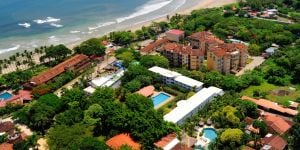
Buying property in Costa Rica
Costa Rica has built a strong reputation as one of Latin America's most welcoming destinations for foreign ...

Buying property in Heredia
Heredia has quietly become one of Costa Rica's most compelling destinations for expats looking to put down ...
Renting in Heredia
Heredia is one of the most livable cities in Costa Rica's Central Valley, drawing expats with its ...
Renting accommodation in San Jose
San Jose is the beating heart of Costa Rica, economically, culturally, and socially. For expats, it is also the ...
Accommodation in Santa Ana
Santa Ana has become one of the most sought-after places to live in the Greater San José area. Known ...

Buying property in San Jose
San Jose, Costa Rica's capital, has become one of Central America's most active residential property ...

Buying property in Santa Ana
Santa Ana has quietly grown into one of the most sought-after residential destinations in Costa Rica's Central ...

Dating culture in Costa Rica: what expats need to know
Costa Rica is a country where the pace of life is deliberately slower, relationships are built on genuine trust, ...
Forum topics on housing in Costa Rica
Essential services for your expat journey