

The Indonesia expat reference thread





The local currency is the Rupiah, it being the only legal form of tender within Indonesia except for bartering.
Any shop or business of any kind, that including rental properties, MUST use the Rupiah if the transaction is to be legal. Anything priced in US$ should be ignored (Mostly because it's likely to be a rip off aimed at tourists or expats with more money than experience).
BITCOIN and other such things are illegal for any and all internal transactions.
Money here is in big numbers (The smallest note being Rp1,000) but don't let the thought of spending four thousand to park a car put you off.
You get used to these numbers pretty quickly.
The big temptation is converting back to your home money - Don't.
The conversion will make things sound really cheap so you'll get ripped off all the more as you aren't considering the local economy. The price you're told might very well be cheap if it was for sale in the UK or US, but it could be three times the normal price for Indonesia.
However, as a foreigner, you'll get ripped off at first but less so when you stop converting and start working out if locals would buy it at that price.
You can minimise this with a trip into an Alfamart or other fixed price shop.
See how much they charge for a bottle of water and a few essential items.
That'll give you a base to work with.
If you use a warung (small shop), they probably buy at the same price such as Alfamart sell at so expect to pay a little more.
As a note, locals commonly miss the thousand or million - you'll get used to how it works (over time).
Local salaries compared to what expats commonly earn
Most working expats earn more in a day or three than many locals see in a month.
That in mind, allow a little rip off or two; it's good for the soul.
I allow a thousand or two but never allow them to charge stupid prices.
The lowest I know of in Jakarta area (For a real job) is just over Rp1 million,
Street traders may well earn less.
A degree educated professional such as a teacher may earn around 5 to 7 million/month, but many earn less.
Consider this information before posting a thread asking if Rp30 million/month is enough to live on.
Bank account
Foreigners may open accounts legally if they hold a KITAS or KITAP immigration document.If you don't have one of these, it's illegal except for a few special account types.https://transferwise.com/au/blog/openin … -indonesia
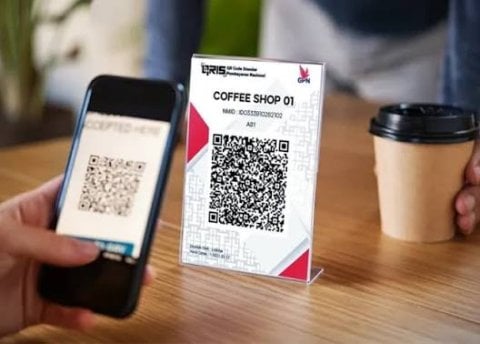
Quick Response Indonesian Standard (QRIS) and the National Payment Gateway (GPN).
QRIS has very quickly risen to become the standard retail payment method.
It's quick, easy, and secure. Banking apps have this in their apps. It's always on the main page as it's in such common use.
A lot of shops and restaurants only accept QRIS. No cash, no cards.
GPN is a local payment sorting system.
My debit card is GPN. The downside is it's local to ASEAN and can't be used aoutside the area, but the upside is it's immune to wild US 'politics' as it avoids US clearance systems.
An account is easy enough to open.
Banks will ask for originals of various documents including KITAS/KITAP, passport, and your local ID card SKTT/KTP.
Check with the bank as the requested documents have a habit of changing from branch to branch.
Your ATM card is usually instant, but does have restrictions. It can be used with an ATM and for instore purcheses, but you can't use it for telephone or internet transactions.Some banks issue ATM cards with Mastercard and other international logos, that meaning you can use them outside the country, but you have to ask or you may get a standard one without them on.
Debit cards with your name on and all the details required for internet and telephone transactions are available on request, these taking around two weeks to obtain.
Banks offer a series of cards that allow different ATM daily limits and different limits on ATM transfers. You pay a monthly fee on all types of card but you'll find the differences in cost are minor so it's often worth taking the top card type.
BCA main branches have a card issuing machine so the process is quick and easy.
The security guys operate the machine for you so it's extremely easy to get a new card.
The most popular bank here seems to be BCA, a very good bank with a lot of branches and a lot of ATMs, but those tend to have long queues at busy times. I generally advise using them at quiet times, and a bit of forward thinking allows that.They, as with other banks, have very good online banking that works very well from the internet or mobile phone app. I've used both systems without the slightest problem.
BNI is another very good bank, but they have fewer branches and fewer ATMs, but generally shorter queues.Another new player is Jenius, an app based account from BTPN. You sign up online (You'll need ID and Tax cards), and all your banking is online. They send the card by post, and that has your name, a 16 digit number and 3 number code on the back. It also has the Visa logo. I keep it at around a million and use it for shopping. If I do get skimmed in a dodgy shop, the most they can get is a million. I transfer from other accounts, but use that card almost exclusively.
All local banks have ATM systems, many accepting several banks' cards, not just their own. Most will accept foreign bank cards and credit cards, but there have been some issues with older, non chip and pin cards, many from some US banks. I had a few problems for a while, but nothing for the last couple of years.
They all accept the usual logos, Visa, Cirrus, Maestro, mastercard and so on.
I tend to use BCA and BNI when I use a foreign issued card but other banks will accept them as well.
Using a Rp100,000 machine means you can take out a greater amount each time (Usually Rp2,500,000) so your bank charges tend to be lower as it's commonly by transaction, not just how much you take.
ATM Transfers to different Indonesian banks
It's possible to transfer between different banks for a small charge, but you have to use a bank identifier code. The ATMs are programmed with the lists but the most common are:
BNI - 009
BRI - 002
BCA - 014
Mandiri - 008
There are some problems with skimmer gangs but sticking to ATMs in shops and malls will mean you're unlikely to get caught out by the thieves.
Internet banking is generally safe and it's very handy. Banks will, on request, provide you with an internet banking secure key. I mostly use BCA's internet service and I'm happy to report it works well. I now pay most bills using it and it can be used to transfer money to accounts and so on. These also allow you to top up pre-paid cards appropriate to the bank in question, Mandiri allowing etoll top up and so on.
The system works well and is available in English.
These are available in many shops and you don't need a bank account to have one.
You can have as many as you like.
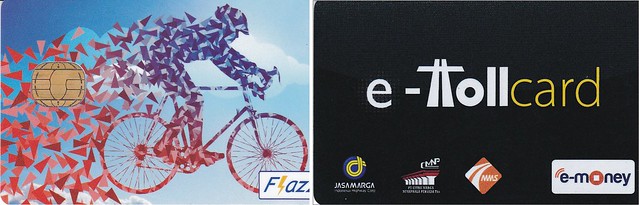
BCA's Flazz and other prepaid cards are quite popular in Indonesia.
I think every bank has at least one, but these are the two I find most useful, mostly because I can pay for toll roads, parking and all the shops I use most accept them.
They're basically cash, but without all the messing around with money and it avoids the loose change that quickly builds up in your pockets disappears.
Transjakata buses require a prepaid card (Flazz, emoney and all variants, and Brizzi all work) as they won't accept cash, and they can be used it to pay for car parking and many other things.
They can be topped up in thousands of places, including the given bank's ATMs, any of the shops that accept them, and the bank's app.
All cards have a maximum load of one million Rupiah.
Jan 2022 update
I have now scrapped all my prepaid cards except BCA Flazz.
My old generation 1 card could only be topped up using an ATM or at a shop, but my new Gen 2 card can be topped up using the BCA app. The thing is accepted at both of my favourite supermarkets and I can use it on toll roads.
Every country has its scam artists, Indonesia being no exception.
Most are limited and unimaginative but professionals are getting in on the act now so watch out for more sophisticated stuff coming along.
Watch out for people hanging around in shopping centres or supermarkets suddenly stopping you, explaining how they're students collecting for charity.
They commonly want a one off payment.
Their ID cards look very professional, but they're fake.
The people using stands are genuine but one off people hanging around are always scammers.
A polite "No thank you" and look around for a security guard.
If one is there at the time, wave him over and the offenders will be kicked out.
Traffic lights often see 'volunteers' collecting for whatever - many are collecting for themselves.
Again, a polite refusal is best.
Violence from these people is uncommon, so remain polite and avoid confrontation and they'll go away and try to scam the next people.
Those in school uniform are likely the real thing as their principal would kick the lot out of school if they used their uniforms for such a thing. These legitimate collections are conducted in groups, never individuals.
NEVER give money to kids begging - Apart from being illegal (Hardly enforced), many of the kids are not willing, some may even have been kidnapped and forced to work.
Many of the women with babies have hired the kids, and they tend to work in gangs
SMS scams have become rare since the introduction of the new security rules. As the thieves must register their SIM cards, they can't send SMS scams without being found out very quickly and arrested.
UPDATE- june 2020
SMS scams are back as the scammers have worked out ways to get around the number rules. Any messages from hospitals, banks, the police, and other fakes asking for money or personal details should be ignored. I'm amazed the bank account numbers they give don't seem to lead to arrests, but maybe they do and I just haven't seen it.
A common one would be someone is in hospital and you have to send money to someone for emergency treatment.
Fair chance it's either illegal loans
One thing I heard of some years ago.
Woman approaches man.
Off to hotel.
Outraged husband knocks on door demanding cash or police.
A cop I know in Java explained that one - seems it's quite common in some areas.
ATM fraud
This happens all over the world, including Indonesia, but it is easily preventable.
Number one trick - try to use ATMs in supermarkets or other places with lots of security. It's far harder for a skimmer to be installed in places like that.
Many gangs operate in tourist areas, knowing a hit will bag them more cash that locals tend to have, so take special care in such places. The police have a crackdown from time to time but foreign gangs reappear and start again. This is likely to spread to domestic thieves so stick to ATMs in secure areas where possible.
Card copying
There are two ways they copy your card:
1 - They conduct a transaction in a retail outlet of whatever sort, and run your card through a second reader under the counter. If your card disappears out of your sight, even for a second or two, cancel the transaction, refusing to enter your PIN into their machine as there could well be a camera pointing at it.
2 - Card skimmers on ATMs.
These were easy to spot because they were of lousy construction but the new ones are far more professional.
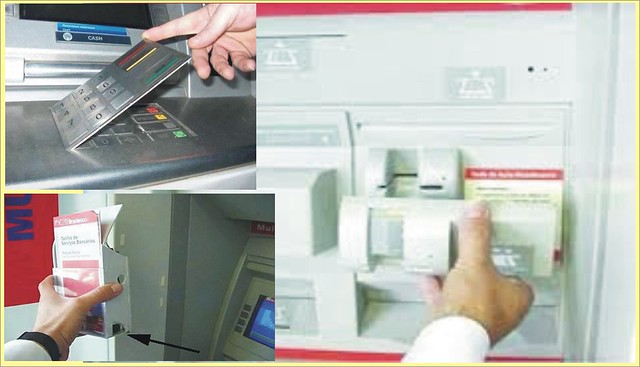
This short clip is worth a watch.
https://www.youtube.com/watch?v=WYMUA8umUz8
Fake websites/Cryptocurrency
These are pretty new in Indonesia but expect more as time goes on. I've just come across a 'koin' site operating from Aceh, they promise the world but the thing is run by a scammer operating out of Panama (or at least that's where the trail leads). The same people having run a lot of fake site scams over the years.
Fake sites are easy to spot if you take a little care and use your head before you get greedy.
Contactless card fraud
Gwmeath wrote:Just looking at your information on ATM fraud etc, not sure if the local banks issue contactless cards (never been issued one myself) but contactless fraud is on the rise especially in Singapore, and other locations could well be happening here or not far away
you can purchase a small wallet that the illegal apps on phones etc cannot get your card information same for car key fobs
I would imagine expats are the main targets in malls etc
Nobody likes to pay tax but it's one of the very few things we can never escape so it's essential to get a local tax code if you have an income in Indonesia.
This site will allow you to do everything
https://pajak.go.id/id
Once you've created an account, this page allows you to fill in your tax return online
https://djponline.pajak.go.id/account/login
The NPWP number is normally applied for by your employer but you might have to visit a tax office if you have no formal employer.
It's easy enough to do and all you need is your identification documents and your family card (if applicable), and photocopies to give to the office.
Just pop to your local tax office (KPP Pratama), fill in the forms, and wait at the counter for them to issue a tax card.
Very fast and very simple
Double taxation for earning from your home country may be avoided legally if your country has a tax agreement with Indonesia.
Note. NPWP will be be replaced by NIK over the next year or two but you won't notice much difference.
Payment apps
There are a wide selection of payment apps to choose from, but Gopay, Grab and OVO are probably the biggest.
All the banks have apps, the one I use most being BCA. I can top up Gojek, buy electricity tokens, and even pay in shops by transferring funds directly to their accounts. My last two computers were paid for that way. It's fast, easy, and the chances of fraud are minimal.
Most transactions in shops are now QRIS
You either scan a code on the counter, or it will appear on the till. It's fast and secure. I generally transfer a couple of million onto my Gopay as it's the easiest app to use, but I do use banking apps from time to time.
You can still use QRIS if you don't have a bank account - download Gopay, top it up in cash at an Alfamart/Indomaret, then use as you wish.
Deposito accounts and Prioritas
Deposito
accounts are fixed term, high interest bonds from the banks. Rates vary so shop around, but you can get a few percent over inflation with ease. They offer a safe option for people that have no interest in more risky investments.
Interest is paid either to your savings account or the deposito, and you can auto-rollover the bond rather than renew manually.
Terms vary, but the best interest rate is usually a three month commitment.
These aren't going to make you a fortune, but can make enough to leave you not worrying about having no work if you have a few billion in them.
Prioritas
accounts are offered as a free service to customers with greater than 500 million or one billion in their accounts, including deposito savings.
I have 2 such accounts, both offering slightly different advantages and discounts, but both have free meals in airport VIP lounges and no queues at branches as you use their dedicated areas rather than the counters. Some branches, usually main ones for the area, have Prioritas suites complete with armchairs and waitress delivered coffee. One gets me a heavily discounted safety deposit box, a very handy service.


Alcohol - Advice that could save your life.
Alcohol is quite expensive in Indonesia but don't let that tempt you into buying cheap stuff from local shops.
The chains, Alfamart, Indomaret, and so on, are no longer suppliers, but it is legally available in some other shops.
Some areas now have a total ban on alcohol sales. Whilst this is often unpopular with expats, it's very popular with most locals (or they simply don't care) as they don't drink anyway.
Many small shops sell cheap gin, whisky or whatever but the stuff is laced with methanol, bleach and various other nasties that'll likely put you in hospital or a morgue.
DO NOT BUY IT
You're more likely to have a heart attack because you're worrying about dengue than you are actually catching it.
Saying that, it is a problem, especially in the rainy season but you can do a lot to reduce your chances to nearly zero.
Mosquitoes tend to be around at night so, if you go out, wear long trousers, socks and shoes.
You're supposed to wear long sleeves as well but you'll melt if you do.
I use an easily bought insect repellent. There are many types available but I use Autan because it doesn't smell of much and I've never been bitten when I've been wearing it.
I don't follow my own advice regarding long trousers and shoes but Autan does the trick.
It also keeps the ants off my feet - they hate it as well.
Malaria is far less of a problem in the cites but take care anyway. I used anti malaria drugs when on holiday but that only lasted a few days as they had such a terrible effect on my digestion. It seems that's a common side effect.
Just follow the same advice as for dengue and your chances of the diseases are very slim.
Prescription drugs
If you intend to enter Indonesia with drugs, legal as they may be in your home country, check they're legal in Indonesia.
Indonesia has very strict laws concerning illegal drugs, laws that include shooting importers, so take extreme care.
Check your drugs are legal in the country you wish to visit/transit (Something legal in Indonesia might very well get you 10 years in a transit country).
Keep all drugs in their containers, including supplied labels.
Keep copies of prescriptions and a letter from your doctor.
Pack them in hand luggage, in a clear plastic bag.
When going through airport security, place the plastic bag on the tray so the officers can see you aren't trying to sneak anything past them. (Some may argue that will invite questions).
Buying drugs in Indonesia
Take great care, buying only from chain outlets, never small one off shops.
There are a lot of fake drugs out here, so you might very well not get what you're paying for.
Hospitals tend to be more expensive, so try to buy from the shops. Supermarkets, amongst others, commonly have a reliable pharmacy in their complexes, as do all shopping centres.
Those with mobility problems, especially wheelchair users will have problems here.
There are no provisions at all outside the newer shopping centres and offices of newer large businesses.
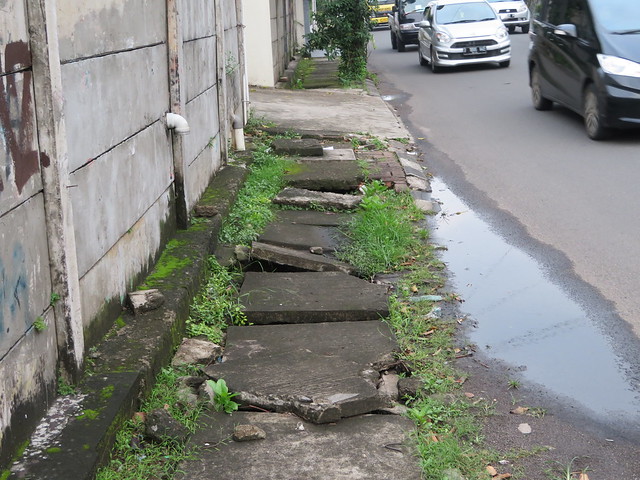
All the new centres have disabled toilets and ramp entrances, but these are about the only places with access designed for wheelchair uses. The pavements (Sidewalks), if they have them at all, are commonly rough and have steps to get up and down, that and bars designed to prevent motorcyclist using them but also blocking wheelchairs.
You'll find most public transport is all but useless to you if you have any sort of disability that slows you down when walking or makes stairs difficult to climb. The new TransJakarta buses have wheelchair facilities but they are of little use as access to most stops aren't wheelchair friendly.
There's almost nothing outside the larger towns and cities for disabled people.
Birth control
Some people believe Indonesia has strict controls on birth control but that's far from the case, much of the reason being the Indonesia's problems concerning overpopulation.
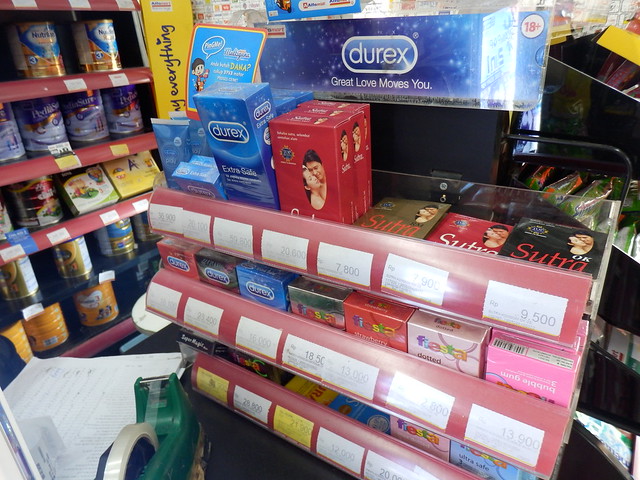
Condoms are available easily without the slightest question in most mini marts and the pill is just as easily available from most pharmacies without need to see a doctor.
As with any potentially dangerous drug, I would strongly recommend seeing a doctor if you intend to use oral contraceptives, but they are available without prescription.
STDs are a problem in Indonesia, but they are MOSTLY confined to given groups, these being sex workers, injecting drug users and the gay community.
However, the problem is also around in the many bars where the richer Indonesians and foreigners hang out. Free sex can easily come with a free STD, and HIV is in there.
SEX
Another issue is gold diggers, mostly women who hunt out foreigners and are willing to go all the way for a few shopping trips. This can be dangerous to the wallet and your health.
I would strongly advise leaving sex alone as far as casual meetings in bars goes, but that's up to you.
If you do engage in carnal pleasure, wear a raincoat.
Sex and social diseases.
Some expats come here and enjoy prostitutes of whatever kind but this has dangers.
This is illegal and police do raid places from time to time so you could find yourself locked up with the potential for being deported, but the main issue is STDs.
AIDS isn't a massive issue here but there are still plenty of deaths so, if you engage in dodgy sex with professionals or have sex with high risk groups, a blood test is a good idea.
I don't use prostitutes, know any drug abusers or have any gay relationships so I don't know any of the following personally thus these aren't recommendations, just possibilities.
Click on the link for further info and more options.
http://www.jakarta100bars.com/2016/03/s … karta.html
Klinik Yayasan Angsamerah
Jl. Panglima Polim Raya 6
Blok A, Kebayoran Baru
Jakarta Selatan 12140
The new Angsamerah Clinic will be located on Jalan Johar.
Website (with English version): http://angsamerah.com/
Phone number: +62 21 724 7676
Bio Medika
Location:
In Jakarta: Kedoya, Gandaria, Kelapa Gading, Mangga Besar, Semangan, Angke. More details on their website: http://www.biomedika.co.id
Phone number: 021 568 9942-43
International SOS
SOS Medika Cipete Clinic
Jalan Puri Sakti No. 12, Cipete - Antasari
Phone number: 021 7505973
SOS Medika Kuningan
Menara Prima 2nd Floor, Mega Kuningan
Phone number: 021 5794 8600
Gay sex
Gay sex or any other gay relationship is perfectly legal here (outside prostitution), it it isn't exactly welcome either. I know a couple of seriously camp blokes and no one bothers them in the slightest, but you have to be aware there are more extreme members of the population who aren't past 'gay bashing'. Gay clubs are raided from time to time and clients ridiculed, but there's little to charge anyone with so no worries about prison time unless you're up to something else as well.
However, even an arrest with no charge has the possibility of becoming a problem with visa applications.
BPJS is available for many expats but it's more an emergency thing if you don't have other insurance. Expect queues and waiting lists if you use it, but it can also save your life.
Expats included in this scheme by force when they work here will probably never use it so treat it as a charitable donation rather than a rip off. The payments are tiny, more so when compared to many expat salaries, but your donations can be a lifesaver for poor people who can't afford medical insurance.
There are many health insurance policies available ranging from the government run BPJS through to very expensive 'do everything' products that ship you off to Singapore for treatment.
The first thing you need to consider is your chances of needing treatment. Accidents happen but the vast majority of younger people remain healthy so won't use their cover at all.
I would advise looking at the middle ground, that being policies issued by the banks.
Many banks have affordable deals that offer pretty good returns in the event of illness, at least one major bank using the payments as an investment scheme over several years so you actually get your money back.
I would strongly suggest walking away from the large international companies that base reps in shopping centres that walk up to you and ask how much you'd like to pay, but avoid all talk of what you get for your money. One very silly woman started off with 12 million/month payments, an absolute rip off job even if her company had a big name and the fee was actually as advertised.
Another way is to wander into a local hospital and ask which insurer they would recommend- You'd be surprised at who they say not to use because those companies are bad payers - A big name that hangs around in shopping centres.
Gwmeath wrote:Just one thing to add on the insurance part/ BPJS
This is especially for expats who are employed by both Indonesian and foreign companies using KITAS once your KITAS has been cancelled you can claim 100% of the BPJS back including employer contributions(probably closer to 90% to be honest) (as long as a claim wasnt done) 99% of the time expats working for foreign companies tend to have insurance but its a requirement to have BPJS
0 tax for first 60/70% of claim and I think its 10% tax for the remainder
A few bits and bobs about local (and not so local) food can be found here.
https://www.expat.com/forum/viewtopic.php?id=592042
Street food takes a little getting used to in order to get the right thing at the right price, but without free food poisoning.
There are some tricks to deciding where to eat.
1 - If the place looks really dirty (by Indonesian standards), the food is probably dodgy.
2 - If there is a crowd, it's probably nice (and safe) If there's a crowd at every other stand but not that one, it's probably rubbish.
3 - Take note of how they wash the dishes. If they have running water, it's probably safe to eat from their plates. If not, order wrapped up (dibunkus) and use the plastic cutlery they give you for free.
I keep some disposable cutlery in the car, just in case.
I believe much of the problem isn't bad food, but it being served on dirty plates. I've seen them washed in drains - pretty terrible, but true.
4 - Most street food (Kaki lima) people that wander the estates are fine. If they aren't, no one buys so they go bust pretty quickly.
Vaccinations
The British government recommends a series of vaccinations before travelling to Indonesia.
As these are harmless, it's a good idea to follow the advice.
https://travelhealthpro.org.uk/countrie … mendations
Tetanus is strongly recommended.
Rabies is extremely unlikely and hep B only really applies if you intend to get naughty. Japanese Encephalitis is unlikely to be any issue for most expats but it's worth considering if you live or spend time in rural areas. Typhoid vaccinations are also a good idea, more so if you eat street food.
Vaccinations and schools
Many schools expats are likely to apply to will ask for the student's vaccination records and failure to provide may result in the application being rejected.

Much of Indonesia doesn't have pavements (sidewalks) and the parts that do don't always look after them. Many pavements in cities are concrete covers over storm drains but with a lot of the covers broken or missing.
Where there are properly designed sidewalks, it's very common to see street hawkers take them over and blocking them totally.
You should be very careful when walking as there are many potholes so a twisted ankle awaits those who don't care care.
In traffic jams, it's very common for motorcyclists to use the pavement as well as the roads, and even pedestrian footbridges.
Where there is no pavement, Indonesians walk with traffic flow rather than against it, that leaving then vulnerable and at the mercy of drivers who might well be playing with their phones whilst driving (very common here). I strongly recommend walking towards oncoming vehicles and watching them very closely.
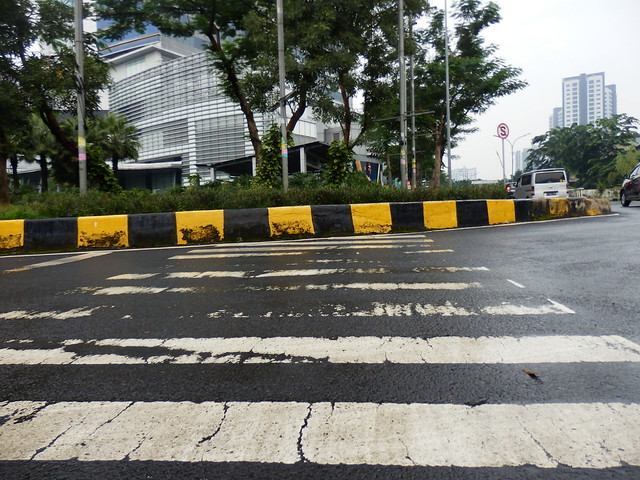
Crossing roads on foot is a dangerous affair as vehicles rarely give way for pedestrians and will usually ignore designated crossing, even light controlled ones.
Very busy streets often have people helping you across the road, the normal thing to do is pay them one or two thousand Rupiah.
The roads
*************WARNING - DO NOT DRINK AND DRIVE IN INDONESIAThis can get you a variety of punishments from fines, through prison time, to being beaten to death by an angry mob.*************Get a dashcam and make sure it's recording at all times.
If anyone is considering driving in Indonesia, watch this first.These caused accidents but most get away with stupidity on the roads - I have no idea how they manage to, but they do.These things are pretty common on roads here, especially the crazy overtaking and totally ignoring traffic lights..
https://www.youtube.com/watch?v=gpNJkfhaTCc
Most people have no idea how bad traffic is in Indonesia until they see it.Traffic lights are advisory at best and commonly ignored; leading to total chaos.
Any accident is your fault regardless of who is to blame, even accidents you witnessed but where not part of.
Keep that dashcam running all the time so you have proof it was nothing to do with you. If your can picks up an accident, transfer the video to your phone or computer as soon as possible in case someone decided to blame you in the hope of getting some cash out of you - it happens.
Expect people to overtake you but turn left before they get clear or somebody to run a red light or just fly out a blind junction without a thought of looking to see if the road is clear.
Traffic lights are hardly ever bothered with in many placrs. They're there; just ignored.Also note - Most people will turn left at any junctions regardless of light colour - this is accepted as normal here.Motorcycles rarely have insurance, but very commonly cause accidents. Motorbikes overtake on the left when there isn't any room. They scratch your car and/or fall off. They will blame you in either case even though they broke the law.
Motorbikes overtake on the right when there isn't any room or you have your right indicator on as you're turning right. They scratch your car, run head on into oncoming traffic, and/or fall off. They will blame you in either case even though they broke the law. These are very common so keep an eye on your mirror when turning right.
Motorbikse run into the back of you when you stop for whatever reason, even traffic lights. As before, they will often try to blame you.
For all of the above - Stay calm and live with whatever damage they cause. You have bugger all chance of getting any cash out of them so there's little advantage in getting stressed out and angry.
I had (yet another) mini-smash the other day. I stopped for the traffic lights queue, the woman on the bike behind me didn't bother. The bang was a lot louder than the damage and the dent came out easily, but I asked her for her licence and registration. The only hope you have of anything is if they aren't riding legally as the cops will take their bike and they know it.
Angkots are mini city busses, the majority of drivers being as mad as hatters. They're mostly dangerous and give give a damn about accidents because the mini vans are mostly beaten up old wrecks and the cops do nothing about them anyway.They cause a large number of town and city traffic jams, will go in the left hand lane to turn right (and the right to turn left), and will drive like a bloody idiot in order to overtake you, then slam their brakes on to pick up a passenger.These are nothing but a dangerous menace so keep an eye out for them and always try to avoid them when possible.If there were any enforced speed limits (or even signs advising of a limit), speeding would be normal when you aren't in a traffic jam.The idea of driving in Indonesia is; I'm first and I don't care about what's in the way or, if something is already there; it'll get out of the way.They seem to think this applies to brick walls as I've seen on a couple of occasions.
The police do almost nothing to enforce any little rules so seeing a kid riding a motorbike, but unable to put his feet to the floor because he's only five years old, is pretty much normal in country areas.
A country area is anywhere there isn't a main road.
Because of this dangerous stupidity, illegal road humps are very common.The locals get pissed off with the bad riding so install crazy road humps outside their house. This becomes more of a problem when the hump is so tall, the cars/bikes get stuck on them. This is quite common.The other problem is, the locals all want a hump outside their house so humps just a few metres apart from each other is common.
licences/insurance/Registration document + Tax
Licences
Your Australian/American/British licence isn't valid here and I expect that probably goes for most other foreign licences.
I believe (Open to correction). an international licence is valid if you report to your local POLDA.
Most cops will accept a foreign licence but don't get into an accident and try to use it. You may just get the wrong cop and end up with a very large bill to pay.
Local licences are:
SIM A - Car licence.
SIM C - Motorcycle licence (Under 250 cc) - C is now split into three depending on the vehicle type.
However, most small scooters are 110 to 150 cc - more than enough on Indonesian's roads as many surfaces are poorly kept and poorly trained drivers are common.
Your licence MUST be carried whenever you drive or the vehicle can be confiscated.
These should be available, after passing a written test, driving test and medical, for a small fee.
The licence should be valid for five years. Most, but not all, of the corruption has been stamped out.
Update (21/09/17) - Foreigners must now take their tests at a POLDA, not any licencing centre as before.
Motorbike insurance.
Insurance for a bike is rare but you can get theft insurance if you try. Ask the dealer when you buy.
New cars on loans come with insurance but watch out to make sure third party is included. It will probably cost more and has limits for payouts.
New cars paid for in cash - ask to make sure insurance in included in the deal.
Car insurance
Insurance is a problem in Indonesia, especially when you look at motor insurance.
Most motorbikes have no insurance at all, and a large proportion of car drivers run around without it, not even third party.
Motorbike insurance against theft is easy enough for a new bike, but accident cover is pretty much impossible to get.
A new car always comes with insurance if it's on credit, but is optional for a cash sale.
You normally have to ask the dealer to arrange it for you.
Most car accidents are knock for knock, but make sure you're covered against some twit on a motorbike running into you and claiming you were at fault.
As I suggested before, a dashcam won't hurt in the event of an accident, but minor details such as clear proof won't always do much to help you.
Many policies don't have third party cover, so make sure you ask for it.
One bonus, many policies come with breakdown and recovery cover.
Registration document + Tax
Every vehicle must have a registration document, this being supplied with the owner's book when the car or bike is first issued number plates.
This document (SKNK) MUST be carried whenever you drive or the vehicle can be confiscated.
Every vehicle has to have a tax paid every year, this being at the end of the month noted on your registration plates (Plat polici).
The police sometimes do a 'sweeping' aiming for cars and motorbikes registered the month or two before the date of their operation.
Road tax can now be paid using an app called, SIGNAL. It's not that easy to set up, but it's easy to use when it has been.
You can now print your own STNK and tax payment QR code. These must be kept with you when driving or riding.
Buying a car/motorbike.
We need to get around, so many of us will buy a car and/or motorbike.
In general, a small scooter is easily the cheapest, most efficient and quickest in Indonesia's terrible traffic but, if you have a family or need a car for other reasons, you can legally buy one.
Buy a scooter that has space for your helmet under the seat - Very handy feature.
You'll get asked for your KITAS/KITAP when buying so the bike can be registered in your name.
Selling a car/motorcycle
All vehicles require taxing once a year, and that requires the person taxing the vehicle to take ID documents with them when they pay.
When a vehicle changes hands, the new owner should register the vehicle in their name, but that means a charge, and that doesn't go down well with a lot of people.
That in mind, expect the new owner to knock on your door at tax time, asking to borrow your ID card and/or various other documents, including passport and KITAS/P.
Whilst I see their position, this is illegal so you shouldn't do it.
Of course, there is no serious problem unless the vehicle is used in a crime or confiscated by the police for some reason.
I would strongly recommend you never lend documents to anyone, especially passport or immigration documents as there appears to be a serious black market trade in these things, with a western passport selling for several thousand US$, more than enough for the borrower to have 'lost' it out of his pocket on the way back to your house, if you ever see him again.
The best way is to make it clear the sale is final, and you won't help them tax the vehicle in future.
Cars and motorcycles are registered in the area you reside and all owners must pay a tax every year using the vehicle registration document (STNK) and your identification.
These must match so moving address outside that administrative area will mean you can't tax it.
That in mind, you have to transfer the vehicle and get new number plates. The rules are a bit of messing around and the police tend to make the job hard work, or maybe just make it sound hard.
I paid a cop to do the messing around for me, NOT a bribe, more a thank you for the hassle saved.
As I'd already found out the correct fee, I knew exactly how much he was charging me and decided it was a fair amount of money to exchange for a simple and easy life.
The procedure was done correctly, the appropriate officer checking my car exactly how he should (Including engine and chassis numbers) but I didn't have all the waiting around, running around, and headaches.
As long as you don;t expect any illegal service to be done for you, I don't really see a problem with this, more so as I asked a random traffic cop I met on the street.
Toll roads (Jalan tol)
Motorbikes are not normally allowed on toll roads but you sometimes see big bikes on the them, commonly in groups - I suppose they have special permission to do so, or maybe just ignore the law - No clue.
The max speed for cars on most toll roads is 100kph, sometimes lower - A good idea as the state of the roads and poor driving means any faster can be unsafe.
Important note - I have never used the Jakarta to Java toll road without seeing the results of a serious accident, usually a bus or a truck. A good few companies push their drivers to do long runs when tired, so they've been known to fall asleep at the wheel or just lose concentration and wander off the road.
All toll roads are cashless payments only so make sure you have an e-toll, brizzi, or Flazz, and make sure it's topped up. I have all three in anyway but I recommend you have two of the above in case one goes faulty.
I use a BCA Flazz as I can top it up from my phone. A handy trick from time to time as you never get stuck with low credit.
There are staff around for drivers who get stuck.
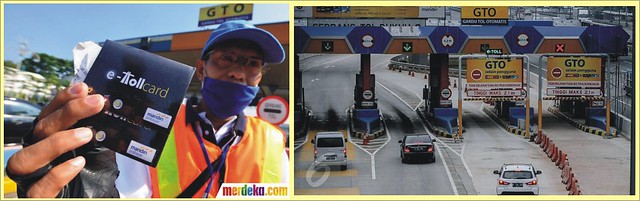
Warning.
Many Indonesian drivers are poorly trained and have no training at all on fast roads, meaning they can be extremely dangerous.
Tailgating whilst flashing high beam is very common, even when you're stuck between two trucks and have absolutely no possibility to get out of the fool's way.
Don't get angry, simply ignore them and move over as soon as safe.
It's very common to see trucks and buses sitting in lane 2 and 3, jamming up the whole mess so always check out lane 1 as that's often totally clear.
Most Indonesians are unused to long roads so accidents are common on the tolls because they just can't handle the speed or try to drive too far without a rest.
Taxis
Jakarta has many taxi companies but you have to be a little careful.
Blue bird are reliable and, with two exceptions, have always got me there without messing about.
No tourist route, no attempts to run without using the meter and no messing about from the drivers.
Their drivers usually drive safely - mostly.
Note - Every Blue bird driver must keep his car clean and tidy, and always have his ID badge in the front of the vehicle. They must return to their pool if they sustain any damage to their vehicle - Blue bird take safety and reputation very seriously.
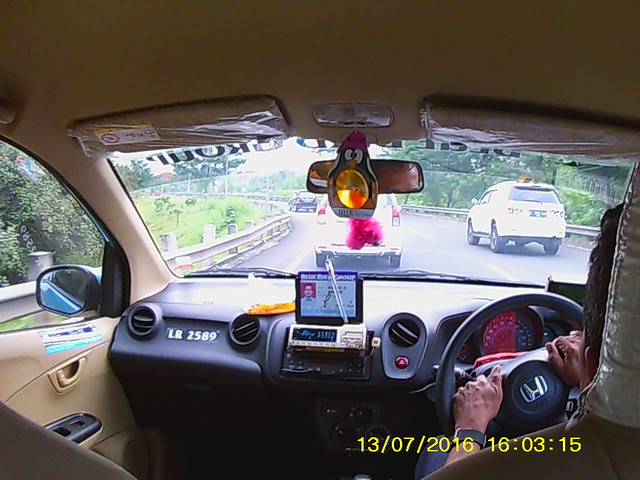
Silver bird is the top end posh service, running Mercs and other quality cars.
Their fares are about 1.5 times that of Blue bird.
Green SM
These are a new taxi company, and commonly cheaper than Bluebird. They use locally made Vietnamese EVs.
I They have introduced a motorbike service as well.
Public transport (Not taxis)
Indonesia has a wide range of public transport.
Transjakarta
is a public bus service that will take you to most areas of the city.
It has links to other bus services that can get you to the satellite towns around Jakarta.
They've has some issues with reliability of vehicles, including fires that have destroyed several buses.
However, in general they're safe and fast because they have special bus lanes that other drivers can't use with risking a fine.
MRT
The Jakarta MRT is an overhead and underground system that Indonesia can be proud of. It's fast, clean, and very safe. It's a great way of getting around Jakarta.
Intercity bus services.Indonesia has a lot of intercity bus services, both air conditioned and not.The non AC are generally old, dirty cattle trucks I would strongly advise you not to even consider.The Air conditioned buses are mostly pretty good.I generally recommend Sinar Jaya services because their buses are clean, tidy and well looked after.I strongly suggest buy two tickets because the seats tend to be a little cramped if you're big, or sit next to someone wider than average.I have had a couple of overtired drivers, but they are generally safe.You'll also notice the very cheap prices they advertise.
There are many local bus services, all about the same.Their buses are commonly in poor condition and their drivers tend to drive in a fashion that leads you to suspect they're suicidal.Kopaja buses in Jakarta are numbered and have designated routes, but are mostly old and commonly very overcrowded.They're very cheap and run all over the city.You should take care of pickpockets on any and all crowded services.This is a typical local bus in Central Java.The floor is damaged, the buses are commonly overcrowded and you even get passengers hanging off the outside.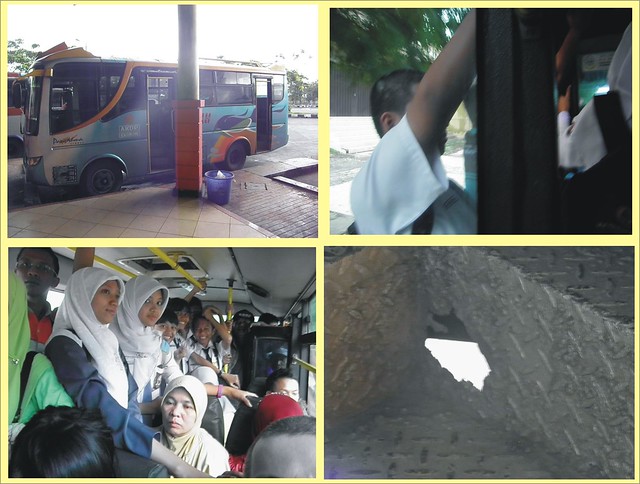
I would generally suggest avoiding these services if possible.
Go-jek and Grab bike
Go Jek and grab bike are motorcycle taxi services that use mobile apps to allow you to call transport to where ever your are. The Go-jek and grab applications both ask for permission to use media, files, contacts lists and other private information. I wouldn't advise installing any application that asks to access information they don't need to run their service.
Trains
Booking trains is easiest if you use the KIA app. It's on Google Play Store (KIA access). You can book trains and which seats you prefer. Paying is easy - I use my BCA banking app but other option are available.
Every seat in executive has a mains socket so you can charge your phone (I have never use economy so I don;t know about them)
Google maps provides real time train information. Click on a station to see train details for that place.
You can download an intercity train app that allows you to book, then pay via a local bank ATM or a paypoint such as a mini mart
Trains (Intercity)
ALWAYS BOOK A TRAIN FOR AT LEAST AN HOUR BEFORE YOUR INTENDED ARRIVAL TIME - THEY'RE OFTEN LATE (Their timing has improved dramatically).
You will be asked for identification for all long distance services, this usually being your KTP or SKTT, but your passport will do nicely if you have yet to get another form of identification.
The executive class intercity trains are generally clean and comfortable, but I have never enjoyed the food, so I would strongly suggest you take a packed lunch.
These services are being improved all the time. They also serve drinks, my favourite being coffee at Rp. 11,000.
Trains are generally safe but level crossings are a problem as many road users don't believe in stopping at them, even petrol tanker drivers.
Trains (Local around the Jakarta area)
You must buy a Rp10,000 card to use the train card, but that's refundable at the end of your journey if you wish to cash it in. All stations also accept prepaid cards such as Flash and etoll.
I don't have a full list of fares at this point, but I know West Jakarta to Bintaro costs Rp2,000.
The trains are fine when they're quiet, but you're packed in like sardines at rush hour, making them a little unsafe.
I've seen a few women faint because of the extremely cramped conditions, heat and lack of air.
All the local commuter trains are equipped with air conditioning and all have ladies only carriages.
Commuterline info
Airport train service
There is an excellent airport train service that calls at several stations in the Jakarta area and goes as far as Bekasi. The Jl. Jend Surdirman to airport trip takes less than ab hours, is cheap, and means you don't have traffic jams to worry about.
There is a free monorail that takes you from the train station to all Terminals.
I've tried several ways to reach the airport, the train being by far the easiest, fastest, and cheapest.
I strongly recommend using it.
Airports / Air travel / airlines
Indonesian airlines used to have a terrible reputation and a worse accident record, but that's changed a lot over the last few years.
Garuda
, the national carrier was banned in many countries (including the whole of the EU) but Garuda is now listed as a five star airline.
My personal experience forces me to agree with this without reservation. Their service has been fantastic, the staff are nothing short of great, and the in flight food is delicious (Tell me that isn't a major shock for any airline)
They gained awards for the most improved airlines and the world's best cabin crews. I can see why.
Soekarno-Hatta is a clean, modern airport with good facilities for the traveller, including easily available food from Indonesian and western outlets. The new toll roads and rail airport link mean easy access from anywhere in the area.
Electric bicycles and motorcycles
EV bikes are getting to be quite popular here because they are cheap, easy, and there are far fewer problems than there are with petrol bikes.
There are a number of Chinese brands, and local brands that use Chinese tech.
- An electric bicycle doesn't require a licence, number plates, or tax, but they are not allowed on main roads. Frankly, they aren't safe in heavy traffic.
- An electric motorbike can be driven on any road except toll roads, but they need plates, and you need a SIM C license.
They vary in quality and abilities. I had a bicycle that did very nicely for local trips, but my new one is a motorcycle as I need it for longer distances and need to use main roads.
If you buy, check the warranty on the battery, frame, and so on.
United give a three year warranty on their Lithium batteries, but I think it's only six months on their sealed lead acid types.
Essential services for your expat journey



- Amateur radio in Indonesia
- Cost of living in Indonesia in 2026
- Expats in Yogyakarta
- Managing mailboxes or PO boxes in Indonesia
- The afterwork culture in Indonesia
- Planning to move to Indonesia
- Firearms
- For those considering marriage here
- Public shower in Indonesia
- The dangers of some areas of Bali, especially Kuta
- Cost of Blacklist to be lifted
- Sense of humour in Indonesia
- The nightlife scene in Indonesia
- Women of Indonesia
- balinese woman + foreign man =true ??
- Polygamy marriage rules in Indonesia
- Best cities to live in Indonesia
- Massage jobs in Indonesia