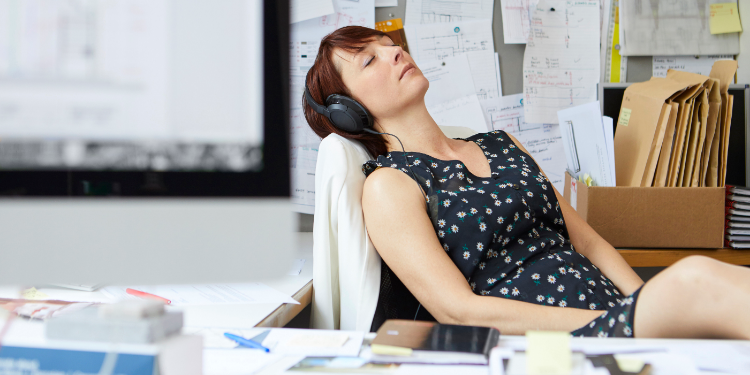
In 2026, office napping is being rediscovered as a workplace trend, mainly in countries where it has never truly taken root. In other parts of the world, however, napping has long been seen as more than a pause in the day: it is a practical habit with lasting benefits.
To perform well, you need to sleep well. American wearable-tech company Whoop has taken this idea quite literally, promising its best sleepers up to $100 a month. In 2025, employees stood out thanks to connected watches that collected sleep data and sent it back to Whoop. While the company claims to be focused on employee well-being, the initiative is also clearly designed to boost productivity. Unsurprisingly, it has raised concerns. Sleep, after all, is deeply personal.
The same concerns surround workplace napping. While Whoop monitors employees' sleep, other American companies are actively introducing nap breaks at work. The idea of the “power nap”, a short, restorative micro-nap, already exists, but it has never been truly encouraged. And yet, according to NASA, a 15-minute nap improves alertness and concentration. In recent years, workplace naps have become a selling point for startups and tech companies looking to attract international talent. Employee well-being and mental health now carry more weight. Creating dedicated nap spaces sends a strong and positive message to staff.
In France also, the idea is gaining ground, particularly in large companies and startups. Here too, naps are seen as a way to attract talent, increase productivity, and improve employer branding. Still, companies that fully embrace the art of napping remain a minority. Many continue to view sleeping at work as shameful or even a serious offense. Yet French businesses have successfully entered this new office-sleep market. Nap bars even gained traction in 2017, before being struck by the pandemic. Some still exist today, mainly in major cities.
“We already sleep enough at night!” “Everything has its place.” These are the unspoken slogans of British work culture, where “napping” and “working” rarely go hand in hand. In the UK, the preference is for a solid night's sleep rather than nodding off at the office. The argument is simple: night-time sleep exists for a reason, so why introduce naps at work? Sleep belongs at home. Work belongs in the office.
Germany shares a similar outlook. Napping has largely disappeared from workplace culture there as well. However, after the extreme heatwaves of 2023, attitudes have started to shift. More and more doctors now recommend naps, particularly during periods of intense heat. Productivity drops when temperatures rise, so resting makes sense. Others, however, denounce the idea as laziness. They struggle to see how a nap could fit into a workday when the economy never stops. Why should the country grind to a halt? For skeptics, institutionalizing naps would be unthinkable in many essential sectors, such as healthcare, media, and food production. This would inevitably create inequalities between workers who can nap on the job and those who cannot.
Still, both supporters and opponents agree on one thing: sooner or later, the workday will need to be reorganized to better support employee well-being.
Join the community
Get regular tips and advice to make the most of your expat life
Workplace naps: A matter of culture and tradition
In several Asian countries, including Japan, the Philippines, and China, napping at work is part of everyday culture. It is not seen as a sign of laziness but of productivity. While some companies provide reclining chairs, there is often no need for dedicated rooms or special equipment. Not every employer can afford to set aside nap areas or provide mattresses. In Japan, people sleep at their desks but also at school, on public transport, and elsewhere. The same applies in China and the Philippines. China has even enshrined the right to a nap in its Constitution.
In Europe, Spain is often described as “the land of the siesta.” Yet the tradition has lost ground over time. In 2024, Labour and Economy Minister Yolanda Díaz criticized a culture that combines daytime naps with late-night schedules. Her target: Spain's working hours, which she argues harm workers' health. The debate continues today. Still, siestas remain common, especially in the south of the country. Climate change and increasingly frequent heatwaves have made them a necessity once again. Performing well in the afternoon becomes difficult when temperatures soar.
The same applies in Mexico and in some areas of Italy, where napping is widely accepted. As in Japan or China, it is not unusual to see employees asleep at their desks. Companies that can afford it provide dedicated rest areas. Expats are often the first to notice the benefits of workplace naps, associating them with well-being and quality of life.
How did we move from a world where naps were part of the natural rhythm of the day to one where sleeping, even for five minutes, is seen as a social failure? Public figures regularly boast about how little they sleep. French President Emmanuel Macron is said to sleep only “three to four hours a night.” US President Donald Trump reportedly sleeps “four to five hours.” Former German Chancellor Angela Merkel also claimed to have slept very little at certain points in her career. Historical figures such as Leonardo da Vinci were also known for sleeping very little. But drawing a direct link between “short sleep” and “great success” would be a step too far.
Napping during the day and sleeping well at night
There are, in fact, genuine “short sleepers.” But these cases should not be turned into a general rule. Some people sleep less out of necessity rather than choice. Certain expats, eager to prove themselves, cut back on sleep and avoid naps in the hope of boosting productivity. Any gains, however, are short-lived. A warning is in order: napping during the day should never be an excuse to shorten nighttime sleep. A nap is not wasted time, nor is it meant to extend the working day. The general recommendation remains seven to eight hours of sleep per night, with adjustments based on individual biological rhythms. Just as there are short sleepers, there are also “long sleepers.”
Many historians believe that habits changed during the Industrial Revolution. The shift from fields to factories, combined with rapid urbanization, transformed daily routines. Napping during work became impossible as machines had to keep running. In some countries, the image of the high-performing worker who never sleeps gradually took hold. Sleep became synonymous with laziness. Today, we are learning to reconnect with history and open ourselves to other cultures, where naps have always been seen for what they truly are: an effective way to recharge.
Freelance web writer specializing in political and socioeconomic news, Asaël Häzaq analyses about international economic trends. Thanks to her experience as an expat in Japan, she offers advices about living abroad : visa, studies, job search, working life, language, country. Holding a Master's degree in Law and Political Science, she has also experienced life as a digital nomad.