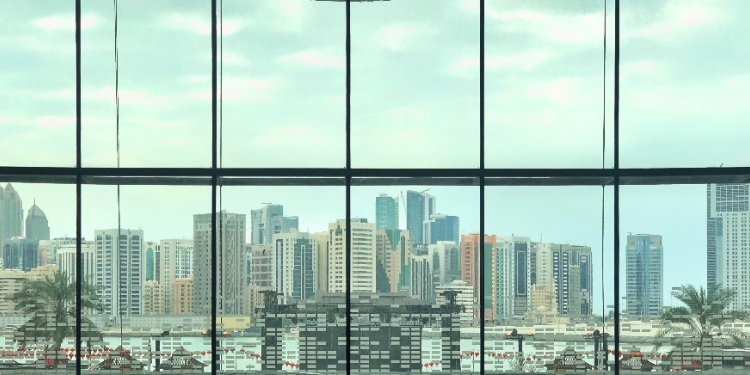
Attracting top talent from around the world is no longer enough. The United Arab Emirates (UAE) has learned that to stay ahead and keep its global edge, it needs to do more than lure professionals with high salaries and career prospects. The real test now lies in getting them to stay. Retaining talent means offering something more profound—a sense of purpose, recognition, and belonging. That's the new challenge shaping the UAE's future.
Working in the UAE: High salaries are no longer enough
The UAE continues to inspire professionals worldwide, largely thanks to its reputation as a land of opportunity and career growth. The country has invested heavily, and continues to do so, to position itself as a global hub for investment and borderless employment.
While the “American Dream” may have lost some of its shine, the “Emirati Dream” is fast gaining ground among foreign professionals. And it's not hard to see why. A store manager in the UAE can earn over USD 100,000 a year. Annual salaries average around USD 137,000 for human resources managers, nearly USD 172,000 for engineers in fields like automotive, aerospace, construction, or healthcare, and up to USD 238,000 for software and IT engineers. Risk managers top the list, earning more than USD 335,000 per year.
These figures are, of course, averages, and they vary by city. Unsurprisingly, the highest salaries are found in Dubai, which remains a magnet for expats. Abu Dhabi, the capital, also boasts strong salary levels. Yet both cities are among the most expensive places to live in the UAE. To balance their budgets, some expats relocate from glitzy Dubai or Abu Dhabi to more affordable emirates such as Sharjah, Ras Al Khaimah, or Ajman.
But money isn't the only reason expats leave. Increasingly, they are seeking meaning, recognition, and a sense of engagement in their work—things that extend far beyond financial rewards.
Get regular tips and advice to make the most of your expat life
Flexibility: The new currency for retaining foreign talent
Higher salaries remain a strong incentive, but in today's global job market, they're no longer the deciding factor. Could flexibility be the key to retaining top talent? Experts say yes—but only to a point.
For many foreign professionals in the UAE, flexibility delivers what they value most: autonomy, control over their time, and a better balance between work and personal life. Yet, for others, it's not enough. Many still struggle within corporate cultures that feel misaligned with their values. Some cite rigid hierarchies or, conversely, a lack of clear leadership. Others simply don't see their own principles reflected in the company ethos.
Remote work, despite being under fire from some global corporations, remains a powerful draw for employees and a strategic advantage for UAE-based firms. But flexibility, recruiters argue, can't just be a perk on paper; it needs to be part of a company's DNA. The organizations that thrive with hybrid or fully remote models are those that have built a genuine “culture of flexibility” at every level of their structure.
That doesn't mean flexibility should be one-size-fits-all. Many employees, expats and locals alike, want it without realizing what it requires. Working remotely demands trust, discipline, and active engagement from both employer and employee. Some workers even discover they function better in the structure of an office. For companies, the real challenge lies in acknowledging these differences and designing work models that adapt to diverse needs rather than imposing a single solution.
Company culture: Balancing individual needs and leadership
For employers in the UAE, this remains the central challenge. Expatriates are far more likely to stay with organizations that understand them—and that they, in turn, understand. Shared values and a compatible work culture can make all the difference between loyalty and turnover.
The ideal scenario is simple to imagine but harder to build: a workplace where an expat feels aligned with the company's values, enjoys flexibility that fits their lifestyle, and knows their voice is heard. It's an environment where communication moves both ways—horizontally, not just top-down—and where employee well-being is more than a slogan. Ambitious as it sounds, recruitment specialists believe such a balance is entirely within reach for UAE companies willing to evolve.
Three key steps for companies that want to keep their foreign talent
1. Be transparent
There's little value in promising hybrid or remote work if the company isn't ready to make it work in practice. Any change in how people work must be carefully thought through—and ideally shaped in consultation with employees. Transparency builds trust, and trust is the foundation of retention.
2. Adapt
No employer can meet every individual's expectation. The goal is balance—between flexibility and collective performance. Companies that involve their teams in finding that middle ground not only create fairer systems but also foster a sense of ownership and belonging.
3. Prioritize well-being
High pay alone won't keep people for long. Many expatriates move to the UAE for opportunity, ambition, or a sense of adventure. They want their work to mean something. Companies that invest in employee well-being—through purpose, recognition, and personal growth—are the ones most likely to hold onto their international talent.
Freelance web writer specializing in political and socioeconomic news, Asaël Häzaq analyses about international economic trends. Thanks to her experience as an expat in Japan, she offers advices about living abroad : visa, studies, job search, working life, language, country. Holding a Master's degree in Law and Political Science, she has also experienced life as a digital nomad.