Living in Toronto: the ultimate expat guide
Everything you need to know for a successful life in Toronto.
Toronto is Canada's largest city, home to over 3 million people in the city proper and 6.5 million across the Greater Toronto Area. As the country's financial capital and a major hub for technology, finance, and culture, Toronto attracts professionals and families from around the world. The city sits on the northwestern shore of Lake Ontario and experiences four distinct seasons. Toronto's extraordinary diversity is one of its defining features—over half of residents were born outside Canada, creating a truly multicultural environment where more than 180 languages are spoken. The city combines modern high-rises with historic neighborhoods, extensive green spaces, and waterfront access.
5 good reasons to move to Toronto
- Economic opportunities in Canada's financial capital, with the country's highest concentration of corporate headquarters and tech companies.
- Exceptional diversity where people from dozens of countries create neighborhoods celebrating cultures from around the world.
- World-class education from the University of Toronto to excellent public and international schools.
- Safe and liveable with consistently high rankings for safety, healthcare, and quality of life among North American cities.
- Cultural richness with major museums, theaters, festivals, professional sports teams, and entertainment options year-round.
Source: World Population Review
Working in Toronto
Toronto's economy is the largest in Canada, contributing around 20% of the national GDP. The city is Canada's business and financial capital, home to the headquarters of all five major Canadian banks and the Toronto Stock Exchange. Beyond finance, Toronto is among North America’s fastest-growing technology hubs.
Key sectors
Key industries include financial services, information and communications technology, life sciences, professional services, and media. The city's workforce is highly educated, with universities in the region producing tens of thousands of business graduates annually. The technology sector continues to expand rapidly, with major international companies like Google, Microsoft, Amazon, and Salesforce maintaining significant operations.
Work permits and requirements
International workers require a valid work permit. Common pathways include the Temporary Foreign Worker Program, the International Mobility Program, and International Experience Canada for young professionals. Many tech professionals enter through the Global Talent Stream with expedited two-week processing. Work permits are usually tied to the job offer, with the duration depending on the program and employer. Most permits require a job offer, and some involve a Labour Market Impact Assessment (LMIA), though exemptions exist under specific streams.
Unemployment rate | 8.4% |
Average salary monthly (net) | CAD 4,806 |
Key sectors | Finance, technology, life sciences |
Data correct as of December 2025.
🔍To learn more


Higher education & universities
Toronto is home to some of Canada's most prestigious universities. The city's higher education institutions are globally recognized for research excellence, diverse program offerings, and connections to industry. International students benefit from high academic standards, multicultural campus environments, and pathways to Canadian permanent residence after graduation.
Major universities and programs
The University of Toronto is Canada's top-ranked university and consistently places among the top 25 universities globally. The university offers a wide range of undergraduate programs and graduate programs. Toronto Metropolitan University specializes in career-focused programs combining academic theory with practical experience through co-op placements. York University is known for its Schulich School of Business and programs in liberal arts, science, and fine arts. OCAD University is Canada's largest art and design university.
Admission and requirements
International students for universities in Toronto apply through the Ontario Universities' Application Centre (OUAC) for undergraduate programs, with applications typically opening in late September. Deadlines fall between January and March for September admission. Admission requirements include completion of secondary education equivalent to the Ontario Secondary School Diploma, specific prerequisite courses, and good grade averages. English proficiency must be demonstrated through IELTS (minimum 6.5) or TOEFL (minimum 90-100). International students must obtain a study permit from Immigration, Refugees and Citizenship Canada (IRCC) after receiving an offer of admission. The permit allows students to enter Canada and study at a designated learning institution.
Sources: University of Toronto, Toronto Metropolitan University, York University
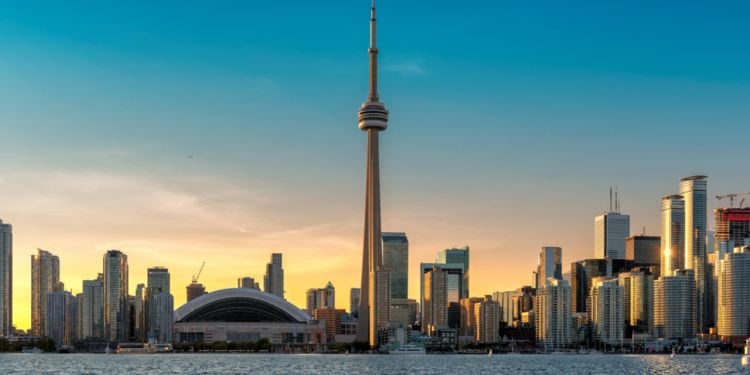
Studying in Toronto
Toronto, the biggest city in Canada, is famous for its diversity and multiculturalism. Over 160 languages are spoken here, and over half of its ...
Schooling for children
Toronto provides excellent educational options for expat families, from free public schools to prestigious international institutions. Education in Toronto is compulsory for children aged 6 to 18, and the school year runs from early September to late June.
International and private schools
Toronto has at least 30 international schools catering to expat families. Popular options include The York School, Canada's first English-speaking school, which delivers the full International Baccalaureate program. TFS - Canada's International School provides French-English bilingual IB education. The German International School Toronto combines German and Ontario curricula for children aged 3-14. Lycée Français de Toronto provides French Ministry programming for ages 3-18. Admission processes vary for these institutions and often include applications, interviews, and assessments.
Enrollment process
Enrollment in Toronto schools depends on the school type. Public schools require proof of address, the child’s identity, and immigration or residency status, with placement based on the family’s local catchment area through boards such as the Toronto District School Board. Children of parents holding eligible work or study permits can usually attend public schools free of charge, though some temporary residents may be subject to fees.
Private and international schools operate independently and require a fee-based application. The process typically includes an application form, academic records, and may involve interviews or entrance assessments. Admission timelines and requirements vary by school, and spaces can be competitive.
Sources: Toronto District School Board, Toronto Catholic District School Board
Housing & neighborhoods
Toronto’s housing market is among the most expensive in Canada, but it offers a wide range of options, from modern high-rise condominiums to traditional detached homes in distinct neighborhoods. The rental market is competitive, particularly in sought-after areas close to downtown and along major subway lines.
Popular neighborhoods for expats
Downtown areas such as the Financial District and Entertainment District attract young professionals looking for walkable lifestyles and short commutes. Yorkville is one of the city’s most upscale neighborhoods, known for luxury shopping and high-end residences. The Annex, close to the University of Toronto, appeals to academics and families, while Leslieville and The Beaches are popular for their community feel and access to waterfront parks. Families seeking more space and value often look to North York, Etobicoke, and Scarborough, which offer a broader range of housing options and good public transit connections.
Rental procedures and rental costs
Most rental agreements in Toronto are based on one-year leases. Landlords typically require the first and last month’s rent upfront and commonly request credit checks, employment verification, and references. Ontario’s Residential Tenancies Act provides strong tenant protections, including rules on rent increases, notice periods, and eviction procedures, although some newer rental units are exempt from standard rent-increase limits.
Rent of a 1-bedroom apartment in the city center | CAD 2,100 - 2,700/month |
Rent of a 3-bedroom apartment in the city center | CAD 3,300 - 3,900/month |
Data correct as of December 2025.
Sources: Numbeo, Toronto Regional Real Estate Board
🔍To learn more


Leisure, culture & things To Do
Toronto's cultural landscape rivals much larger metropolises, with internationally acclaimed museums, theaters, and music venues. Toronto is Canada's entertainment capital and hosts major professional sports teams, diverse dining from over 100 ethnic cuisines, and countless neighborhood festivals. The waterfront, parks, and nearby natural areas provide plenty of outdoor recreation.
Museums, galleries, and cultural attractions
The Royal Ontario Museum (ROM) is Canada's largest museum with world-class collections spanning natural history, art, and world cultures. The Art Gallery of Ontario (AGO) houses over 95,000 works including significant Canadian and European collections. Ripley's Aquarium of Canada at the waterfront features over 20,000 marine animals. The Distillery District hosts galleries, shops, restaurants, and seasonal markets in heritage industrial buildings. Toronto's theater scene includes major venues like the Princess of Wales Theatre and Royal Alexandra Theatre. The annual Toronto International Film Festival (TIFF) in September is one of the world's most prestigious film festivals.
Sports, outdoors, and nightlife
Sports fans rally behind the Toronto Maple Leafs (hockey), Toronto Raptors (basketball), Toronto Blue Jays (baseball), and Toronto FC (soccer). Outdoor recreation is easy to find, from High Park’s 400 acres of green space with gardens, walking trails, and spring cherry blossoms to the Toronto Islands, reached by ferry and known for their beaches, cycling paths, and skyline views. The Martin Goodman Trail stretches 56 kilometers along Lake Ontario and is popular for walking and cycling. After dark, nightlife centers on neighborhoods such as King West, Queen West, and the Entertainment District. Throughout the summer, the city also hosts major festivals, including Pride Toronto and Caribana, the Caribbean carnival.
Sources: Royal Ontario Museum, Art Gallery of Ontario
🔍To learn more

Activities to do in Toronto during weekdays and weekends
If you're wondering what to do during the week or how to stay busy on weekends in Toronto, ...

Gastronomy in Toronto
While Ontarians have a distinct culinary culture of their own, the distinction between local and ...

Enjoying nature and the outdoors in Toronto
It's no surprise that winter in Canada, including Toronto, can be freezing. However, this ...
Daily life
Toronto combines a polished urban atmosphere with a practical, easy-to-navigate lifestyle that helps newcomers settle in quickly. The city’s well-known multicultural population contributes to an inclusive social environment where different cultures and lifestyles are widely visible and accepted.
Transportation and getting around
Public transportation is widely used and reliable. The Toronto Transit Commission operates an extensive network of subways, streetcars, and buses across the city, with subway service generally running from early morning until after midnight. The UP Express provides a direct rail link between downtown Toronto and Pearson International Airport in about 25 minutes, while GO Transit connects the city to surrounding suburbs and regional centers by train and bus. Cycling is increasingly popular, supported by expanding bike lanes and Bike Share Toronto’s public bicycle system. While many residents own cars, driving downtown can be slow during peak hours, and parking is often costly.
Lifestyle and cultural habits
Toronto experiences four distinct seasons. Summers are typically warm and humid, while winters are cold, with temperatures often below freezing and regular snowfall. Socially, Torontonians tend to be polite and somewhat reserved at first but generally friendly once relationships are established. Tipping is customary in restaurants, bars, and taxis, with 15 to 20 percent considered standard.
Sources: Toronto Transit Commission, GO Transit
🔍To learn more
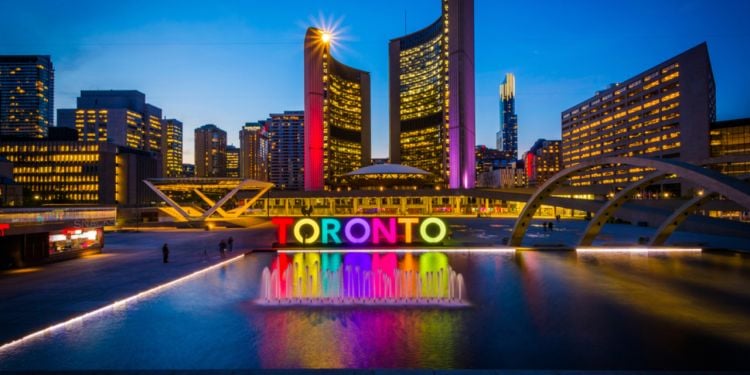
Discovering Toronto
Thinking about relocating to Toronto but unsure about what to expect? Find out more about this ...

Developing your social circle in Toronto
It's crucial to have a social circle if you want to fully enjoy your expatriate life in ...
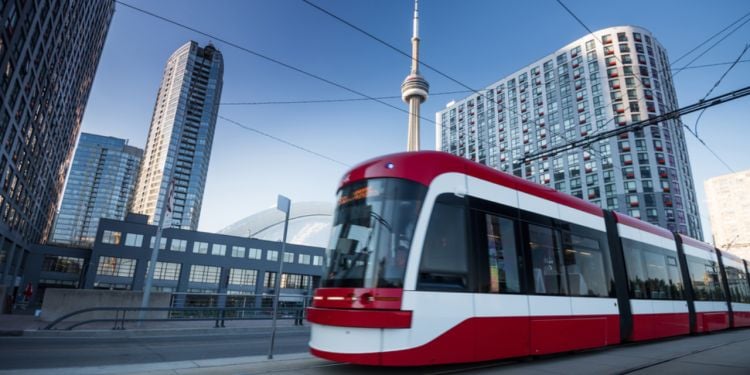
Transportation in Toronto
As reported by the Journal de Québec, Toronto was ranked as the seventh most congested city ...
Cost of living
The cost of living in Toronto is one of Canada's highest, with costs particularly high for housing. However, salaries generally match the higher expenses, and the quality of services justifies costs for most residents.
Monthly expenses for a single person
Rent of a 1-bedroom apartment in the city center | CAD 2,100 - 2,700 |
Utilities | CAD 100 - 350 |
Groceries | CAD 350 - 550 |
Data correct as of December 2025.
Monthly expenses for a family of four.
Rent of a 3-bedroom apartment in the city center | CAD 3,300 - 4,900 |
Utilities | CAD 250 - 450 |
Groceries | CAD 1,000 - 1,500 |
Sources: Numbeo, Canada Food Price Report
In short
Toronto blends economic opportunity, cultural diversity, and urban sophistication, making it Canada’s most international city. There are good employment prospects across finance, technology, healthcare, and other sectors, alongside world-class universities and high-quality public services. While housing costs are high and winters can be cold, Toronto compensates with safe, welcoming neighborhoods, exceptional cultural institutions, extensive parks, and easy access to the waterfront. Its multicultural population—residents from dozens of countries—creates a truly inclusive environment where newcomers can feel at home. For more information about life in Toronto, join the conversations and connect with other expats on the Expat.com Toronto forum.
We do our best to provide accurate and up to date information. However, if you have noticed any inaccuracies in this content, please contact us.


News & testimonies
Canada updates Express Entry categories
In a recent press release, Canada announced the creation of new Express Entry categories. The goal is to continue attracting top international talent in an increasingly competitive global market. Here's what you need to know.

Canada cuts temporary immigration by 43%: What's changing in 2026–2028
Canada continues to captivate expatriates, but entering and staying is becoming increasingly difficult. The immigration slowdown is confirmed. The 2026-2028 plan prioritizes long-term economic immigration and curtails temporary immigration to Canada. Temporary expatriate workers and students are directly targeted by this slowdown.

Studying in Canada? Here's what changed for the Post-Graduation Work Permit
On July 4, 2025, the Canadian federal government revised the Classification of Instructional Programs (CIP) codes, which are used to classify post-secondary programs by field of study. Here's what international students need to know.

British Columbia's PNP now prioritizes healthcare professionals
British Columbia is still grappling with a shortage of doctors and nurses. While the province's 2023 compensation plan has successfully brought in 1,001 new family doctors over the past year, about 400,000 residents remain without a family physician. In response, the province announced a cap on Provincial Nominee Program (PNP) applications as of April 14.
Essential services for your expat journey