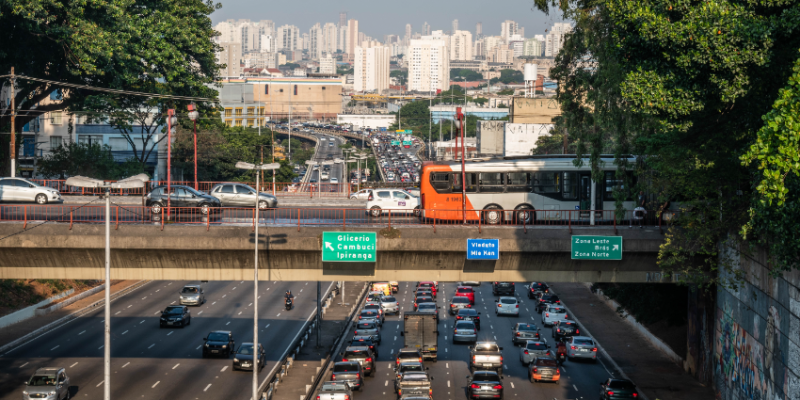
São Paulo's size makes the route between your home and daily destinations a major part of settling in. Its metro, metropolitan trains, and buses can work together, but payment rules, transfers, and operating hours need a little planning. This article explains how to use the main options, what key journeys cost, and when walking, cycling, or a car may fit your routine.
Getting around São Paulo is easier once you plan around your most frequent trips. The metro and metropolitan trains connect many of the city's major districts and transport hubs, while buses reach neighborhoods beyond the stations. Walking covers the last part of a journey, and taxis or app-booked cars can simplify a late arrival or a trip with luggage.
For a regular commute, the number of transfers can matter as much as distance. An apartment farther away on the same rail line may be more convenient than a closer address requiring several connections. When comparing locations, include the walk to the station, the interchange, and the final stretch to your workplace or school.
The metropolitan rail map uses line numbers, colors, and station names. Learn three useful Portuguese words: embarque means boarding, desembarque means getting off, and integração means a transfer. For journeys combining different modes, Moovit's São Paulo route planner can help you compare routes. Payment is partly integrated, but the card and type of credit you use determine which transfers are included.
Rail is particularly useful for longer journeys across São Paulo. Start with the lines serving your home and daily destination, then learn their main connections rather than trying to memorize the whole network:
Line 1-Azul runs north to south through Luz, Sé, Liberdade, and Vila Mariana. Portuguesa-Tietê serves the Tietê intercity bus terminal.
Line 2-Verde serves the Avenida Paulista corridor, Vila Madalena, and Vila Prudente. It connects with Line 1 at Paraíso and Ana Rosa.
Line 3-Vermelha links Palmeiras-Barra Funda with eastern São Paulo through Sé and Tatuapé.
Line 4-Amarela connects Luz and Vila Sônia through República, Paulista, Oscar Freire, Faria Lima, Pinheiros, and Butantã. Paulista connects with Consolação on Line 2, while Pinheiros connects with Line 9-Esmeralda. Line 9 serves southwestern districts and office areas along the Pinheiros River; Butantã also has a bus terminal.
Line 5-Lilás connects Capão Redondo and Chácara Klabin through Santo Amaro, Brooklin, and Moema. It connects to Line 9 at Santo Amaro, Line 1 at Santa Cruz, and Line 2 at Chácara Klabin.
The rail map also includes monorails: Line 15-Prata connects with Line 2 at Vila Prudente, and Line 17-Ouro serves Congonhas Airport. Line 17 has a transitional operating schedule, explained in the airport section. On any route, allow for walking inside interchange stations: a connection shown on the map is not necessarily a short walk between platforms. The Line 4 station guide helps identify its entrances and connections.
Hours, transfers, and disruptions
Conventional lines operated by Metrô generally run from 4:40 a.m. to midnight, although station closing times vary. Transfer gates to other networks close at midnight. An experimental overnight service on Lines 1, 2, 3, and 15 runs from Saturday into Sunday and is announced through January 2027. It does not extend to every line, so check the official operating hours for the entire journey, including your return connection.
Commuting periods are busier, and a journey estimate should include platform access and transfers, as well as time on the train. If a line is disrupted, follow the operator's announcements about service changes or any replacement buses. A municipal bus route may provide another way to reach your destination; use the SPTrans planner to check it rather than assuming the rail route has a direct substitute.
Accessibility in practice
Line 4 stations have elevators, escalators, and tactile paths. For Metrô-operated stations, the ramp and elevator access map identifies accessible entrances. Choose the entrance carefully, especially when traveling with a wheelchair or stroller. The map does not establish whether an elevator is working at the moment of travel.
Metrô's priority assistance covers passengers with disabilities or reduced mobility, older adults, pregnant passengers, and adults holding infants. It includes priority ticket purchase and gate access, elevators, and seats. Staff can provide guidance and operate assistance equipment. Ask station staff for help with the specific boarding arrangement you need; facilities alone do not establish the platform-to-train conditions at every stop.
Join the Sao Paulo community
Get regular tips and advice to make the most of your expat life
Buses in São Paulo
Municipal buses, overseen by São Paulo Transporte(SPTrans), fill the gaps between rail corridors. They can also offer a direct journey that avoids several train transfers. This makes the bus route near your home worth checking even if you expect to commute mainly by metro.
Match the route number and displayed destination, and check that you are on the correct side of the road for your direction. Signal the driver as the bus approaches. Boarding is normally through the front door: tap your Bilhete Único on the reader to pass the turnstile. Cash is accepted, but a cash fare does not give you the card's transfer discounts. If you are unsure about boarding or payment, ask the crew.
Press the stop-request button before your stop and leave through the exit door. When changing buses, tap the same card again. Whether the next boarding is covered depends on your credit type and the applicable time window.
Use SPTrans's route and schedule search to find a service by address or journey. Olho Vivo shows vehicle locations and arrival estimates on equipped corridors. Frequency varies by route and time of day, and road traffic can delay buses, so use information for your specific line rather than a citywide frequency estimate.
After midnight, the Noturno night-bus network operates until 4 a.m. Main routes connect terminals, and local routes serve surrounding neighborhoods, with transfers at designated connection points. Night routes differ from daytime routes; find the overnight itinerary before leaving rather than returning to your usual daytime stop automatically.
How to pay for transport in São Paulo
Single journeys and travel cards
A single rail ticket costs BRL 5.40, approximately USD 0.97. QR-code tickets are sold at ticket offices, station machines, and through the TOP app. A rail journey includes permitted transfers within the paid area, but free metro-to-train connections at Tatuapé and Corinthians-Itaquera depend on the day and time. Consult the rail ticket and card information for these conditions.
Contactless bank-card payment is available on Lines 1, 2, 3, and 15. It can be convenient for an occasional rail trip, but it does not provide the municipal bus-transfer discount.
For regular bus travel or combined bus-and-rail journeys, consider Bilhete Único, the personal, reloadable travel card. The first card is free and can be obtained at a service or sales office after completing registration. Registration uses your CPF, Brazil's taxpayer number. Prepare your CPF and identification and check the Bilhete Único registration service for the documents accepted in your situation before visiting an office. You can load credit at authorized sales points and station equipment.
The TOP app sells rail QR tickets, while the TOP card also serves rail and intermunicipal buses. TOP and Bilhete Único do not have identical transfer coverage. If you live outside the municipality of São Paulo, identify your local bus operator before choosing a card: intermunicipal service is not automatically covered by municipal bus rules.
Fares and passes for regular travel
The following fares apply to ordinary credit, the credit you buy for your own journeys, rather than employer-funded travel credit.
Option using ordinary credit
Price
Included travel
Municipal bus fare
BRL 5.30, about USD 0.95
Up to four different buses within three hours.
Integrated bus and rail fare
BRL 9.38, about USD 1.68
Up to three different buses within three hours, plus one rail entry within the first two hours.
Integrated 24-hour pass
BRL 27.28, about USD 4.88
Ten boardings in total.
Integrated 31-day pass
BRL 411.13, about USD 73.57
Up to ten boardings per day.
The integrated passes have rail reentry intervals of 30 or 60 minutes, depending on the station. Compare the conditions with your actual routine: two integrated journeys a day for 22 days cost BRL 412.72 in ordinary credit, close to the 31-day pass price. Weekend trips may change which option is better value. Dollar equivalents here and below are indicative; fares are charged in reais.
Municipal buses are free on Sundays from midnight to 11:59 p.m., including daytime and night routes. This Sunday fare waiver does not automatically cover the metro, trains, or intermunicipal buses.
Employer, student, and older-passenger benefits
If your employer provides vale-transporte, give HR your Bilhete Único number and confirm the credit arrangements. Employer-funded credit has its own fares and transfer conditions; the ordinary-credit table above should not be applied to it automatically.
Student discounts or free travel depend on eligibility. The educational institution must send registration details to SPTrans, after which the student applies. Enrollment alone does not activate the benefit.
Passengers aged 60 to 64 can travel free on rail using the eligible Bilhete Único or TOP electronic card. Bilhete Único requires the monthly credit-loading procedure described in the rail exemption rules for ages 60 to 64. Passengers aged 65 and over can obtain free rail access with identification. Foreign residents should confirm the accepted documents for the relevant card before applying.
Taxis and ride-hailing in São Paulo
A licensed taxi in the ordinary category is white, with a TAXI roof light and municipal identification. Those features identify the ordinary category, not every taxi category. You can hail one, use a taxi rank, or book a ride. A street or rank journey normally uses the meter.
Uber and 99 operate in São Paulo. Check the selected category: an app may offer a licensed taxi or a private-hire car, which are different services. The app shows the fare and selected payment method before you book, and prices vary by route and demand. For a taxi taken without an app, confirm card acceptance before boarding if you need to pay cashlessly.
Under the municipal ordinary-taxi tariff, the starting charge is BRL 6.55 (about USD 1.17), plus BRL 4.80 per kilometer (about USD 0.86), and a time-based rate of BRL 55.50 per hour (about USD 9.93), under the applicable meter rules. The kilometer rate rises by 30% from 8 p.m. to 6 a.m., on Sundays, and on holidays. Guarulhos Airport's destination-based fixed taxi prices are arranged separately.
A car ride costs more than public transport for a solo passenger, but sharing the cost can make it more useful for a group, a late-night trip, or when you have luggage. Match the license plate, vehicle model, and driver identity with your booking before entering. Use the app's trip-sharing and assistance functions where helpful; 99 also offers a ride-verification code.
Cycling and walking in São Paulo
Walking works well for local errands and the journey to a station around Avenida Paulista, Liberdade, and parts of the center. A longer trip across São Paulo is not comfortable on foot: distances, hills, major roads, and crossings can change the experience quickly. Check the route itself, including the final walk from a station.
The cycling network includes separated paths, painted lanes, and shared streets. The municipal traffic authority, CET, publishes a cycling infrastructure and bicycle-parking map. For a commute, look for a continuous route, including the connections at both ends. Intersections and vehicle access across the route still need attention. A helmet, lights, and a route using cycling infrastructure are sensible parts of the journey.
Bike-sharing and taking your own bike
Bike Itaú, operated by Tembici, is a station-to-station rental system. You do not need an Itaú bank account. Use the app to find an available bike and a dock at your destination, then lock the bike into the dock to finish the rental.
Mechanical-bike options start at BRL 6.90 (about USD 1.23) for a 15-minute ride. A 24-hour plan starts at BRL 32.90 (about USD 5.89) for four rides of up to 60 minutes each. Monthly plans start at BRL 43.90 (about USD 7.86) for four rides a day of up to 45 minutes each, with automatic renewal. Extra time, additional rides, and electric bikes can cost more, so check the plan before unlocking a bike. Please note that the basket is not a child seat.
If you have your own bike, Line 4's bicycle rules allow it in the last car on weekdays from 10 a.m. to 4 p.m. and from 9 p.m. to midnight, and throughout service on weekends and holidays. Its station bicycle parking requires registration with the operator. These are Line 4 rules; check the rules of any other line on your route separately.
Driving in São Paulo
A car can be useful for scattered appointments, outer districts, or journeys outside the city. For a regular rail commute, weigh that flexibility against congestion and parking costs. Morning and late-afternoon traffic can make driving unpredictable, while an occasional rental may cover the trips you need a car for without adding a daily driving commitment.
License-plate restrictions and parking
The rodízio license-plate restriction applies in the expanded center, including its boundary roads, Monday through Friday from 7 to 10 a.m. and 5 to 8 p.m. The restricted day depends on the plate's last digit:
Monday: 1 or 2.
Tuesday: 3 or 4.
Wednesday: 5 or 6.
Thursday: 7 or 8.
Friday: 9 or 0.
Check CET's rodízio rules and area for the boundaries and any applicable exemptions or suspensions. The plate matters when renting a car too, particularly if you plan to drive through the restricted area during those hours.
Street parking in Zona Azul uses digital credit associated with the vehicle's license plate. A Cartão Azul Digital costs BRL 6.95, about USD 1.24. It usually covers one hour, with a usual maximum stay of two hours, but some areas have different durations. Follow the signs and the Zona Azul parking rules for that space. Private garages set their own prices.
Rental costs and your license
Compare more than the rental's advertised daily rate. The budget can also include protection, a deductible, fuel, parking, and tolls. Before booking, check the rental contract's accepted license requirements and the card needed for a deposit.
Recognition of a foreign driver's license depends on the applicable conventions or agreements and the license's validity. The usual limit is 180 days from entry into Brazil, without extending beyond the license's own validity. Keep proof of entry and your foreign license, with an international driving permit where applicable. Our article about driving in Brazil explains the framework; anyone continuing to drive beyond the permitted period needs to follow the procedure set by Detran, the state traffic department.
Traditional and local transport in São Paulo
In the south of the city, Aquático-SP provides a practical local crossing of the Billings reservoir between Parque Linear Cantinho do Céu and Parque Mar Paulista-Bruno Covas. It serves everyday journeys in that area rather than providing a central-city sightseeing connection.
The service runs from 5 a.m. to 9 p.m. During the supervised operating phase, there is no fare, but passengers still validate a Bilhete Único. Route 606C-10 serves Cantinho do Céu, while route 627M-10 connects Mar Paulista with Santo Amaro terminal at the normal bus fare. Boats accommodate passengers with reduced mobility and have space for bicycles. Heavy rain can suspend the crossing, so check service information before relying on it for a connection.
São Paulo/Guarulhos Airport (GRU) is the main international gateway. The airport rail information explains the connection from Aeroporto-Guarulhos station, which is outside the terminal halls. Allow time for the free bus or AeroGRU connection, depending on the service operating when you arrive.
The Expresso Aeroporto links Aeroporto-Guarulhos to Luz and Palmeiras-Barra Funda. The end-to-end rail journey takes about 35 minutes, excluding the wait, terminal transfer, and onward trip. The fare is BRL 5.40. Weekday service is generally hourly; consult the dated Expresso Aeroporto timetable for your travel day. Alternatively, regular Line 13-Jade trains connect to Line 12 at Engenheiro Goulart.
By road, intermunicipal route 257 connects GRU with Tatuapé and has its own fare system. Airport Bus Service coaches connect to Tietê, Barra Funda, Congonhas, and Paulista-República. They use fixed stops and separate tickets and remain subject to road traffic.
Rail is a low-cost option when you travel light, and your destination is near a station. A direct car ride avoids transfers for a family with heavy bags or when you arrive outside useful rail connections. Uber publishes historical averages of about 32 kilometers and 47 minutes for its GRU-to-São Paulo route; these are not a travel-time guarantee for every address or traffic condition.
Guarucoop's airport taxi counters operate 24 hours a day, with fixed prices by destination, so you can confirm the fare before you leave. For an app ride, use the pickup point specified in the app and verify the vehicle and driver there.
Congonhas and Viracopos
Congonhas Airport (CGH) is within São Paulo and mainly serves domestic flights. Line 17-Ouro connects it with Lines 5-Lilás and 9-Esmeralda. Under the transitional Line 17 operating arrangements, it runs Monday through Saturday from 6 a.m. to 10 p.m. Travel on Line 17 itself is free during this phase; connecting lines retain their own fare rules. On Sundays or outside those hours, use a bus or car alternative. Bus 609J-10 connects with São Judas on Line 1-Azul.
Viracopos Airport (VCP) is in Campinas, so reaching São Paulo requires an intercity transfer. Options include coaches, a private transfer, or a rental car. LiraBus operates a transfer service under contract for Azul passengers; verify eligibility and the departure point with the airline rather than assuming every ticket includes it. Add the transfer cost and the road journey to your airfare comparison.
Frequently asked questions
Use rail for journeys between well-connected districts and buses for neighborhoods beyond the stations. Compare the full route, including transfers and walking, before choosing accommodation or a commute.
Rail connects many major districts and hubs, and municipal buses extend coverage beyond the rail network. Commute periods are busier, buses can be delayed by traffic, and disruptions require checking the relevant operator. No single frequency or reliability figure applies to the whole network.
You can buy a single rail QR ticket or use contactless bank-card payment on Lines 1, 2, 3, and 15. Bilhete Único is useful for municipal bus transfers and integrated bus-and-rail fares. TOP has different coverage, including intermunicipal buses.
Yes, when your home and regular destinations are near its lines. Lines 1, 2, 3, 4, and 5 connect important residential, business, and transport districts. Check the final walk and interchange distances, as well as the station names.
Walking can be practical for local journeys around Avenida Paulista, Liberdade, and parts of the center. Longer routes may involve hills, major roads, and difficult crossings. For cycling, check the continuity of mapped infrastructure and the junctions on your actual route.
Walking costs nothing where the route is practical. Municipal buses are free on Sundays. On other days, ordinary bus credit costs BRL 5.30 and a single rail journey costs BRL 5.40; frequent riders should compare integrated fares and passes.
A car can help with scattered destinations, outer districts, or trips outside São Paulo. For a rail-served commute, congestion, parking, and rodízio restrictions can reduce its value. An occasional rental is another option, with fuel, tolls, parking, and protection added to the rental budget.
From GRU, rail is a low-cost option for light luggage and destinations near a station. Coaches serve fixed stops, while an official taxi or app car avoids transfers. Congonhas has Line 17 during its limited transitional hours and bus or car alternatives; Viracopos requires an intercity transfer from Campinas.
ℹ️
We do our best to provide accurate and up to date information. However, if you have noticed any inaccuracies in this article, please let us know in the comments section below.
A journalist, holder of the DALF C1 and C2 and a diploma from the University of Mauritius, I have nearly twenty years of writing experience. After six years in the Mauritian press, I joined Expat.com, where I have been working for over a decade, including five years as editorial assistant, and now as editorial manager.