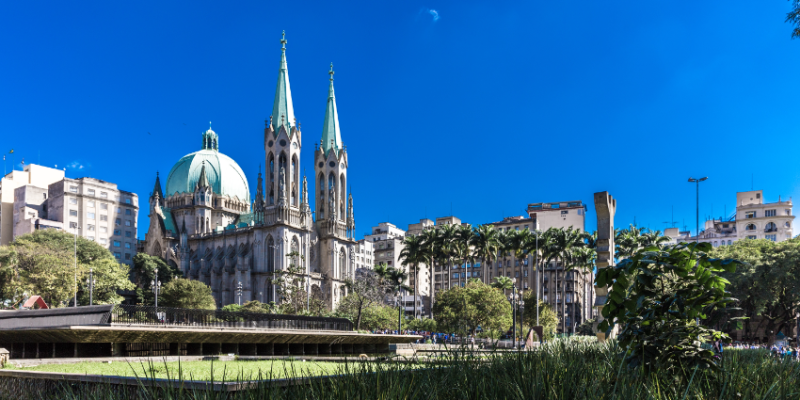
Life in São Paulo revolves around your neighborhood, daily journeys, and a wide choice of food and culture. Work and study draw people to the city, while housing, childcare, and distances shape how comfortable life feels. An address that fits your routine makes it easier to enjoy what the city offers, whether you're arriving alone, with a family, or for a new stage of life.
São Paulo brings together work, study, and culture on a scale that takes time to grasp. Businesses and universities draw people to the city, while its restaurants and cultural venues offer far more than you could fit into a weekend. Whether you're employed, studying, or working for yourself, there are plenty of opportunities to meet people. How much you enjoy that variety depends heavily on where you live and how far you need to travel.
The municipality of São Paulo has more than 11 million residents and forms part of a much larger metropolitan area. High-rises, major roads, and residential neighborhoods stretch well beyond the historic center. The built-up city continues across municipal boundaries, so an address in the metropolitan area may be outside São Paulo itself.
Settling in often means finding ways to keep home, work, and daily activities close together. Shopping on foot and having a station nearby creates a very different routine from spending hours traveling across the city.
Pinheiros and Vila Madalena, in the west, have restaurants, cafés, bars, galleries, and studios. In Vila Madalena, bars are mostly found along Rua Aspicuelta, with galleries and studios contributing to the neighborhood's cultural life. Both areas can appeal to freelancers and newcomers who want places to go close to home. Rents are high, particularly in Pinheiros, and apartments near bars may be noisy. An address advertised as Vila Madalena isn't necessarily close to the station of the same name.
Vila Mariana and Paraíso, south of the center, combine subway stations, educational institutions, and everyday services. Vila Mariana is home to universities and the French school. For students, families, and retirees, the actual distance to classes, shops, and healthcare matters more than the neighborhood's reputation. Asking rents are lower here than in Pinheiros, although they remain expensive by city standards.
Moema and the Jardins neighborhoods call for a larger housing budget. Moema offers options around Ibirapuera Park, while Jardins encompasses several residential and shopping districts, including Jardim Paulistano. Itaim Bibi is another upscale option for people whose work is concentrated in the west and southwest. Compare the journey from the specific address: a direct subway connection may be more convenient than a location that looks closer on a map.
In the north, Santana has substantially lower rents. If you'll be studying at the University of São Paulo (USP), consider Butantã based on your campus and its transport connections. In central districts such as Bela Vista, the street, building, and daily route make a big difference to an apartment's appeal.
Join the Sao Paulo community
Get regular tips and advice to make the most of your expat life
Cost of living in São Paulo
Everyday spending is in Brazilian reais (BRL), and housing is a major expense. Average advertised residential rents are about BRL 66 per square meter per month, approximately USD 12.40. Building charges, known as condomínio, are added to the rent, along with the municipal property tax, IPTU, when the contract assigns it to the tenant. Neighborhood figures are approximately BRL 100 per square meter per month in Pinheiros (USD 18.80), BRL 94 in Itaim Bibi (USD 17.60), BRL 85 in Moema (USD 16), BRL 73 in Vila Mariana (USD 13.70), and BRL 49 in Santana (USD 9.20). Apartment size, condition, and building amenities can substantially change the total bill.
The DIEESE basket of 13 basic food products for one adult in São Paulo costs about BRL 923 a month (USD 173). It covers a limited set of staples rather than a complete grocery shop. For eating out, a set lunch, or prato feito, averages about BRL 39 (USD 7.30), and a buffet sold by weight averages BRL 87 per kilogram (USD 16.30) among the restaurants surveyed by Procon-SP across the city's five regions. At a buffet, you pay for the weight of the food you choose.
Standard public transport fares are BRL 5.30 for a municipal bus (about USD 1) and BRL 5.40 for the subway or train (USD 1.01). The combined bus and rail fare is BRL 9.38 (USD 1.76), subject to the Bilhete Único transfer rules. Municipal buses are free on Sundays; that arrangement doesn't automatically include the subway and trains.
For a single person renting a small apartment in a lower-rent neighborhood, Serasa's budget estimate is BRL 4,250-6,450 a month, approximately USD 800-1,210. It includes BRL 400-600 for water, electricity, and Internet (USD 75-115), and BRL 300-500 for leisure and miscellaneous spending (USD 55-95).v
Sharing an apartment spreads fixed expenses. Living alone in a sought-after location and going out frequently increases spending, while families need to price bedrooms, childcare, and school separately. If your income is in another currency, exchange-rate movements affect how much you have available each month.
Climate and weather in São Paulo
Summer in the Southern Hemisphere is warm and rainy; winter is cooler and drier. For January and February, the municipal weather monitoring service, CGE, gives reference average lows of around 19-20°C and highs of around 29°C across its urban network. Hot spells and neighborhood differences still occur. Rainfall and temperatures gradually decrease during the fall.
Thunderstorms can disrupt travel and cause localized flooding. The CGE's forecasts and flooded-road alerts help you adjust a route when rain affects traffic. Dry winter air can also affect exercise routines and breathing comfort.
When viewing a home, look at sunlight, ventilation, and signs of water entering the building. If you'll work from home, consider how hot the room becomes during your working hours. Light clothing, rain protection, and warmer layers are more useful than packing only for summer weather.
Getting around São Paulo
The subway and trains provide the main rail connections, with buses reaching additional areas. A nearby station with a convenient connection to your destination can make living without a car practical. Taxis and ride-hailing services such as Uber and 99 cover other journeys, including awkward final stretches on foot.
Walking is most useful for local trips. For cycling, consider hills, gaps in the route, and major roads to cross, as well as distance. A car can help with some family journeys or trips to outlying areas, but adds parking costs and time in traffic.
The Bilhete Único card holds electronic credit and provides transfers under the standard fare rules. Standard bus credit covers up to four boardings on different buses within three hours. The combined bus and rail fare covers up to three different buses within three hours, plus one subway or train entry within the first two hours. Paying cash on a bus buys one ride without those transfers. Your first card is free after registering with SPTrans.
Language and communication in São Paulo
Portuguese is the language of everyday life, administrative procedures, and most services. You'll become familiar with local expressions and pronunciation through conversation. A few words of English or a translation app can help with a simple exchange, but understanding a contract or a medical consultation may require more support. Clear written information and appropriate language assistance make important decisions easier.
The municipal Portas Abertas program offers free Portuguese classes to immigrants aged 16 and over, regardless of immigration status or documentation. Lessons cover reading, writing, listening, and speaking through everyday situations, with beginner, intermediate, and advanced levels. Participating locations and schedules are available through the municipal Portas Abertas page.
For early conversations, “bom dia” is a morning greeting, and “pode repetir, por favor?” asks someone to repeat what they said. Having a price, address, or date repeated can prevent misunderstandings. If the conversation continues by messaging, get the meeting place and time in writing, especially if you made earlier arrangements verbally.
Culture and social norms in São Paulo
São Paulo's culture reflects migration from other parts of Brazil and from many countries. These influences show up in food, shops, places of worship, and cultural celebrations. People's experience of settling in also depends on their work, resources, and existing local connections.
Conversations and new acquaintances may lead to meals or outings. Expectations about punctuality and familiarity depend on whether you're attending a work meeting, seeing friends, or joining a family occasion. For an arranged appointment, arrive on time and let the other person know if you're delayed. At a first meeting, follow their lead on how familiar the greeting should be.
Neighborhood festivals bring religious traditions into social life. The festas juninas, associated with saints' days in June, combine corn-based foods, music, and activities; parish fairs can also raise money for charitable work. Clothing depends on the setting. An office, place of worship, and evening event may have different expectations, which the organizer can clarify.
Pace of life and work culture in São Paulo
Work, study, and travel can take up much of the day, while evenings offer a wide choice of restaurants and places to go out.
Working hours and office attendance depend on your contract, employer, and sector. The time you have left outside work also depends on how often you commute and how long the door-to-door journey takes. For families, finishing in time for school pickup or having extended childcare can matter as much as salary. For someone working independently, a workspace near home may leave more free time than a prestigious business address across town.
The rhythm changes during vacations, when people also head to the coast. Road traffic generally falls in late December and early January, during the holiday period and school vacations. Shops, services, and cultural venues still set their own opening hours.
Food culture in São Paulo
Food is a major part of the city's appeal. Regional Brazilian cooking sits alongside Japanese, Italian, Arab, and many other cuisines. Liberdade offers numerous places to try Asian food, while Pinheiros and Vila Madalena also have a wide variety of restaurants. Options range from everyday lunches to expensive dining.
During the workday, look for set lunches and weight-based buffets. A prato feito gives you a meal at a stated price; at a buffet by weight, you choose your food and pay after weighing the plate. Lunch hours vary by restaurant and neighborhood, and the city's extensive restaurant scene doesn't mean every kitchen serves continuously.
Municipal street markets, called feiras livres, sell fruit, vegetables, and other food. Traditional markets generally run from 8 a.m. to 2 p.m.; some evening markets open from 4 p.m. to 9 p.m. The municipal map identifies the market near your home. These local markets complement supermarkets and neighborhood stores, without requiring a trip to a large tourist market.
Leisure and social life in São Paulo
Museums,movies, music, soccer, and parks offer many ways to spend your free time. MASP and Instituto Moreira Salles offer art and photography around Avenida Paulista, while Ibirapuera combines walks with cultural institutions. For something you want to do regularly, location and registration arrangements matter more than how famous the venue is.
Sesc São Paulo offers performances, exhibitions, workshops, libraries, and physical activities. Access varies by service. Some activities are open to the public, while swimming pools require a valid Credencial Plena and a dermatological examination. The card is intended for employees in commerce, services, and tourism and their eligible dependents. Play spaces welcome children aged 0-6 accompanied by a responsible adult. Each activity has its own admission, reservation, and pricing conditions.
For an evening out, Vila Madalena and Pinheiros offer restaurants and bars nearby. Regular neighborhood activities, sports, and workshops also create opportunities to make friends. On weekends, a nearby park or cultural outing is easier to fit around everyday commitments; allow for travel time when planning an excursion farther away.
Family life in São Paulo
School and housing choices are closely connected. The French international lycée, commonly called Lycée Pasteur, is in Vila Mariana. St. Paul's, which combines British and Brazilian education, is in Jardim Paulistano. Your child's age, curriculum, and available places help determine which schools to consider before choosing where to live.
For public early childhood education, you can request a municipal place at an early childhood education unit or through the online registration form. The usual documents are proof of address, the guardian's identification, a document for the child, and contact details. You'll receive a reference number to track the application. If an immigrant child is missing documents, the regional education authority can allow the application to proceed in justified exceptional cases to protect the child's access to education. The municipal application rules also govern the registration process.
Some private early childhood providers in São Paulo charge BRL 1,000-3,000 a month (about USD 190-560). Full-day care isn't necessarily included: confirm the hours and price with the provider. A quote should specify the time covered, meals, enrollment fees, and activities.
Family routines are easier when the journey between home, school, and work is manageable. Nearby parks, shops, and activities reduce the need for extra trips. Sesc's accompanied play spaces offer an outing with a young child, but they don't replace childcare.
Safety in São Paulo
Phone theft and other opportunistic theft are everyday risks. The Polícia Militar advises keeping phones out of sight in the street, staying alert in crowded places, and not leaving devices unattended. To look up directions, stop somewhere suitable rather than keep walking with your phone in your hand.
Assess the route and time of day when considering an address. An expensive residential neighborhood may have quiet streets at night, while a busy shopping street can attract theft during the day. Look at the walk from the station, street lighting, and the building entrance. In the evening, a taxi or booked car can replace a walk through a deserted area.
Call 190 for police, 192 for SAMU emergency medical assistance, and 193 for firefighters. Civil defense is reached on 199 for situations including weather-related hazards; the state also provides information on the firefighters' emergency service. After a phone theft, contact the operator to block the device or line and report the theft to the authorities. CRAI can direct immigrants to help when their rights have been violated.
Environment and livability in São Paulo
Traffic, noise, and air quality can affect everyday comfort. Low winter humidity can coincide with a buildup of pollutants and increase breathing discomfort. The metropolitan air-quality map from CETESB, São Paulo state's environmental agency, helps you follow local conditions and adjust outdoor activities to the day's recommendations.
Parks provide space for walking and exercise, but access depends on where you live. A bedroom facing a main road, an interior courtyard, or a street of bars can have very different noise levels. Being near green space on a map doesn't necessarily mean you can walk there easily. These details matter especially when working from home, raising young children, or planning to retire in the city.
International residents include students, entrepreneurs, refugees, and families who have settled permanently, as well as employees transferred by companies. Japanese, Italian, and Arab migration helped shape the city, and more recent arrivals have created additional networks. v
The International Newcomers' Club of São Paulo (INC)is a nonprofit, English-speaking association that offers social and cultural activities. Members can connect through neighborhood representatives and area WhatsApp groups, as well as interest groups such as book clubs and playgroups. The program includes gatherings, outings, and opportunities to volunteer. Some activities carry an additional participation fee; the membership page provides the application form.
For administrative or social difficulties, CRAI Oriana Jara provides specialized multilingual advice, access to legal assistance, and referrals to social services regardless of immigration status. Its role is to help people access their rights, with particular attention to vulnerable residents. Portuguese classes, regular activities, and professional networks provide further opportunities to build local relationships.
Frequently asked questions
It can suit people looking for restaurants, culture, and professional connections. Housing costs and travel time matter: an apartment suitable for working and close to your regular activities makes daily life easier. Check the connection and how quiet your workspace will be in the specific property.
Language assistance can help you get started, but Portuguese makes shopping, administrative tasks, and dealing with services much easier. Free Portas Abertas classes welcome immigrants aged 16 and over regardless of documentation status.
Serasa estimates BRL 4,250-6,450 a month, approximately USD 800-1,210, for one person in a small apartment in a lower-rent neighborhood. A more expensive district, a family, or an international school requires a separate budget. Building charges and property tax may be added to the advertised rent.
Both are possible. For a short stay, living close to work or study makes the routine easier. For a longer move, total housing cost, manageable commutes, school needs, and local relationships become more important.
The city's size, the differences between neighborhoods, and the variety of places to eat and go out can take time to get used to. The weather also calls for flexibility, with rainy summers and cooler, drier winters.
Long journeys, a noisy home, or a tight budget can make it stressful. Living near your regular destinations and having activities nearby reduces several everyday pressures, although it doesn't remove the challenges of a large metropolis.
Foreigners can rent, but documents and guarantees depend on the landlord or intermediary. Proof of identity and income is important. QuintoAndar has specific requirements for foreign applicants, including evidence of income or income movements in Brazil. Its criteria don't apply to every landlord.
Housing costs in sought-after areas, congestion, travel time, opportunistic theft, and noise can affect everyday life. Air quality and thunderstorms also matter, depending on the season and where you live.
ℹ️
We do our best to provide accurate and up to date information. However, if you have noticed any inaccuracies in this article, please let us know in the comments section below.
A journalist, holder of the DALF C1 and C2 and a diploma from the University of Mauritius, I have nearly twenty years of writing experience. After six years in the Mauritian press, I joined Expat.com, where I have been working for over a decade, including five years as editorial assistant, and now as editorial manager.