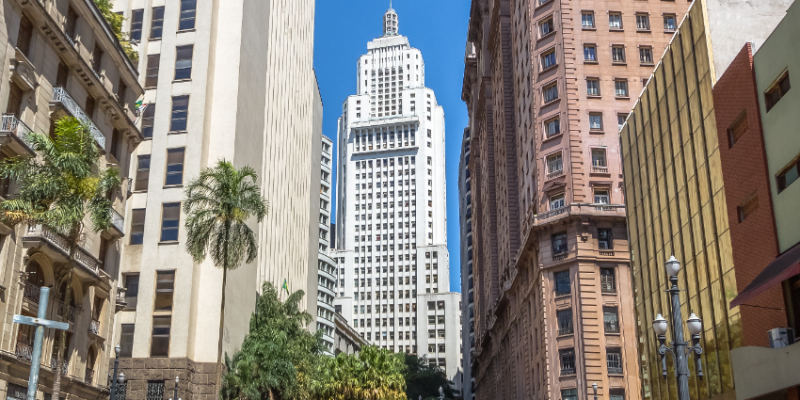
São Paulo offers everything from compact new apartments to spacious resale properties and houses, with large differences in price and building costs between neighborhoods. Foreigners can buy urban property without living in Brazil, though financing and tax arrangements depend on their circumstances. Whether you're buying for personal use, rental income, or eventual resale, the building's finances and the property's permitted use deserve as much attention as its asking price.
Foreigners can buy an urban apartment or house in São Paulo whether or not they live in Brazil. You can purchase in your own name, use the property year-round or for occasional stays, or rent it out. In a city where compact new apartments, older family properties, and large residential complexes fall into very different price brackets, your choice of building and neighborhood will shape both your purchase budget and ongoing costs.
You'll need a CPF, Brazil's individual taxpayer identification number, which is available to residents and nonresidents. The purchase paperwork also includes identification and documents showing your marital status, with marriage and marital-property documents where applicable. The professional preparing the deed can specify which foreign documents need sworn translations, apostilles, or legalization. Buying through a company is possible, too, but the tax treatment, administrative costs, and arrangements for holding your assets need individual advice. Rural land has separate restrictions, so a property on the outskirts needs a clear check of its urban or rural classification.
Property ownership and permission to live in Brazil are separate. For São Paulo, the property investment residence route requires at least BRL 1,000,000 (Brazilian reais), approximately USD 179,000, in completed urban property or property under construction. That minimum must come from your own funds brought from abroad; you may borrow only the amount above the threshold. The application requires evidence of the purchase and the international transfer of capital. The initial authorization is for 4 years, subject to approval. You can buy for less without qualifying for residence through this route.
Among the areas compared here, Itaim Bibi, Pinheiros, and Moema have some of the highest apartment prices. Vila Mariana is less expensive, while Santana and Vila Andrade have substantially lower average asking prices. What you get for the money differs, too: an older apartment needing work comes with a different set of costs from a compact new unit or an apartment in a complex with a pool and other shared facilities.
Itaim Bibi, Vila Olímpia, and Pinheiros
Itaim Bibi and Vila Olímpia combine upscale apartment buildings with access to business districts, restaurants, and shopping centers. They can suit buyers planning to live near their workplace. Pinheiros offers apartments among shops and restaurants, with evening activity and access to the Yellow metro line. Here, the street and the direction an apartment faces can make a real difference: being close to places to go out doesn't have to mean hearing them from your bedroom.
Vila Mariana, Paraíso, Moema, and Perdizes
Vila Mariana has larger older apartments as well as new developments near the metro. Schools, universities, hospitals, and shops give families reasons to look beyond the commute alone. Moema also has a mix of older family apartments and compact new units. In both areas, the differences between new and resale apartments make layout and renovation needs as relevant as floor area. An older property may offer more space, but you'll need money to bring it into the condition you want.
Paraíso puts Avenida Paulista, medical services, and transportation within reach, which may appeal to someone buying for retirement. Perdizes has newer apartment buildings, large older houses, and houses on small residential streets, alongside shops and schools. Its hilly streets can make a short distance on a map a demanding walk. Building entrances, steps, and elevators deserve particular attention if easy access is a priority.
Santana and Vila Andrade
In the north, Santana can offer a lower purchase price and more space in older apartment buildings. Some of this stock dates from the 1970s and 1980s. However, staffing costs and accumulated maintenance can mean high condominium fees. Those monthly bills matter to an owner-occupier's budget and can also affect a property's appeal to tenants or future buyers.
Vila Andrade, in the southwest, has a different appeal. Around Panamby and Avenida Giovanni Gronchi, large residential complexes offer shared leisure facilities, while the Panamby area also has Burle Marx Park. This can suit buyers who value amenities within their development. Access along Giovanni Gronchi and Marginal Pinheiros can be congested at peak times, and the journey to shops, schools, or work varies widely depending on the complex's location.
Good to know:
In Moema, aircraft noise from Congonhas Airport is worth investigating at the property itself. Measurements and complaints concern the neighborhood, but exposure varies by address. The airport's noise zoning map helps locate a property within the surrounding area. Visiting while flights are operating, with windows open and closed, gives you a better sense of indoor noise.
São Paulo's GeoSampa municipal map provides zoning and location-specific information, including flood data that distinguishes overflowing watercourses from water accumulating because of urban drainage problems. Consider access roads, basements, and garages, as well as the unit itself, even when buying on an upper floor. Recorded flooding is useful evidence, but it doesn't certify an individual property's condition. A visit can also reveal traffic noise, nightlife, nearby construction, and how easy it is to walk to local services. A technical inspection can assess electrical installations, signs of damp, and repairs the seller describes.
Join the Sao Paulo community
Get regular tips and advice to make the most of your expat life
Property prices in São Paulo
The average asking price for completed apartmentsin São Paulo is about BRL 12,200 per m², approximately USD 2,180 per m². These apartment price averages measure advertised prices rather than the amounts agreed in completed sales. Itaim Bibi, Pinheiros, Jardins, and Moema form the more expensive group in this comparison while Vila Mariana sits between those areas and the lower averages in Santana and Vila Andrade :
Area
Rounded average asking price (BRL/m²)
Approximate equivalent (USD/m²)
Itaim Bibi
20,000
3,580
Pinheiros
18,300
3,270
Jardins
18,000
3,220
Moema
16,500
2,950
Vila Mariana
14,900
2,670
Santana
9,300
1,660
Vila Andrade
8,400
1,500
Each average includes apartments of different sizes and with different features. Building age, floor, renovation needs, and parking also affect an individual price. In Santana, some older buildings' fees can add considerably to the budget; in Vila Andrade, shared facilities can increase ownership costs.
Asking prices rose by 3.64% over the 12 months ending in September 2026. For completed apartments, São Paulo ranks among the most expensive state capitals, behind Vitória and Florianópolis.
Types of property in São Paulo
Apartments range from compact studios and kitnets, generally arranged around one main room, to family apartments with several bedrooms. A bedroom with its own bathroom is called a suíte. Apartment buildings have shared access and common areas, and the building's condominium budget covers running costs and maintenance.
Houses, or casas, have their own entrance and may have one or more stories. A sobrado is a multistory house. Perdizes includes older houses and properties on small residential streets. A casa de condomínio is a house within a residential development with shared expenses. You'll also see condomínio used for the development or building community itself and for its regular fees.
With a resale property, you can visit the unit and examine the building's accounts before buying. You can also inspect completed new apartments in person, whereas buying off-plan commits you before the unit is delivered. A spacious older apartment needing renovation and a small new unit with shared amenities can have very different upkeep costs.
Buying off-plan, known as na planta, calls for a careful look at how payments will work throughout construction and at delivery. The contract needs to set out payment dates, price-adjustment indices, selling fees, and cancellation terms. The development's registration reference, the memorial de incorporação, is an essential part of the paperwork. Under the property development law, a delivery grace period of up to 180 days can be agreed if it is clearly and expressly stated. If you expect to borrow the remaining balance when the unit is ready, establish how that financing will work before signing.
HIS and HMP housing
Some São Paulo units are sold under the HIS and HMP housing categories for households that meet income criteria. An inexpensive studio may fall within one of these categories. Municipal rules govern purchase and rental use: tenants must belong to the eligible group, and the required formalities must be followed. Short-term letting is not a permitted use. Before treating one of these units as a rental investment, establish its exact category and what appears in its registry record.
Finding property in São Paulo
ZAP Imóveis and Viva Real list sales, while QuintoAndar lets you filter properties, book viewings, and submit offers. Its buying support includes help with purchase paperwork and, for financed purchases, contact with partner banks. Local agencies can help focus a search on a particular neighborhood.
A real estate agent, or corretor de imóveis, helps with the search, viewings, and negotiation. Agents are professionally registered with CRECISP. Fees are agreed by contract; CRECISP's fee reference for urban property sales is 6-8% of the price. The seller usually pays, although a prior agreement can make the buyer responsible.
The offer should clearly state the full price and each intermediary's fee, including who pays it. With off-plan developments, a commission may be shown separately and charged to the buyer; disclose that before you commit. A particularly low price also needs an explanation, whether it reflects an occupied property, debt, renovation work, the sale of rights rather than full ownership, or HIS/HMP restrictions.
Before transferring money, have the owner's identity, any representative's authority, and the payment recipient checked against the transaction documents. Payment instructions arriving by message should match the verified parties and contract. Listing photos alone don't establish who has the right to sell.
The buying process in São Paulo
The purchase brings together the seller, the buyer, the professionals handling the documents, and, where applicable, a lender. Your offer and contract must link the payment schedule with the legal checks and any mortgage approval.
Make and negotiate the offer. Set out the property, price, payment method, and deadlines. Agree on any conditions for financing and document review before making a financial commitment.
Review the property and seller's documents. The matrícula, the property's registry record, identifies the registered owner and recorded entries. The review also covers the seller's paperwork, municipal property tax, and the condominium's financial position.
Agree on the preliminary contract and deposit. The compromisso de compra e venda sets out both sides' obligations. The contract should explain when the deposit, or sinal, is refundable, when it can be retained, and what happens if a loan is refused.
Sign the required document and arrange payment. A tabelião de notas, the notarial professional responsible for the formal deed, prepares it where required. A bank's financing contract can serve as the document to be registered in a financed purchase. The schedule needs to cover taxes, payments, and repayment of any existing seller's loan.
Register the purchase and take possession. File the title with the property registry responsible for the address. The contract should establish when keys are handed over, whether anyone occupies the unit, and how charges are divided.
You become the owner when the title is registered, as required by the Brazilian Civil Code. Signing the deed or receiving the keys doesn't replace registration. ARISP helps you find the registry responsible for a property.
Searching, checking documents, arranging finance, and registering the purchase are separate stages. Once a title has been filed, the public records law generally allows 10 business days for registration or a request for corrections. Certain straightforward sales qualify for 5 business days under the legal conditions. This is only the registry stage: foreign documents, an unsettled inheritance, the release of existing security, or additional bank requests can extend the overall purchase.
Costs of buying in São Paulo
The main municipal purchase tax is ITBI, the property transfer tax, generally charged at 3%. On a taxable value of BRL 1,000,000 (about USD 179,000), that means BRL 30,000 in tax, approximately USD 5,370.
The taxable value can matter as much as the rate. Under the Superior Court of Justice's ruling in Tema 1113, the declared price is presumed to reflect normal market conditions. If the municipality disputes that value, it must use an administrative procedure rather than impose its own reference value in advance. A lawyer can examine a discrepancy between this rule and the municipal calculation.
Some qualifying financed purchases, including those under the SFH housing finance system, can receive a reduced ITBI rate. For a property priced up to BRL 725,808 (about USD 129,880), a 0.5% rate may apply to the amount actually financed, capped at BRL 120,968 (about USD 21,650). The rest is taxed at 3%. Eligibility depends on the financing arrangement and transaction type.
Notarial deed fees and property registration fees are separate charges. They follow São Paulo state schedules: the Colégio Notarial de São Paulo publishes notarial fee tables, and ARISP provides registry charge information. Quotes depend on the property's value and the work required. An apartment and a parking space with separate registry records can require separate registration work.
Other costs can include legal fees, certificates, translations, a power of attorney, bank charges, and currency exchange. Keep funds available for renovation, furnishings, and building charges after paying the price. The total amount needed depends on the transaction, individual quotes, and ITBI.
Financing and mortgages in São Paulo
Foreign residents can apply for a mortgage, but approval depends on their documents, finances, and the property. Santander's mortgage documentation asks foreign applicants for their migration registration document, or a passport with a permanent visa if that document is unavailable. The file also includes identification, marital-status documents, and financial evidence appropriate to the applicant. The bank assesses creditworthiness and the property offered as security.
CAIXA and Santander have mortgage calculators that can help start the discussion. Calculator figures still need confirmation through an application. If you are a nonresident or earn all your income abroad, get written confirmation of whether the bank accepts that income, how much it will lend, and the required down payment before signing a purchase agreement that depends on borrowing.
When comparing offers, look at the total effective cost, or CET, alongside insurance, fees, and any index-linked adjustments. If your income is in another currency and repayments are in reais, exchange-rate changes will affect your loan costs. Funds sent from abroad for a purchase should pass through an institution authorized to carry out foreign exchange transactions. Keep evidence of the money's origin, conversion, and payment for both the purchase and a later sale.
Legal considerations in São Paulo
Engage a local lawyer who is independent of the seller and the agent. Their checks before the purchase should cover title, liens and seizures, the seller's position, outstanding debts, planning permissions, and whether the construction complies with the required approvals. An unresolved inheritance, an unregistered extension, or a creditor's claim can change the terms on which a sale can proceed.
You can buy through an authorized representative if you won't be present. A power of attorney made abroad needs the applicable authentication and translation formalities. Have the lawyer and the professional handling the deed approve its wording in advance, including the powers to buy, sign, and complete the necessary procedures. You'll still need to supply the buyer's identity, marital-status documents, and evidence of the source of funds.
Resolving a dispute
A disagreement over a commission, contract, or building work may first be addressed through documented negotiations with your lawyer's help. The São Paulo Court of Justice's Cejusc centers also offer conciliation and mediation, including before a lawsuit is filed. Your lawyer can assess whether court proceedings or urgent measures are appropriate to the dispute.
Owning property in São Paulo
Your regular ownership budget includes IPTU property tax, condominium fees, utilities, insurance, and maintenance. IPTU is calculated using a municipal assessed value, with its own calculation rules and possible relief. The bill for the actual property is more useful for budgeting than applying a percentage to its advertised price.
In a condominium, the síndico is the elected administrator. Accounts, meeting minutes, and reserve-fund information can show what work has been approved and which extra payments are coming. Facade repairs, elevator work, and waterproofing can all lead to additional charges. Under the Civil Code, the buyer is responsible for the seller's unpaid condominium debts, including interest and penalties, so you need to address the settlement before the sale.
You can rent out the property subject to its permitted use, building rules, and any specific restrictions. Under Brazil's urban tenancy law, ordinary running charges are generally paid by the tenant, while extraordinary condominium expenditure falls to the landlord. The lease should also make clear who pays any taxes and insurance that can be allocated by agreement.
If you will manage the investment from abroad, the management contract should specify who finds tenants, collects rent, follows up on arrears, inspects the property, and approves repairs. It should also specify fees and how often you receive accounts and reports. Rental management and tax representation are distinct jobs, so make arrangements for both expressly.
Rent paid to a nonresident owner of Brazilian property is subject to withholding tax. Individual income tax rules require 15% withholding by the representative handling the income, subject to the applicable tax regime. A cross-border accountant should assess your tax residence, allowable deductions, and any relevant treaty.
A sale needs an up-to-date file with the owners' identification and marital status, registered title, tax position, condominium accounts, and any outstanding security. For an occupied property, you also need to review the lease and the tenant's rights. Local comparable properties, condition, and features help determine the asking price. The agreed agent's commission then reduces what you receive from the sale.
Capital gains tax applies to taxable profit, not the full selling price. The general progressive schedule starts at 15% on the portion of the gain up to BRL 5 million (about USD 895,000), with rates of 17.5%, 20%, and 22.5% on higher portions. You'll need evidence of the acquisition cost and other items allowed in the tax calculation.
A nonresident seller's tax arrangements need to be in place before payment. Under Article 26 of Law 10.833, the purchaser based in Brazil is responsible for withholding and paying the nonresident seller's capital gains tax. If the purchaser is also based abroad, that responsibility falls to the purchaser's representative. The 180-day residential reinvestment exemption is for individuals who are tax residents in Brazil, so it cannot automatically be applied to a nonresident sale. Preferential-tax jurisdictions and tax treaties also require an individual assessment.
To send the proceeds abroad, work with the institution handling the currency exchange. They will specify the required documents, so keep the deed, acquisition and payment evidence, records of the original transfers, and tax receipts. The sum you receive in your preferred currency depends on the net sale proceeds, charges, and exchange rate. A property can generate rent and still take time to sell; rising advertised prices don't guarantee a net gain or a quick exit.
Frequently asked questions
No. Nonresidents can buy urban residential property in São Paulo. You need a CPF and the documents required for the deed and registration. Buying a property does not automatically give you permission to live in Brazil.
It depends on the purchase price, rent collected, ownership costs, taxes, and eventual sale. Vacancy, repairs, rental restrictions, and currency movements can reduce returns. Higher asking prices do not guarantee a net profit.
The FipeZAP measure for completed apartments rose by 3.64% over the 12 months ending in September 2026. It tracks asking prices in advertisements rather than completed sale prices. Results vary by neighborhood and property.
A resale property lets you inspect the unit and review how the building is run. You can also visit a completed new apartment. Off-plan purchases require a closer look at the registered development, price adjustments, payment terms, and delivery timelines, including how you will finance the final balance.
Foreign residents can apply, subject to immigration documents, financial evidence, and the bank's assessment. Nonresidents need the lender to confirm eligibility, accepted income, available amount, and the down payment before committing to a loan-dependent purchase.
There is no single timeline covering every purchase. Documents, the seller's situation, and financing affect the overall duration. After filing, the registry generally has 10 business days to register the title or request corrections, with a 5-business-day period for certain qualifying simple sales. Earlier stages take additional time.
Yes, subject to the property's permitted use, building rules, and any specific restrictions. HIS and HMP units have income-related and rental-use conditions and cannot be used for short-term letting. Tax arrangements also depend on the owner's situation.
The general capital gains schedule ranges from 15% to 22.5% of the taxable gain. For a nonresident seller, the Brazil-based purchaser is responsible for withholding and paying the tax, or the purchaser's representative if the purchaser is also abroad. Your personal tax position needs to be assessed before the sale.
ℹ️
We do our best to provide accurate and up to date information. However, if you have noticed any inaccuracies in this article, please let us know in the comments section below.
A journalist, holder of the DALF C1 and C2 and a diploma from the University of Mauritius, I have nearly twenty years of writing experience. After six years in the Mauritian press, I joined Expat.com, where I have been working for over a decade, including five years as editorial assistant, and now as editorial manager.