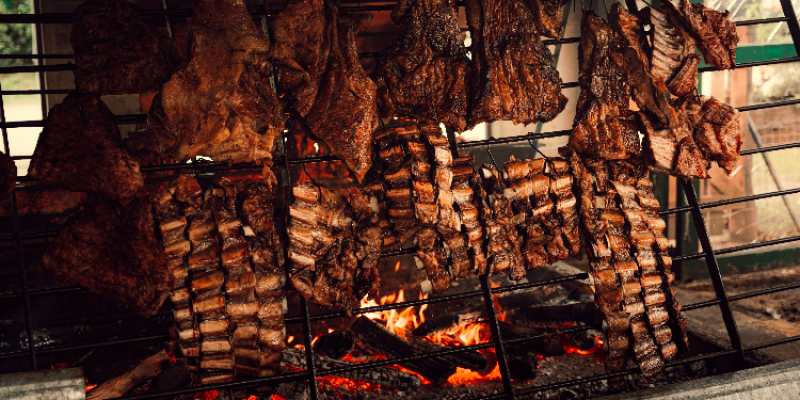
Eating in Mendoza is harder to separate from drinking than in most cities of comparable size. Wine sits at the center of the table, the calendar revolves around the grape harvest, and the city has secured 6 of the 10 Michelin stars awarded in Argentina. For expats, that means budgeting decisions, restaurant choices, and even grocery rhythms are shaped by a wine-and-food ecosystem that includes around 250 wineries open to tourism in the surrounding departments. Cafés, parrillas, alfajores, and seasonal produce fill in the daily picture.
Mendoza's food culture is officially framed as gastronomía identitaria, a positioning that ties wine and cuisine together as a single identity marker and consolidates the city as one of Argentina's major gastronomic poles. Wine is treated as inseparable from the table, much as it is in Napa Valley or Bordeaux, and the eating calendar is anchored as much to the grape harvest as to restaurant openings. The Fiesta Nacional de la Vendimia, which reaches its 90th edition in 2026, remains the central food-and-wine cultural moment of the year.
Mendoza counts around 250 wineries open to tourism, forming Latin America's largest wine-tourism network, in which production, hospitality, gastronomy, and cultural experiences are bundled into a single offer. Alongside wine, olive oil has its own institutional place at the table through the Mendoza Oliva Bien program, which positions extra-virgin olive oil as a tourism product linked to gastronomy and sustainability.
Urban café culture has also gained visibility over the past couple of years.
The defining specialty in Mendoza is the wine-paired meal. Provincial tourism material frames the local cuisine as tied to territory, local production, and sustainability, with wine treated as a sensory component of the meal rather than an afterthought. Parrilla (grilled meat) sits at the center of the traditional offer, along with regional Argentine cooking that uses local produce, herbs, and olive oil.
The Ente Mendoza Turismo, together with the 18 municipalities and the 365 Tentaciones program, has produced an official recipe book organized by region (Gran Mendoza, Alta Montaña, Zona Este, Valle de Uco, Zona Sur), with tapas, main dishes, desserts, and festival dishes that map out how the local kitchen actually looks from north to south.
Sweets matter too. The alfajor, Argentina's emblematic filled biscuit, is a fixture of local food events: the Feria Argentina del Alfajor, hosted in the city, brings together more than 60 alfajor brands from across the country in its annual editions. Wine, olive oil, parrilla, regional dishes, and alfajores are the five threads expats will encounter most often.
Join the Mendoza community
Get regular tips and advice to make the most of your expat life
Types of dining in Mendoza
The dining landscape is unusually stratified for a mid-sized city. Mendoza secured 6 of the 10 Michelin stars awarded in Argentina, along with 5 of the 10 green stars recognizing sustainable restaurants, including Angélica Cocina Maestra, Casa Vigil, Osadía de Crear, Riccitelli Bistró, and Zonda Cocina de Paisaje. The city has been part of the Great Wine Capitals network for more than 20 years, and wine-paired tasting menus are a defining format at the higher end.
The following are categories that are useful for orientation: Cocina en Bodega (winery cuisine), Cocina de Montaña (mountain cuisine), Cocina de Autor (signature cuisine), Cocina Temática (Arabic, rabbit, olive-oil specialties), Cocina Regional de Autor, and Vivencia Rural (rural-experience meals). In practice, this translates into everything from a long lunch at a winery in Luján de Cuyo to a slow dinner on a leafy patio in the city center.
Outdoor dining is visible across the urban restaurant scene, with patios, terraces, and shaded courtyards designed for lingering. In winter, dining shifts indoors and slows further: meals are treated as social occasions to be extended over wine rather than transactions to be completed quickly. Food festivals add another layer, with events such as Wine Rock Sessions combining wine, food, and music, and Vinexpo Explorer Mendoza bringing international wine importers into direct contact with Argentine wineries.
The city's food scene is compact enough to explore on foot or by bicycle, helped by around 90 km of cycle lanes across the urban area. Plaza Independencia is the natural reference point for casual eating, with regular artisans' fairs, music, and food stalls in the surrounding streets. From there, the Arístides Villanueva corridor is the main hub for cafés and casual dining, lively in the evenings and a fixture for after-work plans, though locals note that prices in this strip have risen noticeably.
The most famous wineries and winery-restaurants are located outside the city itself, in the surrounding departments of Luján de Cuyo, Maipú, and the Valle de Uco. These require a day trip rather than a walk, and most expats end up renting a car, hiring a driver, or joining an organized winery tour for full-day visits.
International cuisine in Mendoza
The city projects its food scene internationally through events such as Madrid Fusión and FITUR in Madrid, where Mendoza chefs and sommeliers represent the local kitchen abroad. In practice, the international side of dining in Mendoza is dominated by wine-paired contemporary Argentine cuisine rather than by a wide spread of national cuisines.
Within that framework, themed restaurants exist: Arabic cuisine has a long-standing presence linked to Levantine immigration, and Italian-influenced cooking is part of the regional fabric. Asian, Indian, and other non-European cuisines are present but limited compared with what newcomers from larger global cities may be used to, especially for expats moving from London, New York, or other large metropolitan markets.
Grocery shopping in Mendoza
Day-to-day grocery shopping in Mendoza mixes supermarkets, neighborhood greengrocers, and producer markets. Casa Segal, for example, is a wholesale and retail supermarket in the city. For fresh produce and shorter supply chains, the Mercado de Productores de la Terminalsells meat, fish, fruit, vegetables, bread, dairy, pasta, wines, oils, cold cuts, dried fruit, spices, and delicatessen products at producer-level prices.
Seasonal shopping pays off. Between December and March, summer produce common in local greengrocers includes peaches, plums, cherries, apricots, table grapes, melon, watermelon, and strawberries, alongside tomatoes, sweetcorn, peppers, eggplant, lettuce, and Korean squash; these in-season items are noticeably cheaper than imported or out-of-season alternatives.
Bakery prices are a separate matter and worth flagging. The Cámara de Empresarios Panaderos de Mendoza stopped issuing suggested bread prices in May 2026, leaving each bakery to set its own values.
Eating out costs in Mendoza
Eating out in Mendoza can be affordable in dollar terms, but inflation makes peso pricing a moving target. The average restaurant meal costs around ARS 15,517 (USD 8.65). Mid-range travelers eating all meals at restaurants typically spend ARS 35,000 to ARS 55,000 per person per day; a mixed pattern of restaurant dinners, café lunches, and breakfasts at home brings this down to ARS 25,000 to ARS 35,000. A sit-down occasion meal, such as a Father's Day menu on Calle Sarmiento featuring asado, wine, and dessert, has been priced at around ARS 30,000 per person.
Wine is the variable that most often catches expats off guard. Restaurant wine markups can add 100% to 200% over retail prices, so a wine-paired meal at a smart restaurant costs materially more than the food alone would suggest. Buying the same bottle at a wine shop and drinking it at home is a common workaround for residents who entertain often.
Timing also matters. The Vendimia period, in late February and early March, brings price surges of30% to 50% for both accommodation and dining as the city fills with visitors. Reservations are essential at well-known restaurants during this stretch, and budgets need adjusting upward.
Dietary requirements in Mendoza
Gluten-free dining is the most clearly supported dietary need in Mendoza. The Government of Mendoza maintains the Sin TACC Mendoza app, which lists restaurants with coeliac menus, suppliers, gluten-free product shops, dietéticas (health food stores), recipes, and authorized foods, with more than 100 adhering sale points. Packaged products should be cross-checked against the national ANMAT register of Alimentos Libres de Gluten.
For wine drinkers with coeliac concerns, a practical destination in the city is Celidiet, at Necochea 85, a gluten-free café and specialty shop offering prepared sin TACC food and products.
Vegetarian options are also available, but less developed.
Food delivery in Mendoza
Food delivery is well established in the city. Rappi is the most visible platform, with around 556 restaurants listed in Mendoza, including international chains such as McDonald's, Burger King, and McCafé, as well as local restaurants like Grido, Alto Belgrano, and La Sexta Pizza. Delivery fees range roughly from ARS 390 to ARS 1,390, with frequent promotions of up to 50% off; both fees and promotions change often, so the figure shown at checkout is the one that counts. PedidosYa operates alongside Rappi and runs its own quick-delivery digital marketplace in the city, useful for groceries and convenience items, as well as restaurant meals.
For residents who prefer to support local producers, the Government of Mendoza's social-economy catalog lists Sabores Mendoza - Pedidos Online, a vendor offering home delivery, electronic payment, discounts, and free delivery within its coverage area. Both major platforms accept card payments and offer in-app tipping; tipping on delivery is appreciated but not mandatory.
The defining feature of dining etiquette in Mendoza is the sobremesa: the time after the meal when people stay at the table, talking, laughing, and finishing the wine. It is not unusual for a dinner with friends to extend an hour or more past dessert, and signaling for the bill quickly comes across as abrupt. For expats used to brisk restaurant turnover, the practical adjustment is to plan social meals for evenings rather than time-boxed slots, and to bring up the bill conversation gently, often by asking the server directly.
Wine is part of the social code. At wine-paired meals and bodega-style dinners, the wine service is treated as part of the experience rather than as an add-on, and pairing local food with local wine is actively promoted by groups such as the Club Gourmet Mendoza. Outdoor dining on patios and terraces reinforces this slower rhythm, particularly in spring and summer.
Card payment is widely accepted, though not universal. The official Sabores Mendoza listing confirms electronic payment, and Rappi pages flag discounts for selected payment methods, but smaller venues sometimes prefer cash, especially for small tickets. Asking when making a reservation is a reliable habit. Tipping in restaurants is appreciated, but no fixed percentage or mandatory service charge is confirmed for the city; rounding up or leaving around 10% is the most common informal practice locals describe.
We do our best to provide accurate and up to date information. However, if you have noticed any inaccuracies in this article, please let us know in the comments section below.
A journalist, holder of the DALF C1 and C2 and a diploma from the University of Mauritius, I have nearly twenty years of writing experience. After six years in the Mauritian press, I joined Expat.com, where I have been working for over a decade, including five years as editorial assistant, and now as editorial manager.