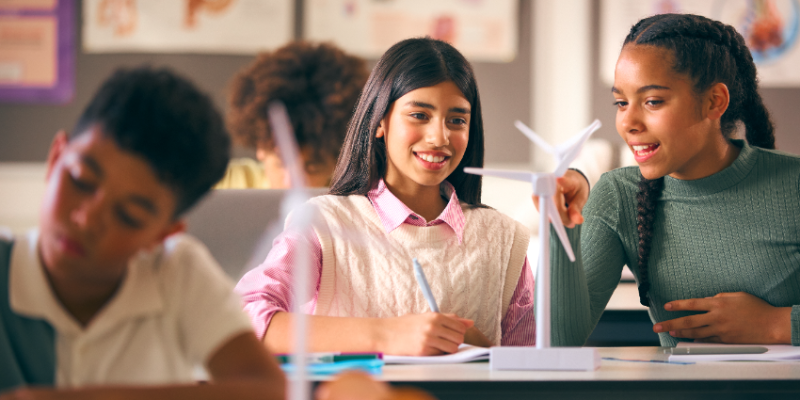
Relocating to Switzerland with school-age children means facing a system that shifts depending on where a family settles: education is organized canton by canton, not nationally, so the right school in Geneva may look nothing like the right school in Zurich or Basel. For most families, the practical fork in the road is between a free public school taught in the local cantonal language (German, French, or Italian) and one of the country's many international schools offering the IB, British, American, or French curricula, with tuition ranging from around CHF 19,800 to over CHF 105,900 a year at the most selective boarding institutions. Popular international schools fill up quickly; waiting lists are common in Geneva and Zurich, and places are rarely secured before an application fee is paid, which makes timing as important as the choice of curriculum itself.
Compulsory schooling in Switzerland runs for 11 years, starting with kindergarten around age 4 and moving through primary and lower-secondary levels until roughly age 15. Around age 12, an internal assessment moves pupils into lower secondary, and after compulsory schooling ends, students split between an academic upper-secondary track and vocational education and training (VET), which combines part-time vocational school with an apprenticeship. Roughly two-thirds of Swiss adolescents choose this combined path, and employers recognize it widely rather than treating it as a fallback option.
Education is a cantonal responsibility, not a national one. Each of the 26 cantons sets its own curriculum and teaching materials, and communes handle day-to-day school organization; the federal government's role is limited to quality assurance. A harmonization agreement between cantons (HarmoS) narrows some of the gaps, but structure, terminology, and timing still differ noticeably depending on where a family settles. This makes the destination canton, not a generic national reference, the starting point for any relocation plan involving school-age children.
Swiss public education is internationally rated as high quality (OECD), and the school year follows the northern-hemisphere pattern of an autumn start and a summer finish, though local authorities set exact dates rather than the federal government.
Almost every child in Switzerland attends a government-run public school in the commune where the family lives, since cantons organize compulsory schooling locally under cantonal curricula. This is the default route for most resident families, including expatriates, and it remains free regardless of nationality or residency status.
Private schooling covers a small minority: roughly 5% of pupils attend private schools, with the large majority completing compulsory education at their local public school. Within that private minority sits a separate category built specifically for internationally mobile families: international schools offering the IB, British, American, or French curricula. These are concentrated around Geneva, Zurich, Basel, Lausanne, and Zug, and several also offer boarding places. Because curriculum choice, fees, accreditation, and admissions differ so much from one international school to the next, they are covered in full in the following section rather than treated as a simple public/private alternative.
Switzerland has a broad international school sector, with the heaviest concentration in Geneva, Zurich, Basel, Lausanne, and the canton of Vaud. The International Baccalaureate is the most widely available portable curriculum: 51 schools are authorized to teach the IB Diploma Program, alongside 14 offering the Middle Years Program, 13 offering the Primary Years Program, and 5 offering the Career-related Program. Other schools run British GCSEs and A-Levels, American AP pathways, the French Baccalauréat, or the German Abitur, with sector accreditation coming from the IB itself as well as bodies such as CIS, COBIS, and NEASC.
For families with a UK or US next step already in mind, British and American curriculum schools, including Geneva English School, British School of Geneva, Zurich International School, and Brillantmont International School, offer the most directly continuous route, since their exit qualifications (GCSEs, A-Levels, the US High School Diploma with AP) map onto those systems without a conversion step.
Admissions run school by school rather than through any national process, and several schools state outright that a place is only guaranteed once fees are paid. For popular schools and year groups, treat admission as competitive and apply before relocating wherever possible. The main options include:
Zurich International School (Greater Zurich area/Wädenswil): IB Diploma, American AP, and bilingual programs for ages 3 to 18. Tuition ranges from CHF 16,900 (preschool mornings) to CHF 39,700 (grades 11 to 12), plus a CHF 500 application fee and a CHF 5,000 infrastructure contribution from kindergarten onward. Lunch, transport, after-school care, and exam fees are billed separately, and the school runs an English as an Additional Language program alongside separately priced learning-support services.
Inter-Community School Zurich (ICS): IB Primary Years, Middle Years, and Diploma Programs from nursery to grade 12. Fees range from CHF 13,100 (nursery half-day) to CHF 40,300 (grades 11 to 12), with a CHF 500 application fee and a capital fund fee of CHF 1,000 to CHF 5,000; bus, learning support, after-school care, lunch, and extracurriculars are invoiced separately.
SIS Swiss International School Zürich (Wallisellen): the IB Diploma combined with a bilingual local/international pathway from kindergarten to upper secondary. Tuition runs from roughly CHF 23,920 to CHF 30,940, billed per semester, with a one-time registration fee of CHF 600 for the first child. The school is financed entirely by fees, with no cantonal subsidy, and a place is guaranteed only once the registration fee is paid.
Geneva English School: British GCSEs and A-Levels from preschool to year 13, and a COBIS member. Fees range from CHF 11,575 (preschool mornings) to CHF 36,500 (years 12 to 13); enrollment involves a CHF 2,000 payment at registration and a further CHF 2,000 after one year. The school takes applications on a rolling basis and offers sibling discounts of 5% to 15%.
British School of Geneva: British GCSEs and A-Levels for ages 3 to 18, and a COBIS member. A one-time, non-refundable enrollment fee of CHF 3,000 applies; families should request the current annual tuition schedule directly from the school.
International School of Geneva (Ecolint): a large, multi-campus school offering the IB Primary Years, Middle Years, and Diploma Programs alongside British, American, and Swiss Maturité pathways for ages 3 to 18. External exam fees, including IB and Maturité, are billed separately from tuition. Given its scale and multiple Geneva-area campuses, confirm campus and year-group availability before relocating.
Lycée Français International de Zurich (Dübendorf/Zurich area): the French Baccalauréat pathway, open to all nationalities, with fees set annually by the school's governing association.
École Française Internationale de Berne: the French Baccalauréat pathway, open to all nationalities, with current tariffs available through the school's admissions page.
Institut International de Lancy (Lancy/Geneva area): a French bilingual program combined with IB Diploma preparation, British GCSEs, and A-Levels. Pupils in year 11, or those wanting to enter year 12 mid-year, may be offered a one-year IB-preparation program, a practical option for families relocating during upper secondary.
St. George's International School Switzerland (Montreux/Vaud): the IB Diploma and British GCSEs/A-Levels, with both boarding and day places; IB Diploma fees may be charged separately from tuition, so confirm this for the relevant year group.
Brillantmont International School (Lausanne): British GCSEs/A-Levels and an American High School Diploma/AP pathway for ages 13 to 18, with boarding places. Boarding families should confirm bed availability alongside academic fit before applying.
Aiglon College (Chesières/Vaud): the IB Diploma and British GCSEs/A-Levels for ages 6 to 18, with boarding, and accreditation from COBIS as well as CIS and the IB. Entry should be treated as highly competitive, particularly for boarding places.
Institut Le Rosey (Rolle/Vaud): the IB Diploma and French Baccalauréat with boarding, reaccredited by CIS. Entry is very competitive, and financial-aid applications for a given year typically close several months before the following school year begins.
Join the Switzerland community
Get regular tips and advice to make the most of your expat life
Public schools in Switzerland for expat children
Public compulsory education is free for every child living in Switzerland, regardless of residency status, so eligibility is not the limiting factor for expat families. What determines a child's school is the family's commune of residence: children attend the state school in the municipality where they live rather than choosing freely among schools nationwide, which means the school question is effectively settled once a home is chosen.
The language of instruction follows the local linguistic region, German, French, Italian, or in a small number of municipalities, Romansh. Public schools provide targeted language support for pupils who are not native speakers of the local school language, ranging from differentiated teaching by the regular class teacher to specialist support for children who need more. During compulsory schooling, all children also study a second national language and English, so a child entering the system without the local language is not left without structured help.
Around 95% of children complete compulsory education in their local state school, which plays a genuine role in local integration. For expat families weighing this against an international school, the trade-off is less about general educational quality and more about language exposure, curriculum continuity, and timing: public school immerses a child in the local language region, while an international school preserves progress toward a specific IB, British, American, or French qualification.
The core decision for a relocating family is a language-and-continuity trade-off, not a simple ranking between public and private. Public school delivers full immersion in the cantonal language with structured support for non-native speakers, while an international school preserves a child's progress in a specific curriculum that will remain recognizable if the family moves again. How long the family expects to stay in Switzerland, and where the child is likely to continue schooling next, should shape this choice more than reputation alone.
Admission process for schools in Switzerland
For a public-school place, contact the commune's education office as soon as the family's address is confirmed; placement follows residence, so there is no separate application race. For international schools, the calendar looks very different: start applications as early as possible, ideally before the spring preceding an August or September start, since capacity is limited by year group even though many schools accept applications throughout the year.
A typical application file includes:
An online application form and payment of any application fee.
School reports or transcripts from the child's current school.
Teacher recommendation forms, required by some schools for certain grades.
Recent specialist reports and current learning-support plans (individualized education programs), where relevant.
Entrance requirements vary by school and grade. Some schools admit through the compulsory-education grades without an entrance exam, while others require a formal entrance examination for senior entry or set English-proficiency levels, such as C1 or C2, for IB Diploma admission. Some schools also run subject-specific placement tests after admission to determine the right course level for a new student.
When a year group is full, schools place applicants on a waiting list, and priority is typically counted from the date both the application and the application fee are received rather than the date of first inquiry.
School fees and costs in Switzerland
Costs range from free public schooling to well over CHF 100,000 a year at the most exclusive boarding schools. Across published international-school fee schedules, annual tuition runs from around CHF 19,800 at the lower end to over CHF 105,900 at elite boarding schools, excluding non-tuition extras unless a school bundles them into the fee. Private bilingual and non-boarding international-style schools tend to sit lower on this scale, with published full-day tuition typically between CHF 10,060 (mornings-only nursery tracks) and CHF 30,390 per year.
The headline tuition figure is rarely the whole story. Uniforms or sports kit, teaching materials, school trips, lunch, transport, and external exam fees such as AP or IB Diploma exams are frequently excluded from the core fee and billed separately, so the real annual cost should be checked against each school's full fee schedule rather than the advertised tuition range alone. One-off entry costs add up too: application fees typically run around CHF 500, while capital, infrastructure, or entrance-style contributions at established schools can range from roughly CHF 5,000 to CHF 15,000, plus a security deposit at some boarding schools.
Payment is usually organized by term or semester, though annual payment is often available, and some day schools allow monthly installments, sometimes with a surcharge. Payment deadlines are typically set well before the school year starts, so budgeting ahead of arrival matters as much as budgeting the tuition itself.
The school year in Switzerland
There is no single national school calendar in Switzerland. The academic year typically runs in two semesters, starting in August or early September and ending in June or July, with a summer break of roughly 5 to 6 weeks, but the exact start and end dates, and the length of other holiday periods, are set by the canton and can differ noticeably from one to the next (Swiss Confederation education overview).
Families arriving from a September-to-June system will find the overall rhythm familiar, though the year often starts earlier in August than expected. Families arriving from a January-to-December system should plan for a mid-year transfer if moving in January, since the main Swiss intake sits right after the summer break. Because compulsory schools are run by canton and commune, check the calendar at that local level for a public-school place; international and private schools each publish and manage their own separate academic calendar and admissions capacity, independent of the local public system.
School life in Switzerland
Timetables in Switzerland are organized by canton and commune, and core lessons are frequently separated from optional, separately registered supervision blocks such as early-morning care, lunch care, supervised homework time, and after-school activities. Some communes register children for these modules through a dedicated extended-day school system with its own enrollment window and eligibility rules, so a school day that looks continuous on paper may actually require several separate sign-ups.
School meals are not automatically included: lunch is typically provided through a municipal or cantonal canteen service that usually requires separate registration, and places can be limited, with at least one commune reporting a waiting list for its lunch service and charging per meal, including supervision until afternoon classes resume. Parent involvement operates on a formal cooperation model rather than an informal volunteer culture; parents are expected to ensure homework is done and to provide the right conditions for it, some schools build homework-support time into their after-school modules, and parent assemblies at some schools have a defined role in running the institution.
Communication with teachers and schools follows structured, responsibility-based channels: parents seek individual or collective advice from the class teacher, school leadership, or the school commission, rather than relying on informal drop-in access. International schools generally lean toward more frequent, direct progress updates and family collaboration alongside these formal channels; International School Basel is one example of a school built explicitly around mobile-family communication and support for children transitioning from another country's curriculum. For families choosing public school instead, how well this integration works depends heavily on the child's age, the language-support offer, and the canton or commune's day-structure arrangements.
Special educational needs in Switzerland
Children with special educational requirements have a legal right to special schooling and support from specialists in early-childhood special-needs education, scholastic special-needs education, language therapy, or psychomotor therapy. This applies wherever a child's development is restricted or at risk, or where a child cannot meet usual school standards without extra support, and cantons are responsible for organizing this provision.
In practice, provision includes special classes, integration classes, development classes, and dedicated special schools, but exact options are canton-led. Cantons have made independent regulatory changes, including a new special-needs ordinance in one canton and a redefined threshold for "intensified measures" in another, so terminology and available options genuinely differ depending on where a family settles. Specialist assessors and therapists available through the Swiss system include early-childhood special-needs specialists, scholastic special-needs teachers, speech and language therapists, and psychomotor therapists, and combined multi-specialist provision (psychotherapy, occupational therapy, speech therapy, special-needs education, and psychology) exists for more intensive cases, including early intervention for severe autism.
Because responsibility sits at the cantonal level, contact the education authority in the canton where the family plans to live before enrollment, and bring any existing diagnostic, therapy, and school-support documentation. This lets the canton or school determine whether the child needs special schooling, language therapy, psychomotor therapy, or other specialist support, and doing this before committing to a specific home or school avoids discovering a mismatch after the move.
Higher education pathway from schools in Switzerland
An international curriculum completed in Switzerland can lead to a Swiss university, but none of them guarantees automatic entry. Each institution sets its own subject, grade, language, and sometimes supplementary-exam conditions, so plan final-year subject choices against a specific target university's published requirements rather than curriculum reputation alone.
The IB Diploma is accepted only when you meet institution-specific subject and grade conditions. EPFL, for example, requires the IB Diploma with mathematics, physics, and chemistry, biology, or computer science at Higher Level; at least 38 of 42 points excluding bonus points; and minimum grades of 6 out of 7 in mathematics and physics. Conditions vary by institution. GCE A-Levels and O-Levels are recognized under similar country-specific conditions, with exact requirements depending on the receiving university's stated subject, grade, language, and any supplementary-exam rules.
For the US High School Diploma with Advanced Placement tests, AP subjects must be taken independently with a minimum grade of 3 each, and some subjects, including Art and Design, Psychology, Statistics, and US Government and Politics, are not recognized. Institution-specific conditions still apply: EPFL requires its own entrance examination for US high-school graduates, while ETH Zurich offers a reduced entrance-exam route for specified AP subjects. The French Baccalauréat général is recognized subject to required general-education subjects over the final three years and institution-specific conditions; for EPFL, this means the Baccalauréat général with mathematics and physics-chemistry specialties, minimum marks of 16 in mathematics and physics-chemistry, and a general average of at least 16.
Admission works by applying directly to the chosen Swiss university, which checks whether the school-leaving certificate is equivalent to the Swiss Maturité gymnasiale standard and whether country-specific subject, grade, and language conditions are met. There is no single automatic conversion step for every foreign credential: Swiss ENIC provides general guidance, but the receiving institution makes the actual admission decision and may add requirements such as aptitude tests or supplementary exams. Switzerland's accredited higher-education landscape includes cantonal universities, federal institutes of technology, universities of applied sciences, and teacher-education institutions, and access from an international or foreign curriculum is possible but rule-bound and institution-specific.
Frequently asked questions
Yes, public schooling is free for all children regardless of residency status, and eligibility is not the limiting factor. Placement follows the family's commune of residence rather than free nationwide choice, so families should contact the cantonal or communal education authority as soon as housing is confirmed. At that point, ask about language integration and available support for non-native speakers.
Day-school tuition commonly starts around CHF 19,800 a year and can exceed CHF 105,900 at elite boarding schools. Beyond tuition, budgets must cover registration and application fees, one-off capital or infrastructure levies, exam fees, meals, transport, boarding, and activities, since these are often billed separately from the headline tuition figure. Always request a school's full fee schedule rather than budgeting from the advertised tuition range alone.
The main options are the IB (Primary Years, Middle Years, and Diploma Programs), the British curriculum with IGCSEs and A-Levels, American high school and AP pathways, and the French Baccalauréat, alongside bilingual Swiss-international models. The right choice depends on where the family expects to move next: the IB Diploma is the most broadly portable, A-Levels suit a return to the UK, AP pathways suit the US, and the French Baccalauréat suits a return to France or another French-speaking system.
For public school, start as soon as the family's address and canton are confirmed, since placement is handled locally. For international schools in Geneva, Zurich, Lausanne, Basel, or Zug, begin at least twelve months before the intended start date, since popular schools and boarding places can be constrained by year group and language profile. Always confirm with the admissions office that the exact year group has space before paying any application or registration fee.
The IB Diploma, IGCSE and A-Levels, the US High School Diploma with AP tests, and the French Baccalauréat are all designed to be portable, but recognition in a future country still depends on the receiving institution and the exact subjects taken. Families planning a future move should confirm the specific accreditation and subject package a school offers rather than relying on the curriculum label alone.
In public schools, the language of instruction follows the canton: German, French, or Italian are the practical options for most families, with Romansh relevant only in a few communities. International schools offer English-medium, French-medium, bilingual, or multilingual programs depending on the school. Because bilingual programs vary in practice, parents should confirm which subjects are taught in each language, what support exists for non-native speakers, and the language of the final exit exam.
Yes, though provision is not uniform nationwide since special-needs education is organized by canton. Public-sector support depends on cantonal assessment and placement, while international schools define their own learning-support capacity and may assess whether they can meet a child's needs before admission. Parents should prepare existing diagnostic and therapy documentation and ask schools directly about their learning-support threshold before enrollment.
Yes, particularly in Geneva, Zurich, and other high-demand areas, and availability can differ by year group, meaning a school may have space in primary but not secondary, or day places but not boarding. Contact the admissions office directly for current year-group availability before applying, and don't assume a well-known or IB-accredited school can admit a child mid-year.
Some expatriate employment packages include an education allowance, but this is a matter for negotiation with the employer rather than a feature of Swiss schooling itself. Since international-school costs can include tuition plus registration, capital, exam, meals, transport, and boarding charges, it is worth negotiating the allowance against the full annual cost and confirming whether it covers deposits, sibling fees, and future increases.
There is no single national Swiss school calendar: term dates and holidays are set canton by canton, and international schools set their own calendars, which can differ from both the local public system and each other. Before booking a move, check the exact calendar for the destination canton or chosen school, since arriving after term starts can affect class placement and language induction.
ℹ️
We do our best to provide accurate and up to date information. However, if you have noticed any inaccuracies in this article, please let us know in the comments section below.
I fell in love with words at an early age After a break to focus on my studies, I rediscovered the joy of writing while keeping a blog during my years between London and Madrid. This passion for storytelling and for exploring new cultures naturally inspired me to create Expat.com, a space for my own reflections as well as for anyone wishing to share their experiences and journeys abroad.