Living in Sweden: the ultimate expat guide
Everything you need to know for a successful life in Sweden.
Sweden is a modern, high-income Nordic country known for its excellent standard of living, strong social welfare system, and progressive values. It offers clean cities, well-preserved nature, and a stable economy. For expats, Sweden provides a safe, well-connected base in Europe with excellent healthcare, education, and work-life balance. The country experiences four distinct seasons, and its major cities—Stockholm, Gothenburg, Malmö—are hubs of culture, innovation, and international communities.
Five compelling reasons to live in Sweden
1. Strong social systems: Sweden’s welfare model ensures wide access to healthcare, education, parental leave, and social protection. Expats who work here benefit from robust public services.
2. High quality of life: Clean air, beautiful landscapes, and low crime rates make Sweden a very livable country. Public transport is efficient, and green spaces are abundant.
3. Work-life balance: Swedish work culture values balance. Flexible hours, and generous vacation and parental leave help residents balance their careers and personal lives.
4. Economic opportunity: Sweden has a dynamic, innovation-driven economy. Key sectors include tech, clean energy, life sciences, and manufacturing, making it attractive for skilled professionals.
5. Inclusive society: Sweden is multicultural, with a significant percentage of residents born abroad or from immigrant backgrounds. Many policies support integration, and English is widely spoken.
Facts and figures
Population (2024) | 10.5 million |
Expat population | 2.2 million |
Most common expat nationalities | Syria, Iraq, and Finland |
Typical temperatures | Summer: 15°C – 25°C (59°F – 77°F), Winter: –3°C – 0°C (27°F – 32°F) |
Data correct as of December 2025.
Sources:
Statistics Sweden — population, expat population and OECD — expat countries of origin
Formalities and visas in Sweden
If you're planning to move to Sweden, the visa system is clear and well-structured; however, waiting times can be lengthy. First-time work permit applications for Sweden usually take around four months, while extensions and complex cases can take six months or more — some rare cases can last over a year. You can apply online, which often speeds up the process. Sweden grants many visas, especially for skilled workers, but the system requires careful preparation and patience.
Tips:
- Start early: Processing times can be long, especially for work or residence permits. Apply well in advance of your intended move.
- Use the online system: Most applications can be submitted digitally, which speeds up processing and helps track your application.
- Complete documentation: Include all required documents: passport, proof of employment, financial means, and any family or relationship documents. Missing paperwork is the most common cause of delays.
- Follow the rules for dependents: If bringing family, ensure you submit separate applications for your spouse/children and meet the requirements for residence and support.
- Be clear about the visa type: Sweden offers visitor visas, work permits, student visas, and family reunification permits.
- Check validity and extensions: Know how long your visa lasts, and when/how you can apply for extensions to avoid overstaying.
Useful link:
🔍To learn more

General visa requirements for Sweden
If you are planning to move to Sweden, it is important to understand whether you need a visa to ...
Permanent residency and citizenship in Sweden
Staying in Sweden for more than 90 days can be simple or more complex, depending on your ...

The Working Holiday Visa for Sweden
Sweden's Working Holiday programme allows young people from certain countries to live in Sweden for ...
Working in Sweden
Sweden has a stable economy and plenty of opportunities for skilled workers, but the job market is competitive. Employers value not just technical skills, but also English fluency, adaptability, and a collaborative mindset. Specific sectors are actively hiring, and despite a slight rise in unemployment in 2025, prepared job seekers who focus on in-demand industries stand a strong chance of success.
Sectors currently hiring in Sweden
• Tech, IT, and AI: Software developers, data scientists, cloud infrastructure (especially as more firms scale digital operations).
• Green energy and sustainability: Renewable energy, clean tech, and environmental engineering.
• Healthcare and life sciences: Given Sweden’s aging population, demand is growing for medical professionals and biotech talent.
• Construction and infrastructure: Large-scale projects require skilled labor, particularly in construction, civil engineering, and related services.
• Logistics and manufacturing: As Sweden continues to export and innovate, roles in advanced manufacturing remain in demand.
Facts and figures
Unemployment rate (September 2025) | 8..7% |
Labor force participation for women | 74.1% |
Largest employer by sector (2023) | Services 80% (business services, retail, healthcare, education, finance, and public administration) |
Union participation | 70% of workers are part of a union |
Data correct as of December 2025.
Sources:
Statistics Sweden — unemployment rate and women's workforce participation, Statista — employer by sector, and European Trade Union Institute (ETUI) — unions
🔍To learn more

Finding work in Sweden
Sweden is a popular destination for expats, famous for great working conditions, a strong emphasis ...

Setting up a business in Sweden
Every year, Sweden attracts many people looking to start a business or work independently. The ...

Internships in Sweden
Sweden is very welcoming towards students and trainees. Moving here offers the chance to gain ...
Studying in Sweden
Sweden is a top destination for international students thanks to its world-class universities, innovative teaching, and strong focus on research and practical skills. Many programs are offered in English, making higher education accessible to non-Swedish speakers. Studying in Sweden gives students a collaborative learning environment, access to cutting-edge research, and strong long-term career prospects, whether you plan to work locally or return home.
International students in Sweden often choose fields like engineering, IT, life sciences, and business, reflecting both local industry strengths and global demand. During 2021-22, nearly 40,000 international students were enrolled in Swedish higher education, with the largest groups coming from Germany, China, and India. To study in Sweden, students need a full-time admission offer, proof of finances, and health insurance for their residence permit, making careful planning essential for a smooth start.
Tips:
- EU/EEA students enjoy free tuition at public universities in Sweden.
- Scholarships are available for non-EU/EEA students.
- Plan accommodation early, as student housing in cities like Stockholm, Gothenburg, and Lund is limited and competitive.
- Learn the basics of Swedish: while most courses are in English, knowing basic Swedish helps with daily life.
Sweden’s best universities
• Uppsala University: Sweden’s oldest university is consistently ranked among the top universities in the world for research, education, and international collaboration.
• KTH Royal Institute of Technology: Sweden’s top technical university, known for engineering, innovation, and strong ties with industry.
• Lund University: One of Scandinavia’s oldest and most international institutions, offering a broad range of English-taught programs.
Useful link:
Finance and banks in Sweden
Sweden’s banking system is modern, digital-first, and well-regulated. As an expat, you’ll find that mobile banking, card payments, and online services are the norm. But opening a bank account in Sweden isn’t always straightforward — you’ll usually need a Swedish personal identity number (personnummer) or another form of official ID, as banks perform strict identity checks.
Tips:
• Get your personnummer first: Most banks require a Swedish personal identity number to open a complete bank account.
• Apply for your personnummer at your local Skatteverket (Swedish Tax Agency) office.
• You will also need the following documents: Passport, residence permit (if applicable), proof of Swedish address, and employment contract.
• Start with a basic account: Many banks allow newcomers to open a limited account first, then upgrade later.
• Be prepared for identity checks: Banks may ask about your income source, why you need the account, and how you’ll use it.
* Sweden is highly digital — most payments are done via the mobile app, Swish, or online banking.
🔍To learn more


Health care in Sweden
Sweden has a high-quality public healthcare system that covers everyone with legal residency, including expats. It is tax-funded, so you don’t pay the full cost of most care, but there are small co-payments for visits and treatments. Sweden's health system is modern and reliable, but waiting times for non-urgent care can be long. Overall, it offers excellent medical services, universal coverage, and strong patient protections.
What you need to know
• Eligibility: If you’re a legal resident (you have a personnummer), you’re covered by the public system just like Swedish citizens.
• How to use it: Register at a local primary care center once you're set up; this will be your first contact point for non-urgent medical issues.
• Waiting times: Non-urgent care can take a while — Sweden has a 'care guarantee', but some patients still wait beyond the targets for specialist appointments.
• You don't always need health insurance for your visa, but it is advisable if you are only in the country for a short period.
• Until you’re eligible for public care, private or international health insurance protects you from upfront medical costs.
• Private health insurance plans offer faster access to specialists, shorter waiting times, and sometimes extra services not covered by public care.
Useful links:
National Board of Health and Welfare
Public Health Agency of Sweden
🔍To learn more

Health care in Sweden
Wondering about the health care services available for expats in Sweden? Find the answers to your queries in this article.
Education and schools in Sweden
Education in Sweden is widely regarded as high-quality, inclusive, and child-centered. The system prioritizes critical thinking, creativity, and student well-being over rote learning, and classrooms tend to be informal, collaborative, and low-pressure. Teaching standards are consistently strong, schools are well-resourced, and equality of access is a core principle. Children typically attend preschool, followed by compulsory schooling and then upper secondary education, with clear pathways into higher education or vocational training.
Public education in Sweden is free and compulsory from ages 6 to 16. Tuition, textbooks, school meals, and basic materials are all covered by the state. Upper secondary school, for students aged 16–19, is also free but not mandatory. Children legally residing in Sweden — including those from expat families with residence permits — are generally entitled to free public education on the same terms as Swedish citizens.
For expat families in Sweden, most children attend local municipal schools, which are free, follow a strong national curriculum, and provide Swedish‑as‑a‑second‑language support to help newcomers settle quickly. International schools exist, mostly in cities like Stockholm, Gothenburg, Malmö, Lund, and Uppsala, and tend to cater to families based in Sweden on short-term assignments. Independent bilingual schools offer alternative curricula for expat families, combining Swedish and English instruction, and providing flexibility and choice beyond the public system. Together, these options give expat families a clear path to schooling while balancing integration, language learning, and international continuity.
Useful links:
Government of Sweden — education
International Schools Database — Stockholm
🔍To learn more

Key facts for international students in Sweden
Looking forward to study in Sweden? What are the related formalities? Find out in this article.
Accommodation in Sweden
Sweden’s housing market is competitive, especially in big cities — finding a flat in Sweden can take time, and prices can be steep. But it’s also stable, transparent, and backed by strong tenant protections. Expats can find a variety of housing types, from city apartments and townhouses to modern condos, suburban villas, and country homes. Many expats start by renting, which is often easier and more flexible as they settle in. Buying property is also possible — the country has an open property market, and expats are generally free to purchase real estate in Sweden, whether it’s a cozy apartment in Stockholm or a family home in the countryside.
What you need to know
- Renting is usually faster and more flexible, especially in major cities where the housing market is competitive.
- Know the types of rental housing – options include apartments, townhouses, and student housing, with modern amenities commonly included in city apartments.
- Most leases are long-term, but temporary or furnished rentals are available. Always check for utilities, maintenance, and deposit requirements.
- Sweden has strong tenant rights, including regulated rent for many apartments and protection from arbitrary eviction.
- Expats can freely buy real estate. Options include condos, detached houses, and vacation homes.
- Costs and process – buying involves property tax, mortgage registration, and often a broker or lawyer to guide you through the process.
- Mortgages are available to expats, but lenders typically require a Swedish ID number and proof of income.
- Be prepared for competition: Popular areas in Stockholm, Gothenburg, and Malmö have high demand; securing a flat or house can take time and patience.
🔍To learn more
Accommodation in Sweden
If you are looking for accommodation in Sweden, here are some tips to guide you.
Buying property in Sweden
With most of Sweden's major cities facing a housing shortage, it will very often prove easier ...
Accommodation in Örebro
Finding accommodation in Örebro is going to be relatively easier than in other Swedish cities. ...
Planning your move to Sweden
Moving to Sweden requires careful planning. Customs rules differ for EU and non-EU arrivals, and duty-free import of personal belongings is allowed only under specific conditions. Shipping furniture, clothes, and vehicles to Sweden is straightforward if you provide a detailed inventory and proof that items are for personal use. Delays or inspections are usually caused by incomplete or unclear paperwork.
Tips:
- Plan and prepare early: Moving abroad involves many steps (visas, housing, registration, etc.). Starting early reduces stress and surprises.
- Secure the right permits first: Check what type of work or residence permit you need based on your nationality and reasons for moving.
- Plan your shipment early: Start organizing your household goods well in advance. Decide what to ship, sell, or store.
- Understand customs regulations: Certain goods may require declaration, taxes, or permits. Familiarize yourself with Swedish customs rules to avoid delays or fines.
- Choose a reputable moving company: Professional international movers can handle packing, transport, and customs paperwork efficiently.
- Consider insurance for your belongings: Shipping internationally carries a risk of loss or damage; ensure your items are insured.
- Temporary storage solutions: If your new home isn’t ready, arrange secure storage for your goods in Sweden until you move in.
- Label and organize carefully: Clearly label boxes with contents and destination rooms to make unpacking faster and smoother.
Useful link:
🔍To learn more


Leisure in Sweden
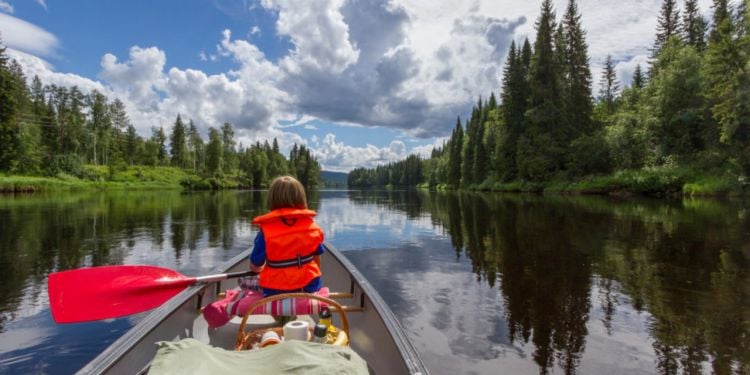
Life in Sweden is an adventure waiting to happen. Imagine kayaking through sparkling archipelagos, hiking endless forests, or skiing under the Northern Lights — the outdoors is always calling. Swedish cities are equally vibrant, blending cutting-edge design, historic streets, and buzzing cafés where the Swedish tradition of fika (taking a break with friends) turns coffee breaks into a social highlight.
Whether you’re chasing culture, adrenaline, or simply some time to relax, Sweden’s leisure scene never disappoints. From summer music festivals to winter ice skating and Sweden's cozy cafés, there’s always something new to try and experience — Sweden is the perfect playground for expats who love exploring!
Popular leisure activities in Sweden
• Hiking and exploring nature reserves, including national parks like Abisko and Sarek.
• Boating and kayaking, especially in the Stockholm and Gothenburg archipelagos.
• Skiing and winter sports – from alpine resorts to cross-country trails across the country.
• Cultural visits – museums, galleries, and historical sites in cities and towns.
• Fika and café culture – enjoying coffee breaks with friends in local cafés.
• Music and cultural festivals – summer concerts, Midsummer celebrations, and traditional events.
• Cycling and outdoor sports are popular in both cities and the countryside for fitness and leisure.
• Northern Lights viewing, particularly in Lapland during the winter months.
🔍To learn more

Everyday life in Sweden
Sweden is safe, efficient, and easy to navigate, making settling into daily life straightforward for expats. Knowing the basics — like the language, money, and local customs — makes the transition even easier. Most Swedes speak excellent English, but learning Swedish helps you connect socially and at work. The currency is the Swedish krona (SEK), and cash is rarely needed since cards and mobile payments are everywhere.
Tips:
• Swedes value punctuality, personal space, and modesty.
• Public transport is reliable, clean, and widely used; biking is popular in cities.
• Most shops close by 6–7 pm on weekdays; online shopping is common, and banking is primarily digital.
• Swedes tend to be reserved but polite; small talk is minimal, but friendliness comes with respect for personal space.
• Always wait your turn — cutting in line is frowned upon.
• Keep a comfortable distance when talking; close proximity can feel intrusive.
• Talking loudly on public transport is frowned upon.
🔍To learn more

Travelling around Sweden
Like most European countries, Sweden has a thoroughly developed transportation network. Even if you move into a somewhat rural area, you will have no ...

Useful contacts in Sweden
Find, in this article, a list of useful contacts which may be of use once you have settled in ...

Phones and Internet in Sweden
Obtaining a phone and Internet connection is a must nowadays. Here is how to proceed in Sweden.
Cost of living in Sweden
Living in Sweden comes with a price, but it’s balanced by a high quality of life and strong social services. Overall, Sweden is more expensive than the global average and slightly above the EU average, with big cities like Stockholm and Gothenburg driving costs up. Housing, eating out, and alcohol tend to be pricier than in many other countries, while public transport, healthcare, and education in Sweden provide excellent value. Daily essentials like groceries are moderate, and Scandinavian efficiency often saves time and money in the long run.
Here is a general breakdown of average monthly expenses for different household types in Sweden.
Monthly expenses
Single expat (per month) | Family of four (per month) | |
Rent (city center) | 1 Bedroom: SEK 12,000 (USD 1080) | 3 Bedroom: SEK 28,000–35,000 (USD 2,520–3,150) |
Rent (suburbs) | 1 Bedroom: SEK 9,000 (USD 810) | 3 Bedroom: SEK 22,000–30,000 (USD 1,980–2,700) |
Utilities (electricity, water, gas, Internet) | SEK 1,500–2,000 (USD 135–180) | SEK 3,500–5,000 (USD 315–450) |
Groceries | SEK 3,500 (USD 315) | SEK 9,000–12,000 (USD 810–1,080) |
Public transport | SEK 950 (USD 85) | SEK 2,400 (USD 216) |
Dining out and entertainment | SEK 2,500 (USD 225) | SEK 6,000–10,000 (USD 540–900) |
Source:
Outro
Moving to Sweden offers expats a high quality of life, excellent public services, and a welcoming, safe society. From navigating the competitive housing market and understanding local customs to exploring career opportunities and enjoying Sweden’s vibrant leisure activities, careful preparation makes the transition smoother. For detailed step-by-step advice, check out our dedicated Expat.com guides to resettling in Sweden, covering visas, housing, healthcare, and more. And don’t forget to jump into our Sweden forum to connect with fellow expats, share experiences, and get practical tips straight from those living the Swedish life.
We do our best to provide accurate and up to date information. However, if you have noticed any inaccuracies in this content, please contact us.


News & testimonies
Why Sweden is reviewing its immigration policy
According to Swedish Migration Minister Maria Malmer Stenergard, this move aims to "reduce the risk of painful tragedies for migrants". Underlying this measure is, in fact, the political pressure exerted by the far-right Sweden Democrats (SD) party. The SD intends to take advantage of Sweden's presidency of the European Union to steer migration policy.
Life of an expat mom with an autistic child in Sweden
Steffy comes from Naples. She left Italy in 2016 to settle in Sweden with her children. An avid blogger, Steffy is also the founder of a non-profit organisation that takes care of children with special needs. She talks to Expat.com about her everyday life and challenges as an expat mom of an autistic child.

Learning the language of your host country: A few tips
Thibauld, who lives and works in Stockholm, has written a guide to help expats learn the language of their host country. He tells Expat.com about what he has learnt and gives us a few tips.
Claire in Sweden: "Stockholm is a fantastic place to live"
Claire comes from a family of serial expats. Born in Scotland, she grew up in France, the US and England. Fascinated by Sweden, she settled in Stockholm indefinitely...for now!
Essential services for your expat journey