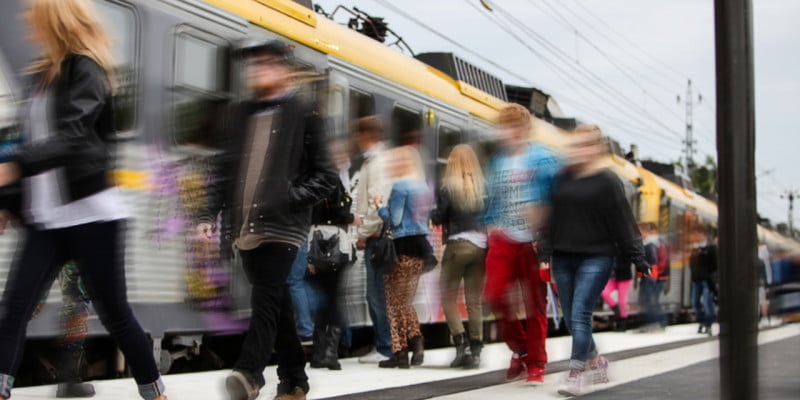
Like most European countries, Sweden has a well-developed transportation network. Even in more rural areas, it is generally easy to travel between regions. Major Swedish cities also have extensive local transport systems that support commuting and everyday travel. Public transport fares are typically structured with single tickets as well as discounted commuter passes for regular use.
Public transport is widely used in Swedish cities and is generally reliable and well integrated, and many Swedes prefer to use it as it is cheaper and better for the environment than cars. Regional services are usually run at county level, while larger cities operate their own local networks. Tickets are now primarily purchased via mobile apps, with ticket machines available in some stations. Buying tickets directly from bus drivers is increasingly uncommon or not available. It is your responsibility to purchase and activate the ticket on your phone in advance of travel or risk stiff fines.
Stockholm has the most extensive system, combining the metro (T-bana), buses, commuter trains, and trams. Gothenburg operated a tram and bus network, while Malmö relies on buses and trains (with strong connections to Denmark via the Öresund bridge).
Taxis are widely available, and taxi companies must clearly display their pricing, but fares can vary between operators. To avoid unexpectedly high costs, it is recommended to check the price before starting the trip. App-based services such as Uber and Bolt are widely used and offer upfront pricing.
Travelling by train is one of the most practical ways to move through Sweden. Long-distance routes often pass through forests, open countryside, and small towns. The main railway hubs are Stockholm, Gothenburg, and Malmö, with frequent services between them. High-speed trains operate on these routes, and there is also a dedicated high-speed rail link between central Stockholm and Arlanda Airport.
The trains in Sweden are operated by several companies. SJ (Swedish Railways) is the largest, but other operators include Snälltåget, which runs long-distance and overnight services, Inlandsbanan, known for its scenic routes, and regional operators that handle local and commuter traffic.
Tickets are now almost exclusively purchased online or via mobile apps, either through the operator or through other travel apps. Prices vary depending on demand, travel time, class and how early you book. Seat reservations are standard on long-distance trains.
Good to know:
Discounts are available for students, youth, seniors, and frequent travellers. You can also become a member of SJ Prio to collect points, which can be used for discounts on future purchases.
Join the Sweden community
Get regular tips and advice to make the most of your expat life
Travelling by air and by sea in Sweden
Swedish airlines provide domestic flights, which are particularly useful for long distances. Flying is often the fastest way to travel between southern and northern parts of the country: for example, a flight from Malmö to Kiruna takes just over 3 hours, compared with a 20 hour drive. Several airlines operate domestic routes, including SAS, BRA, and Norwegian. Stockholm's Arlanda Airport serves as the main hub, with frequent connections to most major airports across Sweden.
Sea travel is also an important part of getting around, especially along the coast. Stockholm itself is a large archipelago that can be explored year-round by public ferries, and the Gothenburg archipelago is also worth visiting. Ferry services operate to many islands and coastal areas throughout the country, making sea travel a practical option as well as a scenic one.
We do our best to provide accurate and up to date information. However, if you have noticed any inaccuracies in this article, please let us know in the comments section below.
I've spent the past 15+ years living and working across different countries in Asia, Africa, Europe, and North America. I enjoy learning from new cultures, adapting to new environments, and connecting with people who share a curiosity about the world.