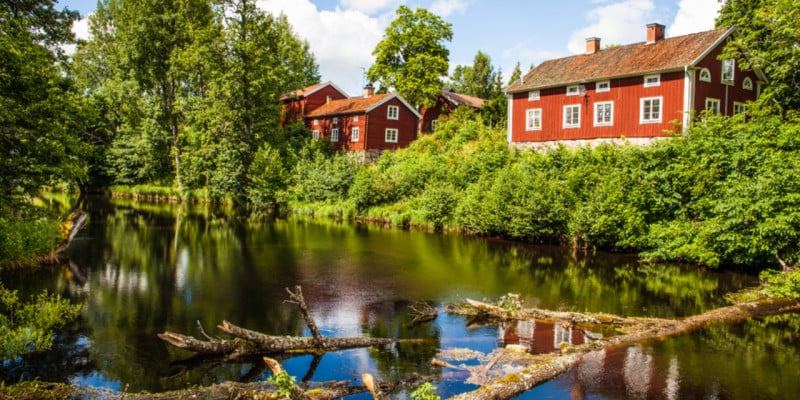
Housing conditions in Sweden vary widely by location. In major cities, long waiting times and limited availability can make renting difficult, so it may sometimes prove easier to find a property to buy than to find a rental. Outside the cities, housing is generally easier to find, and property prices are significantly lower. As a result, some newcomers choose to buy rather than rent. This section outlines what to consider if you are exploring that option.
Foreign nationals are allowed to buy property in Sweden, and there are no general restrictions based on nationality. What differs is how you are able to finance the purchase.
If you are an EU/EEA or Nordic citizen, you can buy property without special permission, provided you have the right to remain in Sweden. You may begin searching and purchasing as soon as you are a legal resident.
If you are a third-country citizen, you can also buy property, but you will need a visaand a resident's permit and established ties to Sweden before banks will consider offering a mortgage. Buying without financing is possible, but less common due to the high home prices.
When buying property in Sweden, you can apply for a mortgage as a foreign buyer, but Swedish banks only lend approximately 75-85% of the purchase price, so you will have to cover the remaining amount by yourself. To qualify, you need to be registered with the Swedish Tax Agency, have a personal identity number (personnummer), and be able to show a stable income that is taxed in Sweden. Banks will also carry out a credit check based on Swedish records. If you are approved, the bank will issue a loan promise (lånelöfte), which confirms how much you can borrow and is required before you can take part in property bidding. Before you have a lånelöfte, you should not waste your time visiting open houses, as the sales process moves fast.
Location is the biggest factor to consider. Prices can vary dramatically between, for example, an apartment in Stockholm and a house in a rural area. As a rough guide, prices for one-bedroom apartments typically range from 1–4 million SEK, while larger city apartments can easily exceed 6–7 million SEK in major urban markets. Detached houses are generally more affordable outside cities, with prices often ranging from 1–3 million SEK in rural areas and 3–6 million SEK in suburban or commuter regions. Apartments, which are the most common form of housing in cities, are generally the most expensive, while detached houses are more typical outside urban areas and tend to be more affordable, though they may require upgrades, particularly for insulation and heating to handle winter conditions.
Once you have chosen your location, the next step is usually to contact a real estate agency. It is actually possible to buy directly from the owner, but you should know the market prices, practices, and some Swedish to do so. You can arrange a viewing through the agent and place a bid if the property suits your needs. In high-demand city markets, properties may sell quickly and sometimes without public viewings.
All properties in Sweden follow a bidding process. The seller provides a starting price, and each interested buyer submits bids, often digitally or by text message. The seller is free to choose which bid to accept, not necessarily the highest. After a bid is accepted, the buyer typically arranges an independent property inspection, signs the contract, and pays a deposit of up to 10% of the purchase price. Ownership is then formally registered through the bank, and the remaining equity is paid at closing, together with the mortgage funds from the bank.
Compared with many other countries, the buying process in Sweden is relatively fast and transparent, often taking just a few weeks from accepted bid to completion.
We do our best to provide accurate and up to date information. However, if you have noticed any inaccuracies in this article, please let us know in the comments section below.
I've spent the past 15+ years living and working across different countries in Asia, Africa, Europe, and North America. I enjoy learning from new cultures, adapting to new environments, and connecting with people who share a curiosity about the world.