Living in Toulouse: the ultimate expat guide
Everything you need to know for a successful life in Toulouse.
Toulouse, the fourth-largest city in France, sits gracefully on the banks of the Garonne River in the Occitanie region. Known as La Ville Rose (The Pink City) for its distinctive terracotta brick architecture, this vibrant metropolis blends rich history with cutting-edge innovation. Home to the Airbus headquarters and a thriving aerospace industry, Toulouse attracts professionals and families from around the world seeking a high quality of life at more accessible costs than Paris or Lyon.
Why Choose Toulouse?
The city offers an exceptional balance of professional opportunities, cultural richness, and Mediterranean-influenced lifestyle. With over 500,000 residents in the city proper and 1.4 million in the greater metropolitan area, Toulouse maintains a human scale while providing all the amenities of a major European city.
5 Good Reasons to Move to Toulouse
- Aerospace capital of Europe – World headquarters of Airbus and a hub for space technology, offering thousands of high-skilled jobs.
- Affordable cost of living – Housing and daily expenses are approximately 25-30% lower than Paris.
- Outstanding climate – Over 2,000 hours of sunshine per year with mild winters and warm summers.
- Student-friendly atmosphere – With 130,000 students, Toulouse is one of France's largest university cities.
- Strategic location – Two hours from the Mediterranean, the Pyrenees mountains, and the Atlantic coast.
Working in Toulouse: Aerospace and Beyond
Toulouse stands as the undisputed aerospace capital of Europe, with the industry forming the backbone of the local economy. However, the job market extends well beyond aviation, encompassing technology, healthcare, research, and services. Understanding the employment landscape is essential for anyone planning to work in this dynamic city.
Key Industries and Employers
Airbus employs over 50,000 people in France, with its headquarters and main commercial aircraft assembly lines located in the Toulouse suburb of Blagnac. The company consistently offers positions for engineers, technicians, managers, and administrative staff. Beyond Airbus, the aerospace cluster includes Thales Alenia Space, Safran, and the CNES (French National Centre for Space Studies). The technology sector is also thriving, with growing opportunities in software development, cybersecurity, and data science. Healthcare and biotechnology represent another significant sector, anchored by the Oncopole cancer research center.
Employment Statistics and Requirements
The table below provides key employment indicators for the Toulouse metropolitan area.
Unemployment rate (Occitanie region) | 8.9% (Q2 2025) |
Average monthly net salary | €2,529 |
Key sectors | Aerospace, Space, IT, Healthcare |
Sources: INSEE, Numbeo 2025
Non-EU citizens require a work visa or residence permit with work authorization. Many aerospace employers sponsor skilled workers, and the Passeport Talent visa offers a streamlined path for highly qualified professionals. EU/EEA citizens can work freely in France.

Working in Toulouse
Toulouse is fondly called "la ville rose" (the pink city) due to its distinctive red-brick architecture. It serves as the capital of the ...
Higher Education in Toulouse: A Major University Hub
Toulouse ranks among France's most important university cities, welcoming approximately 130,000 students each year. The city's academic institutions span engineering, business, sciences, law, and humanities, many offering programs in English. This concentration of talent feeds directly into the local aerospace and technology industries.
Top Universities and Grandes Écoles
The University of Toulouse consortium unites several prestigious institutions. Université Toulouse III – Paul Sabatier excels in sciences, medicine, and engineering, ranking among France's top research universities. For aerospace engineering, ISAE-SUPAERO is world-renowned, having trained generations of aviation pioneers. INSA Toulouse offers five-year engineering programs across eight specializations, with strong industry connections. The Toulouse School of Economics (TSE) is internationally recognized, while TBS Education (Toulouse Business School) provides business programs with international accreditation. Sciences Po Toulouse specializes in political science and international relations.
Tuition and Admissions
Public universities charge modest fees for EU students (approximately €170-380 per year for Bachelor's and Master's degrees). Non-EU students may face higher fees (€2,770-3,770) depending on the institution, though scholarships and exemptions are available. Private institutions like TBS charge €11,700-19,000 annually. International students typically apply through Campus France and must demonstrate French or English proficiency depending on the program language.
Sources: Université de Toulouse, TBS Education
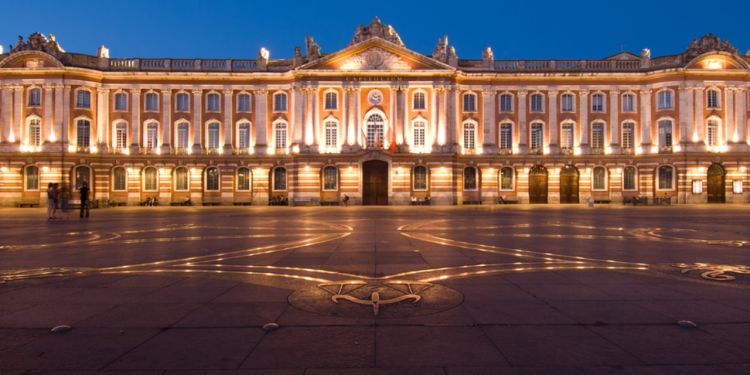
Study in Toulouse
With more than 100,000 students, Toulouse ranks as the fourth-top student city in France. Known for its warm, historic charm, Toulouse is also a key ...
Retiring in Toulouse: A Sunny Option for Your Golden Years
Toulouse is an increasingly popular retirement destination, combining a mild climate, excellent healthcare, rich culture, and lower costs than northern European cities. Non-EU retirees can settle in France through the Long-Stay Visitor Visa, while EU citizens enjoy freedom of movement.
Visa Requirements for Non-EU Retirees
Non-EU citizens wishing to retire in France must apply for the VLS-TS Visiteur (Long-Stay Visitor Visa equivalent to residence permit). Key requirements include demonstrating sufficient income – at least €1,400-1,800 per month from pensions, savings, or investments – along with private health insurance valid in France and proof of accommodation. The visa does not permit employment. After five consecutive years of residence, retirees may apply for a 10-year resident card (Carte de Résident), and French citizenship becomes possible after 10 years.
Healthcare and Cost of Living for Retirees
France offers one of the world's best healthcare systems. After approximately three months of residence, legal residents can register for PUMA (universal health coverage) and receive a Carte Vitale. Most medical expenses are reimbursed at 70%, with private supplementary insurance (mutuelle) covering the remainder. Toulouse's cost of living is particularly favorable for retirees, with housing, dining, and leisure significantly cheaper than Paris. The city's compact size, excellent public transport, and abundance of cultural activities make it easy to enjoy an active retirement without a car.
Sources: Service-Public.fr, VisaGuide.World
Schools for Children: International and Local Options
Families relocating to Toulouse will find a range of schooling options, from the French public system to international schools following British, American, or German curricula. The choice depends on the length of stay, language considerations, and educational preferences.
International Schools
The International School of Toulouse (IST) is the primary choice for English-speaking families. Founded in 1999 by Airbus to serve its international workforce, IST educates children aged 3-18 following the IB (International Baccalaureate) curriculum. The school is located in Colomiers, west of Toulouse city center, and is accredited by CIS and NEASC. Annual fees range from €15,930 to €27,295 depending on grade level and sponsorship status. The school represents over 30 nationalities, offering a truly international environment.
Bilingual and Local Schools
Mon École My School provides French-English bilingual education for children aged 2-11, with fees around €7,068-7,668 per year. Kaleidoscope École Bilingue offers immersive French-English education from age 3 to 11 in Plaisance du Touch. The Deutsche Schule Toulouse serves German-speaking families with an internationally recognized German curriculum. For families seeking integration into the French system, public schools in Toulouse are free and of good quality, with International Sections (Sections Internationales) available at certain schools including the Lycée Victor Hugo, offering bilingual tracks.
Sources: International School of Toulouse, International Schools Database
Housing in Toulouse: Neighborhoods and Rental Costs
Finding accommodation in Toulouse is more accessible than in Paris or Lyon, though the rental market has tightened in recent years due to the city's growing popularity. Understanding the different neighborhoods and their character will help you choose the right area for your lifestyle and budget.
Popular Neighborhoods for Expats
Saint-Cyprien on the left bank of the Garonne has emerged as one of Toulouse's trendiest areas, with a vibrant cultural scene, excellent restaurants, and the beautiful Prairie des Filtres park. Les Carmes offers medieval charm in the historic center, with narrow streets, boutiques, and the famous Marché des Carmes. Saint-Étienne is the upscale district near the cathedral, attracting professionals seeking elegance. Minimes, along the Canal du Midi, is popular with families for its quieter atmosphere and metro access. For those working at Airbus, Colomiers and Blagnac offer convenient commutes and access to the International School of Toulouse.
Rental Prices
The following table shows typical monthly rental costs in Toulouse.
1-bedroom apartment (city center) | €600 – €850 |
1-bedroom apartment (outside center) | €500 – €700 |
3-bedroom apartment (city center) | €1,000 – €2,000 |
3-bedroom apartment (outside center) | €924 – €1,200 |
Sources: Numbeo 2025
Rental contracts typically require proof of income (three times the rent), ID documents, and often a French guarantor. Many landlords work through agencies; popular platforms include SeLoger, Leboncoin, and PAP.
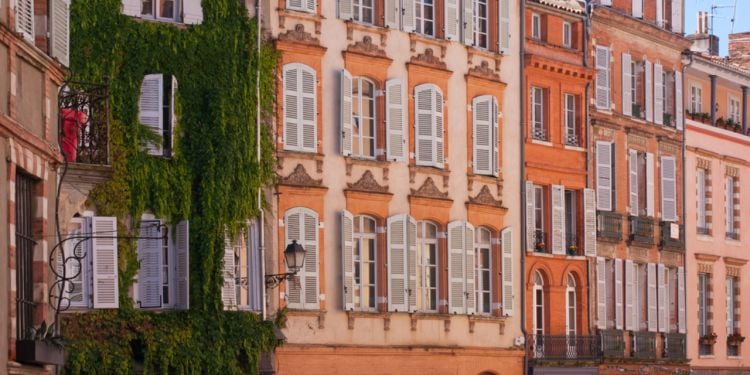
Accommodation in Toulouse
Located in southwestern France, in the Occitanie region, Toulouse is known as "la Ville Rose" (the Pink City). It's also close to the ...
Leisure and Culture: What to Do in Toulouse
Toulouse offers a rich cultural scene that reflects its history as a major center of learning and its modern identity as a technology hub. From world-class museums to vibrant nightlife, there is no shortage of activities for residents and visitors alike.
Museums and Attractions
The Cité de l'Espace is Toulouse's flagship attraction, a space exploration theme park featuring a life-size replica of the Ariane 5 rocket, the Mir space station, planetarium shows, and interactive exhibits. Admission costs approximately €29 for adults and €22.50 for children. Aviation enthusiasts should visit Aéroscopia near the airport, which houses historic aircraft including a Concorde and an A380. The Muséum de Toulouse is a natural history museum set in the beautiful Jardin des Plantes, while the Musée des Augustins showcases fine arts from the Middle Ages to the early 20th century in a stunning 14th-century monastery. The Couvent des Jacobins is famous for its unique palm-tree vaulted ceiling and houses the relics of Saint Thomas Aquinas.
Parks, Events, and Nightlife
The Canal du Midi, a UNESCO World Heritage Site, offers scenic walks, cycling paths, and boat cruises. The Jardin Japonais in Compans-Caffarelli provides a peaceful retreat. Toulouse hosts numerous festivals, including the Rio Loco world music festival and the Toulouse d'Été summer program. The Saint-Cyprien and Saint-Pierre neighborhoods are the heart of nightlife, with bars, live music venues, and restaurants open late. Rugby is a passion here; attending an Stade Toulousain match at the Stadium is an essential local experience.
Sources: Toulouse Tourisme, Cité de l'Espace

Things to see and to do in Toulouse
As the capital of the Midi-Pyrénées region, Toulouse, affectionately called "la Ville Rose" due to its red terracotta roofs, ...
Daily Life in Toulouse: Transport and Lifestyle
Toulouse offers a pleasant daily rhythm that balances professional life with the relaxed ambiance of southern France. The city's compact layout, efficient public transport, and Mediterranean-influenced culture make everyday living enjoyable and practical.
Public Transportation
The Tisséo network operates all public transport in the Toulouse metropolitan area. The system includes two metro lines (A and B), a tramway (T1), an extensive bus network with high-frequency Linéo routes, and the Téléo cable car connecting the university to the Oncopole hospital. In 2024, the network recorded over 200 million validations, a record since the pandemic. A third metro line (Line C) is under construction and scheduled to open in 2028, connecting Colomiers to Labège. A single ticket costs €2, while a monthly pass costs €56. The VélôToulouse bike-sharing system offers another convenient option with stations throughout the city.
Lifestyle and Culture
Life in Toulouse revolves around the city's beautiful public spaces. The iconic Place du Capitole serves as the heart of urban life, surrounded by cafés and restaurants. Markets are central to daily life, with the Marché Victor Hugo offering fresh produce, cheese, and regional specialties. The warm climate encourages outdoor dining and socializing well into the evening. Shops typically close between 12:00 and 14:00 for the traditional lunch break, with most businesses open until 19:00. Restaurants serve lunch from 12:00-14:00 and dinner from 19:30-22:00.

Getting around Toulouse
The greater Toulouse area features a well-developed transport network managed by the Tisséo transport company, including buses, metro, and ...
Cost of Living in Toulouse: Monthly Budget Guide
Toulouse offers a significantly lower cost of living compared to Paris, making it an attractive destination for expats seeking quality of life without capital-city prices. The following estimates provide a realistic monthly budget based on current data.
Monthly Budget for a Single Person
The table below outlines typical monthly expenses for a single person living in Toulouse.
Expense | Estimated Cost |
Rent (1-bed, outside center) | €550 – €650 |
Utilities (electricity, water, heating) | €120 – €160 |
Groceries | €250 – €350 |
Transport (monthly pass) | €56 |
Mobile phone + Internet | €45 – €50 |
Leisure and dining out | €150 – €250 |
Total (estimated) | €1,170 – €1,520 |
Monthly Budget for a Family of Four
Families should budget for additional housing, education, and daily expenses as shown below.
Expense | Estimated Cost |
Rent (3-bed apartment) | €1,100 – €1,500 |
Utilities | €160 – €230 |
Groceries | €600 – €800 |
Transport (2 passes) | €112 |
International school (per child) | €1,300 – €2,300 |
Health insurance (private top-up) | €150 – €300 |
Leisure and activities | €300 – €400 |
Total (estimated) | €3,700 – €5,700 |
Sources: Numbeo 2025
In Short
Toulouse stands out as one of France's most welcoming cities for international residents. Whether you're drawn by aerospace career opportunities, world-class universities, or simply the appeal of Mediterranean-influenced living at accessible prices, the Pink City delivers on all fronts. With its efficient public transport, diverse neighborhoods, excellent schools, and rich cultural life, Toulouse offers a quality of life that rivals much larger cities without their drawbacks. The local population is open and friendly, and the expat community – built largely around Airbus – is well-established and active. From the historic streets of Les Carmes to the modern aerospace facilities in Blagnac, Toulouse seamlessly blends past and future. Ready to take the next step? Join the Expat.com Toulouse forum to connect with other expats, ask questions, and start planning your move to southwest France.
We do our best to provide accurate and up to date information. However, if you have noticed any inaccuracies in this content, please contact us.


Essential services for your expat journey