

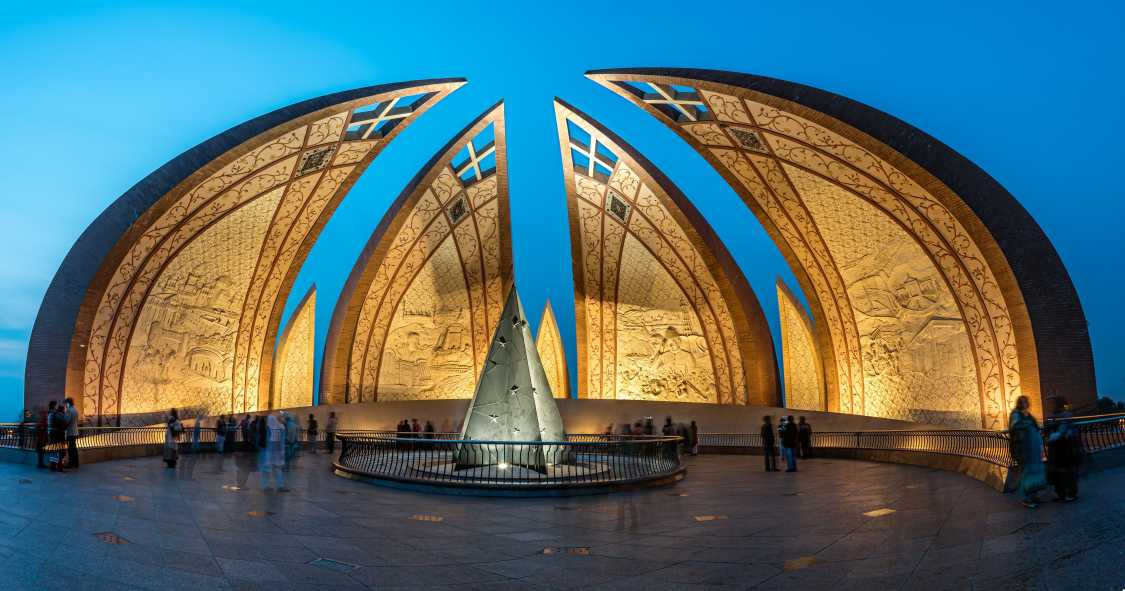
 Prepared by Julien Faliu on 13 October 2025
Pakistan, the world's fifth most populous nation with 255.2 million people, offers unique opportunities for international professionals and entrepreneurs. The country's strategic location in South Asia, young demographic profile, and growing economy make it an increasingly attractive destination. Since August 2024, Pakistan has significantly streamlined its immigration process with a free e-visa system for over 120 countries, making relocation more accessible than ever. With living costs approximately 80% lower than major Western cities and infrastructure development accelerating through initiatives like the China-Pakistan Economic Corridor, the country presents compelling prospects for those seeking adventure and opportunity.
5 Key Reasons to Relocate to Pakistan
- Exceptionally low cost of living: Living expenses run roughly 80% below London or New York rates, allowing expatriates to maintain a comfortable lifestyle while maximizing savings potential across housing, dining, and everyday expenses.
- Emerging market opportunities: A GDP of USD 411 billion with 2.68% growth creates openings in technology, construction, financial services, and infrastructure development, particularly through the China-Pakistan Economic Corridor.
- Substantial workforce: The world's sixth-largest labor force of 71.8 million workers provides businesses with access to skilled professionals and competitive operational costs for companies looking to establish regional operations.
- Spectacular natural landscapes: UNESCO World Heritage sites, Himalayan valleys featuring some of the world's highest peaks including K2, and adventure tourism destinations rival any mountain region globally.
- Simplified immigration: The introduction of free e-visas for 120+ countries in August 2024 has eliminated previous bureaucratic barriers, enabling faster entry and streamlined business travel arrangements.
Understanding Pakistan's demographics and economy helps frame expectations for relocating. Here are the essential indicators:
Total Population | 255.2 million (5th globally) |
Median Age | 20.6 years (very young population) |
Growth Rate | +2.55% annually |
Urban Population | 34.39% (87.8 million) |
Official Languages | Urdu (national), English (government) |
Currency | Pakistani Rupee (PKR) |
GDP 2024-25 | USD 411 billion |
Cost of Living Index | 19.92 (vs 100 for New York) |
Sources: Worldometer, Numbeo
Your setup journey
Guide in 12 steps. Click any step below to jump directly to the section you need.
01Best Cities for Expats
Choosing your Pakistani city depends on professional priorities, family needs, and lifestyle preferences. The three main metropolitan areas—Islamabad, Karachi, and Lahore—each offer distinct advantages. Islamabad appeals through tranquility and greenery, Karachi attracts for economic dynamism, and Lahore radiates cultural wealth. Other cities like Rawalpindi or Peshawar present interesting alternatives depending on your sector.
Islamabad: The Green Capital
With approximately 1.1 million inhabitants (2.4 million including Rawalpindi in the urban area), Islamabad was designed as a planned city in the 1960s. Its sector-based organization (F-6, F-7, F-8, E-7, G-6, G-7) facilitates navigation and ensures superior quality of life. Average rent for a three-bedroom apartment in city center reaches PKR 70,000-100,000. The city hosts reputable international schools including International School of Islamabad (ISOI), Roots Millennium, and Beaconhouse. Medical infrastructure includes Shifa International Hospital and Pakistan Institute of Medical Sciences (PIMS). Neighborhoods like Bahria Town Islamabad and DHA Islamabad offer high-end secure settings. The capital attracts diplomats, international civil servants, and senior executives. Key advantages are security, quality of life, proximity to Margalla Hills, and a calm, verdant environment.
Karachi: The Economic Powerhouse
Karachi, with 18 million inhabitants, is Pakistan's largest city and the world's seventh. A major economic center and the country's primary port, it concentrates opportunities in finance, commerce, and services. Average rents for three bedrooms range from PKR 60,000-90,000 outside premium zones. Sought-after neighborhoods include Clifton along the seafront, highly secure Defence (DHA) with numerous international schools, central and residential PECHS, and Gulshan-e-Iqbal for upper-middle classes. International schools like International School of Karachi (ISK), Karachi Grammar School (KGS), and Beaconhouse serve expatriate children. Reputed hospitals include Aga Khan University Hospital and Indus Hospital. Karachi suits professionals seeking opportunities in multinationals and financial sectors. Assets include cultural diversity and seafront location, though the city suffers from dense traffic, significant heat, and overcrowding.
Lahore: The Cultural Heart
With 11-13 million inhabitants, Lahore is considered Pakistan's cultural capital, rich in Mughal heritage and dynamic university scene. Average rents for three bedrooms vary from PKR 50,000-80,000 in city center. Desirable neighborhoods include Gulberg (central and commercial), highly sought Defence (DHA), established residential Model Town, and modern Bahria Town Lahore. The international school offering is exceptional with Lahore American School (LAS), Lahore Grammar School (LGS), Beaconhouse, Scarsdale, and The City School. Medical infrastructure includes Shaukat Khanum Memorial Cancer Hospital and Services Hospital. Lahore attracts education, culture, IT, and industry professionals. Strengths are rich cultural life, renowned cuisine, and impressive historical monuments. Pollution and traffic constitute primary drawbacks.
Other Cities Worth Considering
Rawalpindi, Islamabad's twin city with 2.1 million inhabitants, offers a commercial and military alternative with more affordable rents (PKR 30,000-60,000). It attracts middle classes, military personnel, and merchants through immediate proximity to Islamabad. Peshawar, with 2.3 million inhabitants, near Afghanistan, presents a marked Pashtun culture. It features Shaukat Khanum Hospital and universities, primarily attracting NGOs, aid workers, and regional commerce.
Explore our city guides
02Visas and Entry Requirements: The 2024 Game-Changer
Pakistan transformed its immigration landscape in 2024 with the introduction of a streamlined e-visa system. The Visa Prior to Arrival (VPA) program, launched in August 2024, provides free electronic visas to citizens of over 120 countries. This reform represents a significant shift for expatriates planning to work or live in Pakistan, eliminating previous bureaucratic obstacles. Citizens of the UK, USA, Canada, Australia, New Zealand, and most European nations can now obtain business and tourist visas quickly through an online platform.
Free E-Visa System
Since August 14, 2024, eligible nationals can obtain a free electronic visa valid for 90 days with multiple entries. Applications are processed through the official platform at visa.nadra.gov.pk with processing times of 24-48 hours. The system covers three main categories: Business, Tourism, and Pilgrimage. The PAK-ID mobile application, launched in February 2025, allows travelers to manage their documentation digitally. E-gates operate at nine international airports plus Gwadar Port for expedited immigration clearance.
Visa Exemptions and Special Cases
Citizens of GCC countries (United Arab Emirates, Bahrain, Saudi Arabia, Oman, Qatar, Kuwait) can enter without a visa for 90 days with multiple entries. The Maldives, Trinidad and Tobago, Vanuatu, Dominica, Haiti, and Saint Vincent and the Grenadines also enjoy this privilege. UN and Interpol passport holders are exempt, as are individuals holding the NICOP (National Identity Card for Overseas Pakistanis) or POC (Pakistan Origin Card). Turkish nationals with valid Schengen, UK, or US visas can obtain visas on arrival.
Work Permits and Long-Term Residence
Extended professional stays require a Work Visa obtained through Pakistani embassies or consulates. Required documents include a signed employment contract and a work permit issued by the Board of Investment (BOI). This permit is mandatory for any paid employment in the country. The Visitor Visa for family purposes requires an invitation letter from a Pakistani national and the sponsor's family documents (CNIC or NICOP). Several countries maintain bilateral agreements with Pakistan facilitating certain administrative procedures.
Online Application Process
The application begins by creating an account on the official platform. Applicants complete the DS-160 form and upload required documents: passport photo, passport copy (valid at least 6 months beyond application date), return ticket, and hotel reservation. After submission, the Visa Grant Notice typically arrives within 24-48 hours. This document must be presented to immigration authorities upon arrival. Police registration is required for certain nationalities, though hotels generally handle this automatically. Exit requires either a valid visa or an exit permit if your visa has expired.
03Employment and Business: Navigating the Market
Pakistan's employment landscape is evolving rapidly with emerging sectors and substantial youth entering the workforce. As the world's sixth-largest labor force, the country offers opportunities particularly for skilled professionals in technology, finance, and infrastructure development. However, challenges including regional disparities and a significant informal sector require careful consideration. Understanding the employment ecosystem and business registration process is essential for those planning to work or establish operations in Pakistan.
Labor Market Overview
The Pakistani labor market presents a dynamic but complex picture. Current employment statistics reveal the following landscape:
Total Labor Force | 71.76 million (6th globally) |
Employed Population | 67.25 million |
Overall Unemployment Rate | 5.5 to 6.3% |
Youth Unemployment (15-24) | 11.1% (44.9% of job seekers) |
Gender Disparity | Female 14.4% vs Male 10% |
Annual New Entrants | ~2 million young workers |
Minimum Wage (monthly) | PKR 30,000-32,000 (varies by province) |
Labor Productivity | USD 2.24/hour (2025 projection) |
Sources: Trading Economics, Statista, World Bank
Growing Sectors for Expatriates
Information technology is experiencing robust expansion with software development firms, call centers, and freelancing platforms generating increasing export revenue. The construction and infrastructure sector benefits from the China-Pakistan Economic Corridor (CPEC) investments and government mega-projects creating demand for engineering and project management expertise. Financial services are modernizing rapidly with fintech growth alongside traditional banking and insurance expansion. Textiles and garments remain economic pillars, employing substantial workforce numbers and driving export revenues. Agriculture, while largely informal, continues as a strategic sector supporting the economy.
Starting Your Business
Company registration proceeds through the Securities and Exchange Commission of Pakistan (SECP). Primary business structures include Sole Proprietorship, Partnership, Private Limited Company, and Public Limited Company. Essential steps include obtaining a National Tax Number (NTN) from the Federal Board of Revenue (FBR), registering for sales tax if applicable, and enrolling with social security organizations EOBI and PESSI. Local chambers of commerce, particularly the KCCI in Karachi and LCCI in Lahore, can assist foreign entrepreneurs. Timelines and costs vary depending on the business structure chosen and the province of establishment.
Join the discussion on the forum
04Housing: Neighborhoods and Market Prices
Pakistan's property market offers diverse options from modern apartments in secured compounds to standalone houses in established residential areas. Expatriates typically favor gated communities like DHA or Bahria Town, which ensure security and quality infrastructure. Rental rates vary considerably by city and neighborhood but remain generally affordable compared to Western standards. Islamabad commands the highest prices, followed by Karachi and Lahore.
Available Housing Types
Apartments range from studios to large three-bedroom-plus units, often in modern buildings with security. Standalone houses come in standardized sizes: 5 Marla, 10 Marla, or 1 Kanal (local measurement units). Villas in residential bungalow areas attract families seeking space and tranquility. Gated communities such as Defence Housing Authority (DHA) in Islamabad, Karachi, and Lahore, Bahria Town in multiple cities, or Emaar in Karachi concentrate much expatriate demand through their complete infrastructure and secured environments.
Preferred Neighborhoods by City
In Islamabad, sectors F-6, F-7, and F-8 offer central locations with shops and services, while E-7, G-6, and G-7 attract those seeking residential calm. Bahria Town Islamabad and DHA Islamabad guarantee modern, secure settings. In Karachi, Clifton borders the sea attracting affluent residents, Defence (DHA) concentrates international schools and commerce, PECHS provides a central residential environment, and Gulshan-e-Iqbal serves upper-middle classes. In Lahore, Gulberg combines commercial and residential aspects centrally, Defence (DHA) is highly sought-after with numerous international schools, Model Town offers an established residential setting, and Bahria Town Lahore stands out for modernity.
Average Rents and Property Purchase
Nationally, a one-bedroom apartment in city center costs PKR 25,000-35,000 monthly, versus PKR 15,000-20,000 in outlying areas. Three-bedroom units run PKR 50,000-70,000 centrally and PKR 30,000-45,000 outside. In Islamabad, the most expensive city, rents reach PKR 30,000-50,000 for one bedroom centrally and PKR 70,000-100,000 for three bedrooms. In Karachi, rates range from PKR 25,000-40,000 (one bedroom) and PKR 60,000-90,000 (three bedrooms), with premium sectors like Clifton or DHA exceeding PKR 100,000-300,000 for large properties. In Lahore, rents run PKR 20,000-35,000 for one bedroom and PKR 50,000-80,000 for three bedrooms. Property purchase prices vary widely: in certain DHA Karachi sectors, for example, rates can reach PKR 200,000-500,000 per square yard. The process typically involves a real estate agent, property title verification, and official registration.
05Monthly Budget: Understanding Living Costs
Pakistan ranks among the world's most affordable countries for living expenses. With a cost index of 19.92 versus 100 for New York, living in Pakistan costs approximately 80% less than major cities like London or Toronto. This difference applies across all spending categories: food, housing, transport, and leisure. However, international school fees and private health insurance can represent substantial budgets for expatriate families. Here's a detailed analysis of monthly expenses for a single person and a family of four.
Single Person Budget
Excluding rent, average monthly expenses for a single person total approximately PKR 102,473 (around USD 370/GBP 285/AUD 550) according to October 2025 data. Here's the breakdown of main expenses:
Expense Category | Monthly Amount (PKR) |
Rent 1-bedroom city center | 25,000 to 35,000 |
Food and groceries | 20,000 to 30,000 |
Utilities (water and electricity) | 5,000 to 10,000 |
Transport (fuel or monthly pass) | 3,000 to 5,000 |
Internet (60 Mbps+) | 3,000 to 5,000 |
Leisure | 10,000 to 20,000 |
Basic private health insurance | 2,000 to 5,000 |
Total with moderate rent | 80,000 to 120,000 |
Source: Numbeo (October 2025)
Family of Four Budget
For a family with two children, living costs increase significantly, particularly due to international school fees. Excluding rent, monthly expenses reach approximately PKR 327,083 (around USD 1,180/GBP 910/AUD 1,750). Here's the budget allocation:
Expense Category | Monthly Amount (PKR) |
Rent 3-bedroom city center | 50,000 to 70,000 |
Food and groceries | 50,000 to 70,000 |
Utilities | 10,000 to 20,000 |
Transport (fuel or driver) | 30,000 to 40,000 |
School fees (2 children, international) | 100,000 to 200,000 |
Leisure | 20,000 to 30,000 |
Family health insurance | 10,000 to 20,000 |
Total with rent and international school | 300,000 to 500,000 |
Source: Numbeo (October 2025)
City-by-City Variations
Islamabad remains the most expensive city with a cost index around 21-22, followed by Lahore (19-20) and Karachi (18-20). Cities like Rawalpindi, Faisalabad, or Multan offer even lower living costs (index 17-18). Restaurant prices range from PKR 250-500 for a local meal, PKR 800-1,500 at mid-range establishments, and exceed PKR 2,000 at upscale restaurants. A fast-food combo costs approximately PKR 500-700. Petrol prices run PKR 280-300 per liter as of October 2025.
06Healthcare: Public and Private Options
Pakistan's healthcare system operates through a mixed public-private model, largely decentralized to provincial governments following constitutional reforms. Inherited from the British Beveridge system, it shows significant disparities between urban and rural areas. Approximately 70% of the population uses private facilities, considered more effective but expensive. Expatriates should secure comprehensive international health insurance to supplement local options, as the public system faces resource constraints.
Public Healthcare Infrastructure
The public network comprises 1,201 hospitals, 5,518 Basic Health Units (BHUs), 683 Rural Health Centers (RHCs), 5,802 dispensaries, 731 Maternity & Child Health Centers, and 347 TB Centers, totaling 123,394 beds. The system operates in three tiers: primary care through BHUs and RHCs, secondary care in District Headquarters Hospitals (DHQ) and Tehsil HQ Hospitals (THQ), and tertiary care in university hospitals and specialized facilities. Despite this infrastructure, health spending remains below 1.2% of GDP, well under the 5% WHO recommendation.
Private Healthcare and Insurance
Private facilities generally offer superior care quality at higher costs. Reputable hospitals include Shifa International Hospital and Pakistan Institute of Medical Sciences (PIMS) in Islamabad, Aga Khan University Hospital and Indus Hospital in Karachi, and Shaukat Khanum Memorial Cancer Hospitals in Lahore, Karachi, and Peshawar. Private health insurance costs approximately PKR 15,000-50,000 annually for individuals and PKR 50,000-150,000 annually for families. Major insurers include Jubilee, EFU, and Adamjee. About 78% of the population pays out-of-pocket for healthcare, with less than 2% of households holding formal insurance.
Sehat Sahulat Program and Healthcare Workforce
The Sehat Sahulat Program (SSP), launched in 2015 in Khyber Pakhtunkhwa then expanded in 2019, aims to achieve Universal Health Coverage by 2030. This public insurance scheme provides free care to vulnerable families through a network of partner hospitals. However, the country faces critical medical personnel shortages, with only 105,950 nurses for 241.5 million people, well below WHO standards. Approximately 40% of medical graduates leave the country for overseas practice. Urban-rural disparities remain pronounced, with a composite health index showing the wealthiest districts are 16.59 times better off than the poorest. International health insurance is strongly recommended for expatriates, ideally including medical evacuation coverage.
07Tax System: Understanding Your Obligations
Pakistan operates a progressive tax system with rates revised annually through the Finance Act. Since July 2025, new brackets apply for individual income tax. Pakistan maintains over 70 tax treaties internationally, including agreements with the UK, USA, Canada, and Australia, preventing double taxation. Understanding your tax residency status is crucial, as it determines whether you're taxed on worldwide income or only Pakistan-source earnings.
Personal Income Tax
The Finance Act 2025, effective July 1, 2025, establishes new tax brackets for salaried individuals. Annual income up to PKR 600,000 is tax-exempt. Beyond this threshold, rates are 1% up to PKR 1,200,000, then 11% up to PKR 2,200,000, 23% up to PKR 3,200,000, 30% up to PKR 4,100,000, and 35% above that. High earners exceeding PKR 10 million face an additional 9% surcharge on calculated tax. The system operates through employer withholding. Tax residents pay on worldwide income, while non-residents are taxed only on Pakistan-source income. Treaty benefits apply for qualifying individuals from countries with bilateral agreements including the US (subject to FATCA reporting), UK, Canada, and Australia.
Consumption Taxes
Federal Sales Tax stands at 18% on goods and certain services. Provinces levy their own rates on services: 15% in Sindh (19.5% for telecommunications), 16% in Punjab (19.5% for telecommunications), with similar rates in Khyber Pakhtunkhwa and Balochistan. The 2025-26 budget introduced a new 2% Digital Transactions Proceeds Levy affecting e-commerce transactions.
Social Contributions and Local Taxes
Employers and employees contribute to the Employees Old-Age Benefits Institution (EOBI) for retirement benefits and the Provincial Employees Social Security Institution (PESSI) in certain provinces. Specific rates depend on the scheme and salary level. Property Tax varies by province and property valuation. Capital Gains Tax applies to real estate and securities transactions. Numerous Withholding Tax rates exist for different transaction types, detailed in the FBR Tax Card 2025-26.
Active Filer Status Benefits
Registration as an Active Filer provides significant advantages. Withholding tax rates are reduced: 3% versus 10% for non-filers on property transactions. Financial service access is also facilitated. To qualify, file your annual tax return before September 30 (individuals) or December 31 (companies). The Active Taxpayers List (ATL) is updated daily by the Federal Board of Revenue (FBR) and accessible on their website. Provincial Revenue Authorities like the SRB in Sindh and PRA in Punjab manage provincial taxes. US citizens should note FATCA compliance requirements apply to foreign accounts including Pakistani banking relationships.
Join the discussion on the forum
08Education: International Schools and Local Systems
Pakistan's education system provides multiple options for expatriate families, from local schools to prestigious international institutions. While the public sector offers free but variable-quality education, private national and international schools represent the preferred choice for expats. Pakistan hosts 31 IB World Schools and numerous institutions offering Cambridge or American curricula. The three major cities—Islamabad, Lahore, and Karachi—concentrate the bulk of international educational offerings.
Local System and International Curricula
The Pakistani system, inherited from the British model, offers Matriculation taught in Urdu or English. National private schools like Beaconhouse, The City School, and Roots provide solid education. For international curricula, Cambridge IGCSE and A-Levels dominate, accredited by Cambridge Assessment International Education. The International Baccalaureate (IB) operates in 31 schools, with 14 offering the IB Diploma and 8 providing all three programs. American curriculum (K-12 with Advanced Placement) exists in several schools accredited by the Middle States Association (MSA).
International Schools in Islamabad
The International School of Islamabad (ISOI), founded in 1965, offers American curriculum from Pre-K through Grade 12 plus IB Diploma. MSA and IB World School accredited, it charges approximately USD 8,000-15,000 annually depending on grade level. Roots Millennium Schools operate multiple campuses in Islamabad offering British programs (IGCSE, A-Levels) and IB for around PKR 300,000-600,000 per year.
International Schools in Lahore
Lahore American School (LAS), established in 1956, follows American curriculum and holds MSA accreditation. Annual fees run PKR 600,000-1,000,000. Lahore Grammar School (LGS) offers British programs across multiple campuses (Gulberg, Defence, Johar Town) for PKR 500,000-800,000 annually. Beaconhouse School System maintains numerous Lahore campuses with fees of PKR 300,000-500,000 per year. International School of Choueifat follows the SABIS program (PKR 500,000-800,000 annually), while Scarsdale International School combines American, IGCSE, and IB Diploma curricula (PKR 450,000-750,000 annually). The City School International provides British curriculum through its extensive network.
International Schools in Karachi and Overall Costs
International School of Karachi (ISK) in the Clifton area offers American curriculum. Karachi Grammar School (KGS) follows British programs for approximately PKR 400,000-700,000 annually. Beaconhouse School System operates multiple Karachi campuses (PKR 300,000-600,000 per year). Generally, premium international schools charge USD 5,000-20,000 annually (approximately PKR 800,000-3,200,000), while quality national private schools require PKR 200,000-600,000. Budget for additional expenses including registration, uniforms, school transport, and extracurricular activities.
09Relocation Planning: Essential Steps
Relocating to Pakistan requires careful preparation, from securing your visa to settling into accommodation. Administrative formalities, though simplified since 2024, demand advance planning. This practical guide outlines steps before departure and upon arrival to smooth your transition.
Pre-Departure Preparations
- Visa and documentation: Verify your passport validity (minimum 6 months), obtain your e-visa through the official platform, and keep copies of your employment contract and all important documents.
- Housing search: Browse local property websites like Zameen.com or OLX, contact agencies specializing in expatriate services, and arrange virtual tours via video call before arrival.
- International health insurance: Secure comprehensive coverage including medical evacuation, as the local healthcare system shows significant disparities.
- Vaccinations: Consult your physician and verify recommendations from health authorities in your home country for Pakistan (typically typhoid, hepatitis A and B, etc.).
- International moving: Compare international moving company quotes, research Pakistani customs regulations, and prepare detailed inventory of your belongings.
Post-Arrival Procedures
- Police registration: This mandatory formality for certain nationalities is typically handled automatically by your hotel during initial stay.
- Bank account opening: Bring your passport, visa, proof of address, and contact a local bank (HBL, UBL, MCB) or international institution (Standard Chartered, Citibank).
- NICOP/POC acquisition: If you have Pakistani heritage, these cards significantly ease administrative procedures and exempt you from visa requirements.
- Embassy registration: Register with your country's embassy or consulate to receive assistance if needed and security updates.
- Local SIM card: Obtain a mobile line from operators like Jazz, Telenor, Zong, or Ufone to facilitate local communication.
Driving License and Vehicle
An International Driving Permit is recommended initially. After obtaining your work permit, you can apply for conversion to a Pakistani license. If considering vehicle importation, note that customs duties are substantial. Purchasing locally may prove more economical. Driving is on the left, and urban traffic can be particularly dense and poorly organized in major cities.
10Daily Life Essentials
Settling in Pakistan involves adapting to a different environment, both in terms of transportation and consumer habits. Major cities offer increasingly modern service infrastructure, with delivery applications and payment methods becoming more digital. Understanding daily operations significantly eases integration and allows you to fully benefit from your expatriate experience.
Getting Around
Public transport is gradually developing. Lahore operates a metro line (Orange Line), while Islamabad continues developing its network. Bus Rapid Transit (BRT) systems function in Peshawar and along the Lahore-Rawalpindi-Islamabad corridors. Rickshaws and tuk-tuks remain ubiquitous with negotiable fares. Ride-hailing services like Uber, Careem, Bykea, and InDriver significantly ease urban travel. For personal vehicles, note that driving is on the left, urban traffic is dense and poorly organized, and petrol costs PKR 280-300 per liter as of October 2025. Many expatriates employ drivers to avoid local driving stress.
Shopping and Dining
Local markets (bazaars) offer fresh fruits, vegetables, meats, and produce at highly competitive prices. Modern supermarkets like Imtiaz, Metro, Hyperstar, and Naheed provide wide product selections in major cities. Food delivery apps like Foodpanda and Careem Now are highly popular and simplify daily life.
Telecommunications and Banking
Main mobile operators are Jazz (market leader), Telenor, Zong, and Ufone. Fixed-line internet via fiber optic is available in major cities, with 60 Mbps packages starting from PKR 3,000-5,000 monthly. For banking, local institutions include HBL, UBL, MCB, Meezan Bank (Islamic), and Habib Metro. International banks like Standard Chartered and Citibank have limited but expatriate-friendly presence.
Lifestyle and Cultural Considerations
Office hours typically run 9am-5pm, while shops stay open late into the evening. The weekend falls on Saturday and Sunday. During Ramadan, schedules shift and most restaurants remain closed during daylight hours. Climate varies considerably by region: summers are very hot in plains, while winters can be harsh in mountainous northern areas. Air conditioning is essential in most homes during summer months.
11Recreation and Discovery: Culture Meets Nature
Pakistan delivers exceptional cultural and natural richness, from millennia-old UNESCO archaeological sites to Himalayan peaks among the world's highest. History enthusiasts will appreciate Lahore's Mughal heritage and Buddhist remnants, while nature lovers find their calling in spectacular northern valleys. From sports to culture to adventure, the country offers varied experiences for all expatriate profiles.
Cultural Heritage and Historic Sites
Pakistan holds several UNESCO World Heritage Sites: the Fort and Shalimar Gardens in Lahore, Mohenjo-daro ruins in Sindh (Indus Valley civilization), Buddhist ruins of Takht-i-Bahi in Khyber Pakhtunkhwa, Rohtas Fort in Punjab, and the ancient city of Taxila. In Lahore, visit the Badshahi Mosque, Lahore Fort, Wazir Khan Mosque, Jehangir's Tomb, and Shalimar Gardens. Islamabad houses the majestic Faisal Mosque, South Asia's largest mosque, and the Pakistan Monument. In Karachi, explore Quaid-e-Azam's Mausoleum, Mohatta Palace, and relax at Clifton Beach.
Museums and Cultural Life
Lahore Museum, the country's oldest, displays a remarkable Gandhara art collection. The National Museum in Karachi traces subcontinent history, while Lok Virsa Museum in Islamabad showcases Pakistani folk heritage. Major cities offer restaurants, cafes, and modern shopping centers like Centaurus in Islamabad, Packages Mall in Lahore, and Dolmen Mall in Karachi. Cinemas, theaters, and cultural spaces animate urban life. Public parks like Fatima Jinnah Park in Islamabad and Lawrence Gardens in Lahore provide welcome relaxation spaces.
Sports and Outdoor Activities
Cricket is the national sport, with iconic stadiums including Gaddafi Stadium in Lahore and National Stadium in Karachi. Field hockey, squash, football, and polo are also widely practiced. For adventure enthusiasts, Pakistan is a premier destination for trekking and mountaineering, featuring legendary peaks like K2, Nanga Parbat, and numerous summits exceeding 7,000 meters. River rafting in the north, skiing at Malam Jabba in Swat Valley, mountain biking, and jeep safaris complete the sporting offerings.
Must-Visit Natural Destinations
Hunza Valley delivers breathtaking Himalayan landscapes, majestic glaciers, the snow-capped Rakaposhi peak, and stunning Attabad Lake. Skardu and Gilgit-Baltistan provide access to K2 base camp, crystalline alpine lakes, and the vast Deosai Plains. Swat Valley, nicknamed "the Switzerland of Pakistan," charms with verdant landscapes and Malam Jabba ski resort. Naran-Kaghan valleys and the legendary Lake Saif-ul-Mulook constitute other popular destinations. Murree, a hill station near Islamabad, offers an easy escape from the capital. The Karakoram Highway (KKH), the world's highest paved road connecting Islamabad to the Chinese border, provides a spectacular tourist route through extraordinary landscapes.
12At a Glance
Pakistan emerges as an unconventional expatriate destination, combining exceptionally low living costs, growing economic opportunities, and outstanding natural heritage. The 2024 visa reform has considerably eased settlement, while major cities now offer infrastructure and services meeting international standards. Quality international schools, secure residential neighborhoods, and a performing private healthcare system enable families to settle comfortably. If you're considering relocating to Pakistan, join the expat community on Expat.com's Pakistan forum to exchange experiences and practical advice with those who've already made the move.
Join the Pakistan community
Get regular tips and advice to make the most of your expat life
Essential services for your expat journey




Forum topics on living in Pakistan
Discover forums topics on expat life in Pakistan: join the conversation, ask your questions, get advice and share your experience.
- Mutta marriages
- Marrying a Pakistani man
- Moving to Pakistan from UK
- Romanian marriage
- Schools that pay in dollars or sterling? Advice pls.
- 5 good reasons for living in Pakistan
- Visa related stuff for marrying a pakistani man.Help?
- Online shopping in Pakistan
- Anyone taken the plunge of moving to Pakistan yet?!
- How much Jewelry I can carry to Pakistan from Saudi Arabia
- BRITISH BORN PAKISTANI MOVING TO PAKISTAN
- Marrying a Pakistani guy
- Pakistan man
- Travelling from Saudi Arabia to Pakistan carrying money and Gold...
- Best cities to live in Pakistan
- Pakistani national female want to marry with an Egyptian