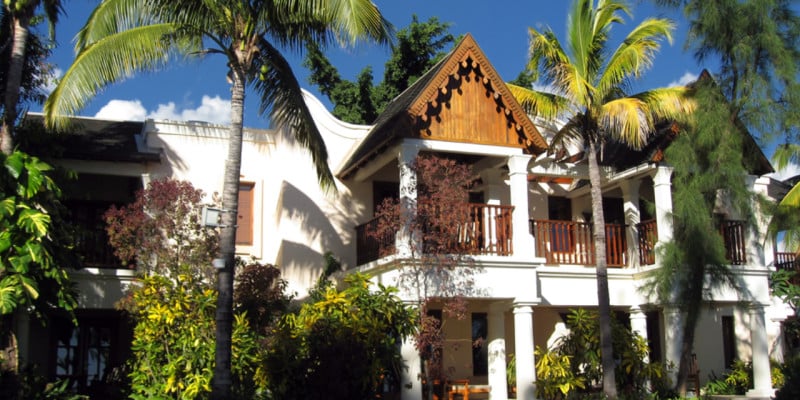
The different property schemes in Mauritius
The Property Development Scheme (PDS)
The Property Development Scheme (PDS) was introduced in 2015 to replace the IRS and RES frameworks. Its goal is to create environmentally friendly, high-end residential developments that foster sustainable economic and social integration.
This program is open to both foreign nationals and Mauritians, with a focus on:
- Compliance with ecological standards.
- Social diversity through shared spaces and community-driven projects.
- High-quality infrastructure and services (leisure areas, waste management, security, and maintenance services).
Projects under the PDS must be built on a plot of at least 5,275 m² and include a minimum of six luxury units (villas, penthouses, apartments, duplexes, or houses). Developments can extend up to 20 hectares.
Conditions and benefits
- Minimum investment for expats: USD 375,000 (or equivalent in convertible currency).
- Any purchase automatically grants a permanent residence permit to the buyer, their spouse, and dependent children, valid as long as the property is owned.
- Foreign residents holding a PDS-linked residence permit are not required to apply separately for an Occupation Permit to invest or work in Mauritius.
- Registration fees are fixed at 5% of the purchase price.
- At least 85% of the purchase price must be paid in Mauritian rupees, transferred from abroad. The remaining 15% may be settled in foreign currency (USD, EUR, GBP) or rupees.
- PDS projects may also include serviced plots (less than 2,100 m²). The option for non-citizens with residence permits to purchase such land has been extended until June 30, 2026.
Tax and financial advantages
- Income tax ranges from 0% to 20%, depending on income levels.
- No property tax, housing tax, or inheritance tax on real estate.
- No capital gains tax on resale.
- Free repatriation of profits and dividends in foreign currency.
Who can buy under the PDS?
The scheme is open to:
- Any individual (Mauritian citizen, non-citizen, or member of the Mauritian diaspora).
- Companies incorporated in Mauritius under the Companies Act 2001.
- Limited Partnerships registered under the Limited Partnerships Act.
- Trusts managed by a Qualified Trustee licensed by the Financial Services Commission.
- Foundations (under the Foundation Act 2012).
- Foreigners already holding an Occupation Permit or Residence Permit.
Acquisition process:
1. Purchase by an individual
The buyer must submit their application to the Economic Development Board (EDB) through a company specializing in PDS projects. This company conducts the KYC (Know Your Client) process and opens an escrow account.
Required documents:
- A certified copy of the first 5 pages of the passport.
- A birth certificate.
- A bank reference letter confirming KYC compliance.
- A police clearance and medical certificate (issued within 6 months).
- A marriage certificate and children's birth certificates for families.
2. Purchase by a company
Required documents:
- The certificate of incorporation or company registration.
- The shareholders' register.
- The board resolution authorizing the purchase.
- Documents identifying all Ultimate Beneficial Owners (UBO).
3. Purchase of commercial property in a PDS
Foreign nationals may also acquire offices, shops, or warehouses. The file must include:
- A business plan, a site plan, and a valuation report.
- Proof of funding from abroad.
- A notarized deed of sale.
- The local planning permission, if construction is involved.
The role of the notary
The Mauritian notary plays a central role in the process:
- Drafting and registering the deed of sale.
- Ensuring the transfer of 85% of the price in Mauritian rupees and the remaining 15% in foreign currency or rupees.
- Verifying the legality of the funds and their transfer.
- Collecting and remitting registration duties.
Payment schedule (VEFA – Off-Plan Purchase):
For off-plan acquisitions, payments follow the standard VEFA timeline:
- 25% upon signing the sales contract.
- 10% upon completion of foundations.
- 35% at the end of structural works.
- 25% upon completion of construction.
- 5% upon delivery.
Off-plan property purchase (VEFA)
The Vente en État Futur d'Achèvement (VEFA) framework allows expatriates to buy a property "off-plan", meaning before construction begins or is completed. Under this arrangement, ownership is transferred gradually as the project progresses, with payments scheduled according to a regulated timeline.
Mauritian law requires developers to provide a guaranteed completion bond (GFA), usually backed by a bank, in order to secure the funds invested. This protects buyers if the developer defaults.
Widely used in IRS, RES, PDS, and Smart City projects, VEFA gives foreign investors access to premium real estate at an initially lower entry price compared to completed units.
Who is VEFA designed for?
VEFA is particularly appealing to:
- Foreign investors seeking brand-new homes in structured developments.
- Buyers looking for more competitive prices at the time of purchase.
- Clients who want the ability to customize aspects of the property during construction, such as finishes and interior layouts.
- Investors aiming to qualify for a residence permit through property purchase, provided the project falls under an approved scheme.
Required formalities
The process usually starts with a pre-booking contract or reservation agreement, which records the buyer's commitment to purchase once the property is completed. This document must specify:
- The detailed description of the future property (surface area, location, common areas).
- The sale price and conditions for any revisions.
- The timeline for providing technical documents (plans, specifications).
- The estimated completion and delivery dates.
- Buyer's rights in case of delays or developer default.
- Conditions for withdrawal and refund of the deposit.
At this stage, the buyer typically pays a reservation deposit, held in escrow or by a notary, refundable if the developer fails to meet obligations.
Reservation deposit and contract signature
When signing the reservation contract, the buyer may be asked to place a deposit:
- Up to 2% of the sale price if the final deed will be signed later.
- Up to 25% if the deed will be signed within a year.
This deposit secures the property but does not yet confer full ownership rights.
Contents of the notarized sales contract (VEFA)
The final VEFA deed (notarized sales contract) must include:
- The exact description of the property (type, size, plans, finishes).
- The completion and delivery dates, expressed in months, including penalties for delays.
- Confirmation of planning and administrative approvals (building permit, compliance certificates).
- The sale price and agreed currency.
- The payment schedule linked to construction milestones.
- A completion guarantee (GFA), or failing that, a refund guarantee.
- Mandatory insurance policies (such as construction defect insurance).
All supporting documents (plans, specifications, general terms) must be given to the buyer at least one month before final signature.
Deposit handling
The reservation deposit is held in escrow or by the notary. Developers cannot use these funds until the sale is finalized. If the project fails to go ahead, the buyer is entitled to a full refund.
Final contract and transfer of ownership
The final sales contract is drafted by a notary and becomes the legal deed of ownership once construction is complete. It formalizes the obligations of both the buyer and the developer. The developer must provide the final contract early enough for the buyer to review it thoroughly before signing.
Delivery of the property
Delivery takes place when the developer hands over the keys. At this point, legal warranties come into effect:
- Perfect completion guarantee: covers all defects reported at delivery or within 12 months afterward.
- Two-year warranty: covers separable fixtures such as shutters, faucets, or equipment.
- Ten-year warranty: covers defects affecting the structural integrity or solidity of the building.
If the buyer lists reservations at delivery, the developer is obliged to fix the issues within an agreed timeframe. Hidden defects discovered within 12 months after handover also trigger the perfect completion guarantee.
Completion and refund guarantees
To protect buyers, the developer must provide a completion guarantee (GFA), typically backed by a bank or insurance company, which ensures funds will be available to finish construction if the developer defaults.
In the absence of a GFA, some contracts provide for a refund guarantee, where the developer reimburses amounts already paid by the buyer. In most cases, this cancels the sale.
Construction warranties
Once delivered, the buyer benefits from:
- A two-year warranty on separable items.
- A ten-year warranty covering structural defects.
- Construction defect insurance, taken out by the developer, which covers risks under the ten-year warranty.
Payment schedule
Payments are staggered according to the progress of construction. A typical schedule is:
- 25% at contract signing.
- 10% upon completion of foundations.
- 35% upon completion of roofing/watertight structure.
- 25% upon completion of construction works.
- 5% upon delivery.
Many developers adjust this schedule depending on the size of the project or specific contractual clauses.
Integrated Resort Scheme (IRS)
Launched in 2002 by the Mauritian government under the supervision of the Economic Development Board (EDB), the Integrated Resort Scheme (IRS) was the first real estate program to allow foreign investors to acquire luxury properties within fully serviced leisure estates. Originally designed to make use of large sugar estate lands, the scheme gave rise to prestigious developments such as villas, marinas, golf courses, beach clubs, and high-end residential complexes in carefully planned areas.
Under this framework, non-residents can purchase a range of properties: stand-alone villas, townhouses, penthouses, duplex apartments, or serviced plots. The maximum allowable plot size is generally capped at 1.25 arpents (≈ 5,276 m²). With a minimum investment of USD 375,000, the buyer and their dependents are eligible for a residence permit, valid as long as the property is owned.
As an IRS property owner, several rights are guaranteed:
- The option to rent out the property through the developer or a designated property management company.
- The possibility of becoming a tax resident if staying in Mauritius for at least 183 days a year.
- Free repatriation of rental income and resale proceeds.
- No requirement for an Occupation or Work Permit for non-citizens holding an IRS-linked residence permit.
A procedural fee of Rs 25,000 applies to every acquisition request under the IRS, covering the EDB's review of the application.
Who is it for?
The IRS primarily targets high-net-worth investors seeking a prestigious residence in a luxury setting, complete with integrated services and a strong focus on lifestyle. It appeals to those who want both a premium real estate asset and simplified access to Mauritian residency.
Acquisition process
- Signing a reservation contract with the developer, which secures the property for the buyer and specifies the terms (price, schedule, conditions).
- The developer submits the acquisition request to the EDB, attaching all required documents (plans, permits, proof of payment, ID, proof of funds, etc.).
- Once the EDB grants approval, the buyer and seller prepare the final sales contract, which must be signed before a Mauritian notary.
Key considerations and new rules
- Since December 13, 2024: All acquisitions under IRS (and similar schemes—RES, PDS, SCS, IHS) must follow the partial payment rule: 85% of the purchase price must be paid in Mauritian rupees to the developer, while the remaining 15% may be settled in foreign currency or rupees. This measure anchors part of the transaction in the local currency.
- From the Finance Act 2025: The registration duty for non-citizens buying under the IRS will increase from 5% to 10%. This applies to deeds registered after the law takes effect, even if a reservation contract was signed beforehand.
- New IRS projects are becoming increasingly rare. Most new real estate developments open to foreigners are now structured under the Property Development Scheme (PDS), which has effectively replaced earlier frameworks.
Real Estate Scheme (RES)
Introduced in 2007, the Real Estate Scheme (RES) was designed to allow smaller-scale property developments that were more accessible and less restrictive than those under the IRS. RES projects are built on smaller plots of land, ranging from 1 to 24 arpents (approximately 0.42 to 10 hectares), and must include at least six high-end residential units.
Unlike IRS properties, which require a minimum purchase of USD 375,000, the RES does not impose a minimum acquisition price. However, foreign buyers only qualify for a residence permit if they invest at least USD 375,000 in a project. Below this threshold, the RES still enables foreigners to own property in Mauritius, but without automatically gaining resident status.
Rights and benefits for RES property owners
The ability to rent out their property through the developer or a designated property management service.
- The possibility of becoming a tax resident in Mauritius, provided they meet the effective residence requirement (more than 183 days of stay per year).
- Free repatriation of rental income or proceeds from resale.
- Exemption, for non-citizens holding a residence permit through the RES, from the need to obtain a separate Occupation or Work Permit to invest or work in Mauritius.
Harmonized fees
Following the reform of real estate frameworks, procedural fees for RES applications have been standardized. Each application is now subject to a fixed fee of Rs 25,000, payable when submitting the file to the Economic Development Board (EDB).
Who is it for?
The RES is primarily aimed at expatriates with a more moderate budget compared to the IRS or PDS, but who still wish to own a high-standard residence in Mauritius. It is especially suitable for those who:
- Want to invest in a second home in Mauritius.
- Plan to live on the island for less than six months a year without applying for a residence permit.
- Prefer a premium residence within a smaller-scale, community-oriented development.
Acquisition process
Non-citizens, Mauritian citizens, companies, or trusts seeking to acquire property under the RES must follow these steps:
- Sign a reservation contract with the developer or current owner.
- The developer submits the RES acquisition application to the EDB for approval.
- Once the buyer receives the EDB's approval letter, the buyer and seller finalize the sales contract, which must be signed before a Mauritian notary.
Smart City Scheme (SCS)
The Smart City Scheme (SCS) was designed to position Mauritius as a modern, sustainable, and integrated business hub. The concept revolves around creating "smart cities" that combine residential areas, workplaces, retail outlets, leisure facilities, infrastructure, and connected services.
Recent reforms
The Finance Act 2025 introduced major changes to the Smart City framework:
- Projects certified after June 5, 2025, lose access to key tax incentives, including VAT exemptions on construction, the 8-year income tax holiday on rental income, and exemptions from customs duties, registration fees, and land conversion taxes.
- Projects where construction has already started or where building permits were granted before this date retain certain benefits, but only for phases already underway.
- Stricter environmental standards now apply: new Smart City projects must comply with sustainability benchmarks set by the EDB, including minimum quotas of green spaces and specific requirements for sustainable urban planning.
- Exemptions from land conversion charges and subdivision fees have been abolished for projects launched after June 5, 2025.
While the SCS remains a framework for developing high-end real estate, the tax advantages granted to new projects have been significantly reduced compared to the original regime.
Originally, each Smart City project had to:
- Cover large plots of land (more than 21,105 hectares).
- Integrate mixed-use development (residential, offices, retail, leisure).
- Optimize energy efficiency and promote sustainable standards.
- Allow retirees to acquire lifetime occupation rights.
- Reserve a share of housing for middle-income earners.
- Be open to citizens and the Mauritian diaspora (at least 25% of residential units).
- Give developers the ability to sell both residential and non-residential land.
- Establish a dedicated structure to manage common facilities (security, maintenance, connectivity).
Traditionally, investors in Smart City residential property enjoyed:
- Eligibility for a residence permit if the property was purchased for at least USD 375,000.
- The possibility of acquiring offices or commercial spaces, under specific conditions.
- A range of tax exemptions for companies involved in the development or operation of urban components (income tax, VAT, customs duties, registration charges, land conversion fees, subdivision costs, etc.).
Acquisition rules and residence
- Foreign buyers can acquire residential properties (villas, apartments, penthouses, duplexes, etc.) in a Smart City. If the purchase price is USD 375,000 or above, they qualify for a residence permit, valid as long as the property is owned.
- The purchase of serviced plots (up to 2,100 m²) for building a residence in a Smart City was previously available to non-citizens holding residence permits, but this option is now restricted to cases predating certain cutoff dates.
- The acquisition process follows the same framework as IRS or VEFA:
- The buyer signs a reservation contract.
- The developer submits the application to the EDB.
- The sale is finalized through a notarized deed.
Given the recent reforms, it is highly recommended that buyers check with the EDB for project-specific conditions before proceeding.
Ground+2 (G+2) apartments
A Ground+2 (G+2) apartment refers to a property located in a building with at least two floors above the ground floor. This real estate framework was introduced to allow non-citizens to invest in the Mauritian residential property market outside the large-scale IRS, RES, PDS, or Smart City schemes, with greater flexibility.
Under this regime, foreigners can acquire an apartment provided that the purchase price is at least USD 375,000 (or the equivalent in Mauritian rupees or freely transferable convertible currency). Once this threshold is met, the buyer and their family members qualify for a residence permit valid for as long as they retain ownership of the property. Authorities have also set a minimum entry threshold of Rs 6 million for eligibility under this program.
A G+2 apartment may be purchased off-plan, during construction, or after completion. To qualify, buyers must comply with specific formalities. First, the apartment must be used in line with the terms of the purchase authorization issued by the Economic Development Board (EDB). Moreover, owners cannot sell or transfer the property without prior EDB approval. A resale or transfer request must be submitted at least 30 days before the transaction. Real estate speculation is regulated: immediate resale within six months of acquisition is prohibited.
Each application is subject to a procedural fee of Rs 25,000. The transaction is subject to property taxes and duties calculated on the property's current market value. Since December 2024, payment rules require that 85% of the purchase price be paid in Mauritian rupees transferred from abroad, while the remaining 15% may be paid in convertible foreign currency or Mauritian rupees.
Starting July 1, 2026, the registration duty for non-citizens acquiring property under residential schemes, including G+2, will increase from 5% to 10%.
Invest Hotel Scheme (IHS)
The Invest Hotel Scheme (IHS) was introduced by the Mauritian government to allow foreign investors to purchase suites or hotel units in classified and approved establishments. The goal is to support the development of the tourism sector while offering investors a unique opportunity to combine real estate investment with hospitality.
How the scheme works
Under the IHS, a hotel developer may sell rooms, suites, or villas that form part of a luxury hotel complex. These units are then made available to the hotel for operational use under a lease or management agreement.
The buyer retains legal ownership of the acquired unit, while the daily management and operations are handled by the hotel operator. In return, the investor earns rental income proportional to the performance of the hotel, according to terms agreed with the developer and operator.
Benefits for investors
- Foreign investors qualify for a Mauritian residence permit if the acquisition price is at least USD 375,000 (or equivalent). The permit remains valid for as long as the property is owned.
- The hotel manages the unit, sparing investors from the responsibilities of maintenance or tenant management.
- Rental income generated through hotel operations is shared between the owner and the hotel based on a pre-agreed percentage.
- Owners may use their unit for personal stays for a limited period each year (typically between 45 and 90 days).
Who is it for?
The IHS primarily appeals to:
- Foreign investors seeking a hybrid product that combines real estate with hotel income.
- Expats wishing to own a second home in Mauritius while delegating all management responsibilities to professionals.
- Wealthy individuals or institutional investors looking for a secure entry into Mauritius' luxury tourism sector.
Formalities and financial rules
Amendments introduced in 2024 brought several changes to align the IHS with other EDB-regulated property schemes. The minimum investment for independent villas remains set at USD 500,000. No minimum purchase price applies to other unit types, such as hotel suites or apartments. Purchases by non-citizens must be financed through funds transferred from abroad via a bank recognized by the Bank of Mauritius. Local loans in Mauritian rupees are permitted, provided an initial payment of USD 500,000 in convertible currency is made.
Rules effective December 2024 require that 85% of the purchase price be settled in Mauritian rupees (converted from foreign currency), while the remaining 15% may be paid in either convertible foreign currency or rupees. From July 1, 2026, registration and transfer duties for non-citizens will rise from 5% to 10%, as outlined in the Finance Act 2025.
The acquisition process is as follows:
- The IHS company submits the acquisition request via the Property Acquisition Management System (PAMS), available on the National Electronic Licensing System (NELS), along with required documents and fees set by the EDB.
- Upon approval, the sale is formalized by notarial deed and registered under Mauritian law (standard practice across EDB schemes).
- Payments must follow the updated rules: 85% in rupees (transferred from abroad), 15% in rupees or convertible currency.
- Registration and transfer duties will increase to 10% for deeds registered on or after July 1, 2026 (with transitional protection for earlier acquisitions).
Good to know:
The IHS is now mainly reserved for high-end hotel projects, reinforcing Mauritius' premium tourism offering. Income generated by hotel operations is subject to the standard 15% corporate and income tax. With the rise of sustainable tourism, some IHS projects now incorporate eco-friendly standards and green certifications to attract an environmentally conscious international clientele.
Useful link:
EDB - Amendments to Property Regulations