

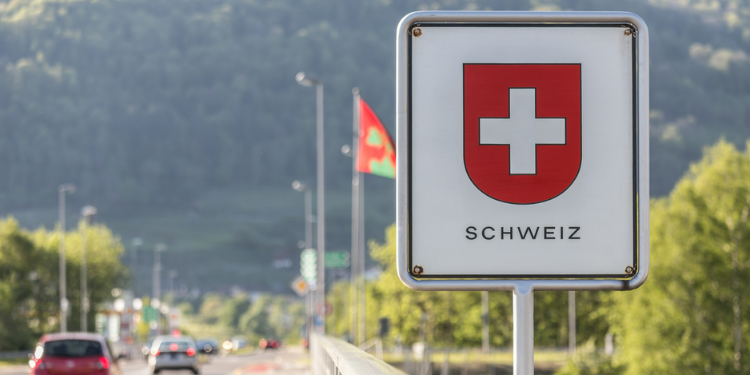
Switzerland is the most popular destination for cross-border workers. The Federal Statistical Office (FSO) points out that the country is home to some 343,000 cross-border workers coming mainly from France, Italy and Germany. But if that's an option you are considering, you need to pay particular attention to many factors, such as wages, the cost of living, healthcare, and other social benefits. So what does the life of a cross-border worker look like?
Cross-border working: Is it a good option to boost your career?
According to the European Parliament, a cross-border worker is a person who resides in one state and works in another. Unlike migrant workers, the cross-borders have double commitments, that is, to their place of residence and their workplace.
In this article
Join the community
Get regular tips and advice to make the most of your expat life
What should you expect as a cross-border worker?
Let's start with a brief overview of cross-border working in Europe. According to European legislation, a cross-border worker is someone who works in an EU country but returns every day, or at least once a week, in another country. To date, Germany, Belgium, Spain, Italy, Luxembourg, Monaco and Switzerland are deemed to be the ideal countries for cross-border work.
Eurostat figures from 2019 highlight that the EU was home to 11.4 million cross-border workers, that is 6% of the 191.5 million active population aged 20 to 64. Belgium had the highest rate, with more than one person in five, that is, 21% of workers going to work outside the country, followed by the Netherlands (13%) and Hungary (12%). Cross-border working is also quite widespread in Austria, Lithuania and Denmark, with around 11% of them.
You must be wondering whether cross-border working is a financially viable option. It's worth noting that cross-border workers are remunerated according to the policies of the country where they work. Let us take two examples, that of a French cross-border worker who works in Germany and that of a Belgian cross-border worker who works in France.
When French cross-border workers go to work in Germany, their salary depends on the time worked. It depends on whether he is employed with a contract and entitled to a monthly salary or if he gets an hourly salary, varying as per the type of work. French cross-border workers may also be eligible for profit-sharing, a supplementary pension, holiday bonuses, etc.
As for Belgian cross-border workers who go to work in France, their salary is subject to French social security. For instance, their salary should not be lower than the legal minimum wage (SMIC), the minimum wage provided for by the collective agreement applicable to cross-border workers, and that offered to French employees for equal positions. In addition, Belgian cross-border workers may be eligible for benefits in kind, holiday bonuses, 13th month, etc.
What are the benefits and drawbacks of being a cross-border worker?
Is the cost of living lower for cross-border workers? The answer naturally depends on several factors that need to be considered carefully, including transport-related expenses (in particular fuel if you use your personal car), road tolls, if there are any, and other costs (food, accommodation, etc.). ) if they do not return to their home country every day.
Employee contributions can also weigh very heavily in the balance. In France, for example, they account for around 22% of the gross salary. Add to that contributions to the social security fund, which are particularly high in some countries. Double taxation is also possible in the absence of an agreement between the cross-border worker's home country and the one where they are remunerated. You can find more information in Annex 3 of the document on Tax and social security regime for cross-border workers in the EU of the European Parliament.
Regarding healthcare, according to European Union provisions, cross-border workers working in one EU country but residing in another are entitled to health care in both countries. However, they have to register in the country where they work by requesting an S1 form (formerly E106 form) from their health insurance. Depending on the insurance, their family members are also entitled to healthcare if they reside in an EU country. However, cross-border workers residing in an EU country and working in Denmark, Ireland, Croatia, Finland, Sweden, the United Kingdom, Iceland, or Norway cannot extend their health cover to their family members except in case of emergency during their stay.
Regarding labor laws, cross-border workers are subject to one applied in the country where they work. For example, Belgian cross-border workers working in France will be subject to French labor law. Besides, the 2021 EU unemployment reform provides that cross-border workers who have been laid off must receive compensation in the country where they were working, except for Switzerland and Luxembourg (until the end of 2025).
What about bringing your car?
Cross-border workers who use their personal car to go to work need to meet specific conditions, the vehicle must be registered and taxed in the owner's country of residence.
The European Union points out that in the case of company cars, employers must inquire about any possibility of double taxation (registration tax) and the prohibition of the free movement of cross-border commuters in their country of residence with the company vehicle.
Therefore, cross-border work has its benefits and drawbacks that need to be considered carefully via reliable sources of information. But no need to give up on your international career plans. Choosing the right destination, for example, Switzerland or Luxembourg, where you can have a higher purchasing power, can work in your favor.

Comments
 hanselmar4 years agoPeople from Germany who work in Switzerland or Luxembourg have the advantage of higher salaries in the country where they work. On the other hand, they benefit from lower prices in their home country.The same is applicable to people from Poland who work in Germany. Basically, it is a good idea to work in another country. However, get information about taxation and health care beforehand.
Essential services for your expat journey

Choose the best health insurance
Protect your health and get easy access to treatment for expats.

Plan your international move
Facilitate your move by getting a quote from our top rated movers.

Open a bank account that suits you
Discover the best international banks to manage your money securely.

International life insurance
Simple term-life insurance covering you & your family across borders
Further reading
Move abroad and be your own boss: A growing trend
Can moving abroad help break gender stereotypes at work?
How continuous learning can boost your international career
Can expats be fired for an office romance?
How to rebuild your career when returning home from abroad
Working in South Korea is getting easier for skilled foreigners
How Europe is adapting work to extreme heat
Could sick leave cost you your job abroad?
Why technology matters for the future of businesses in Mauritius
Join the community
Get regular tips and advice to make the most of your expat life