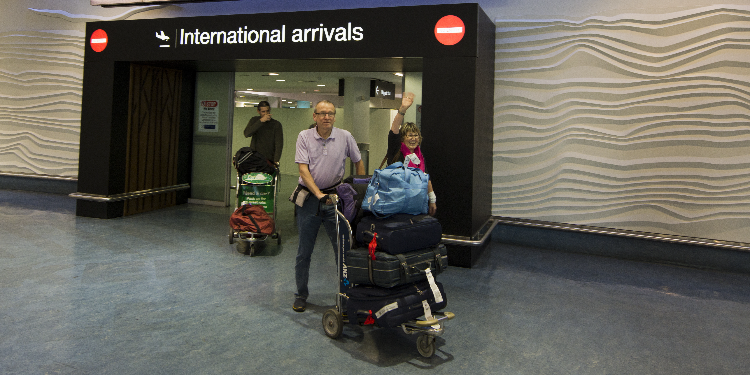
Borders reopen despite the new Covid hike
The government insists that borders are not reopening fully. Currently, more than 80% of the local population is vaccinated. It's clear that the Covid vaccination campaign has made significant progress. New Zealand is also the country with the strictest restrictions worldwide. The government can boast its strategy to contain the pandemic, compared to many countries. Besides, more than 90% of the eligible population is fully vaccinated (two doses).
But a new rise in the number of Covid cases has been noted since mid-February. On average, there were 715 cases on average on February 15, 7,500 on the 27th, with a daily peak of 15,016 cases, most of them due to the Omicron variant. These are the highest figures since the begining of the pandemic. This is a tricky situation for New Zealand as self-proclaimed "freedom convoys" from Ottawa, Canada, spread to the country. A rally degenerated on February 19, and 122 protesters were arrested. But the government remains firm on its position and will not consider postponing its reopening strategy. However, the first stages of the plan only apply to New Zealand nationals.
A 5-step reopening plan
Step 1: From February 27, fully vaccinated New Zealanders residing in Australia are allowed to return to New Zealand. They are required to self-isolate at home for 10 days. Hotel quarantine is no longer mandatory.
Step 2: From March 13, fully vaccinated New Zealanders residing elsewhere in the world will be able to return to New Zealand. This also applies to existing visa holders, especially working-holidayers and skilled workers earning at least 1.5 times the median wage.
Step 3: International students will only be able to travel to New Zealand from April 12. However, only 5,000 of them will be allowed into the country. Work visa holders will also be able to travel to New Zealand. Moreover, all international travellers have to be fully vaccinated.
Stage 4: From July, all Australian residents and travelers who do not need a visa to travel to New Zealand will be allowed, provided they have been fully immunized against Covid-19.
Step 5: Other travellers, including fully vaccinated tourists and expatriates will only be able to travel to New Zealand from October 2022.
What are the new entry requirements
As explained above, only fully vaccinated travellers (people who have been vaccinated for at least 14 days) will be allowed into New Zealand. For now "fully immunized" means having received at least two doses of a vaccine (except for single-dose Janssen vaccine). Besides being vaccinated and having a vaccination certificate, international travelers need a negative PCR test before their departure, and they are required to self-isolate for 10 days upon their arrival. There are chances that the isolation period is reduced to 7 days as the situation evolves. Upon their arrival in the country, travelers will receive three self-testing kits at the airport. The first test has to be carried out within the first 24 hours, followed by the second on day 5 or day 6. The third test is provided as a preventive measure. If a traveler is Covid-positive, they are required to get a PCR test done with a general practitioner or in a Community testing center.
On the other hand, new visa applications can be made from August 5, 2022, as announced on November 25, 2021. But there's hope that things will move faster with the return of working holidayers from March 13.
The country has implemented the vaccination pass as well as a color-based alert system to inform the population of the rules to be observed. Regardless of the alert level, the vaccination pass remains mandatory (green, orange or red). The vaccination pass is therefore requested at the restaurant, gym, hairdresser, and all places where people are likely to gather. But it's worth noting that the alert system varies depending on regions - each being free to adapt it according to the situation. The green color means that the situation is "near normal". The mask is only compulsory in certain places. When there is an orange alert, the mandatory wearing of masks is extended to more places/situations, and gatherings are limited. When there is a red alert, wearing a mask becomes compulsory everywhere, movement is limited, etc.
Tourists and expatriates will therefore have to wait until October to be able to travel to New Zealand. The arrival of the Omicron variant in December 2021 had already compromised the reopening plans, and the government prefers to remain cautious.