

 Prepared by Julien Faliu on 24 October 2025
Tucked between the Adriatic Sea and the rugged Balkan mountains, Montenegro is rapidly emerging as a prime expat destination. This compact nation of 632,729 people packs extraordinary diversity into its borders—UNESCO heritage sites, pristine beaches, and alpine peaks all within easy reach. With a GDP of USD 8.12 billion (2024) and steady growth projected through 2029, Montenegro combines economic stability with lifestyle appeal. The country uses the euro despite not being an EU member, eliminating currency risk for those earning or saving in European currencies.
5 compelling reasons to move to Montenegro
- Competitive tax regime with personal income tax capped at just 9-15%, significantly lower than most Western countries
- Cost of living 38.9% lower than the United States and well below Western European standards
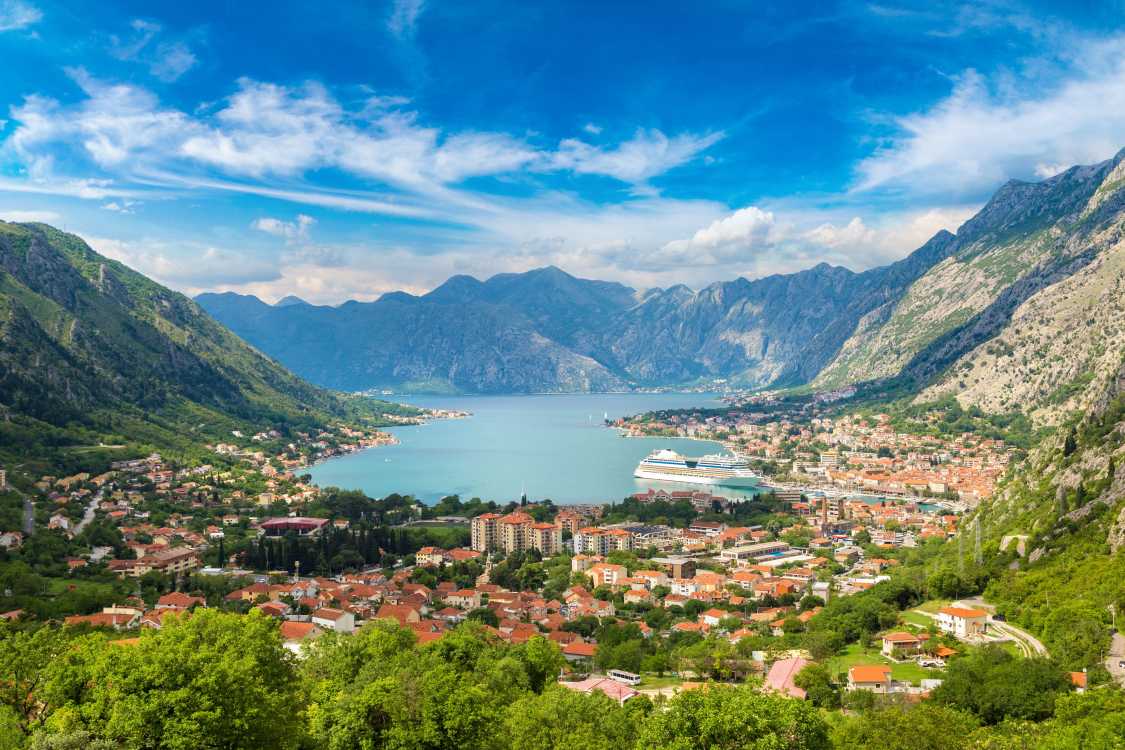
- Stunning natural beauty including UNESCO-listed Kotor Bay, Mediterranean coastline, and mountain ranges perfect for year-round outdoor activities
- EU candidacy status providing political stability and alignment with European standards
- Straightforward residency pathways for property owners, entrepreneurs, and remote workers
The expat community continues to grow, particularly in real estate and tourism sectors. Montenegro's multicultural fabric includes 45% Montenegrins, 29% Serbs, and various Bosniak, Albanian, and Croatian communities living harmoniously. The official language is Montenegrin, though Serbian, Croatian, Bosnian, and Albanian are widely spoken. English proficiency is growing, especially in coastal tourist areas and among younger professionals.
Here are the key facts about Montenegro:
Indicator | Value | Year |
Total population | 632,729 | 2025 |
GDP | USD 8.12 billion | 2024 |
GDP per capita | USD 10,093 | 2022 |
Currency | Euro (EUR) | 2025 |
Unemployment rate | 10.5% | Q2 2025 |
Average net salary | EUR 864 | 2025 |
Official language | Montenegrin | 2025 |
Sources: Worldometers, Statista, Numbeo
Your setup journey
Guide in 11 steps. Click any step below to jump directly to the section you need.
01Where to Live: City and Region Guide
Your choice of location in Montenegro will largely determine your quality of life and daily expenses. Each city and region presents distinct advantages depending on your priorities: dynamic urban life, coastal tranquility, mountain authenticity, or service accessibility. Here's a detailed overview of prime destinations favored by expats.
Podgorica: the evolving capital
As administrative and economic capital, Podgorica concentrates 30% of the national population with approximately 190,000 inhabitants. Often overlooked by tourists favoring the coast, it nonetheless offers practical and affordable living for expats working locally or starting businesses.
The city features modern infrastructure: shopping centers (Delta City, Mall of Montenegro), public hospitals and private clinics, universities, international schools. Downtown mixes Ottoman architecture, brutalist Yugoslav structures, and contemporary buildings. Residential areas like Stara Varoš or Nova Varoš offer renovated apartments in 1970s-80s buildings.
A two-bedroom city-center apartment rents for EUR 500-700 monthly; for purchase expect EUR 1,500-2,200/m². Peripheral neighborhoods like Gorica or Tolosi provide more space and greenery at 20% lower prices. QSI International School attracts expat families, guaranteeing quality English-language education.
Urban transport functions adequately with a bus network covering the metro area for EUR 1 per trip. Cars remain practical for exploring surroundings: Lake Skadar is 30 minutes away, the coast 1 hour. Podgorica International Airport, 10 kilometers from downtown, directly connects several European capitals.
Podgorica suffers from a reputation as a charmless city. Summers are very hot (regularly 35-40°C), winters cold and damp. Cultural offerings remain limited compared to Western standards. The city particularly suits professionals seeking low living costs, employment opportunities, and access to all services.
Budva: the Balkan Riviera
Montenegro's most famous beach resort, Budva massively attracts tourists and expats drawn by beaches, fortified old town, and animated nightlife. The permanent population of 20,000 triples or quadruples in summer, creating electric but sometimes overwhelming atmosphere.
The medieval old town, rebuilt after the 1979 earthquake, houses restaurants, shops, and galleries in a maze of cobblestone alleys. Beaches of Mogren, Slovenska, and Bečići line the riviera, some public, others privatized by hotel complexes. Beach bars and clubs along the coast make Budva Montenegro's party capital.
Real estate is the country's priciest: a two-bedroom city-center or sea-view apartment rents for EUR 800-1,200 in summer, EUR 600-900 off-season. For purchase, expect EUR 2,500-4,000/m² depending on sea proximity. New developments in surrounding hills offer modern villas with pools from EUR 350,000.
International supermarkets (Idea, Maxi), modern private clinics, and decent local schools facilitate daily life. However, lack of international schools poses challenges for families, requiring turns to KSI in Tivat (20 minutes) or QSI in Podgorica (1 hour).
Budva suits professionals in tourism, real estate, or remote work, who appreciate animation and accept summer crowds. Off-season (October-May), the city regains peaceful rhythm, many businesses close, but the mild climate allows sea enjoyment through November.
Kotor: UNESCO Bay jewel
A medieval gem nestled at the bay's end, Kotor captivates with exceptional heritage and breathtaking landscapes. The UNESCO-listed fortified old town forms a labyrinth of alleys, churches, and perfectly preserved Venetian palaces.
The permanent population of 13,000 swells considerably in summer with cruise ship arrivals (sometimes 10,000 visitors daily). This tourist overcrowding transforms the historic center into a seasonal theme park, with souvenir shops and premium-priced restaurants.
Housing in the old town itself proves rare and expensive: expect EUR 1,000-1,500 monthly for a character apartment, often damp and dark. Modern districts of Dobrota, Škaljari, or Prčanj along the bay offer more comfort for EUR 600-900 monthly. For purchase, old town prices reach EUR 3,500-5,000/m², EUR 2,000-3,000/m² in modern extensions.
Infrastructure remains adequate with supermarkets, pharmacies, medical center, and local schools. The nearest hospital is in Tivat (10 km). Proximity to KSI Knightsbridge School in Tivat benefits families.
Kotor attracts heritage lovers, hikers (fortifications dominating the city offer spectacular trails), and those seeking exceptional settings while accepting tourist constraints. In winter, the bay regularly veils in mist creating mysterious atmosphere, temperatures stay mild but luminosity is limited.
Tivat: modern marina town
Tivat, long overshadowed by neighbors, transformed with development of Porto Montenegro, a luxury marina attracting yachts and international jet-set. This transformation propelled Tivat among destinations favored by affluent expats.
The town of 14,000 has a very active international airport in summer, facilitating European connections. The historic downtown retains relaxed charm with a bayfront promenade, cafés, and restaurants. Porto Montenegro forms a separate enclave, with upscale residences, brand boutiques, gourmet restaurants, and premium services.
Real estate divides between standard and luxury markets. In Tivat-town, a two-bedroom apartment rents for EUR 600-900, for purchase EUR 2,000-3,000/m². At Porto Montenegro, prices soar: EUR 5,000-8,000/m² or more for penthouses, seasonal rentals at EUR 3,000-10,000 monthly depending on size and period.
Knightsbridge Schools International makes Tivat the preferred choice for expat families wanting British education for children. Porto Montenegro's private medical facilities rival Western standards. Well-stocked supermarkets and varied services ease daily life.
Tivat attracts yachting professionals, prosperous entrepreneurs, and families seeking an international environment in sublime natural setting. The town maintains human scale while offering sophistication and modern amenities.
Bar: port city on the rise
Montenegro's main seaport, Bar remains less touristy than neighbors, offering authenticity and accessible prices. Its 42,000 inhabitants live primarily from port trade, fishing, and local tourism. The city divides between modern Bar by the sea and Stari Bar, a ruined medieval citadel perched on hills.
Bar doesn't rival Kotor or Budva's charm, its architecture dates mostly from the Yugoslav era. However, it offers complete services (hospital, schools, supermarkets) at significantly lower prices. A two-bedroom apartment rents for EUR 400-600, for purchase EUR 1,200-1,800/m². Pebble beaches stretch several kilometers, less crowded than Budva's.
The city benefits from one of the country's mildest climates, with 270 sunny days annually. The port ensures regular connections with Italy (Bari), convenient for trips to Western Europe. Proximity to Albania (20 km border) and Lake Skadar offers varied excursion options.
Bar suits tight budgets, retirees seeking tranquility and mild climate, or families accepting less picturesque environment for reduced living costs. Lack of international schools limits appeal for some expat families.
Herceg Novi: authentic northern bay charm
At Kotor Bay's entrance, Herceg Novi cultivates distinct identity, less touristy and more residential. Its 30,000 inhabitants enjoy subtropical climate enabling cultivation of mimosas, bougainvilleas, and even palms. The town tiers up steep slopes, connected by countless stone-carved staircases.
The historic center mixes Venetian, Ottoman, and Austro-Hungarian fortifications, testifying to rich history. The 7-kilometer seafront promenade, named Pet Danica, invites seaside strolls. Pebble beaches and concrete platforms alternate with some sandy coves.
Real estate remains affordable: EUR 500-800 monthly for a two-bedroom city-center apartment, EUR 1,800-2,800/m² for purchase. Houses with gardens in surrounding hills offer calm and panoramic views for EUR 150,000-300,000 depending on size and finishes.
Herceg Novi has adequate infrastructure with regional hospital, local schools, supermarkets, and animated daily market. Atmosphere is more local than Budva, restaurant and service prices reflect resident rather than tourist clientele. Proximity to Croatia (Dubrovnik 40 km) benefits weekly shopping or cultural outings.
The town particularly attracts retirees and remote workers appreciating authenticity, mild climate, and preserved setting without sacrificing urban amenities.
Ulcinj: Albania's gateway with endless beach
Montenegro's southernmost city, Ulcinj distinguishes itself with marked Albanian atmosphere (Albanian-speaking majority) and its interminable beach. Velika Plaža, 13 kilometers of fine sand, attracts kitesurfers and families with young children thanks to shallow waters.
The fortified old town dominates the sea, its well-preserved Ottoman architecture offering glimpses of more pronounced Oriental influence than elsewhere in Montenegro. The fishing port animates the waterfront with fresh fish restaurants at unbeatable prices.
Real estate remains the coast's most affordable: EUR 350-550 monthly for a two-bedroom apartment, EUR 1,000-1,500/m² for purchase. This accessibility attracts a limited but growing expat community, mainly retirees and kitesurfing enthusiasts.
Infrastructure remains basic: medical center rather than hospital, limited supermarkets, no international school. Albania's proximity (10 km border) enables accessing supplementary services in Shkodër. The climate is the country's hottest, ideal for sun lovers.
Ulcinj suits very tight budgets, water sports athletes, and those seeking immersion in different, more Oriental culture, accepting relative isolation from the rest of Montenegro.
Žabljak and Kolašin: mountain Montenegro
For mountain and winter sports enthusiasts, Žabljak and Kolašin represent radical alternatives to coastal life. Žabljak, at 1,450 meters altitude, the Balkans' highest town, serves as gateway to Durmitor National Park. Its 2,000 permanent inhabitants live primarily from winter and summer (hiking) tourism.
Real estate is very accessible: EUR 250-400 monthly for an apartment, EUR 800-1,200/m² for purchase. Mountain houses with land are found from EUR 50,000. Winters are harsh with abundant snow November through April, summers cool and pleasant.
Kolašin, larger (8,000 inhabitants) and at moderate altitude (960 meters), offers more services while retaining mountain appeal. Kolašin 1450 ski resort operates December through March. In summer, surrounding forests become playgrounds for hikers and mountain bikers.
These destinations suit nature lovers, mountain sports enthusiasts, and those fleeing summer heat. Professional opportunities limit to tourism sector. Remoteness (2.5 hours from Podgorica, 3 hours from coast) and winter isolation require genuine mountain vocation.
02Visas and Residence Permits: Your Entry Guide
Montenegro maintains a relatively open immigration policy, especially for EU citizens and holders of certain international visas. Whether you're planning a short tourist visit or long-term relocation, understanding your visa options is essential for a smooth transition.
Visa exemptions for short stays
EU and EEA citizens enjoy visa-free entry for up to 90 days within a 180-day period using just a valid passport or national ID card. This exemption extends to holders of valid Schengen, US, Canadian, UK, Irish, Japanese, Australian, or New Zealand visas, who can stay up to 30 days without additional paperwork.
Citizens of several other countries receive automatic 90-day visa exemptions: Azerbaijan, Belarus, Kazakhstan, Kuwait, Qatar, Russia, Saudi Arabia, Turkey, and Vanuatu. This liberal policy reflects Montenegro's ambition to boost tourism and attract international investment.
Visa categories explained
For those requiring visas, Montenegro offers several categories based on travel purpose and duration. Visa A covers airport transit only, allowing you to remain in the international zone without officially entering Montenegro, valid for up to 90 days.
Visa B serves land transit purposes, permitting stays of up to 5 days per passage, with total visa validity extending up to 6 months. This works well for travelers passing through Montenegro en route to other Balkan destinations.
Visa C is the standard short-stay visa for tourism or business, valid for up to 90 days. Visa D applies to extended stays exceeding 90 days, with validity up to 365 days. This long-stay visa often serves as a stepping stone to formal residence permits.
Application process
Visa applications must be submitted in person at the nearest Montenegrin embassy or consulate. Standard processing takes 10 business days, though this can extend to 30 days if additional verification is needed, or exceptionally to 60 days for complex cases.
Required documents include a completed application form, passport valid at least 3 months beyond your planned departure date, recent passport photo, proof of sufficient financial means, and travel health insurance covering medical expenses and repatriation.
Temporary residence: settling in Montenegro
The temporary residence permit, called Privremeni boravak, is issued for one year and renewable annually. Several grounds qualify you for this permit, each suited to different expat profiles.
Employment provides the most straightforward path: a work contract with a Montenegrin employer suffices. Administrative fees run approximately EUR 70-100, with processing taking 30-45 days. This option guarantees immediate professional integration into the local economy.
Property ownership offers an attractive alternative. Unlike many countries, Montenegro imposes no minimum investment threshold. Purchasing any residential property, regardless of value, qualifies you for temporary residence. Fees range from EUR 100-120, with 30-50 day processing. This route requires maintaining at least 11 months annual presence in Montenegro, with absences up to 3 months allowed after prior notification.
Entrepreneurship works well for self-employed professionals. Establishing a local company (DOO) with a symbolic minimum capital of just EUR 1 and appointing yourself as managing director grants access to residency for around EUR 70-100. This appeals to consultants, freelancers, and independent business owners.
The new digital nomad status, introduced in 2025, targets remote workers. It requires minimum monthly income and applies to professionals working remotely for foreign companies. Fees are EUR 100-120 with 30-50 day processing. This positions Montenegro competitively in the growing digital nomad market.
Students enrolled in accredited institutions can obtain permits for EUR 50-80 with quick 20-30 day processing. Family reunification allows spouses, minor children, and dependent parents of citizens or residents to join for EUR 70-100.
An unusual option exists for yacht owners with official marina berth contracts. This permit requires near-permanent presence, with maximum absences of 30 days (extendable to 90 days upon request).
Regardless of grounds, applications require a valid passport, proof of financial means, accommodation confirmation (rental contract or property deed), valid health insurance, and clean criminal record from your home country. Overall processing averages 30-50 days.
Permanent residence and citizenship
Permanent residence status, or Stalni boravak, becomes available after 5 years of continuous legal residence with temporary permits. Absences must not exceed 10 months total or 6 consecutive months during this period. Requirements include a clean criminal record, proof of stable accommodation and income, and basic language skills (if required). This permit is issued for 5-year renewable periods, with processing up to 60 days.
Montenegrin citizenship requires 10 years total legal residence: 5 years temporary plus 5 years permanent. The citizenship-by-investment program, which offered expedited naturalization through real estate investment, ended on December 31, 2022 and has not been renewed.
For specific questions about your situation, the official Montenegrin government portal provides updated administrative information.
Join the discussion on the forum
03Working in Montenegro: Jobs and Business Opportunities
Montenegro's job market is evolving positively, driven by tourism, real estate, and service sectors. The unemployment rate of 10.5% in Q2 2025, down from 11.2% the previous quarter, shows encouraging trends. The active workforce numbers 311,800 people, with 89.5% in salaried positions.
Salary expectations
The average gross monthly salary stands at EUR 1,198, translating to approximately EUR 864 net after taxes and social contributions. The median salary reaches EUR 1,032, indicating relatively even income distribution. While these figures fall below Western European standards, they align with proportionally lower living costs.
Minimum wages vary by education level. Workers with secondary education or below earn a minimum of EUR 670 gross monthly (EUR 532 net). University graduates receive a minimum of EUR 800 gross. A notable tax advantage: the first EUR 700 of gross salary is completely tax-exempt, significantly reducing the burden on lower incomes.
Promising sectors for expats
Tourism and hospitality dominate the economy, accounting for over 25% of GDP. The summer season generates strong demand for qualified staff, particularly in roles requiring foreign language skills. Coastal resorts in Budva and Kotor actively recruit experienced hospitality professionals.
The real estate sector continues robust growth, fueled by international investor interest. Agencies seek multilingual sales agents, while construction projects employ project managers and architects. Ongoing development of residential and tourist complexes along the coast maintains steady demand.
Information technology is emerging as a growth sector. The government actively encourages tech companies to establish operations, creating opportunities for developers, software engineers, and cybersecurity specialists. IT salaries often exceed the national average, with competitive packages for qualified profiles.
Financial services are expanding alongside the economy. Banks, insurance companies, and consulting firms recruit experts in finance, accounting, and analysis. The country's EU candidacy stimulates this sector, requiring professionals capable of navigating international regulations.
Education represents a niche for qualified teachers, particularly in international schools. Positions teaching English or other European languages are regularly available, often with conditions aligned to international standards.
Here's an overview of average salaries by sector in 2025:
Sector | Average monthly salary | Level |
Information technology | EUR 1,500-2,500 | High |
Finance and banking | EUR 1,200-1,800 | Medium-high |
Tourism and hospitality | EUR 800-1,400 | Medium |
Real estate | EUR 900-1,600 | Medium |
Education | EUR 700-1,200 | Medium |
Retail and sales | EUR 700-1,100 | Medium-low |
Sources: Remote People, Rivermate
Work permits and employment conditions
EU citizens enjoy privileged status: they can work in Montenegro without prior work permits, though residence permits remain necessary for stays exceeding 90 days. For other nationalities, employers must obtain work permits from competent authorities before your arrival.
Employment contracts must be written in Montenegrin and comply with local Labor Code. The legal workweek is 40 hours, with a minimum of 20 days annual paid leave. Employees benefit from 11 national holidays. Overtime is limited to 8 hours weekly and must be compensated at minimum 30% premium.
Starting a business in Montenegro
Entrepreneurship attracts many expats thanks to favorable tax environment and simplified procedures. The most common legal form is the DOO (Društvo sa ograničenom odgovornošću), equivalent to an LLC. The symbolic minimum capital of just EUR 1 makes establishment accessible to all.
Registration typically takes 5-10 days through the Central Registry of Business Entities (CRPS). Required documents include company bylaws, proof of registered office address, and founders' identification. Registration fees run approximately EUR 60-100.
Corporate tax rates remain attractive at 9% for profits below EUR 100,000, and 15% above that threshold. Employer social contributions amount to approximately 10.3% of gross salary. Certain activities benefit from tax incentives, particularly in special economic zones or for job-creating investments.
Preferred sectors for expat entrepreneurship include business consulting, web development, import-export, and tourism services. Multilingual capabilities provide major advantages, enabling service to international clients while operating from a country with reduced operational costs.
04Housing: From Coastal Apartments to Mountain Retreats
Montenegro's property market offers remarkable diversity, from urban apartments to coastal villas and mountain homes. Prices vary dramatically by location, with proximity to the sea remaining the key determinant. The market serves both renters and buyers, with attractive opportunities across budgets.
Renting: flexible expat choice
Renting is the preferred solution for initial settlement, allowing exploration of different regions before potential purchase. Contracts typically sign for minimum one year, with renewal options. A security deposit equivalent to 1-2 months' rent is standard.
In Podgorica, a city-center studio rents for EUR 300-450 monthly, a two-bedroom apartment EUR 500-700. Peripheral residential areas see prices drop 20-30%, offering more space for equivalent budgets.
On the coast, rates climb significantly. In Budva, expect EUR 500-800 for a city-center two-bedroom, EUR 800-1,200 for a three-bedroom with sea view. Kotor shows similar prices in the old town, slightly lower in modern districts.
Individual villas with gardens rent for EUR 1,000-2,500 monthly depending on size, location, and standard. Luxury properties with pools and direct beach access can reach EUR 3,000-5,000 in high season, but become more affordable on annual leases.
Seasonality heavily impacts coastal rental markets. Short-term summer rentals generate substantial income, pushing some owners to favor this market. Consequently, long-term rental supply tightens from May to September in beach resorts.
Property purchase: investing in real estate
Buying property in Montenegro remains accessible compared to Western Europe, with prices per square meter 40-60% lower. Foreigners can purchase freely, without restrictions, except agricultural or forest land requiring special authorization.
In Podgorica, new city-center apartments sell for EUR 1,500-2,200/m², older properties for EUR 1,000-1,500/m². A 70m² apartment thus costs EUR 70,000-150,000 depending on standard and exact location.
The coast commands significantly higher prices. In Budva, new developments ask EUR 2,500-4,000/m², with peaks at EUR 5,000/m² for luxury seafront residences. An 80m² apartment with Adriatic views costs EUR 200,000-400,000.
Kotor and Tivat, benefiting from bay prestige and Porto Montenegro marina, show similar or higher rates for premium properties. Individual villas start at EUR 300,000 for simple properties, easily exceeding one million euros for exceptional residences.
Developing areas like Bar, Ulcinj, or mountain regions offer more affordable opportunities. A recent Bar apartment costs EUR 1,200-1,800/m², a house with land in the hinterland can be found from EUR 50,000-80,000.
Purchase process and associated costs
Real estate purchase follows a relatively simple procedure. After price agreement, a preliminary contract signs before a notary with deposit payment (typically 10% of price). Legal checks include confirming cadastral ownership, absence of charges or mortgages, and building permit compliance.
The final contract signs before notary, followed by cadastral registration within weeks. Total acquisition costs represent approximately 5-7% of purchase price: 3% transfer tax, 1-2% notary fees, 1% registration fees, plus attorney fees if you engage one (1-2% additional).
Engaging a local real estate attorney is strongly recommended to secure the transaction. Some areas, particularly new tourist complexes, present complex legal situations with unresolved ownership disputes from the Yugoslav period.
Property types and characteristics
Montenegrin architecture mixes Venetian, Ottoman, and Yugoslav influences. In old towns like Kotor or Perast, apartments occupy historic stone buildings, often tastefully renovated but with reduced floor space. High ceilings and thick walls guarantee natural summer coolness.
Modern construction favors 3-6 story buildings with underground parking, elevators, and common areas. Finishes vary considerably: decent standards in mid-range to high-end materials (marble, parquet, home automation) in premium new programs.
Coastal villas often adopt Mediterranean style with red tile roofs, spacious terraces, and landscaped gardens. Mountain properties, notably around Žabljak or Kolašin, recall alpine chalets with wood cladding and large bay windows.
Ownership charges and taxes
Monthly condo fees range from EUR 0.50-1.50/m², covering common area maintenance, security if applicable, cold water, and sometimes collective heating. An 80m² apartment thus generates charges of EUR 40-120 monthly.
Annual property tax varies from 0.25% to 1% of cadastral value, typically lower than market value. For a property valued at EUR 150,000 (cadastral value often around EUR 100,000), annual tax runs EUR 250-1,000 depending on municipality.
Home insurance remains affordable: EUR 100-300 annually for comprehensive coverage including fire, water damage, theft, and liability.
Join the discussion on the forum
05Cost of Living: Budget Breakdown
Montenegro's cost of living runs significantly below Western Europe and North America while maintaining satisfactory service and comfort levels. Expenses vary considerably by residence location: the Adriatic coast proves pricier than inland areas, and tourist zones charge premium rates in high season. Here's a detailed analysis based on August 2025 data.
Single person budget
A single person living in Montenegro can expect comfortable quality of life on a reasonable monthly budget. Housing represents the major expense, followed by food and transport. Figures below correspond to standard living without particular excesses, in a medium-sized city.
Expense category | Monthly amount |
Rent 1-bedroom apartment city center | EUR 488.89 |
Utilities (electricity, water, gas, internet) | EUR 108.81 |
Groceries and food | EUR 250.00 |
Transport (monthly pass or fuel) | EUR 35.00 |
Dining out (4-6 times/month) | EUR 100.00 |
Entertainment and subscriptions | EUR 80.00 |
Mobile phone | EUR 15.00 |
Healthcare (insurance and routine costs) | EUR 100.00 |
Total monthly | EUR 1,177.70 |
Source: Numbeo (August 2025)
This EUR 1,177.70 budget enables comfortable living in a medium-sized city. In Podgorica or on the coast, add 20-30% for housing. Conversely, in rural areas or secondary cities, you can reduce this budget by 15-25%.
Family of four budget
A family with two children naturally requires a larger budget, primarily due to more spacious housing and school fees if choosing international education. The following table presents typical expenses for a four-person household maintaining a Western European equivalent lifestyle.
Expense category | Monthly amount |
Rent 3-bedroom apartment city center | EUR 919.23 |
Utilities (electricity, water, gas, internet) | EUR 180.00 |
Groceries and food | EUR 600.00 |
Transport (family vehicle) | EUR 200.00 |
Schooling 2 children (local school) | EUR 100.00 |
After-school activities and recreation | EUR 200.00 |
Dining out and family outings | EUR 150.00 |
Phones and subscriptions | EUR 40.00 |
Healthcare (family insurance) | EUR 300.00 |
Miscellaneous and contingency | EUR 150.00 |
Total monthly (local school) | EUR 2,839.23 |
International school supplement (2 children) | + EUR 1,500.00 |
Total with international school | EUR 4,339.23 |
Source: Numbeo (August 2025)
School choice dramatically impacts family budgets. Montenegrin public schools, free or nearly free, work well if your children master the language or are young. International schools, though expensive (EUR 8,000-15,000 per child annually), guarantee pedagogical continuity and English or other European language instruction.
Daily living reference prices
Beyond major budget categories, here are some 2025 prices for better visualizing daily living costs. A meal at an inexpensive restaurant costs EUR 7-12, a fast-food combo EUR 6-8, dinner for two at a mid-range restaurant EUR 35-50.
A cappuccino runs EUR 1.50-2.50, a local beer (0.5L) EUR 2-3 at a bar, a table wine bottle EUR 5-10 at the supermarket. Bread (500g) costs about EUR 0.80, milk (1L) EUR 1, a dozen eggs EUR 2-2.50, chicken (1kg) EUR 5-7, potatoes (1kg) EUR 0.70-1.
A city bus ticket sells for EUR 1-1.50, taxis start at EUR 1.50 plus EUR 0.80-1/km. Gasoline 95 sells around EUR 1.45-1.60/liter, diesel EUR 1.40-1.55/liter, similar to European prices.
A cinema ticket costs EUR 5-7, monthly gym membership EUR 25-40, men's haircut EUR 8-15, women's EUR 15-30. International brand clothing shows prices aligned with Europe, while local products remain more affordable.
Comparison with major cities
Overall, Montenegro's cost of living sits 30-40% below major Western cities like London, Sydney, or Toronto. Rent represents the most significant savings, particularly in Podgorica compared to these metropolitan areas. Food costs about 20-30% less, especially for local and seasonal products.
Services (restaurants, haircuts, repairs) show rates 40-50% lower, reflecting local wage levels. Conversely, imported goods, electronics, brand clothing, and new vehicles present similar or slightly higher prices due to import taxes.
A professional earning EUR 2,500 net in Montenegro enjoys purchasing power equivalent to USD 4,000-4,500 in the United States or GBP 3,500-4,000 in the UK, thanks to reduced costs and advantageous taxation. This differential explains the country's growing appeal to remote workers and retirees.
06Healthcare: Navigating Public and Private Systems
Montenegro's healthcare system operates on a mixed model combining universal public coverage with an expanding private sector. While infrastructure doesn't yet match Western European standards, the country is investing heavily in modernizing facilities and training medical personnel.
Public health insurance
The public system, managed by the Health Insurance Fund, covers all citizens and permanent residents. Employees contribute automatically through social deductions (8.5% employee, 5.5% employer), providing access to basic care, hospitalization, and emergency treatment.
Expats on temporary residence generally aren't covered by the public system unless employed by a Montenegrin company. In that case, mandatory contributions grant the same rights as nationals. The network includes health centers in each municipality, regional hospitals in Podgorica, Nikšić, and Herceg Novi, plus Podgorica Clinical Center concentrating specialized services.
Wait times for specialist consultations or non-urgent procedures can be lengthy, particularly in rural areas. Language barriers pose challenges: few public sector doctors speak fluent English, making consultations sometimes complex for expats.
Private sector expansion
Private clinics are multiplying, especially in coastal tourist areas and Podgorica. They offer quality comparable to European standards, with often multilingual staff and modern equipment. Rates remain well below Western European levels: general consultations cost EUR 30-50, specialist consultations EUR 50-100.
Facilities like Medico Policlinic in Podgorica or Diagnostički centar in Budva provide comprehensive examinations and care. For surgical procedures, rates vary by complexity: expect EUR 1,000-5,000 for routine operations, versus double or triple in the UK or Australia.
International health insurance: essential coverage
International health insurance is essential for most expats, guaranteeing optimal coverage and access to private care without financial constraints. Policies typically cover consultations, hospitalization, medications, and often include repatriation assistance.
Annual premiums start around EUR 800-1,200 for basic individual coverage, rising to EUR 2,000-4,000 for comprehensive family plans. International insurers like Cigna Global, Allianz Care, or April International offer expat-adapted plans, with worldwide or Europe-limited coverage options.
For those from countries with reciprocal healthcare agreements, verify what coverage extends to Montenegro. Generally, it's advisable to supplement any home country coverage with local or international insurance for complete protection.
Pharmacies and medications
Pharmacies, identifiable by green crosses, are ubiquitous. Major cities have 24-hour pharmacies. Common medications are readily available, often without prescription for minor treatments. Prices remain reasonable: generic antibiotics cost around EUR 5-15, basic painkillers EUR 2-5.
Specialized or newer medications may require importation. It's wise to bring a supply of your regular medications when relocating, accompanied by prescriptions translated into English. Some medications available in your home country may require prescriptions in Montenegro, and vice versa.
Dental and optical care
Private dental care offers attractive rates: cleaning costs EUR 30-50, fillings EUR 40-80, ceramic crowns EUR 200-400. Many expats and medical tourists take advantage of these prices for expensive procedures in their home countries.
Opticians offer complete glasses (frames + lenses) from EUR 80-150, eye exams cost around EUR 20-30. Contact lenses are also available at competitive prices.
07Tax System: Competitive Rates That Work in Your Favor
Montenegro's tax system stands out for its simplicity and some of Europe's lowest rates. This deliberate policy aims to attract foreign investors and stimulate economic activity. The 2025 reforms further enhanced competitiveness, confirming Montenegro as a fiscally advantageous destination for expats.
Personal income tax
Income tax follows a progressive scale that's remarkably gentle. Annual income up to EUR 8,400 is taxed at just 9%, among Europe's lowest rates. Above this threshold, the rate increases to 15%, still well below European standards where rates often peak at 40-50%.
An advantageous measure applies to employees: the first EUR 700 of monthly gross income is completely tax-exempt. For a salary of EUR 1,200, only EUR 500 is taxable, significantly reducing effective tax burden. This exemption particularly benefits middle and lower incomes.
Tax residents are taxed on worldwide income, while non-residents pay tax only on Montenegrin-source income. Tax residency is established after 183 days of presence on territory during a calendar year, or if your center of economic and personal interests is in Montenegro.
Social security contributions
Social contributions split between employer and employee. Employers contribute 10.3% of gross salary, covering health insurance (5.5%), unemployment insurance (1%), and pension (3.8%). Employees contribute 24%, including pension (15%), health insurance (8.5%), and unemployment insurance (0.5%).
Self-employed individuals pay contributions on their declared income base, at similar rates. They must remit contributions monthly, with some flexibility in calculating their base.
VAT and consumption taxes
Montenegro's VAT applies multiple rates by goods and services. The standard rate of 21% applies to most products and services. A reduced rate of 7% covers basic necessities (bread, milk, meat, fruits, vegetables), medicines, books, newspapers, and tourist accommodation services.
Since 2025, certain services benefit from a special rate of 15%, notably restaurant services and certain cultural activities. Exports and international transactions are generally exempt, facilitating cross-border commercial activities.
Corporate income tax
Corporate tax rates remain among Europe's most competitive. Companies earning annual profits below EUR 100,000 are taxed at 9%. Above this threshold, the rate rises to 15%, still well below European averages ranging from 20-30%.
Additional tax incentives exist for companies operating in special economic zones or investing in strategic sectors. Newly established companies may benefit from temporary exemptions under certain conditions, particularly if creating local employment.
Property and real estate taxes
Property tax applies to real estate owners, whether residents or non-residents. Rates vary by location and property type, typically ranging from 0.25% to 1% of cadastral value. Coastal municipalities often apply slightly higher rates due to tourism appeal.
When purchasing property, a transfer tax of 3% of the sale price applies. This one-time tax covers registration with the cadastre. New properties purchased directly from developers may be subject to VAT rather than transfer tax.
Other notable taxes
The vehicle tax varies by engine power and vehicle age, with annual amounts ranging from EUR 30-300. Electric vehicles benefit from exemptions encouraging ecological mobility.
Capital gains on securities and real estate are taxed at 9%, with possible exemptions if the property is held over 10 years or if it's your primary residence sold after 2 years of ownership.
Tax treaties
Montenegro has signed tax treaties with numerous countries to prevent double taxation. These treaties typically allocate taxation rights to the country of tax residence. It's advisable to consult a tax expert to optimize your situation, especially if you maintain income sources in your home country. For US citizens, FATCA compliance requirements apply regardless of residence location.
Join the discussion on the forum
08Education Options: Local and International Schools
Montenegro's education system follows a classic European model, combining a free public system with developing private international offerings. Expat families have several options depending on their linguistic and pedagogical needs, with quality varying between public and private institutions.
Local education system
Compulsory education runs from ages 6 to 15, covering primary and lower secondary school. The primary cycle lasts 9 years, divided into two phases: years 1-5 in general education, then years 6-9 with specialized subjects. Upper secondary education spans 3-4 years depending on track (general, technical, or vocational).
Montenegrin public schools are free and reasonably good, particularly in major cities. Instruction is in Montenegrin, which poses a significant challenge for non-native children. Some schools offer bilingual programs or language support classes, facilitating gradual integration.
University education divides into Bachelor (3-4 years), Master (1-2 years), and Doctorate (3 years) cycles. The University of Montenegro in Podgorica remains the reference institution, offering programs in sciences, engineering, medicine, and humanities. Tuition stays modest: EUR 1,000-3,000 annually by faculty, well below European standards.
International schools
Expat families typically favor international schools, guaranteeing pedagogical continuity and instruction in English or other European languages. Options remain limited but quality is improving.
QSI International School of Montenegro in Podgorica follows the American curriculum and accepts students from kindergarten through high school. Recognized by the US State Department, it delivers English-language education aligned with international standards. Tuition ranges from EUR 8,000-12,000 annually by grade, generally including textbooks and certain extracurricular activities.
Knightsbridge Schools International (KSI) in Tivat, near the coast, represents a prestigious British alternative. This establishment offers the English curriculum with options to prepare for IGCSE and A-Level examinations. Focus is on academic excellence and personal development. Fees range from EUR 10,000-15,000 annually, with boarding options available for secondary levels at approximately EUR 25,000-30,000 per year all-inclusive.
Several bilingual schools are emerging in tourist areas, offering mixed Montenegrin-English or Montenegrin-Russian instruction, serving a diverse expat population. While their fees remain more accessible (EUR 3,000-6,000 annually), pedagogical quality requires case-by-case evaluation.
Childcare and extracurricular activities
Public nurseries and kindergartens accept children from age 1, with monthly fees around EUR 100-200. Private nurseries offer bilingual supervision and modern infrastructure for EUR 300-500 monthly, with often long waiting lists in popular areas.
Extracurricular activities are developing gradually: music lessons, sports (football, basketball, swimming), arts. Local sports clubs offer training for EUR 30-80 monthly, while private music lessons cost approximately EUR 20-40 per session.
Degree recognition
Montenegro participates in the Bologna Process, guaranteeing mutual recognition of university degrees in the European space. Degrees obtained in Montenegro are generally recognized in other countries, subject to equivalency validation by competent authorities.
For secondary diplomas, including high school graduation certificates, an equivalency procedure may be necessary to pursue higher education abroad. Check with the Montenegrin Ministry of Education for specific procedures.
09Relocation Planning: Your Move Made Simple
Moving to Montenegro requires careful preparation to ensure smooth transition. Between customs formalities, transporting belongings, and settling in, each step deserves attention. Here's a comprehensive guide to orchestrate your arrival efficiently.
Pre-departure checklist
- Verify travel documents: Ensure passports are valid at least 6 months beyond your planned arrival date. Make certified copies of all identity documents, birth certificates, diplomas, and medical certificates. These copies will serve various administrative procedures.
- Obtain your visa or residence permit: Begin procedures several months ahead at the Montenegrin embassy or consulate. Prepare all required supporting documents (proof of income, health insurance, criminal record). If arriving visa-free, plan to regularize your situation promptly upon arrival.
- Arrange international health insurance: Choose coverage suited to your needs, effective from arrival. Check exclusions, deductibles, and reimbursement limits. Good insurance avoids nasty surprises in medical emergencies.
- Organize your finances: Inform your bank of your expatriation to avoid card blocks. Open a Montenegrin bank account upon arrival to facilitate local transactions. Research international transfer conditions to optimize fees.
- Cancel or suspend contracts: Utilities, internet, phone, home and auto insurance in your home country require cancellation or suspension depending on your situation. Keep cancellation proof to avoid subsequent billing.
- Handle tax matters: Declare your tax residence change to home country authorities. Research your Montenegrin tax obligations and double taxation treaties. A tax advisor can help optimize your situation.
- Prepare personal belongings: Sort possessions into what you're bringing, selling, storing, or donating. International movers charge by volume or weight, so reducing belongings significantly cuts costs. Photograph valuables for transport insurance.
- Arrange belongings transport: Compare quotes from several international movers specializing in Balkans. Sea freight via container costs less but takes longer (4-8 weeks), direct road transport is faster (1-2 weeks) but pricier. Verify insurance covers full belongings value.
- Anticipate customs formalities: Personal effects and household furniture from your primary residence can import duty-free if you prove residence change. Prepare detailed inventory with value estimates, your residence permit, and Montenegrin address proof.
- Prepare children's transition: Enroll them in their future school, obtain school records and translated report cards if needed. Plan an adaptation period and possibly language support classes to ease integration.
- Transfer medical records: Obtain copies of medical histories, vaccinations, current prescriptions, recent test results. Translate them into English to facilitate exchanges with Montenegrin medical staff. Bring a supply of regular medications for initial months.
- Plan your arrival: Book temporary accommodation for your first weeks while finding permanent housing. Rent a car or plan local transport. Establish an essentials shopping list for immediate setup.
Belongings transport options
Several solutions exist depending on volume and budget. Sea container shipping proves economical for large volumes. A 20-foot container (33m³) from Western Europe costs EUR 2,000-4,000, a 40-foot container (67m³) EUR 3,500-6,000. Transit time varies 4-8 weeks depending on embarkation port and Italian transit necessity.
Direct road transport suits medium volumes and guarantees faster delivery. Expect EUR 3,000-8,000 for a full truck depending on distance. Shared truck (groupage) reduces costs to EUR 1,000-3,000 for 15-25m³, with 1-3 week timelines.
For small volumes, express courier shipping (like DHL, FedEx) works for important documents and first-necessity items, at EUR 50-200 depending on weight and urgency.
Personal vehicle: import or local purchase
Importing your vehicle requires paying import tax calculated by age, engine size, and CO2 emissions. For a car under 5 years old, this tax can represent 20-30% of vehicle value, sometimes making the operation financially uninteresting.
Buying a local used vehicle avoids these complications. The market offers wide choice at reasonable prices: a 5-7 year old compact sells for EUR 5,000-10,000, a recent SUV EUR 15,000-30,000. New vehicles benefit from prices similar to the rest of Europe.
First days on the ground
Upon arrival, several priority procedures arise. Opening a bank account immediately facilitates transactions and bill payments. Major banks like Crnogorska komercijalna banka, NLB Banka, or Hipotekarna banka regularly serve expats and offer services in English.
Subscribe to a local phone plan to stay reachable. Operators Telenor, Crnogorski Telekom, and m:tel offer unlimited mobile internet packages for EUR 10-20 monthly. A temporary prepaid SIM costs EUR 5-10, ideal before choosing a definitive plan.
Installing utilities in your accommodation (electricity, water, internet) typically takes under a week after request. Electricity provider EPCG serves the entire territory, internet operators like m:tel or Telenor provide fiber connections in urban areas for EUR 20-40 monthly.
Join the discussion on the forum
10Lifestyle and Recreation: Making the Most of Montenegro
Montenegro packs extraordinary cultural and natural wealth into its compact territory. Between the Adriatic Sea, rugged mountains, and historic heritage, activities abound for exploring this multifaceted country. Cultural life, while modest compared to major European capitals, develops constantly with festivals, exhibitions, and year-round events.
Heritage and historic sites
Kotor Bay, a UNESCO World Heritage site, ranks as the country's must-see destination. This spectacular bay, often compared to a fjord, harbors preserved medieval towns. Kotor old town itself, enclosed in Venetian ramparts, invites wandering through cobblestone lanes, Romanesque churches, and Renaissance palaces. Climbing the 1,350 steps to Saint John's Fortress rewards with breathtaking bay views.
Perast, a picturesque waterside village, charms with baroque palaces and two islets: Saint George's Island with its monastery, and Our Lady of the Rocks, an artificial island hosting a 17th-century chapel. A short boat ride enables visiting these maritime sanctuaries.
Ostrog Monastery, clinging to a vertical cliff face, represents the country's most visited religious site. This Orthodox pilgrimage site impresses equally by its spectacular position and spirituality. The access road winds through striking mountain landscapes.
Budva old town, though touristy, retains undeniable charm with ramparts, medieval churches, and animated squares. Stari Bar, a ruined fortified city, recounts 2,000 years of Ottoman and Venetian history at Mount Rumija's foot.
National parks and nature
Montenegro counts five national parks, offering infinite possibilities for hiking, outdoor sports, and wildlife observation. Durmitor National Park, in the north, displays summits exceeding 2,000 meters, glacial lakes, and black pine forests. The Tara River Canyon, Europe's second deepest after France's Verdon Gorges, cuts through the park for 82 kilometers. Rafting constitutes a signature activity, accessible May through September.
Biogradska Gora National Park protects one of Europe's last primeval forests, with 500-year-old trees. Lake Biograd, at the park's heart, features a 3.5-kilometer walking trail, ideal for family outings.
Lovćen National Park, near Kotor, houses the mausoleum of Petar II Petrović-Njegoš, Montenegrin poet and ruler. Perched at 1,660 meters altitude, the site offers panoramic views of the entire country in clear weather.
Lake Skadar, the Balkans' largest lake, forms a unique ecosystem shared with Albania. An ornithological paradise with over 270 bird species, it's discovered by traditional boat, bike, or foot. Fishing villages and island monasteries dot the shores, offering immersion in rural Montenegrin life.
Beaches and water activities
The 293 kilometers of Adriatic coastline alternate sandy beaches, rocky coves, and animated resorts. Jaz Beach near Budva, a long pebble beach, regularly hosts concerts and festivals. Mogren Beach, accessible via a coastal path from Budva, offers a more intimate setting.
Bečići Beach, awarded for cleanliness and crystal waters, stretches 2 kilometers with all necessary services: loungers, umbrellas, restaurants. Sveti Stefan, the iconic peninsula transformed into a luxury hotel complex, has a public beach accessible to all on one side.
Further south, Velika Plaža in Ulcinj impresses with 13 kilometers of fine sand, ideal for swimming with children thanks to shallow waters. Kitesurfing and windsurfing thrive here due to regular winds.
Scuba diving develops along the coast, with several centers in Budva, Kotor, and Herceg Novi offering introductions and wreck explorations. The clear Adriatic waters harbor varied fauna and submerged historic remains.
Winter sports and mountains
Contrary to expectations, Montenegro offers excellent winter sports conditions. Kolašin 1450 resort, at 1,450 meters altitude, provides 15 kilometers of slopes suited to all levels, with modern ski domain and very affordable rates: EUR 20-30 for adult day passes, versus double or triple in the Alps.
Žabljak, at Durmitor's foot, combines alpine and cross-country skiing in grandiose scenery. The Savin Kuk domain peaks at 2,313 meters, offering spectacular views. The resort remains family-oriented and authentic, far from mass tourism.
Hiking is practiced year-round, with hundreds of kilometers of marked trails. The Peaks of the Balkans trek crosses three countries (Montenegro, Kosovo, Albania) over 192 kilometers, a 10-day adventure for seasoned hikers. Shorter day circuits enable discovering high-altitude lakes, traditional villages, and panoramic summits.
Cultural life and nightlife
Podgorica gradually develops cultural offerings with the National Theatre, Cultural Centre, and several contemporary art galleries. Classical music, jazz, and rock concerts punctuate the year. The Podgorica Chronicles Festival in December celebrates music and theatre.
Budva comes alive in summer with the Grad Teatar Festival, transforming the old town into an open-air theatre stage for two months. Beachfront bars and clubs throb until dawn, attracting young international crowds.
Festivals multiply: Sea Dance Festival at Jaz Beach attracts electronic music fans, KotorArt celebrates theatre and dance in Kotor Bay's unique setting, Lake Fest on Skadar Lake shores mixes alternative music and preserved natural environment.
Montenegrin gastronomy deserves exploration: njeguški pršut (smoked ham), kačamak (local polenta), fresh Adriatic seafood, and local wines like red Vranac or white Krstač. Konoba (traditional taverns) serve these specialties in convivial atmosphere at very reasonable prices.
11In brief
Montenegro establishes itself as a compelling expat destination, combining Mediterranean quality of life, advantageous taxation, and accessible living costs. Whether seeking animated beach resort life, historic fortified town charm, or mountain tranquility, this compact country offers remarkable diversity.
Administrative procedures remain relatively straightforward, professional opportunities are developing in tourism, real estate, and technology, while exceptional natural settings guarantee enviable work-life balance. Upcoming European Union accession promises growing stability and encouraging economic prospects.
Ready to make the move? Join the expat community on Expat.com's Montenegro forum to exchange practical advice, insider tips, and share experiences with those who've already taken the leap.
Join the Montenegro community
Get regular tips and advice to make the most of your expat life
Essential services for your expat journey




Forum topics on living in Montenegro
Discover forums topics on expat life in Montenegro: join the conversation, ask your questions, get advice and share your experience.