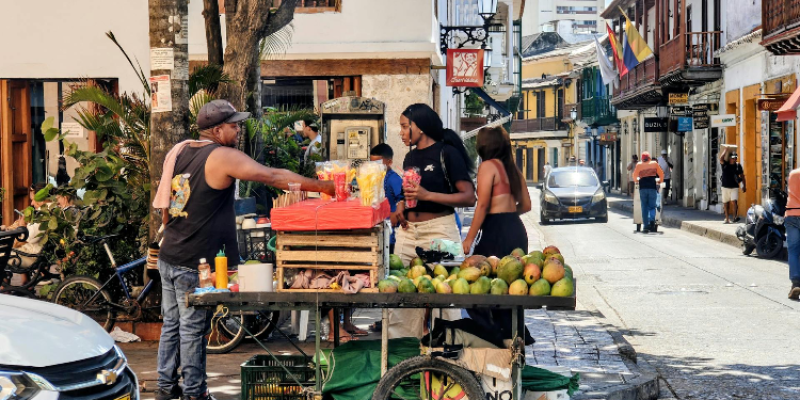
Colombia sits at the northern tip of South America with coastlines on both the Pacific Ocean and the Caribbean Sea, a geographic position that shapes everything from its climate to its culture. The country has steadily built a reputation as a practical and rewarding destination for expats: the cost of living runs roughly 51.6% lower than in the United States, a dedicated Digital Nomad Visa opened a clear legal pathway for remote workers, and cities like Medellín and Bogotá offer modern infrastructure alongside a warm social culture. This article covers what daily life in Colombia actually looks like, from regional differences in pace and climate to safety realities, food, language, and where the expat community concentrates.
Colombia's geography shapes daily life in ways most expats don't expect
Colombia is divided into strikingly different regions, and choosing where to live is one of the most consequential decisions an expat will make. The Andean region, home to Bogotá and Medellín, sits at high altitude and enjoys a mild, temperate climate year-round. Bogotá, the capital, tends toward cool and overcast conditions, while Medellín has earned its reputation as the "City of Eternal Spring" with consistently pleasant temperatures. On the Caribbean coast, cities like Cartagena and Santa Marta are hot and tropical. Cali, in the southwest, is also warm and sits closer to the Pacific influence. The country also encompasses the Orinoquía plains and the Amazon rainforest, though these regions attract far fewer expats. The entire country operates on Colombia Standard Time (UTC-5) with no daylight saving changes, which simplifies scheduling for remote workers with international clients.
Colombia's political reforms are reshaping the country, but stability remains a work in progress
Colombia operates as a unitary constitutional republic with a history shaped by pre-Columbian indigenous roots, Spanish colonization, and decades of internal armed conflict. The current administration, led by President Gustavo Petro, has focused heavily on social reform, including a major pension system overhaul implemented in June 2024 aimed at broadening social inclusion. The Global Peace Index 2025 recorded a 0.55% improvement in Colombia's overall peacefulness score, though the country still ranks 140th out of 163 globally. That improvement reflects genuine progress, but it also signals that political and social tensions remain present. Expats are generally welcomed by the Colombian government, as evidenced by the introduction of the Digital Nomad Visa to attract international talent. Avoiding local political demonstrations is a practical consideration, as these can occasionally escalate.
Join the Colombia community
Get regular tips and advice to make the most of your expat life
The cost of living in Colombia is significantly lower than in North America or Western Europe
Colombia'scost of living is one of its most compelling draws. The Numbeo cost of living data for Colombia shows overall costs running about 51.6% lower than in the United States, with rent averaging 71.1% less. A one-bedroom apartment in a city center typically costs between COP 1,000,000 and COP 1,600,000 (USD 273 to USD 437) per month. Monthly living expenses for a single person, excluding rent, run to roughly COP 2,081,146 (USD 569). An inexpensive lunch at a local restaurant costs between COP 15,000 and COP 22,000 (USD 4 to USD 6), and a standard grocery basket covering a liter of milk, 12 eggs, and 1 kg of chicken comes to around COP 33,000 (USD 9). Monthly grocery spending for a single person typically falls between COP 800,000 and COP 1,200,000 (USD 219 to USD 328). The World Bank Global Economic Prospects projects Colombia's economy will grow by 2.6% in 2026 and 2.8% in 2027, driven by resilient consumption and recovering private investment, which points to a stable economic backdrop for expats settling in.
Good to know:
All COP/USD conversions in this article use the exchange rate of USD 1 = COP 3,660, reflecting rates from late March 2026. Exchange rates fluctuate, so verify current rates before making financial decisions.
Learning Spanish is essential for daily life in Colombia
Spanish is the only official language of Colombia, and the language barrier is a genuine consideration for expats who arrive without it. Colombia ranks 76th globally in English proficiency with a score of 480, placing it in the "Low" band of the EF English Proficiency Index. English is present in corporate environments and tourist-heavy districts in Medellín and Bogotá, but outside those contexts, managing administrative tasks, medical appointments, landlord relationships, and everyday commerce requires functional Spanish. Colombian Spanish, particularly in Bogotá, is widely considered clear and relatively accent-neutral, which makes it a good environment for language learners. Cities like Bucaramanga (scoring 518) and Medellín (scoring 516) outperform the national average, but this should not create a false sense of comfort. Investing in Spanish classes early in a relocation is one of the most practical steps an expat can take.
Colombia's Digital Nomad Visa offers a clear legal pathway for remote workers
Colombia introduced the Visa V Nómadas Digitales specifically for remote workers, freelancers, and entrepreneurs earning income from foreign sources. The visa is valid for up to two years and requires applicants to demonstrate a stable monthly income of at least three times the Colombian legal minimum wage, which in 2026 amounts to approximately COP 5,252,715 (USD 1,435). The minimum wage is adjusted annually, so checking the current threshold before applying is essential. Applications are processed entirely online through the Cancillería's digital portal. Costs include a USD 50 study fee plus a visa issuance fee of approximately USD 181 to USD 265.
Required documents include a passport-style photo (3x4 cm, white background, JPG format under 300 KB), a passport with at least 6 months of validity and 2 blank pages, three months of bank statements showing consistent income, valid international health insurance covering the full stay, and a letter from a foreign employer confirming remote work authorization and salary (or articles of organization for business owners). The visa explicitly prohibits paid work for entities based within Colombia. Dependents, including spouses and children, can be added through a Beneficiary Visa process with apostilled supporting documents.
Colombian culture runs on warmth, hospitality, and social formality
Colombian cultural norms place a high value on courtesy. Greeting someone with "buenos días" or "buenas tardes" before launching into a question or transaction is standard social etiquette, not optional politeness. In urban centers like Bogotá and Medellín, dress leans toward smart-casual and formal; wearing shorts or flip-flops in Bogotá immediately marks someone as a visitor. Coastal cities operate much more casually due to the heat. Attitudes toward punctuality differ by context: arriving 15 to 30 minutes late to a social gathering is common and accepted, while business meetings are expected to start on time. One social taboo that expats should understand clearly: references to Colombia's past association with drug cartels, including any mention of Pablo Escobar in a casual or joking context, are considered deeply offensive. Colombians who lived through that era do not view it as a neutral historical topic, and raising it carelessly will quickly damage relationships.
Catholicism shapes Colombia's public calendar and social fabric
The predominant religion in Colombia is Catholicism, which influences public life through numerous national holidays. The constitution guarantees freedom of religion, and non-religious expats or those of other faiths generally experience high tolerance. What matters practically is the holiday calendar: Colombia observes multiple Catholic public holidays each year, many of which create "puentes" (long weekends) that close banks, government offices, and administrative services. Key observances include Epiphany (January 12), Saint Joseph's Day (March 23), Holy Thursday and Good Friday (in late March or early April), Ascension Day (May 18), Corpus Christi (June 8), and Sacred Heart (June 15). Planning administrative tasks, visa renewals, or any dealings with government institutions around these dates is important, particularly during Holy Week, when much of the country slows down significantly.
Family life in Colombia is communal, child-friendly, and socially open
Colombian family structures tend to extend well beyond the nuclear unit, with Sunday traditionally reserved as a family day across the country. Children are welcomed in restaurants, public plazas, and social events late into the evening without any social friction. Expat families typically turn to private international schools in major cities rather than the local public system, primarily to bridge language and curriculum differences. Bogotá and Medellín both host a solid network of international schools offering US, British, and other curricula, with admission cycles typically opening several months before the start of the following school year. Private schooling costs vary but remain lower than equivalent options in Western Europe or North America, making them accessible to a broader range of expat budgets.
Work culture in Colombia is relationship-driven, and the pace varies sharply by city
The work culturein Colombia is built around personal relationships. Establishing a genuine connection before moving to business matters is an expected part of professional interaction, not a formality to rush through. Small talk over a "tinto" (a small black coffee) often accomplishes more than a formal email. Business interactions reward patience and interpersonal investment. The pace of daily life diverges significantly by region: Bogotá operates as a fast-paced business capital where efficiency is valued, Medellín balances urban energy with a slightly more relaxed rhythm, and coastal cities like Cartagena run on a notably slower, tropical pace. Standard working hours have been gradually moving toward a 42-hour workweek under recent labor reform trends, though dedication to the workplace remains culturally important regardless of formal hours.
Colombian food is regional, affordable, and central to social life
Colombianfood culture is deeply regional. The Bandeja Paisa, a large mixed plate of beans, rice, ground meat, chicharrón, egg, and plantain, is the signature dish of the Antioquia region. Bogotá is known for Ajiaco, a hearty chicken and potato soup. Along the coasts, fresh seafood and coconut rice dominate. The main meal of the day is lunch, and the "corrientazo" (a set executive lunch menu including soup, a main dish, and fresh juice) is widely available for between COP 15,000 and COP 22,000 (USD 4 to USD 6). Arepas and empanadas are ubiquitous as street snacks and cost very little. A dinner for two at a mid-range restaurant generally runs between COP 80,000 and COP 100,000 (USD 22 to USD 27). Expats who stick to local produce and cooking will find grocery bills very manageable, though imported Western goods and specialty items carry a noticeable premium at supermarkets.
Sunday cycling, salsa, and weekend fincas define Colombian leisure culture
Cycling is a national passion in Colombia, and the "Ciclovía" is one of the most visible expressions of that culture: on Sundays, major cities close miles of urban roads to motor traffic so residents can cycle, jog, and walk safely. In Bogotá, this is a longstanding weekly institution and a natural way for new arrivals to explore the city. Salsa dancing is deeply woven into social life, particularly in Cali, which considers itself the salsa capital of the world. Nightlife across Colombian cities is vibrant and forms a core part of socialization. On weekends, locals frequently escape to nearby "fincas" (country properties) or heritage towns in regions like the Coffee Axis, where the landscape is defined by cloud forest and coffee plantations. These weekend retreats are also one of the most effective ways for expats to integrate into local social circles.
Safety in Colombia requires awareness, not paranoia
The safetypicture in Colombia is mixed and demands an honest assessment. The Global Peace Index 2025 ranks Colombia 140th out of 163 countries, making it the least peaceful country in South America by that measure, though its score improved year-over-year. Numbeo's crime data shows Cali with the highest Crime Index among major cities at 70.8, followed by Bogotá at 66.7, and Medellín at 53.9. Daytime safety walking alone is rated "Moderate" (53.30), while nighttime safety walking alone is rated "Low" (25.83) across the country.
The primary day-to-day risks for expats are street crime, petty theft, and bag-snatching, often carried out from motorcycles. Certain neighborhoods, such as Aguablanca in Cali, have significantly higher violent crime rates and should be avoided. Using app-based ride services such as Uber or Cabify rather than hailing taxis off the street is a widely recommended practice. The local expression "no dar papaya" captures an important principle: avoiding displaying valuables such as expensive phones, jewelry, or cameras in public reduces risk considerably. Safety conditions vary significantly by neighborhood within each city, and learning the local geography of a chosen area is one of the most practical investments a new expat can make.
Infrastructure in Colombia is solid in major cities, with Medellín leading on transport
Air quality in Colombia's major Andean cities is generally acceptable. Bogotá recorded an average Air Quality Index (AQI) of 25 to 33 (Good) and Medellín recorded 46 to 49 (Good), while Cali sits around 67 (Moderate). Public transport varies considerably by city. Bogotá relies on the TransMilenio Bus Rapid Transit system, which moves large volumes of commuters but can be crowded and slow during peak hours. Medellín stands apart in Colombia for its integrated Metro system, which combines a light rail network with cable cars reaching hillside neighborhoods, making it one of the more efficient urban transport systems in the region. Fiber optic internet is widely available and affordable in major cities, a key factor behind the growth of the remote worker community. Reliable high-speed connectivity in cities like Bogotá, Medellín, and increasingly in Pereira in the Coffee Axis has made Colombia a practical base for digital workers.
The expat community in Colombia is concentrated, growing, and easy to access
The expat community in Colombia has grown substantially in recent years, driven by regional migration and the introduction of the Digital Nomad Visa. The largest foreign-born population in Colombia is Venezuelan, followed by North Americans (from the US and Canada), Spaniards, and a rising number of European digital nomads. In Medellín, the neighborhoods of El Poblado and Laureles have become the primary base for international remote workers, with a dense concentration of coworking spaces, international restaurants, and English-language social networks. El Poblado, in particular, functions as a self-contained expat hub that offers convenience but can limit deeper integration into Colombian daily life. In Bogotá, the neighborhoods of Chapinero, Usaquén, and Chico concentrate corporate expats, diplomats, and NGO workers. Pereira, in the Coffee Axis, has emerged as a more affordable secondary hub with growing appeal for those seeking a quieter environment with modern amenities and strong internet connectivity, without the congestion of the two main cities.
Applicants must show a stable foreign income of at least three times the current Colombian legal minimum monthly wage. In 2026, this threshold is approximately COP 5,252,715 (USD 1,435), demonstrated through three months of bank statements. The minimum wage is adjusted annually, so confirming the current figure before applying is essential.
The Visa V Nómadas Digitales is valid for up to two years. It can be renewed provided the holder continues to meet the income and foreign employment requirements at the time of renewal.
No. The Digital Nomad Visa explicitly prohibits any paid activity for legal entities or individuals based within Colombia. All income must come from foreign sources. Expats seeking to work for a Colombian employer need to apply for a separate work visa category.
Nighttime safety walking alone is rated "Low" across Colombia's major cities. Using app-based ride services such as Uber or Cabify after dark is strongly advisable. Safety conditions vary considerably by neighborhood, so learning which areas to avoid in your chosen city is a practical priority when you arrive.
A standard one-bedroom apartment in a city center costs between COP 1,000,000 and COP 1,600,000 (USD 273 to USD 437) per month. Furnished apartments in popular expat neighborhoods such as El Poblado in Medellín tend to sit at the higher end of this range or above it.
Fluency is not required from day one, but conversational Spanish is essential for navigating daily life outside expat enclaves. Colombia ranks in the "Low" English proficiency band globally, meaning routine tasks such as administrative appointments, dealing with landlords, or shopping in local markets require Spanish. Investing in language classes early in your relocation pays dividends quickly.
Yes. Bogotá, Medellín, and Cali all have established international schools offering US, British, and other curricula. Admission cycles typically open several months before the start of the following school year. Costs are generally lower than equivalent schools in Western Europe or North America, though they vary significantly by institution and city.
ℹ️
We do our best to provide accurate and up to date information. However, if you have noticed any inaccuracies in this article, please let us know in the comments section below.
A journalist, holder of the DALF C1 and C2 and a diploma from the University of Mauritius, I have nearly twenty years of writing experience. After six years in the Mauritian press, I joined Expat.com, where I have been working for over a decade, including five years as editorial assistant, and now as editorial manager.