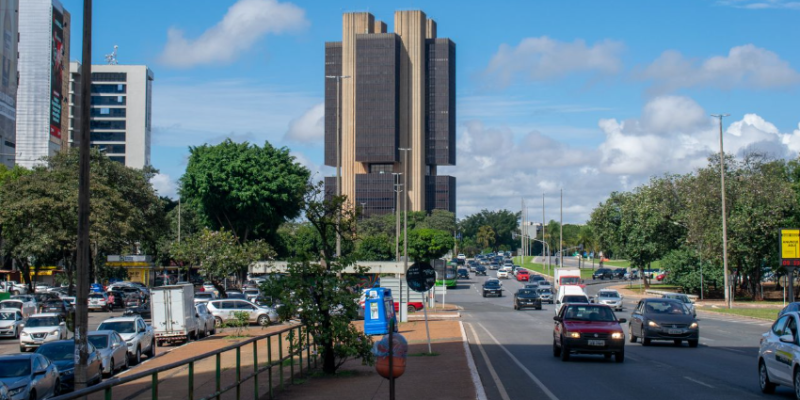
Brasilia offers apartments in leafy superquadras, newer high-rise developments, and detached houses around the lake. Foreigners can buy urban residential property without living in Brazil, whether for their own use, part-year stays, or rental income. Your budget and plans will shape the search, while the title, purchase costs, ongoing expenses, and eventual sale all need attention before you commit.
As a foreign national, you can buy an urban apartment or house in Brasília, even if you continue to live abroad. You'll need a CPF, Brazil's individual tax identification number, along with the documents required to complete and register the purchase. Foreign buyers follow the same national rules for urban property. Rural land falls under a different system, so a house advertised as being near Brasília also needs a check on how its land is classified. Being allowed to buy doesn't mean you'll qualify for a Brazilian mortgage.
Brasilia's residential market includes apartments in the Plano Piloto's superquadras, newer buildings in Noroeste, towers in Águas Claras, and detached houses around the lake. The address is only part of the decision. In the Federal District, some properties are sold through an assignment of rights while the process of establishing legal title is still underway. An attractive price may therefore buy a different set of rights from the registered ownership you had in mind.
Buying property doesn't automatically give you the right to live in Brazil. You can apply for a separate residence visa under the property investment rules in Normative Resolution 36. For Brasília, the threshold is BRL 1,000,000 (approximately USD 186,900), invested in one or more urban properties using your own funds brought from abroad. The lower threshold for northern and northeastern Brazil doesn't apply here. You may borrow only the amount above the required investment. The initial residence authorization lasts 4 years. Continuing conditions include maintaining the investment and spending at least 14 days in Brazil in each 2-year period. Meeting the financial threshold still requires an application and approval.
Residential purchases can be made in your own name. You can also buy through a company, but this brings accounting obligations and changes the tax and inheritance questions. A lawyer and an accountant can compare the two approaches for your circumstances before you set up a company. You don't need a company just to own an urban residential property.
Asa Sul and Asa Norte offer the superquadras: residential blocks with green space, nearby shops, and local services. Their protected layout includes six-story buildings raised on columns in the 100, 200, and 300 series, and three-story buildings in the relevant 400-series blocks. These preservation rules help explain why the area looks so different from the high-rise districts. If you plan to live there, the walk from a particular building to shops and services matters. If you plan to rent the apartment out, building charges and work needed in an older building also affect the numbers.
Sudoeste combines a central location with established shops and services. Noroeste has newer housing and generally targets the upper end of the market. Águas Claras has more towers and developments with shared leisure facilities, plus metro access. Guará offers a wider mix of housing and prices. These differences in buildings and local services can matter as much as distance on a map. Shared pools and gyms also come with running costs paid by the owners.
The detached-house areas of Lago Sul and Lago Norte suit buyers who want a garden and more outdoor space, sometimes with a pool. You gain more control over those spaces and take on their upkeep directly. A single-story layout may suit a retired buyer, but you should assess accessibility in the actual house. For a family, the route to the chosen school and the bedroom layout may make one location more suitable than another. Apartment price averages for Lago Norte don't establish what its houses are worth.
Taguatinga, Gama, Ceilândia, and Sobradinho widen the search for buyers with a smaller budget than Sudoeste or the Asas would require. Compare equivalent properties by private floor area, parking, building condition, and legal status. Visits at different times help you assess noise, access, and safety around the particular building, whichever district you choose.
For houses in subdivisions, especially where land regularization is part of the sales pitch, the exact plot matters. Seduh's land regularization portal lists procedures by administrative region. Seduh is the Federal District's urban development and housing secretariat. A district's inclusion in a procedure doesn't establish that an individual property already has its own registered title, an authorized building, or all utility connections.
Join the Brasília community
Get regular tips and advice to make the most of your expat life
Property prices in Brasilia
The average asking price for completed apartments covered by FipeZAP in Brasilia is around BRL 10,450 per m², approximately USD 1,950 per m². Prices vary substantially by area. Sudoeste and Asa Norte sit well above that average, while Taguatinga, Gama, Ceilândia Sul, and Sobradinho offer lower price levels.
Sudoeste: around BRL 14,670 per m², approximately USD 2,740 per m².
Asa Norte: around BRL 12,710 per m², approximately USD 2,380 per m².
Asa Sul: around BRL 9,350 per m², approximately USD 1,750 per m²; Águas Claras: around BRL 9,290 per m², approximately USD 1,740 per m².
Taguatinga Sul: around BRL 6,640 per m² (about USD 1,240 per m²); Taguatinga Norte: around BRL 6,010 per m² (about USD 1,120 per m²).
Gama, Ceilândia Sul, and Sobradinho: area averages of roughly BRL 4,430-5,430 per m², approximately USD 828-USD 1,010 per m².
Asa Sul and Águas Claras have similar averages but offer different settings: superquadras and buildings on columns in Asa Sul, and towers and shared facilities in Águas Claras. For an individual apartment, renovation, floor level, orientation, and parking also influence the price. Compare private floor areas on the same basis, keeping shared areas separate.
Apartment asking prices rose 9.8% between September 2025 and September 2026. In the Federal District's new and off-plan apartment market, sales and launches have also increased, although performance differs by price bracket. Sales grew fastest in the BRL 600,000-1,500,000 bracket, approximately USD 112,100-USD 280,300. The BRL 350,000-600,000 bracket, approximately USD 65,400-USD 112,100, also grew, while sales above BRL 1,500,000 fell.
For houses, median asking prices in Lago Norte are around BRL 1,500,000 for 3 bedrooms and BRL 2,500,000 for 4 bedrooms, approximately USD 280,300 and USD 467,200, respectively. In Lago Sul, the corresponding figures are roughly BRL 3,000,000 and BRL 3,900,000, approximately USD 560,600 and USD 728,800.
Types of property in Brasília
In the superquadras, apartments in columned buildings, known as pilotis, sit above a largely open ground floor. The green space around a building isn't necessarily a private condominium garden. A renovated apartment can still be in a building whose plumbing, other infrastructure, or common areas need work. A technical inspection should therefore extend beyond the apartment itself.
Newer developments may offer balconies, several bathrooms, and shared facilities, depending on the project. In listings, a suíte is a bedroom with an adjoining bathroom. A cobertura is a top-floor property, sometimes a duplex with a terrace. Some apartments have several en suite bedrooms and parking spaces. Establish whether each parking space has a separate title or forms part of the apartment's title.
A house gives you more freedom over outdoor space, along with direct responsibility for the roof, fences, garden, and private installations. In a gated development, shared charges may also apply. The word condomínio can describe a legally constituted condominium or appear in marketing for a subdivision. The label alone doesn't establish the property's legal status.
A resale property lets you see its actual condition and examine its maintenance history. A completed new property needs a handover inspection and a review of its construction paperwork. Buying off-plan, or na planta, means committing before completion. The contract needs to set out specifications, payment dates, price adjustments, and what happens after a delay or cancellation. Compare the initial price with the full amount of payments still due.
Finding property in Brasília
ZAP Imóveis, Viva Real, and OLX carry residential listings across Brazil. The local portal DFimóveis also brings together listings from Federal District agencies. Search by administrative region and exact address: a listing labeled “Brasilia” may be a considerable distance from the Plano Piloto.
Agencies with local listings include Pilotis Imobiliária, Moni Imóveis, and Cleber Dantas Imóveis. They are possible contacts for viewings, offers, and negotiations. Their local presence doesn't mean they offer service in English or specialize in purchases by nonresidents.
An agent can help select properties and negotiate, while your lawyer should be independent. Ask for the agent's CRECI-DF registration number and identify the person or company charging the brokerage fee. Stop payment if listings are duplicated, you're pressured to pay a deposit, or the account has no clear connection to the owner. Match the recipient's identity to the sale documents even when the photos and address look authentic.
The property buying process in Brasília
A purchase moves from choosing the property to document checks, sale documents, and registration. The professionals have different jobs. The agent handles the commercial side, and your lawyer examines risks for you. A tabelionato de notas, a notarial office, draws up the public deed. The relevant cartório de registro de imóveis, or property registry, records the title.
Prepare your documents and payment arrangements. The file includes your CPF, passport or immigration document, proof of address, documents showing your marital status, and evidence of the source of funds. Before sending original documents, confirm which translations and authentications the professional handling the deed requires.
View the property and complete the checks. Your lawyer examines the title, debts, the seller's right to sell, and the legality of the construction. A technical inspection addresses the physical condition alongside those document checks.
Agree on the offer and preliminary contract. This should cover the price, dates, key handover, what is included, and any conditions related to financing or issues that must be resolved. A reservation payment or sinal, a sum paid when signing, needs written terms on refunds and termination.
Arrange the deed and transfer tax. The documents must allow the ITBI transfer tax to be assessed and the appropriate deed or contract to be signed. A mortgage transaction may use a bank contract with the legal effect of a public deed.
Register the title and arrange handover. Confirm that the title has been registered in your name, then update the owner details with the Federal District tax authority, building management, and relevant utility providers.
The documents for a foreign buyer depend on the buyer's residence and marital circumstances. Names, identification numbers, and the rules governing the couple's property must be consistent throughout the file. The payment schedule should allow you to resolve contractual conditions before you release the balance.
A sinal may operate as arras, a payment that binds the parties to their agreement. Depending on the applicable conditions, the seller may retain it if the buyer fails to perform. If the seller defaults, the buyer may seek its return plus an equivalent amount. Your lawyer should review financing conditions, withdrawal rights, and termination terms before you pay.
You can arrange signing from abroad through a power of attorney granting specific powers. The Brazilian professional who will use it should approve its wording and form. A foreign power of attorney may need an apostille or legalization, a sworn translation, and registration formalities. For a sale, the authority to sell and to receive money needs explicit attention. These arrangements for a transaction from abroad must be in place before the signing date.
The overall timing depends on the title, foreign documents, and any mortgage. A bank's initial estimate isn't final approval: it still has to examine the buyer, the property, and the sellers. An unresolved inheritance or an unregistered building can prevent the sale from proceeding on the planned dates. The contract should allow time for these steps and explain the consequences of delays.
Once the title is submitted, the registry normally has 10 business days to register it or issue a notice of missing requirements. For a sale without special clauses, this falls to 5 business days if the documents are complete and fees have been paid. This is the registration stage after the deed is prepared, not the timeline for the whole purchase.
Costs of buying property in Brasília
The Federal District's property transfer tax, ITBI, is generally 2%, with a 1% rate for the first transfer of qualifying new property, under Law 7635. The reduced rate includes qualifying first transfers within 5 years counted from the year following issuance of the habite-se, the document authorizing use of the building. Separate conditions also apply to properties under construction with individually registered titles. Eligibility needs to be established before you use the lower rate in your budget.
ITBI is charged on the tax base accepted for the transfer. On a BRL 1,000,000 base, the tax would be BRL 20,000 (approximately USD 3,740) at the general rate, or BRL 10,000 (approximately USD 1,870) at the reduced rate. ITBI regulations set out the tax base and define new property. There is no nationality-based surcharge on these rates.
Deed and registration fees follow value bands, with possible additional charges for other acts and levies. For a title valued at BRL 1,000,000, the Federal District and Territories Court of Justice (TJDFT) fee schedule gives approximately BRL 2,548 for the deed and BRL 1,669 for registration, about USD 476 and USD 312, before any additional charges. Adding these two amounts to ITBI at the general rate produces a subtotal of about 2.42% of the price in this example. It isn't an average for the full cost of buying.
A 50% reduction in eligible notarial and registry fees applies to acts connected with a first residential property purchase financed through the Sistema Financeiro da Habitação (SFH), Brazil's housing finance system. The reduction under Article 290 of the Public Records Law doesn't halve all purchase taxes and costs.
Other expenses include certificates, your lawyer, translations, a power of attorney, and bank or currency conversion fees. If you're borrowing, the property valuation, insurance, and total effective cost (CET) also matter. CET brings the loan's financial charges together so you can compare offers. Utility connections or account transfers, your own insurance, initial repairs, and the first building charges also factor into the money needed at the start.
Agency commission depends on the agreement. Under its own terms, Meu Lugar Brasília sets a 6% commission payable by the seller unless the preliminary contract provides otherwise. Establish who pays the intermediary and whether the amount is included in the advertised price. Price any extra service you commission as the buyer separately. Older commission tables shouldn't be treated as mandatory tariffs.
Property financing and mortgages in Brasília
Mortgage access is restricted for foreign nonresidents. Banks' policies depend on immigration status, income in Brazil, and your relationship with the bank. A foreign national living in Brazil also needs an assessment of income, existing debt, and the property offered as security. If the purchase depends on a loan, the preliminary contract should include a financing condition and explain what happens if it isn't met, before you pay a deposit.
Santander offers property finance and requires you to be a customer. Its approval process assesses your creditworthiness separately from inspecting the property and checking its documents. The application requires identification, proof of residence, documents showing whether you're married, income evidence, and requested tax returns, followed by the sellers' and property's documents. If you earn abroad, confirm whether the bank accepts that income, what translations it requires, and how it assesses the income's stability.
Santander's mortgage document checklist specifies a Brazilian immigration document for a foreign applicant, or a passport with a permanent visa if that document isn't available. The bank needs to confirm which documents apply to your current status. Itaú also offers property finance, with a credit assessment followed by approval of the documents and property. Having a CPF alone doesn't make these products available to every foreign buyer.
An advertised maximum loan doesn't tell you what share of the price a bank will finance for a foreign applicant, particularly a non-resident. Base your funding arrangements on the amount approved for you and the down payment you will actually need. Compare CET, the repayment term, how the balance is paid down, insurance, and any adjustment index. If your income is in another currency, BRL repayments expose you to exchange-rate changes throughout the loan.
When bringing purchase funds from abroad, agree on the banking route and transaction documents in advance. Keep the transfer records, conversion records, and proof of payment to the seller. The difference between a reference rate and the bank's offered rate, along with fees and currency transaction taxes, changes the amount received. The USD equivalents here help put costs in context; they aren't money transfer quotes.
Legal considerations in Brasília
Hire an independent local lawyer before making a substantial payment. Their work should cover the seller's identity and authority to sell, a current matrícula, the property's official registry record, mortgages or seizures, disputes, tax and condominium debts, and compliance with planning rules. The seller's old purchase deed doesn't replace an up-to-date registry extract.
Under the Brazilian Civil Code, signing a deed and registering the title are different steps: ownership transfers through registration. The buyer also becomes responsible for condominium debts attached to the property, including penalties and interest. Any settlement of those amounts between buyer and seller therefore needs verified balances and certificates.
Where land regularization is still underway, a cessão de direitos assigns the rights held by the person transferring them. These may remain contractual rights or rights based on possession. An IPTU payment, water bill, or authenticated signature doesn't establish registered ownership on its own.
For an extended house, the built area needs to match the permits and registry record. An off-plan purchase also needs checks on the developer, permits, project registration, payment dates, handover, and cancellation terms. If a dispute arises, keep contracts, payment records, and correspondence. Your lawyer can assess negotiation, a consumer remedy where consumer law applies, or court action. Marriage, inheritance, and several people holding rights to the same property each need examination in the particular transaction.
Before future units can be marketed, Brazil's property development law requires registration of the memorial de incorporação, the project's legal and technical file. A development may also use the patrimônio de afetação system, which separates the assets and rights allocated to that project from the developer's general assets so they can be used to complete it. A handover grace period of up to 180 calendar days can apply without a penalty to the developer only when clearly and expressly agreed and highlighted in the contract. Your lawyer should examine the remedies available if that period is exceeded.
Owning property in Brasília
Recurring expenses include urban property tax (IPTU), the public cleaning tax (TLP), condominium charges, insurance, utilities, and maintenance. For qualifying buildings used exclusively for residential purposes, IPTU is 0.3% of the assessed tax value. That value isn't necessarily your purchase price. The property's latest complete IPTU and TLP bill shows what is actually being charged.
In a condominium, the síndico represents and manages the building under the owners' collective decisions. The rules, accounts, arrears, and recent meeting minutes help you understand its finances. Separate ordinary operating charges from assessments for work: the facade, elevators, waterproofing, or replacement of building systems can require significant payments. For a house, get estimates for maintaining its actual equipment and facilities rather than applying an apartment's charges.
If you won't be there, a management agency can find tenants, prepare condition reports, collect rent, and follow up on repairs. The written agreement should set fees, the amount it can spend without your approval, reporting frequency, and responsibility for tax procedures. A local contact is also useful for a property you use only part of the year.
An indicative range for ongoing rental management in Brasília is 8%-10% of monthly rent, depending on the contract and services. Services may include advertising, tenant screening, the lease, condition reports, rent collection, and repair follow-up. You may also charge an initial letting commission, often all or part of the first month's rent. Keep that initial cost distinct from the monthly fee and additional charges for work or certain legal proceedings.
The Urban Tenancy Law governs residential leases, including guarantees, repairs, and charges the landlord can pass to the tenant. Extraordinary condominium expenses generally remain the landlord's responsibility. Seasonal rentals have their own conditions, and you should also consider the building's rules before planning short-term lets. An assertion in a listing doesn't establish permission.
Your tax residence determines the tax treatment. Rent paid to a nonresident is generally subject to a final withholding tax of 15%, potentially 25% if the recipient lives in a preferential-tax jurisdiction, subject to applicable treaties. The representative receiving the rent must arrange withholding and payment under the income tax regulations. An accountant can establish the taxable amount, the required filings, and any obligations in your country of residence. Moving to or leaving Brazil also requires a review of nonresident tax rules.
Certain documented expenses can be deducted when calculating a nonresident's taxable rent. These include property-related taxes and fees, rent collection costs, and condominium charges, subject to the rules for amounts actually borne by the landlord. Under the withholding rules for nonresident landlords, the representative is responsible for payment. The tax is due on the date of the taxable event, using Revenue Code 9478. The accountant also needs to arrange reporting of income and withholding through EFD-Reinf, and the related tax obligations through DCTFWeb. These are Brazil's electronic reporting systems; this work shouldn't wait for the owner's personal annual return.
Preparing a sale means updating the title, resolving any unregistered construction, and gathering identity, marital, tax, and condominium documents. If the property is rented, the tenant generally has a right of first refusal. You must notify the sale terms in accordance with the law, giving the tenant 30 days to accept. The lease and arrangements for vacant possession also affect the schedule.
An agent can estimate an asking price, advertise, conduct viewings, and negotiate. Your lawyer handles legal obstacles and the obligations you agree to. Commission, document fees, and the cost of releasing any security reduce your net proceeds. A property sold with rights that still need regularization can be harder to finance and resell, which also affects how its price should be assessed.
Capital gains tax applies to the taxable difference between the sale price and the documented acquisition cost. The general progressive rates apply to successive portions of the gain:
15% on the portion up to BRL 5,000,000, approximately USD 934,300.
17.5% on the portion above BRL 5,000,000 and up to BRL 10,000,000, approximately USD 1,868,600.
20% on the portion above BRL 10,000,000 and up to BRL 30,000,000, approximately USD 5,605,800.
22.5% on the portion above BRL 30,000,000.
These percentages apply to the taxable gain, rather than the property's full selling price. A 25% rate may apply to a seller in a preferential-tax jurisdiction, and you must also consider international treaties.
For a nonresident seller, the buyer resident in Brazil must arrange withholding and payment. If the buyer is also abroad, that responsibility falls to the appropriate representative under Article 26 of Law 10833. Payment is due sooner than for a resident seller: for a nonresident sale through a representative, the tax is due on the sale date. Have it calculated and the withholding arranged before the purchase money is released.
Exemptions for residents shouldn't automatically be included in a nonresident's calculation. The exemption for reinvesting in Brazilian residential property within 180 days is for resident individuals who meet the applicable tax conditions. Keep evidence of the original purchase price and expenses that can legally be included in the acquisition cost.
To send the net proceeds abroad, prepare the currency transaction documents with an authorized institution: tax identification, sale deed, source of funds, and proof of the tax treatment. A change in the BRL can reduce the result in your own currency even if the local sale price has risen. Time on the market depends on the asking price, property, and title. A rising index guarantees neither a quick sale nor a profit. For a rental investment, vacancy, management, repairs, and taxes also need to come out of the advertised gross return.
Frequently asked questions
No. A nonresident foreign national can buy urban residential property with a CPF and the required deed and payment documents. The purchase doesn't automatically grant residence, and qualifying for a mortgage is a separate question.
That depends on the purchase price, demand for the particular property, and its costs. Rising asking prices don't guarantee a profit. For rental property, allow for vacancy, owner-paid charges, management, maintenance, and taxes. Buying with another currency also brings exchange-rate risk.
Asking prices for completed apartments covered by FipeZAP rose 9.8% between September 2025 and September 2026. An individual property's price also depends on its area, condition, and features.
A resale lets you inspect the property in its actual condition and examine the building's maintenance. A completed new property needs a handover inspection. Buying off-plan also requires checks on the developer, permits, payment adjustments, and delay or cancellation clauses. The first transfer of qualifying new property benefits from 1% ITBI, compared with the general 2% rate.
Access is more restricted for nonresidents. Foreign nationals living in Brazil can apply, with the bank assessing immigration documents, income, debt, and then the property. Get approval for your own circumstances before committing to a purchase that depends on borrowing. Advertised lending limits don't establish your approved loan or down payment.
The overall schedule depends on preparing the file, foreign documents, title checks, and any mortgage. After you submit the title, the registry normally has 10 business days to register it or notify you of missing requirements. For a sale without special clauses, this is 5 business days if the file is complete and fees are paid. These deadlines cover registration, not the whole purchase.
Yes. Residential letting is governed by the Urban Tenancy Law. The lease needs to address guarantees, charges, and repairs. Seasonal and short-term rentals also require attention to their particular conditions and the building's rules. Rental income also creates tax obligations for nonresident owners.
Taxable capital gains generally fall under progressive rates of 15%-22.5%, with particular rules depending on tax residence and applicable treaties. A nonresident seller must arrange withholding and payment before the sale with the buyer or an appropriate representative. Exemptions for residents don't automatically apply.
ℹ️
We do our best to provide accurate and up to date information. However, if you have noticed any inaccuracies in this article, please let us know in the comments section below.
A journalist, holder of the DALF C1 and C2 and a diploma from the University of Mauritius, I have nearly twenty years of writing experience. After six years in the Mauritian press, I joined Expat.com, where I have been working for over a decade, including five years as editorial assistant, and now as editorial manager.