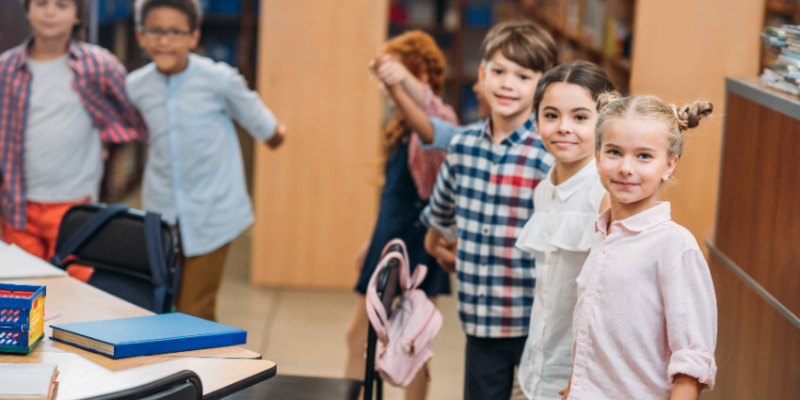
What is education like in Brasília?
Schools in Brasília offer several ways to keep your child's education on track during a move. Alongside Portuguese-medium public and private schools, there are American, British, French, and bilingual programs. A child who already studies in English can continue in that language, while a family planning to settle in Brazil may want a school that also prepares students for a Brazilian qualification. The language your child learns in now, the length of your stay, and the likelihood of another move will all shape the choice.
Brasília is part of the Federal District, where public-school applications are handled by the Secretaria de Educação and its regional offices. Under Brazil's national education law, schooling is compulsory from ages 4 to 17 and free in the public system. Children progress from preschool to ensino fundamental, the nine-year stage beginning at age 6, and then to ensino médio, the final stage of secondary school. Grade numbers alone won't tell you where a child transferring from another system belongs: age and previous learning matter too.
The public-school year runs from February to December. Some international schools follow a different cycle. The Lycée français François-Mitterrand follows a Northern Hemisphere calendar, and the American School of Brasília also runs its academic year from the second half of one calendar year into the first half of the next. Depending on your arrival date, your child may join a class partway through the year. Discussing placement before the move helps you understand how the transition will work.
The length of the day matters just as much to family life. At the French school's elementary section, classes run from 7:30 a.m. to 2:50 p.m., with an 11:30 a.m. finish on Wednesdays. At the British School, primary and secondary students usually finish at 3:30 p.m., and sports, music, theater, and other activities can extend the day to 4:30 p.m. A Wednesday afternoon without classes at the French school creates a different childcare need from a full day at another campus.
Types of schools in Brasília
Public and Brazilian private schools
Foreign children can attend public schools, where ordinary classes are taught in Portuguese. Individual schools serve different stages, so check the grades and hours available for the location you are considering. In the Plano Piloto, Escolas Parque also work alongside regular schools as part of the organization of the school day. Access to this complementary provision depends on how the schools concerned operate.
Brazilian private schools charge tuition and follow the national curriculum. When comparing their schedules and fees, distinguish classroom teaching from care before or after classes and optional activities. English lessons and bilingual schooling are different offers. What matters is which subjects children study in each language and which school records and qualifications they receive at the end of each stage.
International, bilingual, and alternative schools
International schools offer continuity with an overseas curriculum, or combine Brazilian schooling with an international qualification. English is the main teaching language at the American School of Brasília and in the British program. SIS Swiss International School Brasília and Escola das Nações offer bilingual routes, while the French school teaches mainly in French. For a teenager approaching graduation, the available subjects and final diploma requirements become especially important.
Families interested in a different teaching approach can consider Escola Waldorf Moara, at SGAN 909, conjunto F, in Asa Norte. It offers preschool, the fundamental stage, and secondary schooling, with extended care for fundamental-stage pupils. A visit lets you see how its Waldorf approach and daily routine fit your child's learning style.
International schools in Brasília
American School of Brasília, Asa Sul
The American School of Brasília, usually called EAB, teaches mainly in English from preschool through Grade 12. Its campus is at SGAS 605, conjunto E, lots 34/37, in Asa Sul. Students can work toward American, Brazilian, and International Baccalaureate (IB) diplomas, subject to the requirements of their chosen program. This gives families an English-medium option with the possibility of a Brazilian qualification as well.
An EAB application includes identification, vaccination records, school reports, and recommendations from the previous school, as required for the grade. Younger children attend an age-appropriate meeting; older applicants may take academic and language assessments. Entry to the IB program involves additional testing. Grade 12 admission is considered case by case because of the program's requirements, so late secondary transfers depend in part on whether the student's previous subjects fit the course.
British School of Brasília, Lago Sul
The British School of Brasília serves children ages 2 to 18 at SHIS QI 7/9, bloco 17, lot F, in Lago Sul. It combines the English curriculum with Brazilian studies. Secondary students take GCSE and IGCSE examinations, then can work toward the IB Diploma in Years 12 and 13. The school holds Federal District school authorizations and offers the IB Diploma Program.
The secondary curriculum includes English and Portuguese as additional languages. The support a child needs will depend on their age and how independently they can study in the teaching language. Starting English in primary school is a different challenge from joining an examination course as a teenager. The admissions process begins with a form and the requested school reports, followed, where appropriate, by an interview and an assessment suited to the child's level.
SIS Swiss International School Brasília, Asa Sul
SIS Swiss International School Brasília is at SGA/Sul, quadra 905, conjunto B. It combines the Brazilian curriculum with bilingual education and IB programs from preschool through ensino médio. English and Portuguese are central to learning here; the Swiss name does not mean that the school generally teaches in French. Older students prepare for the IB Diploma and the Exame Nacional do Ensino Médio (Enem), Brazil's national upper-secondary examination used for university admission.
The SIS admissions process includes an introduction to the school and an application form. Younger children attend a morning of activities, while an assessment is required from the second year of the fundamental stage. You can apply during the school year. Offers depend on available places and the priorities set out in the admissions rules.
Escola das Nações, Lago Sul
Escola das Nações, also known as School of the Nations, serves preschool through Grade 12. Its main campus is at SHIS QI 21, conjunto C1, and its early childhood campus is at SMDB conjunto 19, lot 2, both in Lago Sul. The school has New England Association of Schools and Colleges (NEASC) accreditation and local recognition. Its educational values draw on the Bahá'í tradition; a visit is an opportunity to discuss how those values shape school life.
Under its language policy, children study in English and Portuguese through Grade 5, with Spanish introduced in Grade 6. Support is available in both main languages, and from Grade 4, applicants are assessed against a minimum English level. French is available as an after-school activity. The IB Primary Years Program forms part of primary learning. At the end of secondary school, students can earn the Brazilian certificate and, depending on their program, the IB Diploma.
Lycée français François-Mitterrand, Lago Sul
The Lycée français François-Mitterrand, at SHIS QI 21, bloco D, offers continuity for children already studying in the French system, including families expecting another international move. All levels, from petite section in preschool to terminale, the final secondary year, are recognized by France's national education ministry.
French is the main teaching language, with Portuguese forming part of the curriculum. English begins in grande section, the final preschool year, and Spanish in cinquième, an early secondary grade. These language lessons do not mean that subjects are divided equally between several teaching languages. Newcomers receive French and Portuguese as foreign-language support during school hours, as needed. For a child joining later in their education, the amount of support and how they will keep up with other subjects need to be discussed before entry.
Pre-enrollment is through Eduka. After reviewing the application, the school arranges an interview and, depending on the child's age, an assessment, subject to available places. Documents include identification for the child and guardians, a birth certificate, the guardians' CPF numbers, vaccination records, and proof of a Brazilian address. A CPF identifies an individual in Brazil's taxpayer register. Pre-enrollment does not reserve a place; the school must give final approval.
Planning a school budget in Brasília
At EAB, the application fee is BRL 550, approximately USD 100. You pay a full year's tuition in twelve parts: an enrollment payment equal to one month's tuition, followed by eleven monthly payments. Uniforms are required, and students need a personal computer from Grade 7 that meets the requirements for their grade. School transport may be provided by an outside operator.
SIS's annual tuition is approximately BRL 71,194 for preschool (USD 13,090), BRL 87,494 for the first five years of the fundamental stage (USD 16,090), and BRL 103,025 for the later fundamental years and the first year of upper secondary (USD 18,950). Under the installment arrangement, families make a payment to secure the place, then make twelve further payments. That initial amount is already included in the quoted annual total.
SIS offers a 5% reduction for a second child and 15% for the third and subsequent children. Midyear entrants are charged according to the school days remaining. For the final two secondary years leading to the IB Diploma, obtain written confirmation of the annual total and payment schedule before signing.
A tuition quote needs to be read alongside the costs of meals, any required uniform, supplies, transport, activities, outings, and exams. The annual tuition total provides a starting point for comparison; adding the services your child will use shows how the school fits your family budget. If an employer contributes, the relocation agreement should specify the maximum payment, which children are covered, which expenses qualify, and what happens if you leave the assignment early.
Public schools for expat children in Brasília
Eligibility and enrollment
Foreign children can enter the public system without discrimination based on nationality or immigration status. The local Bem-vindos ao Distrito Federal program protects that access. Applications involving missing school records or Brazilian documents must be handled in a way that accommodates the child's situation. If the online form prevents you from applying, take the case to the regional education office.
New applications for the following school year are usually made in October, through the Secretaria de Educação portal or by calling 156, option 2. Once a school has been allocated, families must complete enrollment there, generally early in the calendar year, within the stated deadline. Applying for a place and confirming enrollment are separate steps. Families arriving outside the annual application period should contact their regional office rather than wait for the next cycle.
The usual paperwork includes available identification and birth documents, school reports and transcripts, proof of address, and vaccination records. The standard form also asks for the child's CPF. The family home address or a guardian's workplace address helps the district find a nearby place, depending on availability. Living near a particular school does not guarantee a place there. Confirm the assigned school and its hours before planning your daily routine around an address.
Learning in Portuguese
Portuguese-language support for newcomers, known as PLAc, supplements ordinary classes. For younger children, schools organize it according to needs and their own arrangements. From the sixth year of the fundamental stage, it should preferably be offered through Centros Interescolares de Línguas (CIL), the interschool language centers. The policy also covers migrants from age 11, and Plano Piloto is among the initial areas of implementation. The school or regional office can establish which group is available and how its timetable fits regular classes.
Free tuition makes public schooling financially accessible, and everyday contact with Brazilian classmates gives children opportunities to learn Portuguese. A child arriving without the language will also need help understanding classroom instructions and assessments from the outset. Personal supplies, travel, and care outside class hours still need to be planned and paid for where applicable.
Special educational needs and disabilities
Families of children with disabilities, autism, or other additional needs should start with UNIPLAT, the school-planning service at their regional education office, to prepare enrollment and discuss support. Existing assessments, details of accommodations that have helped, and contact information for the previous school can help the team understand the child. Under the Federal District's special-education rules, the absence of a medical diagnosis must not prevent enrollment or preparation of an educational support plan.
Local provision includes Brasília's CEE 01 and CEE 02 special-education centers and the center for students with visual impairments. A referral to a specialist center follows an assessment involving the school team and family. Specialist support can also accompany attendance in a mainstream class. At a private or international school, a meeting with the person responsible for learning accommodations should lead to a clear agreement about the support the school will provide for your child.
Choosing a school in Brasília
Connecting the campus with your housing search
Asa Sul is convenient for exploring EAB in sector 605 and SIS in sector 905. In Lago Sul, the British School is around QI 7/9, while the French school and the main Escola das Nações campus are both in QI 21. Nations' early childhood campus is at a separate address in SMDB. With more than one child, the relevant address is the campus each child will actually attend.
Asa Norte includes Waldorf Moara in sector 909. These school locations offer useful starting points for a housing search rather than a ranking of neighborhoods. If you are considering Lago Norte, Jardim Botânico, or another part of the Federal District, try the journey to the chosen campus at school arrival and dismissal times. Living across the lake from school can make a substantial difference to the family routine.
What a school visit can tell you
A visit is most useful when you can meet the staff who will teach or support your child and see classes at the relevant level. Discuss what happens during a newcomer's first few weeks and how teachers keep in touch with parents. Useful questions include:
- How many children will be in the class, and which adults work with them?
- How much language support is available, and does it cost extra?
- How are homework and assessments adapted while a child settles in?
- Which accommodations can the school provide for a disability or learning need?
- Which meals, activities, transport, and extended care are included in the quote?
- Which school records and qualifications will the child receive if the family moves again?
For a short stay, continuity in a familiar curriculum and language may matter most. For a longer stay, written Portuguese and the opportunity to earn a Brazilian school-leaving qualification deserve more attention. Depending on their age, involving your child in the decision can reveal what the prospectus cannot: whether they feel comfortable with the teachers, can make themselves understood, and want to take part in the activities.
Higher education pathways in Brasília
The Universidade de Brasília (UnB) is a major local public-university option. Entry routes include the vestibular, a university entrance examination, procedures using Enem results, and the Programa de Avaliação Seriada (PAS), which assesses students during secondary school. An admissions reorganization extends SiSU to all UnB degree programs from 2027 and gradually changes how places are distributed between semesters. SiSU is the national selection system using Enem results. Families need to follow the procedure that applies to their teenager's graduating cohort.
The private Centro Universitário de Brasília (CEUB) is another local option, with admissions through Enem or an entrance examination. Finishing secondary school and securing a university place are separate requirements. An international diploma does not automatically confer admission.
For a student planning to study in Brazil, it matters whether the school also awards the Brazilian ensino médio completion certificate. If a foreign qualification needs formal recognition as equivalent, allow time for that before enrollment. CEUB's admissions rules require that recognition before enrollment in the cases concerned. Academic Portuguese also matters for keeping up with university classes and preparing for selection exams.
For study abroad, a French baccalauréat, an IB Diploma, and an American high school diploma lead to different application requirements depending on the country, university, and degree. Early in secondary school, look at the subjects, course levels, grades, and language certificates needed for possible destinations. A school must offer the required subjects through graduation, especially if you transfer in the final years.