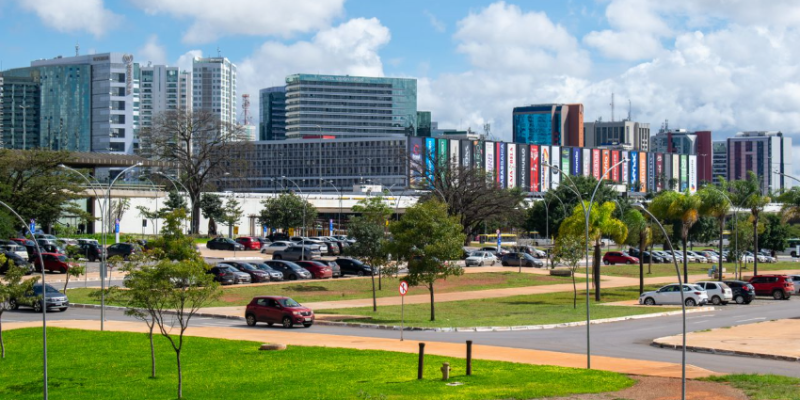
In Brasília, your daily route can matter as much as the neighborhood you choose. The metro connects the center with southern and western parts of the Federal District, while buses serve the places beyond its reach. A direct connection can make commuting affordable and straightforward; a journey involving several stops and a long walk takes more planning. Understanding the fares, return schedules, and alternatives will help you decide when public transport works for you and when a car is useful.
Getting around Brasília often means traveling across the Federal District, rather than staying within the Plano Piloto. Asa Sul and Asa Norte are part of that central area, while Águas Claras, Taguatinga, Ceilândia, and Samambaia are also places where people live and work. Cars play a large part in daily travel, alongside buses and the metro. The most convenient option depends on the two addresses you're traveling between, how many connections you need, and the walk at either end.
The metro connects the center with southern and western areas. Buses reach destinations beyond the tracks, including Asa Norte and the University of Brasília. When choosing an apartment, it's worth working through each household member's actual commute. Being close to a metro station can make one person's trip straightforward while leaving someone else with a lengthy bus connection.
For planning, DF no Ponto provides routes, stops, timetables, and vehicle tracking through its website and mobile app. You can search using an address or a landmark such as a school or hospital. Destination names and the steps for using services are largely in Portuguese, so keep the full address handy, including the quadra, or block number. Taxis and app-booked rides can help with unfamiliar journeys when you first arrive and with getting back late at night.
Central station, inside the Rodoviária do Plano Piloto urban bus terminal, is the downtown starting point for the metro. From there, trains share a route to Águas Claras before the network divides toward Ceilândia and Samambaia, forming a Y. The system serves Asa Sul, Guará, Águas Claras, Taguatinga, Ceilândia, and Samambaia, making it useful for trips between the west and the center. Asa Norte, the university's Darcy Ribeiro campus, and the airport require another connection.
Regular opening hours are 5:30 a.m. to 11:30 p.m. Monday through Saturday, 7 a.m. to 9:30 p.m. on Sundays, and 7 a.m. to 7 p.m. on public holidays. These are network operating hours, not a last-train time for every platform. Allow time to reach the right platform and, if necessary, change branches at Águas Claras. The destination shown on the train matters, particularly when traveling beyond the shared section.
To enter, tap a loaded Mobilidade card or an accepted contactless bank card at the gate. Follow the direction signs and let passengers off before boarding. The first car is reserved for women, people with disabilities, and autistic passengers throughout operating hours, including weekends and holidays. Station staff can help with directions. Watch your step across the gap between the platform and the train as you board.
Traveling by rail avoids road congestion, although commuter trains can be crowded and incidents sometimes interrupt service. When passengers switch to buses during a metro shutdown, the Rodoviária can become crowded too. For an interview or another appointment you can't miss, leave some extra time and have an alternative route in mind. Train intervals vary by time and branch; services on each branch are less frequent than on the shared section.
Step-free access depends on working elevators. Elevators are intended for passengers with accessibility needs, but prolonged outages have affected stations such as Galeria. If you use a wheelchair, establish whether both your departure and arrival stations are accessible before passing through the gates. Staff can help, but an offer of help doesn't necessarily make a route usable when an elevator is out of service.
Join the Brasília community
Get regular tips and advice to make the most of your expat life
Buses in Brasília
Buses handle local journeys within the Federal District's administrative regions as well as trips between those regions and the Plano Piloto. They also cover much of the city beyond the metro. BRT, short for bus rapid transit, uses dedicated road infrastructure along part of its routes, including links serving Gama and Santa Maria. The Rodoviária do Plano Piloto and Terminal Asa Sul are key places to transfer between services. The downtown Rodoviária is the urban bus terminal, distinct from the intercity terminal used for travel to other cities.
DF no Ponto helps you identify the exact stop, direction, and route number; at a terminal, you'll also need the platform. Signal the approaching bus and read its destination display before boarding. On an ordinary bus, passengers board at the front, validate their payment, and go through the turnstile. As your stop approaches, use the stop-request button or device and move toward the exit. BRT stations may be arranged differently, with payment validation before you enter the platform.
Waiting can add substantially to a journey. At some stops on routes into the center, buses are already full and may be unable to pick up more passengers. This affects parts of Eixinho Norte during the morning rush, for example. Tracking a bus makes it easier to decide when to leave, but doesn't guarantee space on board or an on-time arrival.
Evening travel needs a separate look at the timetable. Fewer buses run at night, and a daytime route isn't necessarily an overnight service. After the metro closes, a bus is a workable option only if there's a scheduled departure that fits your return journey. For a night out with no set finishing time, allow for a taxi or app-booked ride. A Mobilidade card can make a bus-metro connection cheaper, but both services still need to be running when you transfer.
How to pay for transport in Brasília
Ordinary bus fares are BRL 2.70, BRL 3.80, or BRL 5.50 per ride, depending on the route category, approximately USD 0.50, USD 0.71, or USD 1.03. BRL is the currency code for the Brazilian real. A metro ride costs BRL 5.50. These are public transport fares; the different bus fare categories explain why one bus journey may cost more than another.
For regular travel, the Mobilidade card's main advantage is its transfer allowance. It works on buses and the metro and allows up to three successive boardings within 3 hours, without returning to your starting point, for an integrated fare of up to BRL 5.50. Direct payment with a bank card doesn't include that allowance. Paying separately at each boarding can therefore cost more than making the same connection with Mobilidade. The integrated fare is especially useful when your commute involves both bus and rail.
Your first Mobilidade card is free, but you must register. For foreign passengers, the accepted identification documents include a passport, Brazilian migration documents, and identity cards for Mercosur nationals. If you've just arrived and don't yet have the identifiers needed for the online form, take your original identification document to a BRB Mobilidade service counter so staff can handle your application in person.
You can add credit at BRB Mobilidade service points, metro ticket offices, and authorized shops. Top-up kiosks are also available at the Rodoviária and other terminals. Depending on the machine, payment options include cash, debit cards, and Pix, Brazil's instant payment system. The BRB Mobilidade app also offers top-ups. Cash payments have increasingly moved to sales points outside buses, so don't rely on paying cash on board every route. For an occasional journey, a single-use QR-code ticket is available without registration, although it doesn't include an integrated transfer.
The Vai de Graça program makes travel on the Federal District's network free on Sundays and the public holidays covered by the program. Sunday service schedules still apply. The benefit doesn't automatically extend to interstate buses serving the Entorno, the neighboring municipalities outside the Federal District.
Some passengers qualify for separate benefits. Eligible students, including those whose home or workplace is more than 1 km from an eligible educational institution, can receive free travel through Passe Livre Estudantilafter registering and being approved. Passengers over 65 can use the relevant urban services free with official proof of age, including a passport; the Cartão Sênior makes it easier to pass through the turnstile. For other passengers, Mobilidade works as pay-as-you-go credit, rather than an unlimited monthly pass.
Taxis and ride-hailing in Brasília
You can take an authorized taxi from a rank, book one, or ask your hotel to arrange one. Conventional taxis are predominantly white or silver and must have a roof light marked “TÁXI,” a meter, and a visible authorization with the required identifying information. Executive taxis are black. These features form part of the Federal District's taxi requirements. A private car booked through an app is a different service, identified through the driver and vehicle details in your booking.
The metered taxi fare starts at BRL 6.59, about USD 1.23. Distance is then charged at BRL 3.59 per km under tariff 1 or BRL 4.61 per km under tariff 2, approximately USD 0.67 or USD 0.86 per km. Waiting time also contributes to the fare. Tariff 2 applies to nighttime journeys between 8 p.m. and 6 a.m., weekends, public holidays, and trips starting or ending at the airport. For solo travelers, these charges make a taxi considerably more expensive than public transport.
Uberand 99 operate in Brasília and serve the airport. Enter the full destination address and make sure the pickup point is somewhere you can actually meet the driver. Prices and waiting times vary with demand, including after events when many people request rides together. Requesting a late-night trip doesn't mean a driver will be immediately available in every neighborhood.
Paying through the app avoids the need for change. 99's payment options also include cash and, depending on the available setup, Pix or cards. With a taxi, agree on an accepted payment method before the trip. For an app booking, match the license plate, car model, and driver with the details shown before getting in. You can use trip sharing when needed, and keeping the ride within the booking system preserves its tracking and receipt.
Cycling and walking in Brasília
Walking works best for nearby errands. In Asa Sul and Asa Norte, a well-located apartment may put some shops within walking distance of your superquadra, a residential grouping arranged around open space. Longer journeys involve different conditions: major roads, interchanges, and the distances between residential areas, workplaces, and services can make walking across the Plano Piloto much harder than walking around your neighborhood.
A bicycle can cover part of a journey to public transport, provided the route is suitable. Brasília has cycling infrastructure, but gaps in paths and poor surfaces can interrupt an otherwise promising route. Crossing and lighting problems also affect places such as Setor de Clubes Sul and some roads in Asa Norte. Try a route in daylight before relying on it for a daily commute, especially with children. Use designated crossings and judge the whole journey, rather than assuming that a short distance will be easy to ride.
+Bike is the city's station-based bike-sharing service. You register and buy a pass through the website or app using a credit card. Pass options cost BRL 3 for a day, BRL 6 for a month, or BRL 10 for annual registration (about USD 0.56, USD 1.12, or USD 1.87). Rides of up to 60 minutes are included, with at least 15 minutes required between rentals. Keeping the bike longer incurs an additional charge.
Bike pickup is available from 6 a.m. to midnight, while returns are possible at any time. Before setting off, look for both an available bicycle at the starting station and a free docking space at the other end. The app unlocks the selected bike; when you return, make sure it locks securely into the dock. If your usual addresses are far from the stations, owning a bike may suit you better. You'll need a secure place to leave it, and its brakes, tires, and lights will need regular attention. Have those parts inspected before buying a used bike.
Driving in Brasília
A car can make daily life easier when your journeys involve several places that public transport doesn't connect well. A school run combined with a workplace away from the metro, appointments in different parts of the city, or regular travel with luggage can all favor driving. If work is close to your apartment or on a direct rail route, public transport and occasional app-booked trips may meet your needs without the ongoing costs of owning a car.
The major roads allow straightforward travel when traffic is light. As more vehicles use them, congestion and public transport issues affect how people get around. Test a prospective commute at the times you'd actually leave in both directions. A quick drive at midday may give a very different impression from the same route at the start or end of the working day.
Public parking areas in the Plano Piloto remain free following the abandonment of a concession proposal. Finding a space close to your destination is a separate matter. Private, commercial, and airport parking facilities set their own charges. When comparing a car journey with transit, include both parking costs and the walk from the space you find.
Renting a car for a short period lets you try out a routine before buying, or simply have a vehicle for an occasional trip. The total rental cost includes more than the daily rate: damage and theft protection, liability to other people, the deductible, any additional driver, and the fuel return policy can all affect what you pay. Ownership adds insurance, maintenance, taxes, and residential parking. Any tolls on a road trip depend on the route; they aren't a fixed daily fee for driving around Brasília.
To drive on a foreign license, Brazil must recognize it. Under national rules for foreign licenses, you can use a recognized license for up to 180 days from entry into Brazil, provided it remains valid. You must carry the license, identification, and proof of your entry date. For documents covered by the Vienna Convention rules, an International Driving Permit accompanies the national license, subject to the international agreements that apply. To keep driving after the 180-day period, you'll need to complete the Brazilian licensing steps through the Detran traffic authority where you live. A rental company's terms are additional requirements, rather than a substitute for legal permission to drive.
Presidente Juscelino Kubitschek International Airport (BSB) is Brasília's main airport. The central area is roughly 15-20 km away, depending on your address, and a car journey can take around 20 minutes in light traffic. Allow longer at busy times. There is no direct metro connection to the terminal.
An urban bus is the budget option when its timetable and stops fit your destination. Route 0.102 travels through Lago Sul and W3 Sul to the Rodoviária do Plano Piloto, where you can continue by bus or use Central metro station. Its many stops make it less direct than a car. Before boarding, identify the terminal stop, the correct direction, and how you'll pay. With several suitcases, getting on, off, and between services takes more effort than a transfer straight to your accommodation. This option suits daytime arrivals with light luggage and destinations near a useful stop.
The airport taxi ranks are on the arrivals level and operate day and night. Use the signposted official pickup points. If paying in advance at a counter, settle the destination and price before payment. For Uber and 99, follow the pickup location in your app along with the terminal signs, as arrangements can change.
A taxi or app-booked car is convenient after a long flight, late at night, or when traveling with children or heavy bags. An advance private transfer can also suit a group needing particular luggage capacity or someone to meet them on arrival. Confirm those arrangements and any child restraint you need when booking.
Frequently asked questions
A taxi or app-booked car can take you straight to your address when you arrive with luggage. For everyday journeys, use DF no Ponto to work out your route. A direct bus or metro connection can be convenient and much cheaper, depending on where you live and work.
Buses and the metro serve many daily journeys, but convenience varies by route. The metro avoids road traffic, while buses reach more destinations. Crowding, waiting times, and service interruptions can delay either part of a trip, so leave extra time and keep an alternative in mind for important appointments.
DF no Ponto helps you find routes and stops. A Mobilidade card is useful if you need integrated transfers between buses and the metro. Contactless bank cards work on compatible equipment, but direct bank-card payment does not include the transfer benefit. Single-use QR tickets are another option if you don't want to register.
It can be especially useful for travel between the center, Asa Sul, Guará, Águas Claras, Taguatinga, Ceilândia, and Samambaia. It does not directly serve Asa Norte, UnB, or the airport. When judging the journey, include the walk between the station and your address.
Uber and 99 operate in Brasília and serve the airport. Prices and pickup times depend on your location and demand, and a request does not guarantee an immediately available driver. Match the car and driver with your booking before getting in.
Walking can work for nearby shops and other local errands in residential areas. Longer trips can cover substantial distances and involve difficult crossings. Cycling can be practical on a route you have assessed, but paths are not consistently continuous or in good condition.
Walking is an option for short distances. Public transport is economical for longer trips, especially when Mobilidade covers a connection. Vai de Graça provides free travel on the Federal District network on Sundays and the public holidays included in the program.
Daily travel involves cars, buses, and the metro. Buses connect many administrative regions with the Plano Piloto, while the metro mainly links southern and western areas with the center. The best option depends heavily on where your apartment and workplace are.
A car offers flexibility for family trips, scattered destinations, and areas that are poorly connected by public transport. It is less necessary when work is close by or on a direct transit route. Occasional rentals can meet specific needs without the ongoing costs of owning a vehicle.
Route 0.102 to the Rodoviária do Plano Piloto is a budget option if you have manageable luggage and arrive at a suitable time. A taxi or app-booked car is easier if you have heavy bags or after a late flight. The airport has no direct metro connection.
ℹ️
We do our best to provide accurate and up to date information. However, if you have noticed any inaccuracies in this article, please let us know in the comments section below.
A journalist, holder of the DALF C1 and C2 and a diploma from the University of Mauritius, I have nearly twenty years of writing experience. After six years in the Mauritian press, I joined Expat.com, where I have been working for over a decade, including five years as editorial assistant, and now as editorial manager.