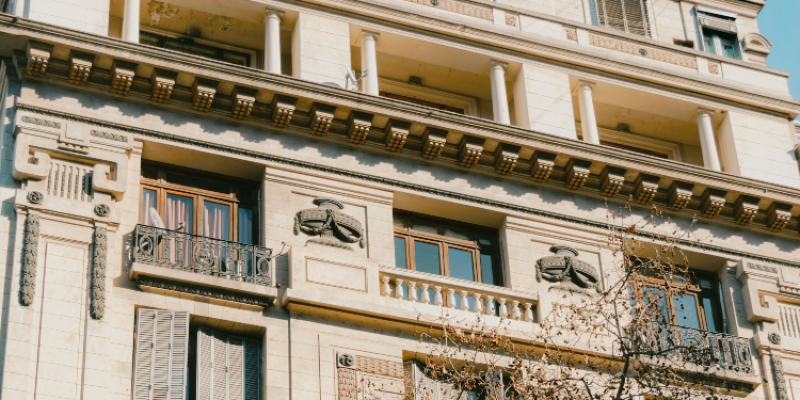
Buenos Aires offers one of the most diverse rental markets in Latin America, with neighborhoods ranging from upscale waterfront districts to creative urban hubs and family-friendly residential areas. For expats, finding accommodation in the Argentine capital means navigating a market shaped by inflation, dual-currency pricing, changing regulations, and fast-moving demand. Understanding how rents, contracts, guarantees, and utilities work is essential before signing a lease. This article explains everything newcomers need to know about renting in Buenos Aires, from average prices and popular neighborhoods to the practical steps involved in securing a home.
The rental market in Buenos Aires shows two parallel realities that newcomers must understand from the start. Official figures from the Instituto de Estadística y Censos de la Ciudad (IDECBA) show that published asking rents for used apartments in the City of Buenos Aires (CABA) rose between 32.3% and 34.7% year-on-year in the first quarter of 2026, slightly above the city's general inflation rate of 32.1% over the same period. Rent growth has eased compared with earlier spikes, but pricing pressure remains constant.
Supply has improved compared with the tightest period of 2023, when previous regulatory constraints reduced active inventory. According to CEPA's first-quarter 2026 analysis, more units returned to the long-term market following regulatory changes, and short-term rentals became less attractive in certain segments. Even so, well-priced units in the most demanded northern and central corridors move quickly, and contract terms (duration, indexation, currency) are now largely a matter of negotiation between the parties.
The market also splits clearly by currency. Listings advertised in pesos dominate the long-term segment, while a significant share of premium and furnished supply is priced in USD. Palermo, in particular, shows a USD-denominated share reaching 45.0% of published apartments, and comunas 1, 2, 13, and 14 (covering Retiro, Recoleta, Belgrano, and Palermo) concentrate the bulk of dollar-listed stock. Practical takeaway: expect to see both peso and USD listings, and clarify the currency of the contract, the adjustment mechanism, and whether building charges and utilities are payable in pesos before signing.
The City of Buenos Aires is officially divided into 48 barrios grouped into 15 comunas, as listed in the GCBA barrios directory. In practice, expat-friendly neighborhoods cluster around three broad zones: a northern corridor with higher rents and stronger international demand, a central belt of traditional residential barrios offering better value, and a southern band with more variable housing stock.
Palermo (Comuna 14) is widely treated as the main expat hub. Officially a single barrio, it contains de facto sub-areas such as Palermo Soho and Palermo Hollywood, with dense dining, nightlife, and creative-industry clusters. A trade-off is the noise and stronger pricing pressure than in most of the city. Recoleta and the adjacent Barrio Norte zone offer elegant building stock and cultural institutions, with a quieter, upscale atmosphere than Palermo. Belgrano, further north, is positioned as residential and family-oriented, with strong day-to-day amenities.
Retiro mixes a financial-district office zone next to the central business district with a high-category residential pocket; it is also home to the main long-distance bus terminal, which makes some blocks transit-heavy. Puerto Madero, the waterfront redevelopment area, contains the newest high-rise stock and the highest-end positioning in the city. San Telmo, part of the southern Barrio Sur identity, features older architecture and a strong cultural character, with block-by-block variation in building conditions.
Caballito sits centrally and works well for newcomers who want everyday connectivity without paying the premium of the northern corridor. Villa Crespo, Chacarita, and Colegiales form an emerging creative belt next to Palermo, with growing café and gastronomy scenes and prices that remain below the Palermo benchmark.
Most of the rental stock available to newcomers consists of apartments, which the city's statistical glossary classifies as departamentos, including buildings under propiedad horizontal (PH). Listings are described by the number of ambientes, a city-defined term that counts living rooms (bedroom, living room, study) but excludes kitchen, bathroom, corridors, and balcony. A monoambiente or 1 ambiente is a studio; 2 ambientes usually correspond to a one-bedroom; 3 ambientes to a two-bedroom. This terminology underpins how prices and floor plans are advertised on every major portal.
Shared and collective housing forms also exist and are called pieza de inquilinato or conventillo arrangements (rooms with shared kitchens and bathrooms), and rooms in hoteles or pensiones are counted as housing units. Separately, professionally managed coliving is a more recent format aimed at students, remote workers, and young professionals.
Serviced apartments and apart-hotels offer a useful transitional option for relocation, and registered properties appear on the city tourism authority's ENTUR list of registered accommodations, with units in Balvanera, Belgrano, Villa Urquiza, Recoleta, and Palermo.
Short-term tourist rentals are a regulated category in CABA. The city's temporary tourist rental law defines them as habitual tourist lodging in furnished dwellings for a period of not less than one night and not more than 6 months, requires the property to be registered, mandates the inclusion of the registration number in advertising, and requires notification of the building consortium.
Furnishing practices differ sharply between segments. Temporary tourist rentals are legally defined as viviendas amuebladas (furnished) and frequently published in USD. Standard long-term apartments listed in pesos are typically rented unfurnished.
Join the Buenos Aires community
Get regular tips and advice to make the most of your expat life
Rental prices in Buenos Aires
For the first quarter of 2026, average published monthly asking rents for used apartments in CABA were: ARS 538,595 for a 1 ambiente (studio), ARS 721,267 for a 2 ambientes (typically one-bedroom), and ARS 1,091,451 for a 3 ambientes (typically two-bedroom).
The Zonaprop Index for February 2026 reports ARS 679,578 (approximately USD 478) for a 40 m² monoambiente, ARS 790,801 (approximately USD 557) for a 50 m² 2 ambientes, and ARS 1,060,751 (approximately USD 747) for a 70 m² 3 ambientes.
Barrio variation is significant. Puerto Madero is reported to be the most expensive barrio for a 2 ambientes at ARS 1,322,428 per month (approximately USD 931), and Villa Lugano is the most affordable at ARS 643,142 (approximately USD 453). Premium waterfront and luxury districts can cost roughly twice as much as value-oriented southern and western areas before building charges and utilities.
The short-term furnished segment follows a different pricing logic. A typical advertised rate in this segment is around USD 1,500 per month plus expenses, reflecting both the furnishing premium and the additional building charges payable in addition to the headline rent.
What is included in the rent matters as much as the headline figure. In fact, rent is structurally separate from expensas (building common charges), which are separate from unit services such as electricity, water, gas, internet, and cable. Before committing to any property, ask for recent expensas statements for the last 3 to 6 months.
The main portals used to search for housing in CABA are Argenprop, Zonaprop, Mercado Libre Inmuebles, and Properati. Each lets you filter by Capital Federal, by long-term or alquiler temporal listings, and by Inmobiliaria versus Dueño directo.
For listings published by registered brokers only, the Colegio Único de Corredores Inmobiliarios de Buenos Aires (CUCICBA) operates Cabaprop as its institutional platform. Before contacting any agency, you can verify the broker's matrícula using CUCICBA's broker directory. CUCICBA also provides a public channel for reporting irregularities involving unregistered operators.
For initial stays while you search in person, the short-term furnished market is the most practical entry point. Use alquiler temporaland amoblado filters on Zonaprop and Argenprop, or on platforms such as Booking.com, for the first few weeks. Operators such as ApartamentoBuenosAires.com and MyLovelyApart cover the one- to six-month range for furnished units.
Most listings on major portals are posted by inmobiliarias rather than direct owners, so newcomers often interact with an agency for viewings, documentation, and the contract process. Viewings are typically scheduled by direct message, often via WhatsApp, and listings move quickly: many temporary furnished units publish narrow availability windows and visit slots. Some operators only offer in-person visits for stays above a minimum duration.
The rental process in Buenos Aires
The rental process splits into two distinct tracks. Long-term residential rentals follow the standard locación contract framework and typically involve a guarantee. Short-term tourist rentals are regulated separately under CABA Law 6255, with a defined duration of one night up to three months and a registration requirement for the property.
For long-term contracts, a guarantee is not legally mandatory, but landlords may request one. If asked, the tenant must propose at least two options, which can include a property title (garantía propietaria), a bank guarantee, surety insurance (seguro de caución), a personal guarantor (fiador solidario), or proof of income such as payslips. The standard required documents are identification (passport for foreign nationals), proof of income or employment, and the selected guarantee option.
Initial costs at move-in typically include the deposit, the first month paid in advance, and any guarantee-related costs, such as the surety insurance premium. Note that the deposit should not exceed one month of rent per year of the agreed contract term.
A point of practical importance for newcomers: in CABA, residential tenants do not have to pay real estate brokerage commissions or gastos de gestoría for reports. Under Law 5859, the maximum commission chargeable to the property owner is 4.15% of the total contract value, and tenants who are asked to pay commission can file a complaint through the IVC complaint channel for Law 5859 non-compliance.
The standard lease duration depends on what the parties agree to. Under current IVC guidance, if no term is set for permanent housing, the default is two years. A tenant may terminate the contract at any time by paying an amount equivalent to 10% of the remaining future rent from notice to the contract end date. Rent adjustments can be set by any index agreed by the parties, public or private, in the same currency; if the chosen index stops being published, an official similar index applies.
For tourist short-term rentals, the property must be registered in the city's Registro de Alquileres Temporarios Turísticos, and the registration number must appear in advertising. Onboarding is closer to a hospitality check-in (ID collection, house rules) than to a classic long-term lease screening.
Challenges for expats in Buenos Aires
The most common friction point is the guarantee requirement. Without a local property owner willing to act as guarantor, newcomers usually need to use seguro de caución or a bank guarantee. The city government runs Plan Alquilar, which includes the Garantía + Fácil program offering up to 70% off the cost of surety insurance, and the Banco Ciudad bank guarantee, designed to replace a traditional guarantor and cover tenant obligations for 24 months.
Administrative onboarding is sequential and can slow the process. Foreign nationals typically need a DNI issued after Migraciones grants temporary or permanent residence, as explained on the official DNI service page. A CUIT tax identifier is often required by service providers and contracts; foreign residents without a DNI can request a CUIT via ARCA's Presentaciones Digitales using Form 460 F/PD plus supporting documentation. Foreign public documents generally require an apostille or legalization, and a Spanish-language certified translation by a registered public translator. For US-issued documents, USAGov guidance on authentication and apostille explains the state-by-state process for vital records before they can be used in Argentina.
When conflicts arise, the city offers structured resolution channels. The IVC runs a free mediation service for rental conflicts in the comunas. The GCBA mediation program handles broader disputes, and Mediación Comunitaria does not require legal representation. Defensa al Consumidor applies consumer protection law to service disputes commonly faced by new arrivals (telecoms, retail, services). For discrimination claims, INADI receives written complaints, and the Defensoría del Pueblo of CABA serves as an independent escalation route.
Practical caution applies to advertising and viewings. Verify the broker's matrícula via CUCICBA before paying anything, never pay simply to view a property, and request the contract and recent expensas statements before transferring any money. Unusually low offers that refuse documentation should be treated as high-risk.
In CABA, utilities are generally not included in the rent. Servicios (electricity, water, gas, telephone, internet, cable) are billed separately, and expensas are a separate line again. The usual practice is for the tenant to pay expensas ordinarias (recurring building charges) and for the owner to pay expensas extraordinarias (one-off charges such as major structural works), though parties can agree differently in the contract.
The AGIP property tax billcomprises two components: Impuesto Inmobiliario, which is paid by the owner, and the tasa de ABL (Alumbrado, Barrido y Limpieza), which is paid by the tenant. AGIP moved to digital-only issuance from April 30, 2026, so make sure you can receive and access bills online.
Setting up utilities in your own name requires Argentine identifiers. The official electricity holder-change service for EDENOR and EDESUR users in CABA lists DNI, CUIL or CUIT, and a copy of the rental contract or property title. EDESUR confirms that the holder change is free and can be requested online, via app, or in person. For natural gas, MetroGAS requires DNI and a valid rental contract; billing categories reflect summed consumption over the last 12 months, so seasonality matters. For water and sewer, AySA processes changes of holder through its virtual office and provides a specific tenant agreement letter.
If you arrive before completing your DNI and CUIL or CUIT, a common practical arrangement is to leave utilities in the owner's name and reimburse the cost monthly. Negotiate this in writing in the contract and define the reimbursement method before move-in.
Internet setup follows building-specific logic. Movistar Fibra installation takes approximately 2 to 4 hours with a technician visit. Telecentro notes that if the building requires a box to be installed, authorization from the building administration (consorcio) may be required to access rooftops or common areas, which can delay activation. Personal and other providers cover similar territory; promotional pricing often requires automatic debit from a credit card, which can be a constraint if you do not yet have an Argentine card.
Frequently asked questions
For the first quarter of 2026, IDECBA reported citywide average asking rents in CABA of ARS 538,595 for a 1 ambiente, ARS 721,267 for a 2 ambientes, and ARS 1,091,451 for a 3 ambientes. Converted at ARS 1,420 per USD, those approximate USD 379, USD 508, and USD 769, respectively. Premium barrios such as Puerto Madero run roughly twice the city average for an equivalent unit, while Villa Lugano and similar southern areas come in well below.
Palermo, Recoleta, and Belgrano concentrate the largest share of internationally oriented supply and the highest proportion of USD-priced listings. Caballito offers good central connectivity at lower prices, while Villa Crespo, Chacarita, and Colegiales work as value alternatives close to Palermo with growing café and creative scenes.
For residential leases in CABA, tenants do not pay real estate commission. Under Law 5859, only the property owner can be charged commission, capped at 4.15% of the total contract value. If an agency asks you to pay commission, you can report it through the IVC's complaint channel.
A guarantee is not legally mandatory, but landlords commonly request one. Accepted options include a property title held by a third party, a bank guarantee, surety insurance (seguro de caución), a personal guarantor, or documented proof of income. For newcomers without a local property owner network, seguro de caución and the Banco Ciudad bank guarantee are the most practical routes.
In practice, yes, especially in the short-term furnished segment, where the standard contract is a contrato de alquiler temporario and the host typically asks for a passport rather than a DNI. For standard long-term residential leases, landlords generally require Argentine identification or strong alternative documentation (income proof, surety insurance), so many expats start with a short-term rental while they process their residency and DNI.
Lease duration is now what the parties agree. If no term is set for permanent housing, the default term is two years under current IVC guidance. Short-term tourist rentals are legally limited to between one night and three months.
Expensas are monthly building common charges covering items such as cleaning, the building manager, lifts, and shared utilities. The usual practice is that tenants pay expensas ordinarias and owners pay expensas extraordinarias, though parties can agree differently in the contract. Ask for statements from the last 3 to 6 months before signing, because expensas can change the true monthly cost materially.
Both. Most long-term listings are priced in pesos, while a significant share of premium and furnished short-term supply is priced in USD. Comunas 1, 2, 13, and 14 have the highest share of USD listings, and within Palermo, the share reaches 45.0% of published apartments. Always confirm the contract's currency and the adjustment mechanism in writing.
For rental conflicts, contact the IVC's free mediation service in the comunas. For commission charges that violate Law 5859, file a complaint via the IVC online complaint channel. For broader service disputes, contact Defensa al Consumidor, and for discrimination claims, INADI receives written complaints.
Provider installation typically takes a few hours once scheduled, but in apartment buildings, the timeline often depends on getting authorization from the building administration to access common areas. Check with the consorcio early and confirm whether your chosen provider already has infrastructure in the building.
ℹ️
We do our best to provide accurate and up to date information. However, if you have noticed any inaccuracies in this article, please let us know in the comments section below.
A journalist, holder of the DALF C1 and C2 and a diploma from the University of Mauritius, I have nearly twenty years of writing experience. After six years in the Mauritian press, I joined Expat.com, where I have been working for over a decade, including five years as editorial assistant, and now as editorial manager.