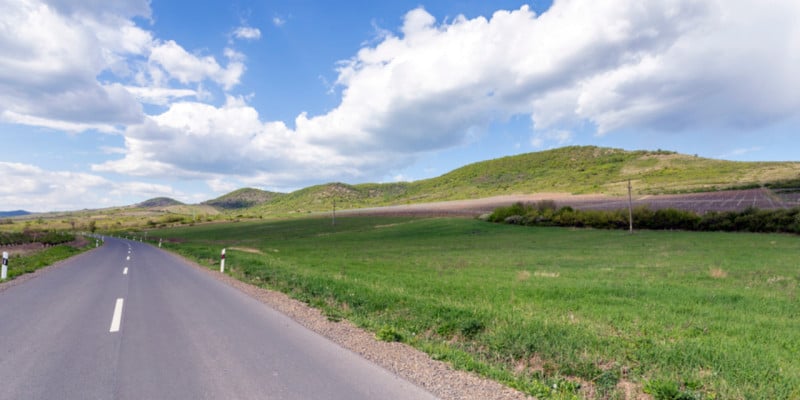
Hungary has an extensive road network, a large portion of which has recently been updated to improve traffic flow. The legal driving age is 17 years old, and the vehicles keep to the right-hand traffic. Expats coming to the country with a non-Hungarian driver's licence will not encounter any problems: if you are an EU/EFTA national, you can easily exchange your licence for a Hungarian one. Third-country nationals can also exchange their driver's licence, but additional fees and paperwork will apply. Alternatively, you can apply for a new Hungarian driver's licence after six months of proven residence in the country.
Do you need an international driving licence when to drive in Hungary?
If you are a national of a non-EU/EEA country, you will need an international driving permit alongside your licence, which you can use for one year after establishing residency before you have to renew it. If your country is a signatory to the Vienna Convention, you don't have to take an exam for this. If your licence is from an EU/EEA state, you don't need a specialized document at all.
Exchange your driver's license for a Hungarian one
Since Hungary is an EU member, the authorities will exchange your driving licence if you're an EU/EFTA citizen with minimal paperwork once it expires. You can do that by visiting any “Kormányablak” (Government Window) or district government document office. In general, the documents you need to have with you are the following:
your foreign driver's licence (you may need an official translation if it is not in English, German, or French, but the specific requirements may vary by office)
The fee for EU/EFTA nationals is 4,000 HUF (12 euros), plus the cost of the medical certificate (approximately 7,200 HUF, or 18.5 euros).
If you're a third-country national, you need to go to the central offices of the Administrative and Electronic Public Services in Budapest. You should provide the same documentation as in the case of EU/EFTA citizens (see above), as well as your residence permit.
The fee for third-country nationals is 6,200 HUF (19 euros). Non-EU citizens are generally required to exchange their license within one year of obtaining residency.
Get regular tips and advice to make the most of your expat life
Getting a driver's licence in Hungary
If you don't have a driver's licence from your home country and wish to get one in Hungary, you should know that non-Hungarian citizens are only allowed to apply for Category A and B vehicles (aka motorcycles and cars). In general, you'll need the following:
your passport
your residence permit or your registration certificate (proving residence for at least 6 months)
medical certificate of good health
passing the theory exam
passing a medical first aid exam by the Red Cross
taking practical driving lessons (30 lessons and a mandatory minimum of 580 kilometres driven)
passing the final driving exam
Once you get your driver's licence, it will be valid in Hungary for 10 years, or five, if you are over the age of 50. Over 60, the licence is valid for 3 years, and over 70, the validity drops to just 2.
Hungary places great importance on driving safely and minimizing accident risk. Every potential driver is required to take a medical first aid class organised by the Red Cross, whereas the penalty point system for traffic offences makes sure that a repeat offender will not stay behind the wheel for long. The main offences include DUI (see below), misuse of the emergency lane, ignoring red lights or police signals, and illegal overtaking. Once a driver accumulates 18 penalty points, they will lose their licence and will be banned from re-applying for one for six months (and even then, they will need to complete a driving course).
Hungary has an extensive and well-maintained network of motorways, with speed limits of 130 kph for cars and motorcycles. (On expressways, this is 110 kph and 80 kph on main roads.) To drive on motorways, you must purchase an e-vignette before entering the road. These are digital-only and can be bought at gas stations, online, or via mobile apps like BudapestGO. Cameras scan license plates to enforce this.
Good to know:
Hungarian laws are particularly strict when it comes to drinking and driving. There is a zero-tolerance policy (0.00% blood alcohol). If you are caught driving under the influence, your driving licence will be immediately revoked, regardless of whether you have accumulated 18 penalty points or not.
We do our best to provide accurate and up to date information. However, if you have noticed any inaccuracies in this article, please let us know in the comments section below.
I am a writer and editor with over a decade of multi-niche experience in content creation. With an international background, I have a strong understanding of expat culture and its associated needs and pain points. I currently reside in Budapest but there is still so much of the world left to explore.