Overview of the Hungarian banking system and banking options for expats
The biggest players in Hungarian banking are OTP and MBH Bank, two local entities. There are many international banks in Hungary, too. Banking in Hungary is a straightforward process for expats with few limitations on general banking, with the exception of certain specialized financial products. Subsidized products for family homes and baby bonds require permanent residency, and smaller local banks may turn you away to avoid compliance issues, there are enough international players and large institutions where this will not prove to be an issue.
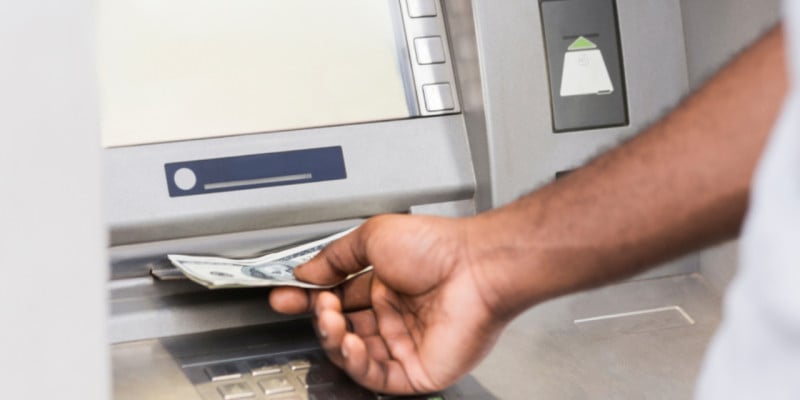
The Hungarian constitution also mandates that shops have to accept cash at all times (and also at least one electronic payment option), and ATMs are mandated to be installed even in smaller settlements, so even if you don't want to closely engage with the local institutions directly (by using platforms like Wise or Revolut), you will have an easy and comfortable time.
You will require a Hungarian tax ID for opening a treasury account, and mortgage requirements can be fairly strict (read more about this in our Buying property in Hungary article), but you won't encounter other significant restrictions.
How to open a bank account in Hungary
The procedure to open a Hungarian bank account may vary depending on your residency status and nationality. As of 2026, KYC (know your customer) compliance is rather strict, but the verification process is quite quick thanks to the wide range of digital tools available. The following is a general overview – be sure to check in with your bank of choice about the specific documents needed.
As an EU/EFTA national, you only need a passport or an ID alongside your address card or a registration certificate to open an account. As a non-EU national, you will typically need a proof of residence permit (work permit, white card etc.)
Good to know:
If you are opening a business account for your company, you'll also have to bring the company registration documents with you. Consult our section on Starting a Business in Hungary.
Banking fees and costs in Hungary
Apart from the standard banking costs associated with opening your account, the monthly maintenance fee, and the annual card fee, note that Hungary applies a financial transaction tax (0.3% up to 10,000 HUF total), which banks often pass over to customers. For costless cash withdrawals, you need to sign a declaration at your bank – the law allows two free withdrawals up to 150,000 HUF total. Premium packages and promotional deals may waive some or all of these fees, so it's important to research your options carefully.
Banking services in Hungary
The bank services in Hungary are of a high standard and feature multiple branches of well-respected international banks and large-sized domestic companies as well. They all offer an impressive slate of digital and online banking options, and you should have no issues with English-language interactions as an expat, no matter your choice. The largest players are OTP Bank and MBH Bank, the two large Hungarian entities, and key international alternatives are CIB (the subsidiary of Intesa Sanpaolo), K&H (owned by the KBC Group), and Erste, whose “George” platform is a standout option for digital banking.
UniCredit and Raiffeisen also offer their services in Hungary – the former being one of the favorites of corporate expats –, and you can also consider smaller digital-first local banks like Gránit Bank and MagNet Bank, depending on your needs. and offer many solutions to expat problems. For example, if you are unable to be in the country for the opening of your account, there are some banks that will give you the option to open your bank account online just by providing them with some additional paperwork. Another issue many expats face is currency conversion, especially with the big difference in value between euros and HUF. That's why most banks offer you the possibility to keep your currency accounts segregated: maintain your money both in HUF and/or in euros, USD, or your preferred currency.
Good to know:
Digital and app-based online banking is now standard, and many of the major banks allow you to start the account opening process via online video chat. Hungary's instant payment system (AFR) works 24/7, and domestic forint transfers arrive in just a few seconds – weekends included.
Fintech and crypto options in Hungary
Revolut and Wise have become common options for finance and banking in Hungary, so much so that Revolut has an established Hungarian banking license and Wise has offices in Budapest for their staff, offering good customer service for local issues. With Revolut's approval from the Hungarian Central Bank (MNB), they can now issue domestic IBANs, which allows workers to directly receive their salaries in a Revolut account.
In late 2025, the Hungarian government issued strict restrictions on cryptocurrency transactions, which are significantly harsher than those of most EU countries, with users facing criminal liability for unlicensed crypto activity, prompting Revolut's cryptocurrency arm to exit the Hungarian market entirely. Be extremely careful when considering such transactions – at the time of writing, it is legal to hold crypto under Hungarian law, but all transactions are considered criminal unless they are handled under the auspices of a government-approved “validator.” At the time of writing, details on compliant market-level solutions remain scarce, and penalties for non-compliance are severe.
Useful links:
OTP Bank
Erste Bank
CIB Bank
K&H Bank