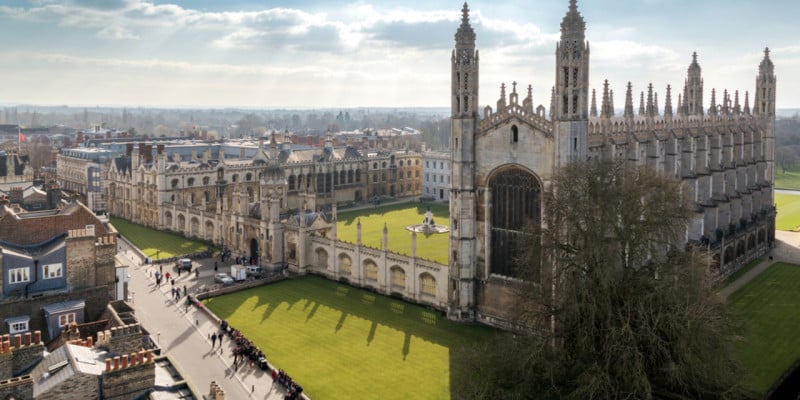
Studying in London is probably the best decision you will make for your professional and personal development. For several years, London has been ranked as one of the best cities in the world for international students. Education in London goes beyond the classroom - it is the social interactions with diverse crowds, the cultural attractions, the world-class academic research, and the determination to make the world better through education.
London has numerous excellent universities that attract international students from all over the world. There are more than 40 universities and higher education facilities in London, with over 20 featured in the QS World University Rankings. Thirteen London higher education institutions are among the UK's top 50. Besides their outstanding teaching and research performance, these universities are right amid the buzzing global cultural, technological, scientific, business and financial development in London.
Factors contributing to London's top ranking include:
The number of first-class universities.
Healthy job market and professional networking opportunities.
Cultural diversity and the embracing of different cultures.
Quality of life with access to museums, theatres and festivals.
Moreover, 47% of London is classified as green space.
Despite the high cost of living, most surveyed students agreed that London offers unparalleled opportunities for personal growth, career development and cultural enrichment.
Imperial College London ranked as the second-best university in the world for 2025, jumping four places in the QS World University Rankings. It focuses on four main areas of study: science, engineering, medicine and business. Imperial College has three major research centres: the Data Science Institute, the Institute of Global Health Innovation and the Centre for Hedge Fund Research.
Imperial College London is located in South Kensington, where London's magnificent science-dedicated museums are (e.g., the Natural History Museum and the Science Museum). Students are encouraged to take advantage of the central location and explore the diversity of culinary, shopping and entertainment options that the area offers. For international experience, Imperial College partners with the Massachusetts Institute of Technology in the US and Seoul National University in South Korea, offering research summer programmes.
University College London dates back to 1826, when it was founded with the intention of providing inclusive and fair higher education. In 1878, UCL led the way, and for the first time in the UK, women enrolled in higher education on equal terms as men. There are eleven faculties at UCL, from Arts & Humanities and Law to Brain, Medical and Population Health Sciences.
Half of the student population at UCL is admitted into postgraduate studies, a factor explained by UCL's investment in cutting-edge and interdisciplinary research. UCL researchers aim to tackle some of the world's most relevant and urgent problems, such as cancer, migration and sustainability. UCL is the first British university to open a campus in Doha, Qatar, focusing on studying cultural heritage.
Good to know:
UCL hosts over 150 nationalities, making up a third of the student body.
London School of Economics and Political Sciences (LSE)
As its name suggests, the London School of Economics and Political Sciences specialises in economics, politics, law, sociology and anthropology studies. The school was founded in the 1800s to study poverty and inequalities, and today, it has 16 Nobel Prize winners and 37 world leaders among its alumni.
LSE has international students from over 140 countries and maintains cross-cultural collaborations with Columbia University in New York, Sciences Po in Paris, Peking University in Beijing, the National University of Singapore and the University of Cape Town. All LSE's buildings and facilities are concentrated in central London, near Covent Garden and Thames, ensuring a community feel.
LSE gives high priority to helping its students start building their careers well before they complete their studies through one-to-one career advice, a network of employers and internship agreements. LSE runs The Parliamentary Internships Programme, open to MSc and PhD students. LSE also has one of the World's most extensive libraries, with over four million volumes and almost 30,000 e-books.
King's College London is renowned for its cutting-edge research, making it one of the most popular colleges globally for research in science and communications. The college has built research partnerships with colossal industries such as Siemens, Unilever and Philips Healthcare and public agencies such as the NHS and Metropolitan Police.
King's College London comprises five campuses in central London and nine faculties (Humanities, Law, Nursing, Business, Medicine, Psychiatry, Dentistry, Engineering, Social Science). The vision that unites students and staff from all fields is participating in informative and innovative research.
Good to know:
King's research activities have contributed to discovering the DNA structure and developing mass media such as the radio, television, mobile phones and radar. The University is also known to have nearly 300 societies that students can join.
The Queen Mary University of London was founded more than 200 years ago as the London Medical College. Today, the institution results from merging four historical medical schools, has five campuses in central London, and delivers over 240 degree programmes in three faculties: Humanities and Social Sciences, Science and Engineering, and Medicine and Dentistry.
The main campus is in the Mile End area, which may lack the Shoreditch and Hackney nightlife extravaganza but has many pubs and bars, ideal for quieter gatherings. Mile End campus students also benefit from short commutes to central London (e.g., 16 minutes to Oxford Circus).
Good to know:
41% of the student population, representing over 170 nationalities, comes from outside the UK, making Queen Mary a multicultural and inclusive place of study.
Royal Holloway isn't the typical city campus you would expect to see in London. With 135 acres of lawn, Royal Holloway, University of London (RHUL) is located about 30 kilometres away from central London, in Egham, Surrey. The campus design is based on one of the most distinctive châteaux in the world, the Château de Chambord at Chambord, Loir-et-Cher, France.
However, Royal Holloway's central base is at Bedford Square in Bloomsbury, close to the British Museum and the University of London Senate House Library. Students and staff can use this convenient location for classes, activities, meetings and a communal space in the afternoons and evenings.
Good to know:
When founded in 1986, Royal Holloway was looking to promote women's education.
Established in 1733, St George's is the only higher education institution in the UK dedicated to medical and health sciences. Among the study subjects are biomedical science, healthcare practice, healthcare science and medicine. The University collaborates with St George's Hospital, and, like every medical school in London (except the Imperial College School of Medicine), is a member of the United Hospitals.
St George's location in Tooting, South London, is a bonus for students who appreciate the charm and personality of this community-driven neighbourhood. From South Asian restaurants and indoor markets to an outbreak of bars and restaurants, Tooting is self-sufficient.
Good to know:
Tooting is home to England's largest freshwater swimming pool, Tooting Bec Lido.
Since it was founded, Birkbeck, part of the University of London, has been led by the aspiration of an equal education that doesn't exclude candidates based on their socioeconomic background. Today, Birkbeck is the only higher education institution that offers flexible and evening learning to 18,000 students across five schools and 19 departments. Part-time studies aim at employed students and students with a family. The main campus is in Bloomsbury, an education, research, and cultural London hub.
Important:
Birkbeck is one of the UK's higher education institutions with a likelihood for its graduates to earn over £30,000 a year.
Good to know:
Birkbeck has developed international partnerships and exchange programmes with Brazil's University of São Paulo, University of Milano-Bicocca in Italy, and Hosei University in Japan.
Research is at the centre of City, University of London's academic activities, defined by collaboration, innovation and creativity. City delivers courses relevant to the modern world and opens the doors to the global job market. The University has an extensive network of London employers and supports students in finding internships and paid jobs through career advice and workshops. City's students benefit from the university's central location in London's financial district, alongside the headquarters of global corporations, startups, law firms, and London's Tech City.
Important:
Each professional legal course of The City Law School is accredited by the relevant bodies to ensure that graduates can start practising their specialities immediately.
Brunel University London, a campus-based university in Uxbridge, comprises three colleges: Engineering, Design, and Physical Sciences; Business, Arts, and Social Sciences; and Health and Life Sciences. Three prominent research institutes are Energy Futures and Environment, Health and Societies and Materials and Manufacturing. The University's technology corresponds to the latest trends, and students can access flight simulators and a 3D body scanner, among other revolutionary equipment.
Uxbridge is far from central London (more than an hour on the tube). However, Brunel's campus has its community, and student life here has its own charm.
Important:
Brunel values the importance of relevant work experience for developing professional skills. The university offers academic study courses and one year of intensive placement (thick sandwich) or two six-month-long placements (thin sandwich).
Good to know:
Every year, the Department of Design organises an exhibition titled Made in Brunei to showcase the work of its graduates.
Middlesex University comprises six schools across North London and offers degrees in Art and Design, Business, Law, Health and Education, Media and Performing Arts and Science and Technology. Businesses and employers can consider Middlesex for their employees' development through Middlesex's Institute for Work-Based Learning, which provides training to organisations and individuals in their workplace. There are 24,000 students enrolled at the London campus.
Good to know:
Middlesex has opened overseas campuses in Dubai, Mauritius and Malta. The University has student exchange international partners in China, Australia, Brazil, South Korea and the United States.
Royal Veterinary College of the University of London offers undergraduate and postgraduate veterinary medicine and nursing courses. The college has two campuses: in Camden, central London, and in North Mymms, Hertfordshire, 15 minutes on the train from Kings Cross station. RVC is the best veterinary school in Europe. The College collaborates with businesses and offers sandwich degrees with one-year-long full-time industry placements for students who wish to gain work experience and employability skills before graduating.
Good to know:
RVC owns and operates the London Bioscience Innovation Centre and Bolton Park Farm in Hertfordshire, a practical teaching facility.
Founded in 1916, The School of Oriental and African Studies (SOAS) is a research University and a member college of the University of London. SOAS offers 350 undergraduate degrees and over 100 postgraduate degrees and PhD programmes. The SOAS School of Law is the only law school in the world that studies the legal systems of Asia, Africa, and the Middle East.
SOAS Brunei Gallery in Russell Square hosts exhibitions from Asia, Africa and the Middle East, aiming to promote the cultures of these regions and educate the public on Asian, African, and Middle Eastern matters.
Good to know:
The SOAS library has more than 1.3 million volumes, rare books, manuscripts and electronic resources and is a member of the Research Library UK.
Get regular tips and advice to make the most of your expat life
Choosing a London university
It is important to research which institutions across London teach the course you wish to study and to be aware of the entry requirements and course fees. As you can see from the above list of top universities, there are several options in London. Here are a few things to consider before making the final call.
Level of study
If you wish to engage in ground-breaking research at a PhD or postdoctoral level, you should probably aim for the best, such as Imperial College and UCL. If you are looking for international experience, Imperial College partners with the Massachusetts Institute of Technology in the US and Seoul National University in South Korea, offering research summer programmes.
Subject specialisation
World-leading universities meet the highest education standards and have outstanding performance regarding teaching, research, reputation, and global outlook. However, as a candidate student, it's vital to recognise in which subjects different universities specialise and whether they deliver the best possible curriculum for your desired area of study. See below some examples of the best Universities in London by subject, as ranked by the Times Higher Education.
University College London is top for studies in:
Arts and Humanities (performing arts, design, literature, linguistics, history, philosophy, theology, architecture, and archaeology);
Social Sciences (geography, politics and international relations, and communication and media studies);
Business & Economics;
Psychology;
Computer Science;
Engineering & Technology;
Clinical and Health studies.
King's College is considered among the best for:
Education, including teacher's training;
Life Sciences (agriculture and forestry, biology, sports science and veterinary);
Clinical and Health studies.
London School of Economics and Political Sciences is world-class for:
Law;
Social Sciences (geography, politics and international relations, communication and media studies);
Business & Economics.
Birkbeck offers some of the best programmes in Psychology.
Imperial College London is among the best in the world for:
Quite a few universities are located in central London. The London School of Economics and Political Science (LSE) is within walking distance to the British Library and Trafalgar Square. Middlesex University, on the other hand, is based further out and takes at least 30 minutes by tube to reach the city centre. Some universities have more than one campus, which may be situated in different parts of the UK, so keep this in mind as you research where your course will be located.
London is home to several Russell Group Universities, including the University College of London and the London School of Economics, which rank in the Top 10 in the UK and the Top 20 globally.
Important:
When you have shortlisted about five universities, start contacting their admissions offices for further information. If it's possible, attend a university open day in London.
A home student wishing to study at an undergraduate level should expect to pay £9,535 per year in 2025 to 2026 (increased by 3.1% from the previous year). In contrast, an international or EU student will pay anywhere from £11,400 for lecture-based programmes up to £50,000 for medical degrees, with most courses falling in the £16,800 to £35,000 range annually.
Postgraduate tuition fees vary significantly, depending on the university and the subject, but the average is estimated at £17,000 to £25,000. However, regardless of the level of study, degrees in humanities and social sciences usually cost less than science and clinical degrees.
Important:
EU students arriving in the UK are classified as international students and must pay international fees unless they have settled or pre-settled status in the UK. The UK government has also announced a 6% levy on international student fees to fund maintenance grants for UK students, which may further impact costs.
Accommodation and living expenses are high in London, with accommodation guaranteed to be your biggest expense. You need to budget at least £1,000 to £1,300 per month for a studio flat. However, you may be able to find less expensive accommodation in university halls or flat shares.
The London School of Economics recommends that students budget around £1,400 to £1,500 per month for living expenses, including accommodation, bills, travel and socialising.
Good to know:
To be exempted from paying council tax in London, you must study for at least 21 hours per week for at least one academic year. This tax applies to any owner or tenant aged 20 or above.
You may be eligible for loans, grants, scholarships, and other forms of funding to cover your tuition fees and living expenses. Explore the options available through your preferred universities or institutions and from independent organisations such as The British Council.
Prominent UK or EU scholarships for international students include:
Many students decide to apply for a work visa after having completed their studies or having found an employment sponsor. The Graduate visa allows students to stay in the UK for at least two years after completing their studies.
Good to know:
Consider looking for a part-time job to help adjust to London's cost of living. University campuses usually look for students to help out with on-site facilities. International students are usually limited to 20 hours per week during term time.
London has the most significant share of overseas students in the UK. UCL, LSE, Imperial, and Kings College have the highest percentage of international students (both Undergraduate and Postgraduate). Students must have a student visa to study in England and enough money to pay for the course and cover their cost of living.
Social life and making friends
One of the things that makes studying in London so unique compared to other student cities is the prospect of meeting like-minded people from all walks of life and accessing a network, which can boost your career later on. Likely, the friends you will make during your first year at university will remain friends for life, as you will get to share the ups and downs of living in London as independent and responsible adults.
However, you may find that meeting people and making new friends in London is much harder than in other smaller student cities, mainly because London universities don't operate in the traditional campus setting and lack the benefits that come along with a campus student life (connectivity, community feel, closeness). But don't get disheartened, as it's up to you to take your social life into your own hands by introducing yourself to fellow students, academic staff, and people outside the university.
Your first socialising experience as a student in London will most likely occur within the university during the student orientation week, before the official start of the academic year. With a series of welcoming events, the Admissions office aims to introduce students to each other, to their academic advisors, and the university's resources (e.g., labs, library, sports facilities, medical services, transportation, etc.) in a friendly and casual manner.
Tips:
Contact your institution to find out whether they run pairing programmes which match international students with mentors (or buddies) to help you settle in.
Find your favourite spots on campus (even if it's a city campus) and hang out regularly between classes so that your friends know where to meet you without much organisation.
Consider joining university-run sports clubs, language classes, choirs, art groups, and charities.
Keep up-to-date with happenings throughout London, and take advantage of outdoor activities, volunteer work, etc.
Social life may require spending money. If you are trying to save some money or you are broke during a particular month, don't panic. You can still meet up with your friends and have fun together. Take the initiative and invite people over to cook dinner, stream movies, or play board games. If the weather is nice and sunny, you can organise a picnic at Hyde Park, stroll along the South Bank, or go to a museum you haven't been to before.
Great spots for budget-friendly studying and socialising include:
The Cake Shop of London Review Bookshop just off the British Museum;
Central Saint Martin's Library;
Hyde Park;
South Bank.
Talk to your friends about your finances to avoid misunderstandings and take the pressure off your shoulders. Plus, by being honest, you will create stronger bonds.
Important:
Studying in London will help you discover yourself and become more independent. However, being abroad on your own can be overwhelming at times. If, at any point in your student life, you feel that you struggle to juggle full-time studying with your part-time job or internship and social life, don't hesitate to ask for advice or help. Several mental health charities in London can offer support.
With so many things to do and places to have fun in London, you may see your finances collapsing, especially if it's your first time away from home. The first step you should take towards a well-thought-out budgeting plan is to open a bank account to prevent foreign currency and other bank charges.
To open an account, the bank will ask you for your passport, proof of address (e.g., utility bill or a letter from student housing services), and proof of student status (e.g., your university acceptance letter). Different banks offer different perks (e.g., interest-free overdraft, Amazon Prime membership, Railcard, etc.). It's wise to do your research and pick the bank that better covers your financial needs.
Travel savings
Travelling within London significantly accounts for the high cost of living in the capital city. If you regularly commute to your workplace and university and have a London address during term time, limit travel costs by getting an 18 Student Oyster photocard, which gives you 30% off the price of the adult rate Travelcards and Bus & Tram season tickets.
Good to know:
The Student Oyster is personalised, which means that even if it gets lost or stolen, you can transfer the remaining amount from the card to a new one.
If you are an avid traveller and wish to combine your student life in London with exploring the rest of the UK, invest in a 16-25 Railcard, which gives you up to one-third off national rail fares. Also, National Express coach services depart from London to popular UK destinations such as Manchester, Birmingham, Bristol, Edinburgh and Glasgow. To get the best deals, book your tickets well in advance.
London retail shops, cafés, restaurants and pubs look after students with generous student discounts. However, not all places advertise those discounts clearly with signs. It's up to you to ask before paying for your purchase if you are entitled to a student discount.
Good to know:
The TOTUM card by the National Union of Students gives you access to over 200 UK student discounts and 42,000 international discounts.
With so many worth-visiting international restaurants in London, students tend to eat out or order regularly. If you are looking to keep your taste buds satisfied without killing your wallet, go to voucher websites such as Groupon and Wowcher to find some good deals on restaurants.
Books and libraries
London universities have very rich libraries. With over 350 public libraries and The British Library on your doorstep, it is likely you won't need to purchase any books throughout your studies in London. However, if it's a last-minute call, or you want to upgrade your bookcase, buy books from second-hand shops or purchase them online for better prices.
London is home to about 170 museums, 11 of which are national, and three are in the world's top ten. Also, with over 250 festivals, the biggest selection of live comedy in the world, over 850 art galleries, and four UNESCO World Heritage sites (Tower of London, Maritime Greenwich, Westminster Palace, and Royal Botanic Gardens), there's no doubt the world's cultural heart beats in London.
Most cultural attractions and events offer discounts to students, and many of the permanent collections in the Natural History Museum, V&A, and Tate Modern, among other museums and galleries, are free.
To benefit from the freedom and opportunities that London has to offer, it's essential to find the right balance between performing well at university without reaching the point of burnout, staying within your budget, enjoying a social life and expanding your network, and taking care of your wellbeing with regular exercise and good quality food.
London is one of the largest business and financial centres in the world, as well as a global fashion, art, media, and culture hub. Get to know the world-leading organisations, institutions and brands in the sectors of your interest that are present in London, and don't hesitate to use your communication skills to approach them. You can introduce yourself via email by attaching your resume and expressing your interest in an internship or volunteer work.7
People travel worldwide to indulge in London's international culinary experiences; from Italian, Indian and Chinese to Ethiopian, Peruvian and Mexican. Make sure that you allocate some of your time and money to try different flavours. Eating decent meals and not limiting your diet to fast food, pasta and canned food will help you stay healthy. You should also try signature English dishes such as Sunday roast, fish and chips, and beef Wellington in the many traditional London pubs.
Balance nutritious meals with some good exercise to stay fit. Considering that about 47% of London is green space, there's no excuse not to.
Good to know:
The Queen Elizabeth Olympic Park is home to world-class sports facilities like the London Aquatics Centre. The prices for using the swimming pools of these five-star facilities aren't different from the prices at other local leisure centres.
Exploring beyond London
London is a big city with many local hubs, and in many cases, you don't have to leave your residential or university area to find all you need: work, entertainment, food and culture. However, it's highly advisable to make some effort to explore this dynamic city.
If you wish to seize the day, you can take a day trip to the South of England. Stonehenge is accessible via a direct train from London to Salisbury, and picturesque Oxford city is only an hour away from London by train. Brighton, also known as London-by-the-Sea, has been a popular resort destination for Londoners since the mid-1800s.
With five major airports, including Gatwick and Heathrow, and the St Pancras International Station, from where you can get the Eurostar to Brussels, Paris and Amsterdam, London makes travelling to the rest of Europe and overseas destinations hassle-free and relatively cheap.
Good to know:
Low-cost airlines such as Easyjet, WizzAir, and Ryanair frequently depart from London to most European destinations.
It would be best to always enjoy the city without risking your safety. In the event of a terror attack, the national police advise everyone to run to safety first, find a hiding spot and finally call 999 to inform the authorities.
When using public transport, especially at night, have an idea of when to expect your service, and avoid waiting alone for a long time for your bus or train service. Never get in a taxi that you haven't booked in advance or isn't a black cab, and if you decide to go home on foot, stick to busy roads with good lighting.
Good to know:
Most private student living properties have 24/7 CCTV in operation and a secure entry system, usually managed with a key card or password.
We do our best to provide accurate and up to date information. However, if you have noticed any inaccuracies in this article, please let us know in the comments section below.
Rebecca Roberts is a Senior Content Editor, writer and content marketing expert based in Leeds, UK. With over 15 years of professional experience, she specialises in female-focused topics including health, wellness, work, travel, motherhood and education.
As a British expatriate who lived in Dubai for six years before returning to England in 2020, Rebecca has first-hand experience of relocating to the UK. This personal journey, combined with her professional background, gives her unique insight into the practical and emotional aspects of settling into life in England.