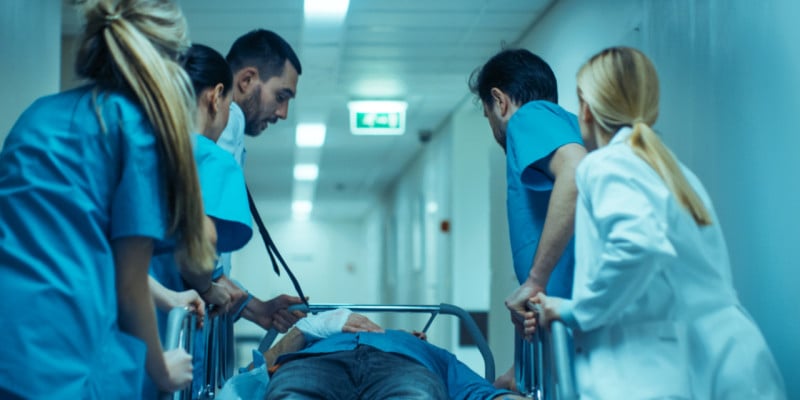
Finding yourself in an emergency—whether medical, environmental, criminal, or related to public health—is a possibility for anyone living in England. Understanding the appropriate response procedures can be lifesaving, and it's even more important as an expat who may not be familiar with the emergency services here. When faced with an emergency, assess the situation calmly, prioritise your own safety before assisting others, and contact emergency services before attempting first aid.
The 999 number, established in London in 1937, remains England and the rest of the UK's primary emergency contact for police, ambulance, fire and coastguard services.
When to call 999
You must call 999 immediately for:
Medical emergencies
Loss of consciousness, severe bleeding, serious burns (including chemical burns), anaphylaxis or severe allergic reactions, chest pain with breathing difficulties (potential heart attack), stroke symptoms, major trauma or overdose.
Other emergencies
Serious road traffic collisions, violent crimes in progress (stabbing, shooting, assault), someone in immediate danger, fires, serious accidents involving falls from height, or maritime emergencies.
What to expect
The emergency operator will ask for your precise location (including what3words coordinates if available), your contact number, a brief description of the emergency, and details about the condition of anyone injured.
While waiting for emergency services, remain calm and call back if the patient's condition changes. When the ambulance arrives, provide relevant information to the paramedics about medical history, medications, or known allergies.
Accessibility options
SMS emergency service: If you have a speech impediment or hearing impairment, sign up for the emergency SMS service by texting “Register” to 999 and following the instructions.
Silent solution system: If you cannot speak during a 999 call (due to danger or medical reasons), stay on the line and press 55 when prompted. This alerts operators that you need help but cannot speak safely.
No credit or signal required: 999 calls work without mobile credit and will attempt to connect through any available network.
Good to know:
What3words is an app you can download that helps you to share your precise location. Every three square meters of the world has been given a unique combination of three words, which aims to give more accuracy and help emergency services, delivery companies, and others locate you more easily.
The NHS 111 service is designed to provide urgent medical guidance when you need help but it's not a life-threatening emergency.
You should use 111 when you are:
Uncertain about the severity of symptoms;
Minor injuries or illnesses requiring same-day attention;
Guidance on appropriate care pathways;
Mental health crisis support (or call 111 and select option 2);
Urgent dental problems outside surgery hours.
During your call, the trained adviser will ask questions about your or the patient's symptoms and advise you accordingly. They will book an arrival time at an A&E, connect you to a nurse, or guide you through self-care.
Good to know:
111 is available 24 hours a day, seven days a week. If you don't speak English, you can ask for a translator.
Get regular tips and advice to make the most of your expat life
Going to A&E in England
Accident and Emergency departments in England operate 24 hours a day, 365 days a year, and deal with life-threatening emergencies, such as loss of consciousness, chest pain, breathing difficulties, severe bleeding, allergic reactions, severe burns, stroke and major trauma.
The procedure for arriving at the A&E alone is different from being driven by ambulance. Firstly, you must register at the reception and answer a few questions. Then, you will go through the preliminary assessment (triage) for the medical practitioner to determine the urgency and nature of your treatment.
Bear in mind that if your condition isn't critical, you may have to wait hours at A&E before a doctor sees you, while other patients with more severe symptoms are being treated.
Attention:
Not all hospitals have an A&E department. You can use the search link to find the closest A&E near you.
Good to know:
Some hospitals have a separate A&E department dedicated to children's care.
With an NHS login, you can access your medical records, test results, and prescriptions online.
Visit an urgent treatment centre in England
Urgent treatment centres (UTCs), also known as walk-in centres or minor injury units, are designed for less severe and non-life-threatening medical emergencies such as sprains and strains, bites and stings, ear and throat infections, stomach pains and emergency contraception.
Urgent treatment centres are complementary to GP and A&E services without replacing any of them. To be seen, you don't have to register or book an appointment; you can walk in and present your symptoms.
Emergency powers in England
Emergency powers date back to ancient Rome and refer to extraordinary (but temporary) measures that may affect fundamental rights (like freedom of movement) in the name of resolving a crisis. The COVID-19 pandemic was a good example of this.
Emergency powers are governments' last resort, administered only in exceptional circumstances during which rapid response is required for the public good.
Legal framework
Civil Contingencies Act 2004: The primary legislation governing emergency planning and response in England, replacing older provisions
Human rights considerations: Emergency measures must be temporary, proportionate, necessary, and regularly reviewed. They're subject to parliamentary oversight and judicial review.
Recent examples: The Coronavirus Act 2020 demonstrated how emergency powers operate during public health crises, with time-limited provisions and regular parliamentary renewals.
Principles
Emergency powers are:
A last resort when normal procedures are insufficient.
Time-limited with regular review requirements.
Proportionate to the threat level.
Subject to legal and parliamentary scrutiny.
Used to protect public safety and well-being.
The British Red Cross
The British Red Cross supports people and communities across England affected by regional or national emergencies, helping people maintain dignity and recover quickly.
The role of the British Red Cross is "auxiliary" by law, meaning that it supports the UK government's function and helps authorities coordinate and meet public humanitarian needs during crises. Hence, the British Red Cross is neither a governmental nor a non-governmental organization—it's a private organisation with public functions.
You can ask for time off work if you or your dependent is involved in an emergency, such as a mental or physical illness. Also, if you or your dependents' pre-existing conditions are worsening, or you have to take care of someone who is going through a traumatic event (e.g., mugging). Lastly, you can ask for time off work if your child has been injured or suspended from school.
Of course, it's not advisable to live your life as if something terrible will happen, but preparing for an emergency and having an emergency plan can save your and other people's lives.
Whether you live alone or with your family, create a household emergency plan, including a "grab bag" with essential items (like a torch, money, water, a phone charger, copies of documents, etc.), should you ever need to rush outside the house in an emergency.
Also, suppose there's an emergency, and you must stay in the house for a few days. In that case, store bottled drinking water, non-perishable food, a first aid kit and baby and pet supplies somewhere in the house.
In serious emergencies such as flooding, fire, or bomb warning, the local councils in the UK provide temporary shelter to evacuees in emergency rest centres (i.e., schools, leisure sports centres, churches, etc.).
Last but not least, consider having an "emergency friend", even though it may be pretty challenging when you are a freshly arrived expat in England. Emergency friends are usually neighbours, relatives, or someone you trust with a spare set of your house keys, so they can look after your pet if you are not at home or babysit your children in the event of a work or family emergency.
ℹ️
We do our best to provide accurate and up to date information. However, if you have noticed any inaccuracies in this article, please let us know in the comments section below.
Rebecca Roberts is a Senior Content Editor, writer and content marketing expert based in Leeds, UK. With over 15 years of professional experience, she specialises in female-focused topics including health, wellness, work, travel, motherhood and education.
As a British expatriate who lived in Dubai for six years before returning to England in 2020, Rebecca has first-hand experience of relocating to the UK. This personal journey, combined with her professional background, gives her unique insight into the practical and emotional aspects of settling into life in England.