Living in Denmark: the ultimate expat guide
Everything you need to know for a successful life in Denmark.
Denmark attracts thousands of expatriates every year, drawn by its unique social model, exceptional quality of life, and the renowned concept of hygge. As a member of the European Union, this Scandinavian country provides a balanced work environment, an efficient social welfare system, and a society that places a strong emphasis on equality. It also stands out for its exemplary commitment to environmental sustainability, evident in its abundant cycling paths and ambitious energy transition.
The population is nearly 6 million, with about 300,000 expatriates mainly from Europe, North America, and Asia. The French community is estimated at around 7,000 people, primarily located in Copenhagen and other major cities across the country.
5 great reasons to choose Denmark
- Excellent work-life balance: reasonable hours and a culture of well-being.
- Free health care and education: high-quality public services funded by taxes.
- A society committed to equality: the country consistently ranks among the best in the world for gender equality.
- The concept of hygge: a way of life focused on simplicity, comfort, and finding joy in the little things.
- Green mobility: outstanding cycling infrastructure and a strong ecological commitment.
The Expat.com guide is designed to help you prepare for your move to Denmark smoothly. You’ll find all the essential information: visas, employment, housing, health, daily life, and the Danish lifestyle.
Official language: Danish. English is widely spoken. | Local currency: Danish krone (DKK) | Time difference with France: None | Flight duration Paris - Copenhagen: About 2 hours |
Formalities and visas for Denmark
If you're planning to settle in Denmark, there are certain requirements you must fulfill, even for European Union citizens. French and other European nationals can enter visa-free and reside in Denmark for up to three months without any special formalities. After this period, you will need to apply for an EU registration certificate (registreringsbevis) from the Danish Immigration and Integration Service (SIRI).
Once you obtain this certificate, registering with the municipal register (Folkeregisteret) allows you to get your CPR number, which is essential for working, accessing healthcare, opening a bank account, or renting accommodation. After that, you can set up your MitID (previously known as NemID) for online administrative tasks, followed by activating your DigitalPost, the official government messaging service.
For nationals from third countries, a long-stay visa or residence permit is required.
💡 Useful tips
- Begin your application process as soon as you arrive: obtaining the CPR number can take several weeks.
- Prepare your essential documents (civil status, diplomas, employment contract) translated into English or Danish (certified translation).
- Job seekers can remain in the country for up to six months without a registration certificate.
- Regularly check the website of Udlændingestyrelsen for the latest updates.
📍 Further resources
Visas for Denmark
Figuring out which is the right visa or residence permit for your stay in Denmark can be confusing. ...
The Greencard in Denmark
According to New to Denmark, the greencard scheme is no longer in place:
The Working Holiday Visa for Denmark
Thanks to the Working Holiday Visa program in Denmark, you can discover all that the country has to ...
Working in Denmark
Denmark enjoys a robust economy with a very low unemployment rate (around 2.9% as of September 2025). The job market functions under a model known as flexicurity, which combines high flexibility for companies with extensive social protection for employees. While English is widely spoken in the workplace, having a good command of Danish is definitely an advantage for long-term career growth.
Starting a business is made easier thanks to simple procedures and a highly efficient digital environment. The country is also a magnet for numerous digital nomads, drawn by its quality of life and excellent connectivity. In Denmark, internships (praktik) are common and well-integrated into the professional system.
Most in-demand profiles:
- IT specialists and developers
- Engineers (biotechnology, renewable energy)
- Healthcare professionals (doctors, nurses)
- Finance and accounting experts
- International trade executives
💡 Key points
- The job market is competitive: experience and English are essential
- No legal minimum wage. The lowest wages are determined by agreements between unions and employers, typically around 110 DKK per hour (approximately €15).
- Wages are high, but the taxes are significant: the average gross monthly salary is around 48,000 DKK (approximately €6,450)
- Culture of arbejdsglæde (‘joy of working’) and an excellent work-life balance
Unemployment rate: around 2.9% (September 2025) | Legal working hours: average 37 hours/week (up to 48 hours depending on the contract) | Minimum wage: no legal minimum | Income tax: progressive between 37% and 52% depending on income and municipality of residence | Corporate tax: 22%, VAT at 25% |
🔍 To explore further

Working in Denmark
Are you thinking about relocating to Denmark for work? Denmark is an open and welcoming country ...

Setting up a business in Denmark
Denmark is one of the easiest countries to set up your own business. The procedures are relatively ...
Internships in Denmark
If you are under 34 years of age and looking to gain experience abroad, why not consider an ...
Studying in Denmark
Denmark attracts a large number of international students thanks to the quality of its higher education. The country is home to eight public universities, including the University of Copenhagen, Aarhus University, the Technical University of Denmark (DTU), and Copenhagen Business School, all of which are well-respected across Europe.
Why study in Denmark?
Universities offer a wide range of programs in English, particularly at the master’s and doctoral levels. The teaching approach promotes creativity, critical thinking, and project-based work. Student life is vibrant, international, and set within a safe and warm environment.
Tuition is free for students from the EU/EEA, but ranges from €6,000 to €16,000 per year for non-Europeans. Danish and European students can benefit from the SU (Statens Uddannelsesstøtte), a monthly allowance ranging from 6,300 to 7,100 DKK (approximately €850 to €950), depending on their situation. For European students, proof of employment for 10 to 12 hours per week is required to qualify for this support, which greatly eases day-to-day living for students.
💡 Our tips
- Plan your applications as the selection process is competitive.
- Check out the SU if you are European and intend to work part-time.
- Explore available scholarships for non-European students.
- Verify the equivalence of your qualifications through the Danish Agency for Higher Education and Science.
- Shared housing is quite popular, especially in Copenhagen, where rents can be high.

Studying in Denmark
Danish students are spoiled with a choice of world-class educational institutions, and luckily, international students are also able to study in ...
Retiring in Denmark
Denmark is generally not a retirement destination for French citizens who have never lived there. The majority of foreign retirees are former expats who worked in the country. The Danish pension system, often ranked among the world's best, is appealing due to its stability, but it is less attractive for newcomers because of the high cost of living.
It is built on three pillars: the Folkepension (universal pension funded by taxes, approximately 6,315 DKK/month, around 845 €), the ATP (mandatory supplementary pension for employees, based on capitalization), and occupational pensions (5 to 18% of salary depending on collective agreements).
3 major advantages
- Efficient healthcare system: high-quality infrastructure accessible via the Sygesikring (Danish health insurance).
- High quality of life: safety, clean environment, the culture of hygge, and well-being.
- Inclusive society: a culture of trust, low crime rates, and strong social cohesion that fosters intergenerational bonds.
💡 Important to know
- The legal retirement age ranges between 65 and 67 years, depending on the year of birth (with a gradual increase).
- The Folkepension in full is granted after 40 years of residency in Denmark; if not, it is calculated pro rata.
- European citizens can benefit after 3 years of residency, including 1 year of continuous residency. For citizens of third countries, it is advisable to check the specific conditions applicable to your nationality.
- There is no specific retirement visa: EU nationals simply need to obtain an EU registration certificate and a CPR number.
- The cost of living is high, especially in Copenhagen, where you should budget around 3,000 to 4,000 € per month for a single person.
- Pensions are taxable, with an average rate of 38 to 58% depending on the municipality. It is advisable to check for a tax treaty between Denmark and your home country. The Franco-Danish treaty, for example, helps avoid double taxation.
Finance and banks in Denmark
Managing your budget effectively is crucial for a successful relocation to Denmark. The country boasts a modern and digitalized banking system, but the high cost of living and complex tax system require careful planning.
💡 Our tips
- Open a local bank account as soon as you receive your CPR number.
- Quickly apply for your MitID and set up your NemKonto to receive public payments.
- Bank charges can often be high: compare offers before choosing your bank.
- The Danish tax system is based on multiple levels of taxation and a withholding tax. Rates are among the highest in Europe, but they fund high-quality public services.
- The VAT is uniformly set at 25% on most goods and services.
- The Franco-Danish tax treaty helps to avoid double taxation.
📍 Further information

Health care in Denmark
The Danish healthcare system, funded by taxes, is one of the most efficient in the world. Universal and publicly funded, it guarantees free access to essential care for all residents, including registered expatriates with a CPR number.
Consultations with a general practitioner, hospital care, and emergency services are free. To see a specialist, you need a referral from your general practitioner. Prescription medications are partially reimbursed based on a progressive scheme related to annual expenses. Dental and eye care costs are the responsibility of adults (expect to pay between 500 and 1,500 DKK, around 65 to 200 euros). Waiting times can range from a few weeks to several months for non-urgent procedures. Childbirth, whether natural or via cesarean section, is fully covered by the public system.
Many companies offer private health insurance to help you access specialists more quickly. Individually, this costs between 200 and 500 DKK per month (25 to 65 euros).
💡 Good to know
- No vaccinations are mandatory, but universal vaccines are recommended (DT-Polio, MMR, hepatitis B...).
- The unique emergency number is 112 (police, fire, ambulance).
- The yellow health card (sundhedskort) is automatically sent after registration with the CPR number and allows access to public healthcare.
- Pharmacies (apotek) are widely available, with some offering 24-hour services.
- Each resident has a designated general practitioner, who is the first point of contact for any medical needs.
📍 Going further

The health system in Denmark
One benefit of living in Denmark is having access to the high standard of healthcare. Understanding the healthcare system in Denmark is a priority ...
Education and schools in Denmark
The Danish education system, which is mandatory from ages 6 to 16, is renowned for its quality and welcoming approach. Education focuses on creativity, independence, and the well-being of the child rather than competition.
Public schools (folkeskoler) are free for all residents and conduct lessons in Danish. English is taught from an early age, typically starting in primary school at around age 9, and occupies a significant role in the educational journey.
Choosing the right school:
- Danish public schools: These are free for all residents, provide education in Danish, and are open to enrolling foreign children. They offer language support classes (dansk som andetsprog) to assist with integration.
- Private and alternative schools: Friskoler (independent schools) and schools that follow alternative pedagogies are partially funded by the government. While they adhere to the national curriculum, they enjoy greater pedagogical freedom (such as Montessori, Steiner, and Catholic schools). Monthly fees typically range from 1,200 to 2,500 DKK (approximately 160 to 335 EUR).
- French school: The Lycée Français Prins Henrik, located in Copenhagen, is the only French school in the country. Recognized by AEFE, it offers the French curriculum from nursery through high school. Tuition fees range from 34,200 to 47,300 DKK per year (about 4,600 to 6,400 EUR), depending on the level.
- International schools: Several institutions, such as the Copenhagen International School, Rygaards School, and Bernadotte School, offer programs in English (IB curriculum, British, American). Annual fees range from 27,000 to 210,000 DKK (approximately 3,600 to 28,000 EUR) depending on the school and the level.
💡 Practical Tips
- Enrollment in a public school is done through the municipality (kommune) of residence, once you have obtained your CPR number.
- Spaces in international schools and at the Lycée Français are limited: register your children several months ahead of the start of the school year.
- Many expat families choose the public education system to enhance their linguistic and cultural integration.
- Public schools regularly host information meetings for foreign families to help ease the transition.
📍 Further resources
Accommodation in Denmark
The housing market in Denmark, particularly in Copenhagen and Aarhus, remains very tight. Finding a place to live can take several weeks, or even months. Renting is the most common option, typically involving indefinite leases and a deposit equivalent to three months' rent. Expect to pay around 8,000 to 12,000 DKK per month (1,070 to 1,600 €) for a studio, 12,000 to 18,000 DKK (1,600 to 2,400 €) for a two-bedroom apartment, and up to 22,000 DKK (approximately 2,950 €) for a three-bedroom in downtown Copenhagen.
EU/EEA citizens can buy property in Denmark if they make it their primary residence or conduct a business activity. In this case, a simple declaration to the land registry is sufficient. On the other hand, non-Europeans must obtain permission from the Ministry of Justice. The purchase fees amount to approximately 2 to 3 % of the property's price, including the registration tax (0.6 % + 1,750 DKK, or about 235 €).
📍 Further reading
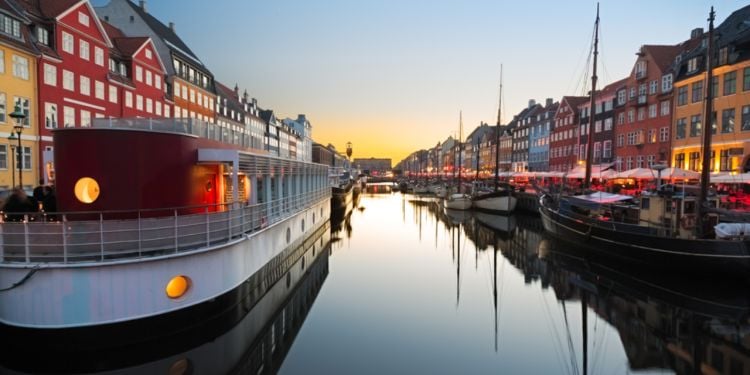
Accommodation in Denmark
Finding accommodation is one of the first steps for expats moving abroad. Denmark has a wide range of accommodation options for all budgets and ...
Moving to Denmark
An international move to Denmark requires careful planning and organization. From the transportation of your belongings to the administrative procedures and your settling in, it's wise to prepare for each step in advance.
- Compare quotes from international moving companies and purchase insurance for your belongings.
- Plan for customs procedures: EU citizens can import their personal effects without restrictions. Non-EU citizens must declare their belongings and may be subject to inspections.
- Gather your essential documents (passport, diplomas, birth certificate, marriage certificate, driving license, employment contract) and have them translated into English if necessary. These will be important for obtaining your CPR number.
- Check the electrical compatibility: Denmark uses a voltage of 230 V / 50 Hz and plug types C, E, and K. An adapter may be necessary for some French devices.
- Notify your organizations (bank, insurance, taxes, etc.) of your change of address before you leave.
- If you are traveling with a pet, it must have a microchip, an up-to-date European passport, and a valid rabies vaccination. No quarantine is required for pets coming from the EU.
📍 To go further


Leisure in Denmark
The Danish enjoy an excellent balance between work and leisure, allowing expatriates to fully enjoy the numerous activities available. The local culture values time spent outdoors and encourages an active and healthy lifestyle. Leisure activities are easily accessible, and costs remain reasonable, especially for outdoor pursuits. Bicycling is central to daily life in Denmark, serving both as transportation and recreation. The country boasts over 7,000 km of coastlines perfect for water sports, as well as plenty of parks and green spaces great for jogging or walking. The hygge vibe is prevalent in the warm cafés where Danes love to gather. Music, food, and cultural festivals fill the year, particularly in Copenhagen and Aarhus.
Must-see experiences:
- Visit a sea sauna, followed by a winter swim with or without a swimsuit (vinterbadning). This ritual, which alternates between hot and cold, improves circulation, boosts the immune system, and offers an intense sense of well-being.
- Join in on community meals (fællesspisning), which are very popular in neighborhoods and organizations, where locals and expats come together for dinner around long, friendly tables.
- Attend local festivals and events such as the Aalborg Carnival or the Aarhus Festuge, which gather the entire community each year to celebrate music, food, and arts.
- Explore the flea markets and farmers' markets found in nearly every town, where you can discover local products, handicrafts, and Danish design.
- And of course, take bicycle rides along the coasts or through forests, a simple and authentic way to immerse yourself in the Danish way of life.
📍 To discover more
Things to do in Denmark
Whether you want to exercise in the great outdoors, stroll along a historic cobblestoned street, or cosy up in a ‘hyggeligt' café, ...
Everyday life in Denmark
Living in Denmark means embracing a balanced lifestyle, where personal well-being is just as important as professional success. The country is frequently cited as one of the best places in the world for work-life balance. The Danes place a high value on quality of life, family time, and leisure activities.
The lifestyle is urban yet close to nature, featuring green, calm, and well-organized cities. The atmosphere is relaxed and egalitarian, with hierarchies being less pronounced and a strong sense of mutual trust. Denmark is also renowned for its security and high level of social welfare.
Good to know:
- Denmark ranks among the safest countries in the world, with low crime rates and high social trust.
- The standard work week is around 37 hours, and leaving the office around 4 PM to 5 PM is quite common.
- Biking is a daily activity, especially in Copenhagen, where bike infrastructure is exemplary.
- The transport network is well-developed, featuring regional and intercity trains, as well as railway bridges like the Great Belt connecting the islands. However, car usage remains common, although its cost encourages the use of public transport or biking.
- The use of cash has significantly declined: digital payments and MobilePay are ubiquitous.
- Digital services are highly developed: administrative procedures, healthcare, banking, and communication are almost exclusively handled through the Internet.
- Mobile telephony and Internet access are of high quality, with extensive 5G coverage and fast, stable connections across the country.
- The culture of hygge remains a vital part of life: warmth, simplicity, and togetherness are key aspects of the Danish daily experience.
📍 For further exploration
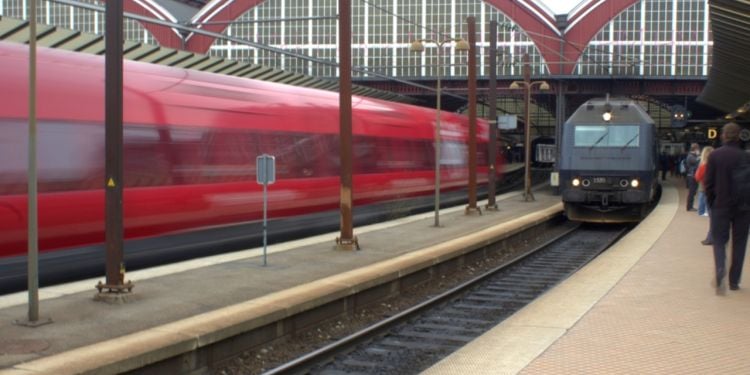
Getting around Denmark
Expats can rest assured, knowing that Denmark offers an extensive transportation network with reliable and affordable services. Depending on the ...

Phones and internet in Denmark
Once you arrive in Denmark, you need to get connected. Here are some tips for choosing a mobile phone operator, paying bills, and connecting to ...

Childcare in Denmark
Choosing a new school for your child is a daunting task, especially for families who have relocated ...
Cost of living in Denmark
Denmark is known to be among the most expensive countries in Europe, particularly when it comes to housing, groceries, and services. However, the high salaries help to offset some of these living costs. Depending on your lifestyle and location, monthly expenses can range from 12,000 to 18,000 DKK (approximately 1,600 to 2,400 €) for a single person, and 30,000 to 50,000 DKK (around 4,000 to 6,700 €) for a family of four.
Here are some estimated monthly expenses:
For a single person | For a family of 4 | |
Groceries | 3,000 to 4,500 DKK (400 to 600 €) | 8,000 to 12,000 DKK (1,070 to 1,600 €) |
Public utilities (water, electricity, internet, phone...) | 1,000 to 1,500 DKK (135 to 200 €) | 1,800 to 2,800 DKK (240 to 375 €) |
Health | 200 to 500 DKK (25 to 65 €) | 500 to 1,200 DKK (65 to 160 €) |
Leisure & outings | 1,000 to 2,000 DKK (135 to 270 €) | 3,000 to 5,000 DKK (400 to 670 €) |
Education (if you have children) | / | free (public system); 27,000 to 210,000 DKK/year per child (3,600 to 28,000 €) for international schools |
Rent | 8,000 to 12,000 DKK (1,070 to 1,600 €) | 12,000 to 20,000 DKK (1,600 to 2,680 €) |
Transport | 500 to 800 DKK (65 to 105 €) | 1,500 to 2,500 DKK (200 to 335 €) |
Subscriptions (gym, clubs, streaming services...) | 300 to 600 DKK (40 to 80 €) | 800 to 1,500 DKK (105 to 200 €) |
Imported goods (organic products, cheeses, wines...) | 500 to 1,000 DKK (65 to 135 €) | 1,500 to 3,000 DKK (200 to 400 €) |
Income Tax | approximately 37 to 42% depending on income and municipality (up to 52% for high earners) | approximately 35 to 40% based on income (up to 50% for high earners) |
The essentials to remember
Get ahead on your administrative tasks: secure your appropriate visa, obtain an international driving permit, acquire your CPR number, and set up your MitID to access public services.
Take the time to read our articles, especially those on working, housing, healthcare, taxation, and daily life.
Feel free to ask your questions on the Denmark forum, where the expat community shares valuable advice and experiences!
To integrate well, embrace the Danish lifestyle: hop on your bike, cultivate hygge, and enjoy a safe, green, and welcoming environment.
Moving to Denmark means choosing a country where well-being, simplicity, and life balance are at the heart of society. To ensure your project is successful, good preparation is essential. We hope this Expat.com guide has provided you with the keys you need to organize your move and fully enjoy your new Danish life.
We do our best to provide accurate and up to date information. However, if you have noticed any inaccuracies in this content, please contact us.


News & testimonies
Denmark opens doors to foreign talent
Denmark is heavily relying on immigration to counter the acute labor shortage in certain sectors. The Danish government has come up with a special scheme to attract qualified foreign talent and created a list of jobs that are under pressure. So what are the opportunities that are currently available in Denmark for prospective expats?

Czech expat talks about living and being an entrepreneur in Denmark
Eliska is a young expatriate who has been traveling abroad since the age of 18. After staying in London and other countries, she finally moved to Denmark, where she owns a business helping people in their moving abroad plans. She talks to Expat.com about her expat life in this Nordic country.
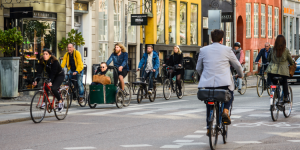
Why expats are flocking to Denmark
An Oxford research group looked into what makes Denmark such an amazing country for expats. The happiest country on Earth attracts expats from all over the world. While 50% of them come from European countries, 34% come from Asia, North America, Oceania, etc., and the rest from other Nordic countries. If you've always wanted to discover the legendary “hygge” and are looking to relocate to Denmark after the COVID-19 crisis, here's what you should expect.
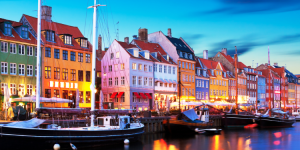
Why moving to Denmark could be your best decision
Besides being one of the world's safest countries, Denmark is also the least corrupt country according to the latest report by Transparency International – which is perhaps why it's gradually turning into a top expat destination. Job seekers, entrepreneurs, investors and even international students are keen on moving there for hygge. If you haven't made up your mind yet, here are five good reasons why moving to Denmark can be the best decision you have ever taken in your whole life.