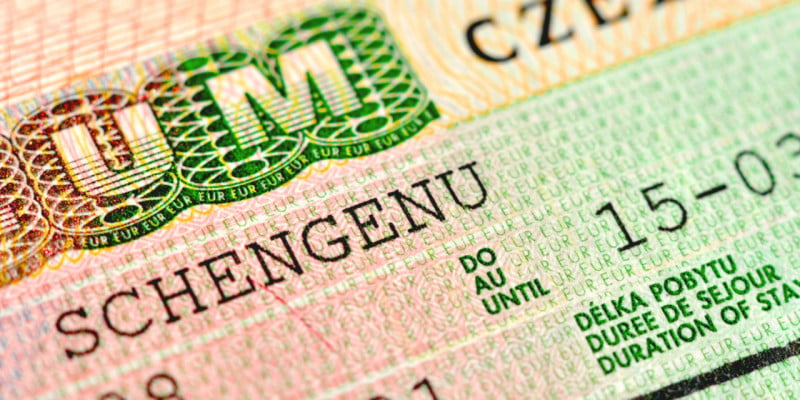
If you plan to stay in the Czech Republic for more than 90 days, you will need a long-term visa or residence permit. Most options fall into a few main groups, based on why you are moving, such as work, study, business, or family.
EU, EEA, and Swiss citizens traveling to the Czech Republic
Citizens of the EU, as well as Iceland, Norway, Liechtenstein, and Switzerland, do not need a visa or work permit to live and work in the Czech Republic.
If you stay longer than 90 days, you can apply for a certificate of temporary residence, but it is not always required. Many people apply only when they need it for practical reasons, such as opening a bank account or dealing with authorities.
After five years of continuous residence, you can apply for permanent residence.
Long-term visas and permits in the Czech Republic for non-EU citizens
If you are not an EU citizen, you will need a long-term visa or a residence permit, depending on your situation.
Long-term visa (over 90 days)
This is usually the first step if you plan to stay in the Czech Republic for several months. It allows you to stay longer than 90 days and is commonly used for study, business, family stays, or some types of work. Freelancers often use this option together with a trade license.
Long-term visas are usually issued for up to one year. In many cases, they can later be extended or changed into a residence permit.
Join the Czech Republic community
Get regular tips and advice to make the most of your expat life
Long-term residence permits in the Czech Republic
If you plan to stay in the Czech Republic long-term, especially for work, study, or family reasons, you will need a residence permit instead of a simple visa. Residence permits are designed for people who plan to live in the country for a long period.
There are several main types of residence permits. The Employee Card is the standard option for foreign employees. It combines a residence permit and a work permit in one document and is linked to a specific job and employer.
The Blue Card is for highly qualified professionals. It is usually aimed at people with a university degree and a higher salary. Compared to the Employee Card, it offers more flexibility and can make it easier to move within the EU later.
Freelancers and self-employed people usually apply through a business permit connected to a trade license, known in Czech as a “živnostenský list.” To qualify, you need to show that your business activity is real and that it can financially support you.
Students enrolled in accredited educational programs can apply for a student residence permit. There is also a family reunification permit for people joining a spouse or close family member already living legally in the Czech Republic.
Good to know: You usually cannot switch from a tourist stay to a long-term visa from within the country.
How work permits and work visas work in the Czech Republic
If you are moving to the Czech Republic for work, the type of permit you need depends on the kind of work you will do.
The application process usually requires several documents. You must show a clear reason for your stay, such as a job offer, work contract, or business activity. You will also need proof of accommodation, valid health insurance, proof of income or financial support, and a valid passport.
In most cases, applications are submitted through a Czech embassy or consulate outside the country. Processing times vary and can take several weeks or a few months. Once approved, you can travel to the Czech Republic and complete the remaining registration steps after arrival.
Additional documents to apply for a long-term visa or residence permit
The exact requirements depend on the visa type, but most applications should also include:
Completed application form.
Passport-size photos.
Documents confirming the purpose of your stay, such as an employment contract (for work), a university acceptance letter (for study), or a trade license (for freelancers).
Criminal record check from your home country (and sometimes other countries where you've lived).
Health insurance valid in the Czech Republic.
Good to know:
Most documents must be officially translated into Czech. Some may also require an apostille or legalization.
Fees and processing times
Fees depend on the type of visa or permit. A long-term visa usually costs around 2,500 CZK (about €100). Employee Cards and other residence permits are in a similar range. There are also extra fees for biometric cards.
You should also expect additional costs during the application process. These can include document translation, health insurance, legalization, or an apostille.
Processing times vary. In many cases, the process takes between 30 and 90 days, but it can sometimes take longer depending on the embassy and the visa type.
After arrival formalities in the Czech Republic
Non-EU nationals must register their address after arrival, unless this is done by their landlord (very rare), hotel, or accommodation provider. If you are applying for or collecting a residence permit, you must also attend a biometric appointment and collect your residence card.
If you plan to stay long-term, you must keep valid health insurance during your stay. You also need to report important changes to the authorities. This includes a new address, a new passport, or a change in marital status.
If you plan to stay in the Czech Republic long-term, permanent residence is an important step. It provides greater stability and reduces paperwork compared to temporary permits. Unlike temporary residence, it is not tied to a short validity period that needs frequent renewal.
For EU citizens, permanent residence is usually possible after five years of continuous legal stay in the country. Non-EU citizens usually qualify after ten years of continuous residence. In some situations, the process can be faster. Family members and partners of EU citizens may be able to apply earlier, depending on their situation and how long they have lived together in the Czech Republic.
To apply, you usually need to show proof of legal residence, accommodation, income, and health insurance. Non-EU nationals also need to pass a Czech language exam. Applications are submitted through the Ministry of the Interior, and processing can take several months.
Permanent residence gives access to more rights within the Czech system. It can make dealing with banks, loans, healthcare, and employers easier. It also gives more security if you plan to live in the country for many years or retire there.
We do our best to provide accurate and up to date information. However, if you have noticed any inaccuracies in this article, please let us know in the comments section below.
Diana Bocco is a freelance writer and serial expat who has lived and worked in Argentina, Thailand, Siberia, and Vietnam—and now calls Prague home. With a career spanning over two decades, she's written for major outlets like Forbes, Business Insider, National Geographic, and USA Today Travel, covering everything from culture and wellness to offbeat destinations and expat life. Her writing often explores what it means to build a life abroad, blending personal insight with practical advice for those chasing new beginnings around the world.
Good day! I would just like to ask if I'm allowed to apply for Temporary resident permit? I have Czech bf, and I want to know if it could help. Thank you!!!