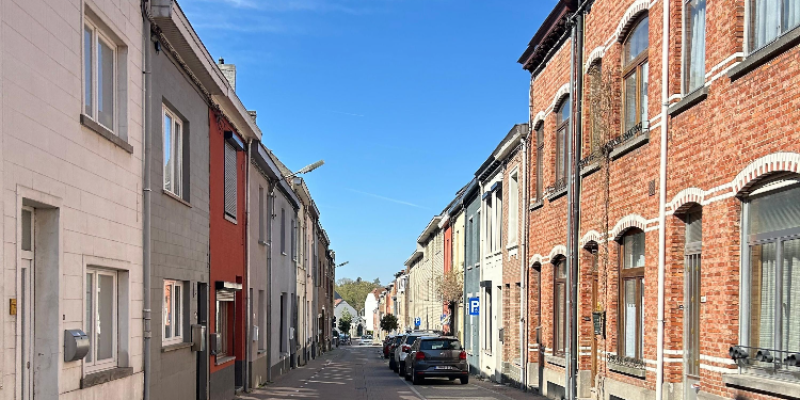
Foreign nationals face no legal restriction on buying property in Leuven: Belgian law imposes no nationality-based ownership cap or restricted zone for residential property. The practical distinction that matters most to expat buyers is tax-related, not legal: whether the standard 12% Flemish registration duty or the reduced 2% rate for a buyer's only own home applies depends on occupancy conditions, not on where the buyer is from.
Belgium imposes no nationality-based restrictions on residential property ownership. Whether you hold an EU passport or come from outside the European Union entirely, you can buy a freehold property in Leuven through exactly the same notarial process that applies to any Belgian buyer. There are no foreign-ownership caps, no restricted residential zones, and no additional government approval required simply because of where you come from.
Residency and ownership are separate legal questions in Belgian law. You do not need a Belgian residency permit to buy property, and owning property in Leuven does not grant you the right to live in Belgium. The practical consequence of not being resident matters most on the tax side: the Flemish reduced registration duty rate of 2%, available to buyers purchasing their only own home, requires that you register your domicile at the property within the statutory period and maintain that registration for at least one year. Buyers who cannot or do not plan to establish domicile there should budget instead for the standard 12% rate.
Every property purchase in Leuven is legally formalized through a notarial authentic deed (notariële akte). The notary's involvement is mandatory: without a signed and registered deed, the sale has no legal effect against third parties. The notary also arranges transcription of the deed at the competent mortgage office, which makes the transfer fully opposable to all third parties. Buyer and seller can each appoint their own notary at no extra cost, since the legally fixed fee is shared between them.
One structural distinction to keep in mind if you are considering buying through a company: from January 1, 2026, the reduced 2% registration duty rate applies exclusively to purchases made by one or more natural persons. If any share of the purchase is held by a company, the general 12% rate applies to the entire transaction, including the natural person's portion.
Leuven is a compact city, but its residential districts have distinct characters, price levels, and practical trade-offs. Understanding which area fits your profile before engaging an agent will save considerable time once you start visiting properties.
Leuven city center (postcode 3000) is the premium residential tier. Historic streets, townhouses, and higher-end apartments cluster around the Grote Markt and Oude Markt, with immediate access to shops, restaurants, and cultural life. Demand here is consistently strong, which keeps prices at the top of the local range. One caveat specific to the center: the neighborhood is heavily shaped by student housing. Before making a binding offer on any central property, check whether the address allows domicile registration and whether the surrounding street is dominated by student accommodation, since both affect your daily environment and your eligibility for the reduced registration duty rate.
Heverlee, the southern district adjacent to KU Leuven's Arenberg campus and the imec technology campus, is the natural first choice for researchers, academics, and technology-sector professionals. It combines proximity to major employers with green space, including Park Abbey. Prices range from mid-level to upscale depending on the street and property type.
For families prioritizing space and schools over central proximity, Kessel-Lo to the northeast and east is the most practical option within the municipality. Parks, quieter streets, and access to the Provincial Domain recreational area make it a workable alternative to the center, with mid-range prices reflecting the trade-off in location.
Further north, Wilsele and Wijgmaal offer the most affordable entry points within the Leuven municipality. Both are connected to the city center by rail, making them viable for commuter households willing to trade central location for a lower purchase price. Wijgmaal is generally considered the more affordable of the two.
Join the Leuven community
Get regular tips and advice to make the most of your expat life
Types of property in Leuven
The Leuven residential property market is genuinely mixed in terms of stock. Buyers will encounter compact city apartments (studios, one-bedroom, multi-bedroom units, and duplexes) concentrated in the center and around KU Leuven campuses; terraced and semi-detached houses spread across inner and outer districts; and detached houses found predominantly in Heverlee and the quieter sub-municipalities. The center also has a layer of historic townhouses and older buildings with renovation potential.
New-build supply in Leuven is limited relative to demand. Off-plan apartment developments and small-scale new-build house projects do come to market, but the overall volume is low. For buyers considering off-plan, verify delivery timing, planning permits, technical specifications, VAT treatment, and completion guarantees before committing to any reservation or purchase agreement.
The tax treatment of a new build differs from a resale property in an important way. A new-build sold by a promoter is subject to 21% VAT rather than Flemish registration duty. Belgian tax rules define a "new" property broadly, so always confirm with the notary which tax regime applies to a specific property before making an offer. For buyers purchasing their first home in Leuven and planning to live there, this distinction can significantly change the total purchase cost.
Every property advertised for sale in Flanders must display an EPC (Energy Performance Certificate) label or energy score in kWh/(m² year). This makes the EPC a quick first filter when browsing listings: properties with poor energy scores may carry mandatory renovation obligations under Flemish energy policy, adding a material post-purchase cost that should factor into any offer calculation. The EPC is broadly comparable to energy performance certificates used in other European countries and can help buyers from abroad quickly orient themselves to running costs and renovation exposure.
Finding property in Leuven
Two national portals cover the Leuven market. Zimmo lists houses, apartments, and building land across Leuven and its sub-municipalities, making it a practical starting point for monitoring the full breadth of active residential listings. Immoweb is Belgium's largest property portal and the most useful for price benchmarking alongside listings; set up saved searches with postcode and property-type filters to track incoming stock in real time. Beyond these two, Biddit is the Belgian notaries' online platform for properties sold by notarial auction, which can surface competitively priced stock outside the privately listed market. The notaris.be cost calculator covers Biddit acquisitions specifically.
Local real estate agencies often list properties on their own websites before or alongside national portals, so running parallel searches is worthwhile. Active Leuven-based agencies include ERA VANDENDRIES, Marnix Vastgoed, BVM Vastgoed, and Globiss Leuven, which handles both purchase and investment mandates. For new-build apartments specifically, IVY Leuven / YOBO Real Estate is an investor-oriented new-build project platform worth checking alongside the national portals.
Belgian real estate agents are licensed and regulated by the BIV/IPI (the Institute of Professional Real Estate Agents). In standard Belgian practice, the listing agent represents the seller; buyers who want independent representation should negotiate a written buyer-search mandate separately before starting the search. Verify any agent's BIV/IPI registration before proceeding, and never transfer funds outside the notarial payment process. Desirable properties in Leuven move quickly, so having a notary briefed and available to review a compromis (private sale agreement) at short notice, rather than only after an offer is accepted, can make a material difference.
Good to know:
Watch for AI-enhanced or misleadingly staged property photos and pressure to sign any agreement before the notary has reviewed the file. These are warning signs in any Belgian property transaction.
The standard private-sale sequence in Belgium runs: offer and negotiation, then a compromis (private sale agreement), then the notary's legal checks and deed preparation, then the authentic notarial deed, and finally transcription at the mortgage office. A public-sale route also exists, in which a notary manages the auction and awards the property to the highest bidder, followed by the same notarial formalities.
Have a notary review the file before signing anything. This is not an optional step. Belgian notarial guidance explicitly recommends engaging a notary before any agreement is signed. Buyer and seller may use the same notary or appoint separate notaries; choosing the latter adds no extra cost because the fixed fee is shared between both notaries. The Belgian property purchase process concentrates legal checks, deed preparation, and tax collection in the notary's role: there is no separate solicitor-conveyancer step. Buyers accustomed to a system with distinct legal stages should note that once both parties sign the compromis, the agreement is fully binding. Standard residential transactions in Belgium carry no cooling-off period after signature.
The compromis is the legally binding private sale agreement. Flemish registration duty is legally due from the moment a sale agreement is concluded, including a verbal agreement that is subsequently registered. A privately signed agreement for Belgian real estate must be registered within four months of signature.
Before drafting the authentic deed, the notary gathers information from multiple authorities: ownership and title history, mortgage and lien status, urban-planning compliance, and the existence of any leases of more than nine years. In Leuven specifically, buyers should obtain a stedenbouwkundig uittreksel (urban-planning extract) early in the process via the city's dedicated urban-planning extract service. This document describes the planning rules, permit history, and any enforcement notices for the parcel, and the notary uses it during deed preparation. Obtaining it before the compromis rather than after gives the buyer an earlier view of any planning risk.
If the agreed purchase price falls below the property's established market value, Belgian tax authorities can treat the difference as a price insufficiency, triggering additional registration duties and a fine. The notary's valuation checks during deed preparation are the main safeguard against this exposure, which is another reason to engage the notary early.
After the authentic deed is signed before the notary, the notary arranges transcription of a copy at the mortgage office of the arrondissement where the property is located. The buyer is the legal owner from deed signature; full third-party protection requires the transcription step to complete. The full timeline from a signed compromis to completed deed registration runs up to approximately four months, the statutory deadline for registering a privately signed Belgian property agreement. Buyers who also need mortgage financing should build in additional time for bank approval before that clock starts.
Remote purchase is legally possible via a valid power of attorney: the notarial deed still requires someone authorized to sign on the buyer's behalf to appear before the notary, but the buyer does not need to be physically present in Leuven.
Costs of buying property in Leuven
The main purchase tax on resale property in Leuven is the Flemish verkooprecht (registration duty), set at a general rate of 12% of the purchase price. A reduced rate of 2% applies where the buyer purchases their only own home and meets all statutory conditions: the purchase must be made exclusively by one or more natural persons (no company co-ownership), the buyer must register their domicile at the property within the required period, and (for sale agreements from January 1, 2026) must maintain uninterrupted registration there for at least one year. Buyers who do not intend to live in the property as their primary residence should budget for the 12% rate from the outset. The gap between 2% and 12% on a EUR 400,000 property is EUR 40,000, so establishing which rate applies before making an offer is not a detail to defer.
For new-build properties sold by a promoter, the applicable tax is typically 21% VAT rather than registration duty. The transaction structure may split the price between land (subject to registration duty) and construction (subject to VAT), so always confirm the exact tax treatment with the notary before signing any new-build offer.
Notary fees are legally fixed in Belgium; the notary cannot charge an arbitrary commercial rate. The fee depends on the purchase price and, if applicable, the mortgage amount. The Belgian notariat's official fee calculator computes both the acquisition deed cost and the mortgage deed cost based on your specific figures: use it before making an offer to budget accurately. Registration duty is collected by the notary at the time of the authentic deed.
If you use a Belgian mortgage, add a mortgage file fee to your budget. As a market reference, a new mortgage credit file at major Belgian lenders runs around EUR 350, though individual bank fees vary and should be confirmed when requesting a mortgage simulation. Beyond that, buyers who plan to make structural changes or need urban-planning documents after purchase should note that Leuven's municipal fee schedule lists EUR 50 for an environmental-permit file relating to one dwelling or residential room, plus EUR 40 extra where neighbor consultation applies.
There are no additional Belgian or Flemish transfer-tax surcharges for foreign or non-resident buyers. Tax treatment is determined by property type, the applicable Flemish tax regime, and whether owner-occupier conditions are met, not by the buyer's nationality or country of residence. Total purchase costs (combining registration duty, notary fees, and mortgage costs) typically add 10-15% on top of the purchase price for a standard resale transaction at the 12% rate; the reduced 2% rate narrows that gap significantly.
Financing and mortgages in Leuven
Belgianmortgage finance is available to foreign buyers, but approval is a commercial decision made individually by each lender. Whether a specific bank will approve a foreign applicant depends on their residency status, income profile, deposit level, existing debts, and the property's valuation. Moreover, the process can take longer for buyers without an established Belgian banking relationship or local credit history.
The National Bank of Belgium (NBB) sets a prudential benchmark of 90% loan-to-value (LTV) for owner-occupied residential mortgage lending. In practice, plan to finance at least 10% of the purchase price from your own funds, on top of all transaction costs. Some flexibility exists for first-time buyers within NBB expectations, but lenders retain discretion on individual cases.
As a market reference, variable and semi-variable residential mortgage rates at major Belgian banks range from approximately 4.243% to 4.659% per annum across different formula types, before individual risk adjustments. Fixed-rate mortgage products are also available. Belgian lenders assess applications using identity documents, payslips or proof of income, bank statements, and the property's valuation; self-employed applicants should prepare accounts and tax returns in addition. Lenders also consult the NBB's Central Credit Register for the applicant's Belgian credit history.
Buyers earning in a currency other than the euro carry a currency risk for the life of the mortgage: monthly installments are fixed in EUR while income fluctuates in the home currency. A sustained depreciation of the income currency against the euro raises the effective monthly burden. If this applies to your situation, model a stress scenario before committing to a repayment level. Building a relationship with a Belgian bank before starting the property search, even by opening a current account, can shorten the mortgage approval process once a property is identified.
Legal considerations for property buyers in Leuven
The authentic notarial deed is the core buyer-protection mechanism in Belgian property law. Before drafting it, the notary collects information from multiple authorities about the seller, the ownership chain, any mortgages or legal liens, existing leases of more than nine years, and urban-planning compliance. The deed is then transcribed at the competent mortgage office, making the transfer opposable to all third parties. Appointing your own notary, separate from the seller's, is strongly advisable for any expat buyer unfamiliar with the local market; the cost is shared, so there is no financial reason to share a notary with the other party.
Urban-planning risk deserves specific attention in Leuven. Every property is subject to planning rules and permit history recorded in a stedenbouwkundig uittreksel, available through the city's Vastgoedinformatieplatform. This document describes applicable zoning, any building permit history, and any enforcement notices. Obtain it before signing the compromis so the notary can incorporate the findings. Unauthorized construction works or unpermitted subdivisions are a risk to identify at this stage rather than after commitment.
Belgian property registration records show whether a property right is encumbered by a mortgage, legal lien, or third-party right, including the beneficiary, amount, and remaining term. The notary's pre-deed investigation covers these encumbrances, but buyers should confirm at the compromis stage that the seller will deliver the property free of all undisclosed encumbrances before the deed date.
One point that catches buyers off guard: the notary performs all legal checks but does not assess the physical condition of the building. For any older property in Leuven, commission an independent structural survey before signing the compromis. The notary handles the legal file; the condition of the roof, drainage, and structure is entirely the buyer's responsibility to verify through a separate inspection.
Owning property in Leuven
Every property owner in Leuven pays an annual onroerende voorheffing (property tax). The Flemish base levy is calculated on the property's kadastraal inkomen (cadastral income, the officially assessed notional rental value), to which Leuven adds municipal opcentiemen (surcharge multipliers). From assessment year 2026, Leuven levies 975 opcentiemen for the standard residential rate and 1,170 opcentiemen for plots linked to economic activities. In practical terms, 975 opcentiemen means EUR 9.75 of Leuven municipal surcharge for every EUR 1 of Flemish base levy. The tax is billed annually and applies to both resident and non-resident owners.
Apartment owners in a co-owned building are required under Belgian law to contribute to shared building costs through the VME (owners' association), managed by a syndicus (property manager). Syndic fees in Leuven start from around EUR 6 per unit per month for basic management; the actual charge depends on the building's size, services, and reserve fund requirements. Budget for this in addition to the property tax when calculating total annual holding costs.
Owners who rent out their Leuven property and do not manage it locally should budget for a rental management agency. Full management services in the Belgian market run 5-8% of monthly rent. Non-resident owners also have a tax filing obligation: Belgian-source rental income must be declared through Belgium's non-resident income tax system, administered by FPS Finance. If you remain tax-resident in another country, check whether your home country's double-taxation treaty with Belgium affects how that rental income is taxed in both jurisdictions.
Before advertising a property for sale in Flanders, the seller must hold a valid EPC and include the label or energy score in every sale advertisement. An absent or expired certificate blocks the launch of marketing and can delay a sale by several weeks while a new one is obtained; arrange it well before listing.
The Belgian selling sequence follows the same notarial structure as buying: private sale agreement, notary's deed preparation, authentic deed, and transcription at the mortgage office. The seller may proceed through a private sale with the buyer directly, through an estate agent, or via a public notarial sale. One key point for sellers: a sale agreement, including a verbal one that is subsequently registered, crystallizes Flemish registration duty (a buyer-side cost) from the moment of conclusion. Do not treat an informal acceptance or letter of intent as preliminary; once a sale agreement is concluded, both parties are bound.
A capital gains tax of 16.5% applies to gains from the sale of built property where the Belgian taxable capital-gains regime is triggered. This applies principally to second homes and investment properties. The seller's main family home is exempt from this tax. For non-resident sellers, the 16.5% rate or global non-resident taxation applies depending on the holding period between acquisition and sale, so confirm the calculation with the notary before listing. The exact tax outcome depends on property type, holding period, and whether the main-home exemption applies. If you are tax-resident in another country, your home country's double-taxation treaty with Belgium may create an additional reporting or tax obligation on the gain.
Belgium imposes no capital controls on the repatriation of residential property sale proceeds. As a eurozone member, cross-border transfers from a Belgian sale are not subject to central-bank approval. Sellers paid in EUR can transfer proceeds freely to any overseas account, subject only to standard banking anti-money-laundering procedures.
Frequently asked questions
No residency permit is needed to buy property in Leuven. Foreign nationals, whether EU or non-EU citizens, can purchase through the standard Belgian notarial process without restriction. The practical consequence of not being resident is tax-related: the reduced Flemish registration duty rate of 2% for an only own home requires registering your domicile at the property within the statutory period and maintaining that registration for at least one year. Buyers who cannot or will not establish domicile there should budget for the standard 12% rate instead.
Leuven is a high-entry-cost market rather than a high-yield one, ranking among Belgium's higher-priced municipalities by median transaction price. The investment case is strongest where strong rental demand from KU Leuven students and researchers, a good energy performance rating, and controlled renovation costs combine to produce a realistic net yield after the 12% registration duty, notary fees, and financing costs. Buyers who qualify for the reduced 2% rate by making the property their main home benefit from a materially lower entry tax. Market fluctuations, illiquidity, and potential changes to rental regulation remain real risks that any buyer should model before committing.
Leuven remains one of Belgium's higher-priced municipalities by median transaction price, with elevated average prices per square meter compared with many other Belgian cities. Belgian market commentary for the current period points to a softer pace of price growth compared with the strong prior-year rebound, but not to a falling Leuven market. Buyers should compare asking prices street by street against current zone data on property portals rather than expecting broad discounts across the city.
The choice is shaped more by tax and due-diligence differences than by a universal quality advantage. Resale properties are subject to Flemish registration duty at 12%, or 2% if all owner-occupier conditions are met. New builds sold by a promoter are typically subject to 21% VAT instead of registration duty, making the entry tax substantially higher even before accounting for limited supply. Off-plan purchases require careful verification of permits, delivery timing, and VAT treatment before signing any offer, and resale properties in established areas may carry renovation costs and poor energy performance ratings that add to the total cost.
Foreign buyers can apply for a Belgian mortgage, but approval is a commercial decision made by each lender. The National Bank of Belgium's prudential benchmark caps owner-occupied lending at 90% loan-to-value, meaning at least 10% of the purchase price must come from the buyer's own funds, separate from transaction costs. Lenders assess income documentation, bank statements, the property's valuation, and the applicant's credit file; self-employed applicants should also prepare accounts and recent tax returns. Buyers earning outside the eurozone carry a currency risk for the life of the mortgage, as monthly installments are fixed in euros while income may fluctuate in the home currency.
The statutory deadline for registering a privately signed Belgian property sale agreement is four months from signature, which sets the outer envelope for the process from the sale agreement to completed deed registration. In practice, the total timeline depends on mortgage approval, the notary's information-gathering from multiple authorities including Leuven's urban-planning office, and the agreed deed date. Buyers should allow time for mortgage approval before signing the sale agreement and engage a notary early to avoid bottlenecks during the deed-preparation phase.
Owning a property in Leuven does not prevent you from renting it out, provided the use is consistent with applicable housing and urban-planning rules. The critical caveat is tax-related: the 2% reduced registration duty rate for an only own home requires the owner to register their domicile at the property and maintain that registration for at least one year from the sale agreement. Renting the property out immediately after purchase is incompatible with meeting those conditions. Buyers planning to let the property from the outset should confirm the tax consequences with their notary before signing any offer, and budget for the standard 12% rate accordingly.
The main seller-side tax exposure is capital gains tax: a 16.5% rate applies to gains from built property where the Belgian taxable capital-gains regime is triggered, primarily for second homes and investment properties. The seller's main family home is exempt from this tax. Non-resident sellers face the same 16.5% rate or global non-resident taxation depending on the holding period between acquisition and sale. The seller also bears the cost of obtaining a valid Energy Performance Certificate before marketing the property, since Flemish law requires it in every sale advertisement. The exact tax outcome depends on property type, holding period, and whether the main-home exemption applies, so confirm the calculation with the notary before listing.
ℹ️
We do our best to provide accurate and up to date information. However, if you have noticed any inaccuracies in this article, please let us know in the comments section below.
I fell in love with words at an early age After a break to focus on my studies, I rediscovered the joy of writing while keeping a blog during my years between London and Madrid. This passion for storytelling and for exploring new cultures naturally inspired me to create Expat.com, a space for my own reflections as well as for anyone wishing to share their experiences and journeys abroad.