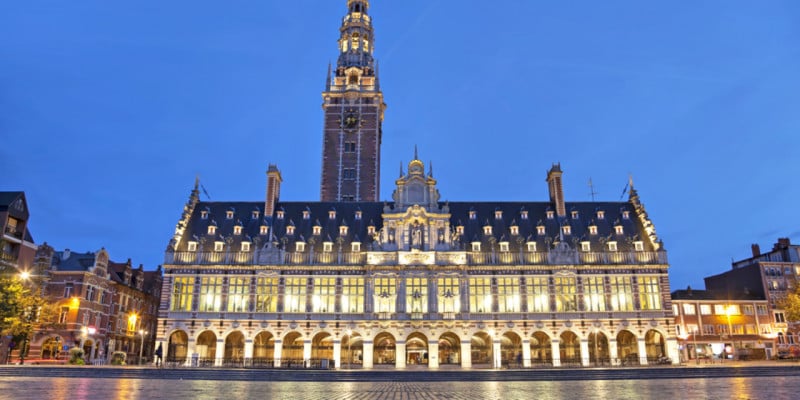
What draws most expats to Leuven for work is not a broad commercial economy but a specific concentration: the research and life sciences cluster that has grown around KU Leuven, one of Europe's major research universities. The city sits in Dutch-speaking Flanders, which shapes everything from job applications to workplace communication. Dutch is the operating language of local companies, public administration, and most employers outside the international research environment; English carries further in university labs, biotech firms, and multinational offices, but rarely replaces Dutch entirely for contracts or HR. For expats evaluating a move here, the practical question is less "are there jobs?" and more "which sector, and on what terms?" The answer varies considerably depending on whether you are joining a research institution, a spin-off company, or a locally rooted employer.
KU Leuven, one of Europe's oldest and most research-intensive universities, is the single largest employer in the city and the organizing force behind its entire professional landscape. The university directly employs thousands of people in research, teaching, administration, and technical support roles. Sitting alongside it, imec, the world-leading research center for nanoelectronics and digital technologies, employs several thousand researchers and engineers on its Leuven campus. Together, these two institutions account for a concentration of knowledge-economy employment that is unusual for a city of Leuven's size.
The life sciences and biotech sector has grown substantially in and around Leuven, largely because of the spin-off ecosystem that KU Leuven has generated over decades. Dozens of biotech, medtech, and pharmaceutical companies operate in the region, several of them founded by former university researchers. Johnson & Johnson's Belgian pharmaceutical operations are based nearby, and a number of international companies have located R&D facilities in the area specifically to recruit from the university talent pool.
Beyond the knowledge economy, Leuven supports a range of service, retail, and hospitality jobs that exist to serve its large student and academic population. These roles tend to be lower-skilled and lower-paid, but they are consistently available and do not require formal credentials. City administration and public-sector positions exist as well, though these are conducted in Dutch and are subject to Belgian civil service rules, which in practice restrict many roles to Belgian nationals or long-term EU residents.
Good to know:
Public-sector employment in Leuven and across Flanders typically requires a certificate of Dutch language proficiency. Expats interested in municipal or regional government roles should factor language certification into their planning timeline.
The primary institutional resource for job searching in Flanders isVDAB (Vlaamse Dienst voor Arbeidsbemiddeling en Beroepsopleiding, the Flemish public employment service). Expats can register on the VDAB platform, upload a CV, and access job listings filtered by sector and location. VDAB also offers career guidance services, though many are oriented toward Dutch-speaking residents. For academic and administrative positions at the university, KU Leuven's own careers portal is the direct entry point and carries vacancies not always listed elsewhere.
For private-sector roles, the dominant Belgian job boards are Jobat and Stepstone, both of which carry a significant share of Leuven-area listings. LinkedIn is widely used for professional roles, particularly in technology, life sciences, and international companies. Recruitment agencies are active in engineering, IT, and life sciences, and approaching them directly can accelerate access to roles that are not publicly advertised.
Dutch proficiency is the single most decisive factor in most hiring decisions outside the academic and international tech sectors. Most employers in Leuven and Flemish Brabant conduct internal operations, HR processes, and client interactions in Dutch. International companies, imec's research divisions, and KU Leuven's international research groups often use English internally, making those environments more accessible to expats who have not yet acquired Dutch. For everyone else, Dutch is not a preference: it is a practical requirement.
Non-EU nationals need a work permit to be employed in Belgium. The standard route is thegecombineerde vergunning (single permit), which combines a residence permit and work authorization into a single application. The employer initiates this process on the worker's behalf, so arriving with a confirmed job offer is the necessary first step for non-EU job seekers. EU nationals can work in Belgium without a permit but must register with the local municipality within 90 days of arrival.
Get regular tips and advice to make the most of your expat life
Salaries and benefits in Leuven
Belgian gross salaries look competitive on paper, but the gap between gross and net take-home pay is significant. Belgium's combination of social security contributions and personal income tax means that an engineer or researcher earning EUR 4,000 gross per month typically takes home around EUR 2,500-2,700 net, depending on their personal and family situation. This is a structural feature of Belgian employment that surprises many newcomers; factoring it into budget planning before arriving is essential.
One element of Belgian wage policy that operates differently from most countries is automatic indexation: salaries increase automatically when the consumer price index crosses a defined threshold, without any individual negotiation. This means that once a starting salary is agreed, future purchasing power adjustments are guaranteed by law. The practical implication is that salary conversations at hire focus almost entirely on the starting gross figure, since future increases are not discretionary.
The 13th month's salary is standard across most Belgian sectors: it functions as a year-end bonus equal to one month's gross pay and is written into most employment contracts. Beyond that, meal vouchers are nearly universal, adding EUR 6-8 per working day in a non-taxable benefit. Eco-vouchers, hospitalization insurance, and group insurance pension contributions are also common in larger companies, meaning the total compensation package often exceeds what the gross salary figure alone implies.
Expats hired through formal international mobility programs, or at senior level by multinationals, may receive additional benefits: housing allowances, annual flights, and school fee contributions. These expatriate packages are not standard for locally hired contracts. Most expats who find a job in Leuven after arriving are employed on a standard Belgian contract with no additional expatriate components, so it is worth clarifying the contract type during negotiations.
Work culture in Leuven
Dutch is the working language across the vast majority of Leuven's offices, institutions, and businesses. Colleagues communicate in Dutch, management meetings run in Dutch, and HR documentation is issued in Dutch. English operates as the internal language at imec, KU Leuven's international research groups, and a number of tech startups, but it does not substitute for Dutch in city-level administration, public employers, or most private-sector hiring processes. For expats planning a long-term career in the city outside explicitly international environments, Dutch language acquisition is a professional priority, not an optional integration step.
The professional register in Leuven, as across Flanders broadly, is direct and task-focused. Decisions tend to be made through procedure and consensus rather than hierarchy, and communication is typically frank without being confrontational. Working hours are taken seriously in both directions: leaving on time is normal and widely accepted, while arriving late without notice signals a lack of respect for colleagues' schedules. This predictability around time and process suits many expats, but it also means that the informal adaptations common in some workplace cultures are rarely available here.
Hybrid and remote work is now standard in knowledge-sector roles in Leuven, particularly in research, technology, and professional services. Most employers in these sectors offer 2-3 home working daysper week as a default arrangement. Roles in hospitality, retail, on-site manufacturing, and laboratory research require full physical presence. The standard Belgian working week is 38 hours, set by law, and overtime is regulated and compensated; informal unpaid overtime is not a cultural norm in the way it is in some other professional environments.
Leuven's character as a university city shapes the texture of professional life in ways that distinguish it from a more purely commercial center. The workforce is highly educated, the density of researchers and academics is high, and the distinction between professional and social networks is often blurred through university-affiliated events, alumni associations, and research communities. For expats arriving in the city, these networks can be a practical route into both employment and social integration.
Getting to work in Leuven
Cycling is the practical default for daily commutes within Leuven. The city's flat terrain, compact layout, and well-maintained cycling network make it faster and more convenient than either driving or taking the bus for most urban journeys. Many employers provide secure bicycle parking, and Belgian employment law allows companies to offer a bicycle lease as a tax-efficient benefit, meaning a commuter bike can be part of the compensation package rather than a personal expense. Expats accustomed to car-centric cities often find the transition to cycling faster than expected once they arrive.
For commuting from outside the city, the train is the dominant option. SNCB (the Belgian national rail operator) runs Leuven station on the main Brussels-to-Liège intercity line, with direct connections to Brussels taking around 25 minutes and running frequently throughout the day. This makes it realistic to live in Leuven and work in Brussels, or to be based in Brussels and commute to Leuven's research parks. A third-party employer rail subscription significantly reduces the commuting cost, and Belgian law requires employers to contribute to the cost of public transport commuting.
Within the city and for connections to surrounding municipalities, De Lijn operates the regional bus network. City buses connect the main residential neighborhoods, the university campuses, and the train station. Bus frequency is adequate during peak hours but drops considerably in the evening and on weekends, which reinforces cycling as the preferred option for shorter journeys.
Driving into central Leuven is constrained by limited parking and a car-restricted city center. For expats living in surrounding towns or suburban areas, a car is practical for reaching out-of-town business parks and logistics facilities. For anyone working in the city center or on the university campus, driving in each day adds time and cost without practical benefit over the alternatives.
Dutch is the working language in Leuven and across Flanders, so it is essential for most locally hired roles, including administration, healthcare, retail, and public-facing positions. English is used extensively at KU Leuven, imec, and international technology companies, where many research and technical roles operate in English. For broader access to the job market beyond the academic and tech sectors, building Dutch language skills is a practical priority after arrival.
Leuven's job market centers on higher education, life sciences, and technology. KU Leuven and its affiliated university hospital, UZ Leuven, are the city's largest employers. imec, the semiconductor and nanotechnology research center headquartered in the city, is another major source of employment. A growing cluster of biotech and pharmaceutical companies linked to the university's research output also recruits regularly across technical and scientific profiles.
VDAB, Flanders' public employment service, is the primary platform for job listings in the region and allows you to register a CV for matching with local employers. LinkedIn is widely used for professional and international roles. For academic and research positions, KU Leuven publishes all vacancies through its own recruitment portal, which is the direct channel for university and hospital roles.
Belgium sets a national interprofessional minimum wage, adjusted periodically by the National Labour Council. The gross minimum stood at around EUR 1,955 per month for a full-time employee. Many sectors operate under collective bargaining agreements that set higher minimums than the national floor, so the rate applicable to your role depends on the industry sector covered by your contract.
The legal standard working week in Belgium is 38 hours for full-time employees. Overtime is regulated and must be compensated either through additional pay or compensatory rest. Part-time contracts are common across sectors, and flexible or hybrid working arrangements are increasingly standard in research, technology, and professional services.
Non-EU nationals need valid work authorization to take up employment in Belgium. The single permit combines residence and work authorization in one administrative procedure and is the standard route for most third-country nationals. The employer typically initiates the application on the employee's behalf. EU, EEA, and Swiss nationals have the right to work freely in Belgium without a separate work permit.
Belgian employment law guarantees a minimum of 20 days' annual paid leave plus public holidays. Meal vouchers (maaltijdcheques) are nearly universal as a tax-advantaged benefit provided alongside salary. An end-of-year bonus equivalent to a 13th month's salary is standard practice in most sectors. All employees are automatically enrolled in Belgium's social security system, which covers healthcare, unemployment insurance, and pension contributions from the first day of employment.
Belgium applies a progressive personal income tax with rates ranging from 25% to 50%. Social security contributions are also deducted from gross salary, so the gap between gross and net pay is considerable. Employees who relocate to Belgium for work and meet specific conditions may qualify for the inbound taxpayer tax regime, which allows a portion of remuneration to be treated as tax-free expenses. Eligibility criteria apply and a tax advisor familiar with Belgian rules is the appropriate person to assess individual situations.
Cycling is the dominant form of daily commuting within the city: Leuven's flat center and extensive cycling infrastructure mean most workplaces are reachable by bike within 15 minutes from central neighborhoods. Employers are legally required to reimburse employees for cycling commutes at a rate set by the federal government. For those traveling from outside the city, Leuven has frequent train connections to Brussels (around 25 minutes), Liège, and Hasselt; De Lijn operates the local bus network for connections within the broader area.
Hybrid work is standard in knowledge-intensive sectors such as IT, research, and professional services, where many employers offer 2 to 3 days of remote work per week. Office presence remains the norm in healthcare, education, retail, and hospitality. Belgian law recognizes structural telework and requires it to be formalized in a written agreement between employer and employee when it is a regular arrangement rather than an occasional one.
ℹ️
We do our best to provide accurate and up to date information. However, if you have noticed any inaccuracies in this article, please let us know in the comments section below.
I fell in love with words at an early age After a break to focus on my studies, I rediscovered the joy of writing while keeping a blog during my years between London and Madrid. This passion for storytelling and for exploring new cultures naturally inspired me to create Expat.com, a space for my own reflections as well as for anyone wishing to share their experiences and journeys abroad.