Living in Antwerp: the ultimate expat guide
Everything you need to know for a successful life in Antwerp.
Antwerp sits at the heart of northern Belgium, blending centuries of trading history with a contemporary urban edge. As the capital of the Flanders region and home to over 530,000 residents, this compact city offers newcomers excellent infrastructure, world-class culture, and a strategic location just 45 minutes from Brussels by train. The city has earned recognition for its diamond trade, fashion scene, and one of Europe's largest ports.
Why Antwerp Attracts International Residents
The city ranks among Belgium's most dynamic urban centres, drawing professionals from logistics, tech, creative industries, and finance. Its manageable size means most daily needs are within cycling distance, while high-speed rail connections link Antwerp to Paris, Amsterdam, and London in under three hours.
5 Good Reasons to Move to Antwerp
- Strategic location: Europe's second-largest port and gateway to continental markets.
- Quality of life: Safe neighbourhoods, excellent healthcare, and a strong work-life balance.
- Cultural richness: World-renowned museums, Baroque heritage, and a thriving fashion scene.
- International community: Over 170 nationalities and widespread English proficiency.
- Competitive costs: Lower living expenses than Brussels while maintaining similar career opportunities.
Working in Antwerp: Opportunities in Europe's Diamond and Port Capital
Antwerp's economy rests on several strong pillars that create diverse employment opportunities for international professionals. The Port of Antwerp-Bruges, Europe's largest integrated chemical cluster, drives much of the regional job market alongside the legendary diamond trade and a growing tech sector.
Key Industries and Employment Sectors
The port sector alone generates 164,000 direct and indirect jobs and contributes EUR 21 billion in added value annually. In 2024, the port handled 278 million tonnes of cargo, cementing its position as Europe's second-largest container port. Beyond logistics, Antwerp hosts major pharmaceutical companies, chemical manufacturers, and the world's leading diamond trading centre, where 84% of rough diamonds globally pass through the city's Diamond Square Mile.
Work Permits and Employment Regulations
Citizens from European Economic Area (EEA) countries and Switzerland can work freely without permits. Non-EU nationals must obtain a Single Permit through their employer, combining work and residence authorisation into one document. The application process typically takes 3-4 months and is handled jointly by the Flemish regional authority and the Immigration Office. Highly qualified workers may qualify for an EU Blue Card with additional benefits.
The table below summarises key employment indicators for the Antwerp region.
Unemployment rate (Flanders) | 3.8% - 4.3% (2024-2025) |
Average gross monthly salary (Antwerp) | EUR 3,543 - 4,200 |
Minimum wage (Belgium, 2025) | EUR 2,070 per month |
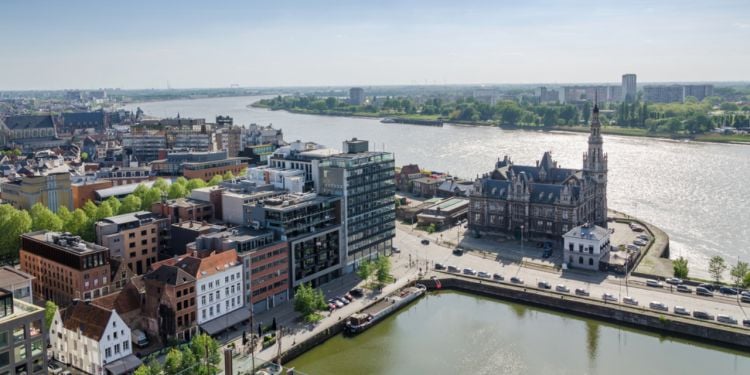
Find a job in Antwerp
The economic capital of northern Belgium, Antwerp attracts expatriates with its dynamism, international openness, and the diversity of its sectors. ...
Higher Education in Antwerp: Universities and International Programmes
Antwerp provides strong options for higher education, with institutions offering programmes in Dutch, English, and other languages. The city attracts students from over 116 nationalities, creating a diverse academic environment with practical links to local industries.
University of Antwerp
The University of Antwerp (UAntwerpen) stands as the city's main research university, ranking among the top 300 globally according to QS World Rankings. Founded through the merger of three institutions in 2003, the university now hosts approximately 25,000 students, with around 19% from abroad. The university offers bachelor's, master's, and doctoral programmes across nine faculties, including a well-regarded Faculty of Business and Economics with international accreditations.
Tuition Fees and Admission
Tuition costs vary significantly based on nationality. Students from EEA member states pay the same fees as Belgian nationals, approximately EUR 1,000 per year at undergraduate level. Non-EEA students face higher fees ranging from EUR 3,100 to EUR 5,800 annually depending on the programme. Many master's programmes are taught entirely in English, particularly in business, science, and engineering fields. Admission typically requires recognised secondary education credentials, proof of English proficiency (IELTS or TOEFL), and programme-specific requirements.
Other Higher Education Options
Beyond the university, Artesis Plantijn University College offers applied programmes in areas like nursing, education, and design. The Antwerp Management School provides executive education and MBA programmes with strong industry connections. For creative fields, the Royal Academy of Fine Arts maintains an international reputation in fashion and design education.
Sources: University of Antwerp, StudyLink
Schooling for Children: International and Local Education Options
Families relocating to Antwerp will find several schooling pathways available. The city hosts multiple international schools alongside the Belgian public system, allowing parents to choose based on curriculum preference, language needs, and budget.
International Schools in Antwerp
The Antwerp International School (AIS), founded in 1967, offers the complete International Baccalaureate (IB) curriculum from early years through the diploma programme. Located in Ekeren, the school serves around 400 students representing over 40 nationalities. Annual tuition ranges from approximately EUR 17,000 to EUR 19,500 depending on grade level, with additional registration fees for first-year students.
Da Vinci International School provides another IB option in a smaller setting, with fees between EUR 17,325 and EUR 29,400 per year. The school emphasises personalised learning with small class sizes. For families seeking French-language education, the Lycée Français International d'Anvers (LFIA) follows the French national curriculum with bilingual French-English immersion from age two and a half.
Belgian Public and Subsidised Schools
The Flemish public education system offers free schooling for all residents, taught primarily in Dutch. Children typically begin kleuterschool (kindergarten) at age 2.5, followed by lagere school (primary) at age 6, and secundair onderwijs (secondary) at age 12. While instruction is in Dutch, many schools provide additional language support for newcomers. Education is compulsory from ages 5 to 18. Enrolment requires proof of residence and the child's identity documents.
The table below compares key international school options.
School | Curriculum | Annual Fees (EUR) |
Antwerp International School | IB (PYP, MYP, DP) | 17,000 - 19,500 |
Da Vinci International School | IB (PYP, MYP, DP) | 17,325 - 29,400 |
International School of Belgium | IB and British | From 14,700 |
Sources: International Schools Database, Antwerp International School
Housing and Neighbourhoods: Finding Your Home in Antwerp
Antwerp's housing market offers variety across its distinct neighbourhoods, from historic townhouses in the old centre to modern apartments in regenerated port areas. Rental prices remain more accessible than Brussels, though demand continues to push costs upward in popular districts.
Popular Neighbourhoods for International Residents
't Zuid attracts young professionals and creatives with its galleries, restaurants, and proximity to the Royal Museum of Fine Arts. Often called the city's cultural quarter, it commands premium rents but delivers excellent urban living. Eilandje, the redeveloped port district around the MAS museum, offers contemporary waterfront apartments popular with expats seeking modern finishes and a trendy atmosphere.
Families often prefer Berchem or Wilrijk, where larger properties, green spaces, and good schools create a more suburban feel while remaining well-connected to the centre. Zurenborg charms residents with its Belle Époque architecture and village-like atmosphere, though availability is limited. For budget-conscious newcomers, Borgerhout and Deurne provide more affordable options with improving infrastructure.
Rental Costs and Procedures
Standard rental contracts run for three to nine years, with shorter terms available for furnished properties. Tenants typically pay a security deposit of two to three months' rent, held in a blocked bank account. Leases must be registered with local authorities. Utilities are usually paid separately, averaging EUR 190-200 monthly for electricity, heating, water, and waste collection in a standard apartment.
The table below shows typical monthly rental costs in Antwerp.
1-bedroom apartment (city centre) | EUR 900 - 1,200 |
1-bedroom apartment (outside centre) | EUR 745 - 1,000 |
3-bedroom apartment (city centre) | EUR 1,400 - 1,800 |
3-bedroom apartment (outside centre) | EUR 1,100 - 1,400 |
Sources: Numbeo, HousingAnywhere
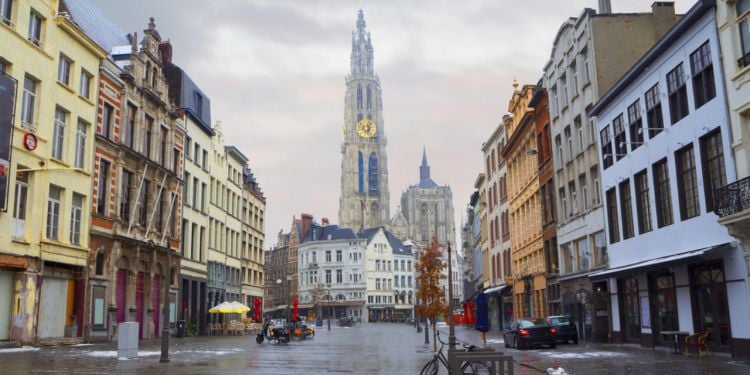
How to find accommodation in Antwerp
A cosmopolitan and vibrant city, Antwerp attracts residents from all over the world. Whether you are arriving to study, work, or simply start a new ...
Leisure, Culture, and Things to Do in Antwerp
Antwerp delivers a rich cultural life that punches above its weight, combining world-class museums with lively neighbourhoods, excellent dining, and a calendar packed with festivals. The city's creative energy extends from Baroque masterpieces to cutting-edge fashion.
Museums and Cultural Attractions
The Royal Museum of Fine Arts (KMSKA) reopened in 2022 after extensive renovations, showcasing Flemish Masters including Rubens, Van Eyck, and Ensor across stunning galleries. The Rubens House offers insight into the Baroque master's life, with a newly renovated garden and Rubens Experience centre. At the waterfront, the striking Museum aan de Stroom (MAS) chronicles the city's relationship with the world, while its rooftop terrace provides panoramic views.
The Museum Plantin-Moretus, a UNESCO World Heritage site, preserves the world's oldest printing presses in an atmospheric Renaissance building. Fashion enthusiasts should visit MoMu, celebrating Antwerp's status as a fashion capital, while the Red Star Line Museum tells moving stories of migration through the shipping terminal where millions departed for America.
Parks, Events, and Nightlife
Stadspark and the vast Middelheim Museum combine green space with open-air sculpture. The annual Zomer van Antwerpen festival transforms the city each summer with free concerts, theatre, and street performances. For nightlife, 't Zuid and the Grote Markt area offer everything from traditional Belgian cafes to cocktail bars and clubs. The city's beer culture thrives in establishments like Kulminator, known for its extensive vintage beer selection.
Sources: City of Antwerp Museums, Visit Flanders
Daily Life in Antwerp: Transport, Language, and Local Customs
Daily routines in Antwerp benefit from the city's compact layout and well-developed infrastructure. Most residents combine walking, cycling, and public transport for their commutes, while the local culture emphasises both efficiency and enjoying life's pleasures.
Getting Around the City
De Lijn operates Antwerp's public transport network, including 13 tram lines (some running underground as the premetro), numerous bus routes, and connections to suburban areas. A single ticket costs EUR 3 when purchased on board, or EUR 1.80 through the De Lijn app. Day passes for unlimited travel cost approximately EUR 7.50-9. Monthly passes start around EUR 58 for combined train and local transport via the City Pass system.
Cycling represents a primary transport mode, with extensive dedicated lanes and the Velo Antwerp bike-sharing network offering stations throughout the city. Antwerp-Centraal station, regularly cited among Europe's most beautiful, provides direct rail links to Brussels (45 minutes), Amsterdam (1 hour 50 minutes), and Paris (2 hours via Thalys).
Language and Cultural Practices
Dutch (specifically Flemish Dutch) serves as the official language, though English proficiency is widespread, particularly in business and among younger residents. Learning basic Dutch remains helpful for administrative matters and social integration. Belgians value punctuality in professional settings but adopt a more relaxed pace socially. The cafe culture is strong, with terraces filling at the first sign of sunshine. Shops typically close on Sundays except in tourist areas, and many businesses observe a lunch break between 12:00 and 14:00.
Cost of Living in Antwerp: Budgeting for Your New Life
Antwerp ranks as Belgium's second most expensive city after Brussels, though costs remain moderate compared to many Western European capitals. Planning a realistic budget helps newcomers settle comfortably while avoiding financial surprises.
Monthly Budget for a Single Person
A single professional can expect total monthly expenses between EUR 1,800 and EUR 2,400 including rent for a one-bedroom apartment outside the centre. Those living centrally should budget EUR 2,200-2,800. Groceries typically cost EUR 250-350 monthly for one person shopping at standard supermarkets like Delhaize, Colruyt, or Albert Heijn. Dining out at a mid-range restaurant runs approximately EUR 20-30 per person for a main course with drink.
Monthly Budget for a Family of Four
Families should anticipate monthly costs of EUR 4,500-5,500 excluding international school fees. This increases significantly if children attend private international schools, adding EUR 1,400-2,400 monthly per child. Grocery costs for a family average EUR 500-800 per month. Healthcare insurance through the Belgian mutualiteit system provides comprehensive coverage at modest cost for employed residents.
The tables below detail typical monthly expenses.
Single Person Monthly Budget
Rent (1-bedroom, outside centre) | EUR 850 |
Utilities (electricity, heating, water) | EUR 150 |
Groceries | EUR 300 |
Public transport (monthly pass) | EUR 58 |
Internet and mobile | EUR 65 |
Leisure and dining out | EUR 200 |
Total estimate | EUR 1,623 |
Family of Four Monthly Budget
Rent (3-bedroom, outside centre) | EUR 1,300 |
Utilities (electricity, heating, water) | EUR 200 |
Groceries | EUR 650 |
Public transport (2 adults) | EUR 116 |
Internet and mobile (family) | EUR 100 |
International school (2 children) | EUR 3,000 |
Leisure and activities | EUR 350 |
Total estimate | EUR 5,716 |
Sources: Numbeo, Relocate.me
In Short
Antwerp offers a compelling package for international residents seeking European quality of life without capital-city intensity. Its position as a global port and diamond hub creates genuine career opportunities, while the city's manageable scale means culture, nature, and daily conveniences remain accessible. Lower costs than Brussels, excellent transport links, and a welcoming international community make integration smoother than in many European destinations. Whether drawn by professional opportunities, the arts scene, or simply the appeal of a historic yet forward-looking city, newcomers consistently find Antwerp rewards those willing to explore its distinctive character.
Ready to connect with others making the same journey? Join the Antwerp forum on Expat.com to ask questions, share experiences, and build your network before and after arrival.
We do our best to provide accurate and up to date information. However, if you have noticed any inaccuracies in this content, please contact us.

Essential services for your expat journey